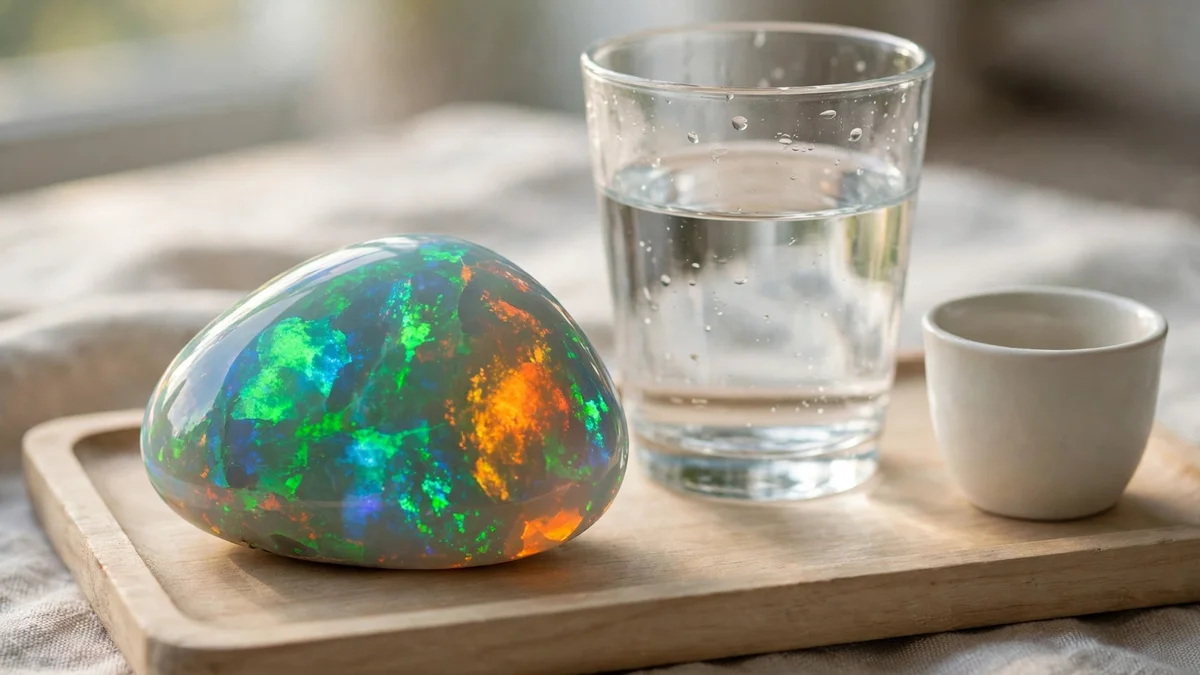
Some mornings feel flat before they have even begun. The light is grey, the room is still, and the day ahead looks plain. Then something small catches the light: a flash of green, a flicker of blue, a spark of orange, all inside one pale stone. The morning feels brighter at once.
Ethiopian opal is a stone for days like these. It is a bright, fiery opal from Ethiopia, pale and clear at its base, with vivid flashes of rainbow colour that move as the stone turns. The flashes are sudden and lively, like sunlight on fresh water.
This guide explains what Ethiopian opal is, how its bright flash forms, how to choose a piece, how to keep it safely beside water, and how to build a short, fresh morning routine around it. The stone is a companion, never a treatment: it will not heal anything, but it helps a fresh day feel brighter.
Key Takeaways
- Ethiopian opal is a bright precious opal from Ethiopia with vivid rainbow flashes in green, blue and orange.
- Its bright flash suits fresh days: clean starts, open windows, and slow, bright mornings.
- Ethiopian opal is a soft, delicate stone, so it must stay dry and is for display and handling only.
- The stone stays beside drinking water, never in it, and it should be kept dry, cool and dusted.
- The stone will not heal anything; fresh days come from water, light, rest and a slow start.
What Ethiopian Opal Is
Ethiopian opal is a precious opal from the volcanic hills of northern Ethiopia. It formed when silica-rich water seeped into cracks in volcanic rock and slowly hardened into opal. The stone is usually pale and clear, and inside it, tiny spheres of silica catch the light and split it into rainbow colours.
Hold a polished piece and it feels cool, smooth and light. The flash moves as you turn the stone: green, then blue, then a sudden spark of orange. No two pieces flash alike. It is softer than many crystals, so it deserves gentle hands.
Why Bright Flash Feels Fresh
Bright flash feels fresh because it moves. When the eye follows a flash across the stone, the mind follows too, away from a dull morning and toward something lighter.
Fresh days are built on small changes: a window opened, a glass of water drunk slowly, a stone turned in the light. Together they make the morning feel clean and new.
How Ethiopian Opal Differs from Other Opals
Ethiopian opal differs from the other opals because its flash is bright, clear and rainbow-coloured on a pale base. Where blue opal soft shimmer daytime offers a pale milky blue stone with a soft, even glow and no fiery flashes, Ethiopian opal offers sudden flashes of green, blue and orange. Where pink opal gentle glow sensitive skin offers a soft pink milky stone with a quiet glow, Ethiopian opal offers lively, changing light.
Yowah and boulder opal carry their colour in warm brown ironstone, and matrix opal threads pale veins through dark rock. Ethiopian opal carries no dark rock at all: it is a clear, pale stone, and its colour is pure light. It also differs from its Batch 38 siblings: black opal, in article 372, shows its flashes glowing against a dark body, while white opal, in article 374, holds a soft, milky light. Ethiopian opal is bright, clear and fresh, with rainbow flashes that suit fresh days best.
Choosing a Bright Piece
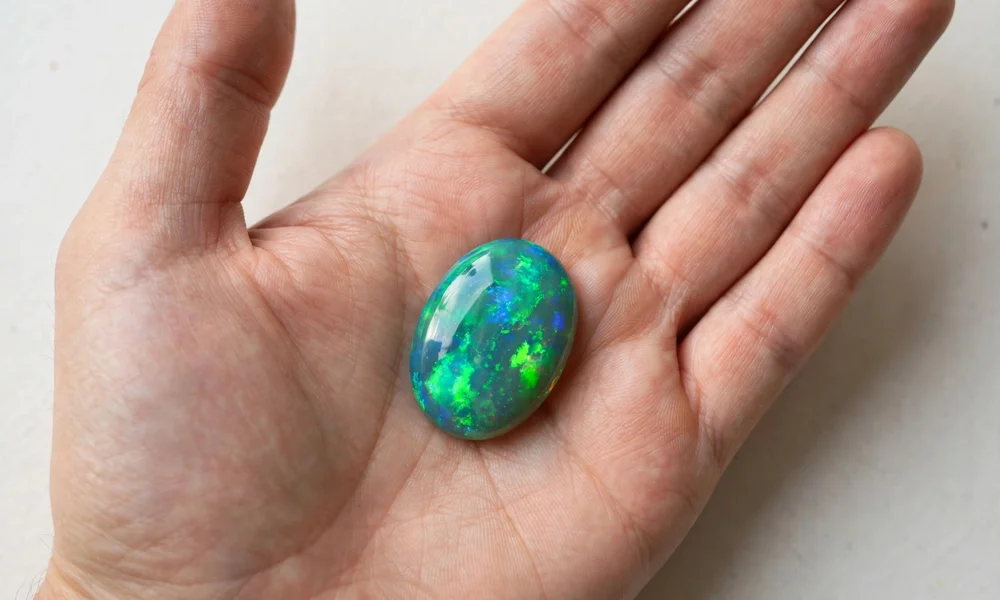
Choosing an Ethiopian opal is mostly a matter of looking closely in good light and trusting your eye. A good piece shows a bright, lively flash that moves as you turn the stone slowly. The base should be pale and clear, and the flashes vivid: green, blue, orange, sometimes a hint of red.
A palm-sized polished stone is enough for a morning tray. Look for a smooth polish with no cracks or cloudy patches. Ethiopian opal is soft, so avoid pieces with chips on the edges.
A Fresh Morning Routine
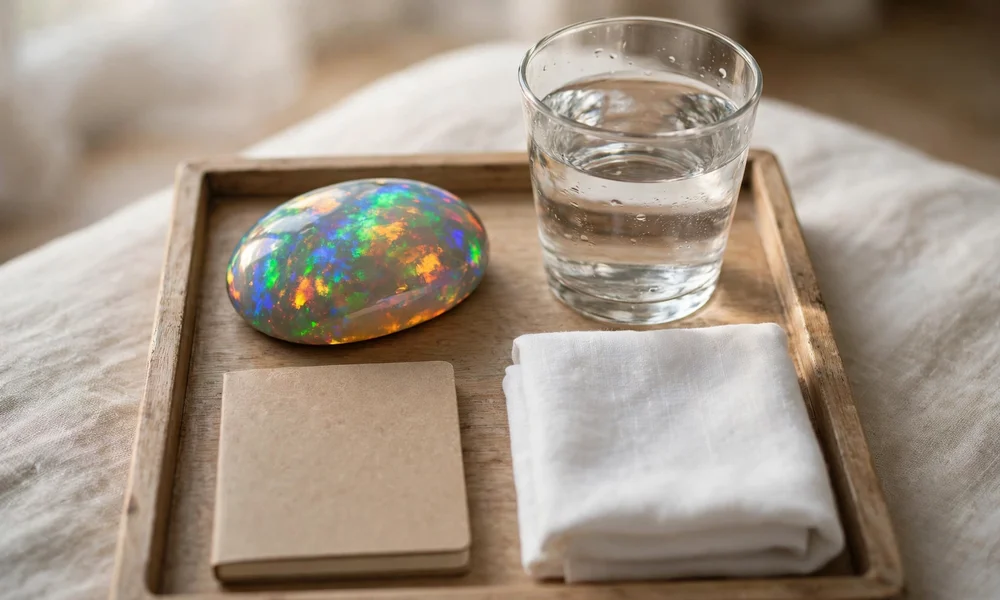
A fresh morning routine takes only a few minutes, starting the night before. Place the stone on a small tray beside a clear glass, where the morning light will find it. When you wake, open the window, fill the glass with fresh water and drink it slowly. Then pick up the stone and turn it slowly in the light, watching the flashes move.
Put the stone back on the tray, and let the morning begin. The routine is simply fresh air, water, light, one bright stone, and a short pause.
Ethiopian Opal Beside Water
Water belongs beside the stone, never around it. Set a clear glass of fresh drinking water next to the stone on the tray. They share a tray, not a glass, and that is the only safe way to pair them. Never place the stone inside drinking water, and never soak it, because Ethiopian opal is porous and soft: water can dull its flash, cloud its surface, or crack it as it dries.
This rule applies every single morning. If the glass spills, lift the stone away at once, dry it gently with a soft cloth, and set it back once the tray is dry. Where matrix opal patterned light bright days keeps a dark veined stone beside water on bright days, this guide keeps a bright, clear stone beside water on fresh days, with the same dry rule.
Keeping the Stone Dry and Clean
Ethiopian opal is delicate, so it deserves the gentlest, driest care. Dust it once a week with a soft, dry cloth. Do not use soap, polish, cleaners or water, and never scrub it. A dry cloth is enough.
Keep the stone away from damp windowsills, steamy bathrooms, kitchen sinks and perfume sprays. Store it on its tray in a dry, cool room, out of direct sun for long hours. Do not wear it every day in rings or bracelets, where it can be knocked or scratched. If it ever gets wet, dry it at once and leave it in open air. Handle it with clean, dry hands.
Ethiopian Opal at a Glance
| Bright flash | Fresh days | Keep it dry |
|---|---|---|
| Green, blue, orange | Clean, slow starts | Beside water only |
| Pale, clear base | Water, light, pause | Dust with dry cloth |
| Flash moves in light | One stone, one tray | Never soak it |
A Bright Corner for the Stone
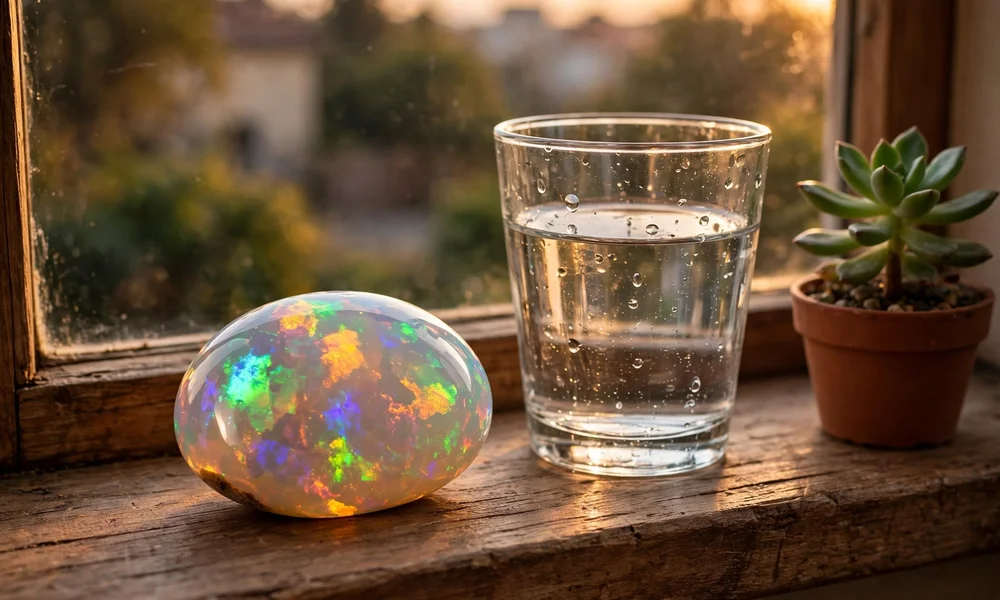
A bright corner gives the stone a home, and a home makes the morning routine easier to keep. Choose a small, clear surface near a window: a bedside table, a shelf, or a corner of a desk. Set down a small tray, place the stone on it, and a clear glass beside it.
Keep the corner the same from day to day, so the morning pause becomes a habit instead of a decision. You walk to the corner, drink the water, turn the stone in the light, and begin.
Stones That Must Never Touch Water
Not every stone is safe beside water, and some must never touch water at all. Malachite must never go in water or in elixirs, because it can release harmful substances. Hematite must never go in drinking water. Apatite, lepidolite — which contains lithium — pyrite, angelite and amber must never go in drinking water or in soaks either. These stones belong on a dry shelf.
Ethiopian opal is different: it is a soft, porous stone that water can damage, so it stays beside water, never in it, and it is never soaked or washed. If you are ever unsure about a stone, treat it as a display piece only and keep it dry.
When a Stone Is Not the Answer
A stone is not the answer to a health problem, and Ethiopian opal is no exception. It will not heal anything, it will not calm a medical condition, and it will not replace rest, food, water or a doctor. The stone is a beautiful object, and that is enough.
If you feel unwell, please see a doctor. Enjoy the stone for what it is, a piece of bright, clear light, and leave health to those trained to help.

Your Fresh Days Checklist
- Place the stone on a small tray beside a clear glass of water.
- Drink a glass of fresh water slowly when you wake.
- Open the window and turn the stone slowly in the light.
- Keep the stone beside water, never inside drinking water.
- Dust the stone weekly with a soft, dry cloth, never soap.
- Remember the stone will not heal anything; see a doctor for health problems.
Frequently Asked Questions
What is Ethiopian opal?
Ethiopian opal is a bright precious opal from Ethiopia, pale and clear at its base, with vivid rainbow flashes in green, blue and orange that move as the stone turns.
Is Ethiopian opal safe beside water?
Yes, Ethiopian opal is safe beside a glass of drinking water, on the same tray. It must never be placed inside drinking water or soaked, because it is soft and porous and water can dull its flash. Beside water is the only safe way.
Will Ethiopian opal heal anything?
No. Ethiopian opal will not heal anything. It is a beautiful object for display and handling, and the freshness of a morning comes from the pause, the water and the slow start.
How do I clean Ethiopian opal?
Dust it once a week with a soft, dry cloth. Do not use soap, polish, cleaners or water, and never scrub it. If it gets wet, dry it at once and leave it in open air.
How is Ethiopian opal different from black opal and white opal?
Black opal shows its flashes glowing against a dark body, and white opal holds a soft, milky light. Ethiopian opal is different: a bright, clear, pale stone with vivid rainbow flashes, kept as a fresh-days companion.
Where should I keep my Ethiopian opal?
Keep it on a small tray in a dry, cool room, with a clear glass of water beside it. A bedside table or a quiet shelf near a window works well, if the spot stays dry.
The Bottom Line
Ethiopian opal brings bright flash to fresh days: a pale, clear stone with vivid rainbow flashes. Keep it beside water, never in it, dust it dry, and let a short fresh pause do the rest.
A Note for Fresh Days
Keep it bright, keep it dry, keep it fresh. A flash of colour can still begin a day well.