A bright day starts with the curtains pulled wide and the room lit up before breakfast, the sun on the table and the windows standing open. A small green crystal fits that morning well.
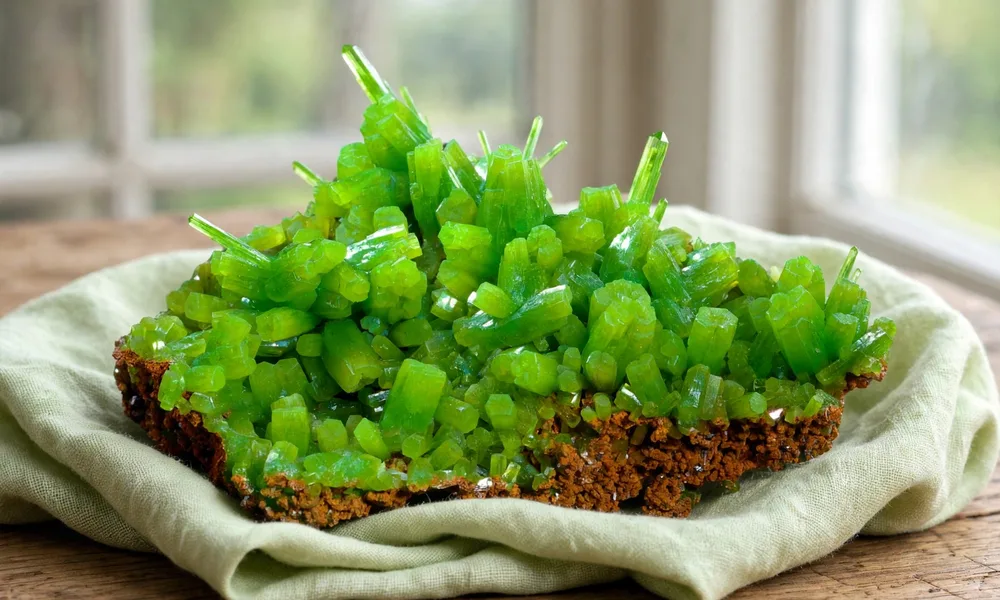
Pyromorphite is the mineral behind that green. It grows in slim six-sided crystals, packed into clusters the colour of fresh peas, lime peel, and young grass after rain. A good piece glows in daylight without shouting.
Before anything else about this stone, one fact has to come first. Pyromorphite carries lead inside it, so it is a piece for looking at and nothing more: it stays on its tray, it never goes near a drink, and hands get a proper wash with soap once it has been picked up. This guide explains the mineral, how to pick a piece, and how to enjoy it through a bright day.
Key Takeaways
- Pyromorphite is a bright green lead mineral that grows in slim six-sided crystals.
- Its fresh green suits bright days, open windows, and morning light.
- Pyromorphite holds lead, so it is for display only and never goes in water.
- Wash your hands with soap after you have handled the stone.
- The stone rests dry on its tray, with a glass of water kept well apart.
What Pyromorphite Is
Pyromorphite is a lead phosphate mineral, formed where old lead veins have weathered near the surface of the ground. Its crystals are slim hexagonal prisms, and they gather into clusters on a brown or grey rocky base. The colour runs from pale apple green to a deep grass green, and the surface carries a soft, waxy shine.
The finest pieces come from old mining country in Germany, France, and the United States. A small cluster feels cool and surprisingly heavy when you lift it, because lead is a dense metal.
Why Warm Green Suits Bright Days
Green suits a bright day because it is the colour the morning already wears outside. Lawns, hedges, and leaves all show it, and a green stone carries that colour into the room. On a day when the sun is strong, a pale stone can look washed out, while green holds its own in the light.
Pyromorphite holds it gently. Its green is fresh rather than fierce, closer to new leaves than to traffic lights.
The Lead Rule First
Lead is the fact that shapes every rule in this guide, so it belongs here, before the choosing and the daily habit. Lead can harm the body if it is swallowed, and it has no place near food or drink, which means pyromorphite is a mineral to look at and nothing more. Pick it up with dry fingers for a closer look, return it to its tray, and give your hands a good scrub with soap before you reach for food, a cup, or your own face.
Store the stone where toddlers and animals cannot get at it, since little ones and pets chew whatever they find. Should a piece ever fall into a drink by mistake, throw that drink out, scrub the glass clean, and wash your hands. The rule is plain and it never bends: look, admire, wash, and never let the stone meet a drink.
Choosing a Pyromorphite Piece
Choose a pyromorphite piece in daylight, near a window rather than under a shop lamp. Look for a green that stays even across the cluster, with no grey patches, no dull brown corners, and no chalky white crust over the crystals. The points should end cleanly, with sharp edges and no cracks through the middle.
A piece no wider than a matchbox suits a tray, and a modest size is simpler to pick up and put down without a knock. Ask the shopkeeper which mine the piece came from, and spend your money only where the seller states the lead content without being prompted. Leave behind any piece whose green looks painted on, and any seller who promises the stone can change your health.
A Bright Day with Pyromorphite
A bright day with pyromorphite asks for very little. Lay a pale green cloth over the side table, set the cluster at one end with its points turned toward the light, and stand a tall glass of water at the other end. Drink the water slowly while the stone catches the sun.
Take the stone up from time to time, feel its chill and its weight, and return it to the tray, then remember the soap and water for your hands. The stone does nothing by itself: the pause is yours, and the green is only there to mark it.
Pyromorphite Beside Water
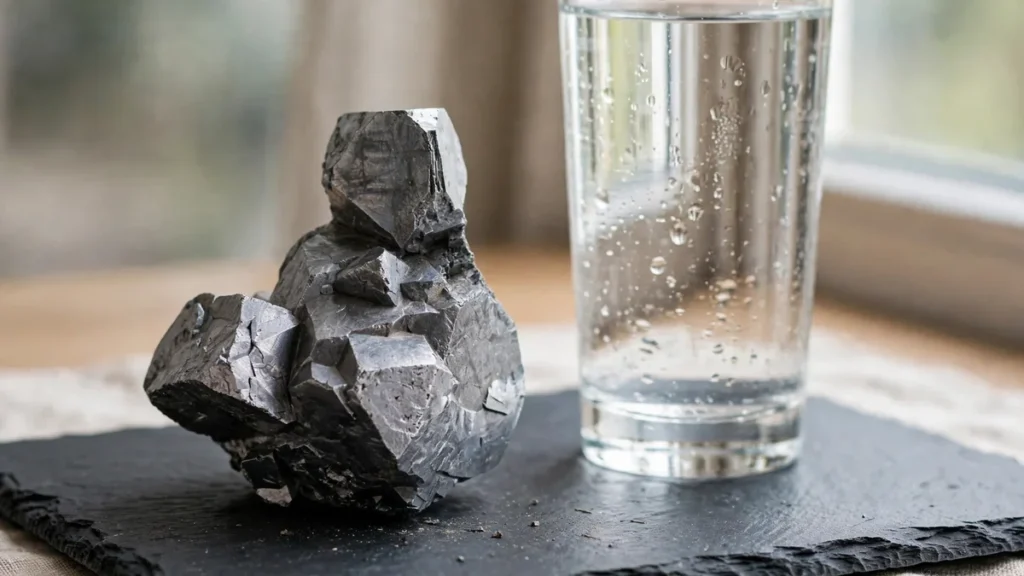
A glass and a pyromorphite cluster make a fresh picture on one tray, yet the two must stay separate. Rest the tumbler at the left edge and the mineral at the right, a band of dry fabric in the middle, so your drink remains pure and the crystal remains untouched by damp.
Never lower it into a tumbler, a pitcher, or a tub, and never hold it beneath a running tap. If your drink spills, move the mineral aside straight away, mop the tray until it is fully dry, and clean your hands before pouring another glass. One tray can frame both the drink and the mineral while keeping them apart.
Pyromorphite at a Glance
| Bright green cluster | Bright days | Display only |
|---|---|---|
| Slim six-sided points | Open windows, sun | Wash hands after |
| Cool, heavy piece | Tray, shelf, desk | Never in water |
| Waxy shine, grass green | One tray, one glass | Dust dry weekly |
Pyromorphite and Vanadinite
Vanadinite for bold days is the lead cousin closest to pyromorphite, though the pair look nothing alike at first glance. Vanadinite forms sharp six-sided points in a rich, warm red, bunched into vivid groups that resemble glowing coals on dark rock.
Pyromorphite answers it in green: fresh grass tones, a waxy finish instead of a glassy one, slim points catching daylight instead of burning red. Lead lives in both, so each remains on its tray, clear of all drinks, with a hand wash after every touch.
Pyromorphite and Wulfenite
Wulfenite for bright days is a second lead mineral from the same sunny shelf, though its shape could not differ more. Wulfenite forms thin, flat tablets with four sides, warm orange in tone, overlapping on dark rock like little roof tiles, every face catching the light.
Pyromorphite grows in chunky six-sided points, bright green rather than orange. Neither goes near water, and both ask for washed hands after touching.
Pyromorphite and Vesuvianite
Vesuvianite for calm days is the green stone most likely to be confused with pyromorphite, because both wear a fresh leaf green and both sit on a tray beside a glass. Vesuvianite is a smooth polished stone, cool and even, the colour of new growth after rain.
Pyromorphite is a different mineral altogether: a cluster of sharp green points on a rocky base, heavy with lead, and bound by rules vesuvianite never needs. Vesuvianite can be held freely; pyromorphite stays on its tray, is picked up briefly, and asks for washed hands after.
Pyromorphite Among the Other Stones in This Batch
Beyond the lead family and the green shelf, this batch holds four more minerals, each wearing a different colour from pyromorphite. Marcasite is a warm gold mineral, bright as fresh straw. Sillimanite is a clear white stone, pale and still. Taaffeite is a rare violet mineral, soft and dusky, while serendibite is a deep blue-green stone, darker and cooler than the grass green here.
None of the four carries lead the way pyromorphite does. Pyromorphite earns its own guide for two reasons at once: the green is fresh, and the rules are firm.
Stones That Must Stay Away from Water
Some stones must stay dry always, and their names are worth learning. Malachite heads the list: copper runs through its green bands, and copper belongs nowhere near a mouth, so keep that stone well clear of every pitcher and cup. Hematite belongs on the same dry list, because damp hematite rusts and can mark skin and cloth.
Apatite breaks down after soaking, and pyrite crumbles in humid air, so both need a dry shelf. Lithium sits inside the pale flakes of lepidolite, which rules out any contact with drinks. A wetting leaves angelite flat and cloudy, while amber, hardened sap from ancient trees, clouds over after a long dip. Mimetite and cerussite, two further lead minerals, stand with pyromorphite at the top of that list: gaze, enjoy, clean your hands, and leave each stone named here next to the tumbler, never within it.
Your Bright Days Checklist
- Rest the pyromorphite cluster on a dry tray, a filled tumbler a short distance off.
- Drink the water unhurriedly as morning light spreads through the room.
- Study the green points for a few breaths, then lay the piece back down.
- Clean your hands with soap once the mineral is home on its tray.
- Choose a seller who states the lead content without hedging.
- Take any health concern to a clinician; a mineral mends nothing.
A pale cloth, a full glass, and one green cluster: that is the whole morning.

Frequently Asked Questions
What exactly is pyromorphite?
Pyromorphite is a bright green lead phosphate mineral that grows in slim six-sided crystals, gathered into clusters on a brown or grey rocky base, and its colour runs from pale apple green to deep grass green.
Is pyromorphite safe to pick up?
You may lift it for a short look, but scrub your hands with soap right afterwards, and keep it far from youngsters, animals, and meals. Lead sits inside it, so display is its only role.
Why must pyromorphite never go in water?
Because lead must never reach anything you drink. Pyromorphite must never be dropped into a glass or left in a soak, and even a splash should be wiped away at once.
How does pyromorphite differ from vesuvianite?
Vesuvianite is a smooth polished green stone with no lead inside it, so it can be held freely. Pyromorphite is a clustered green mineral that contains lead and stays on its tray.
How does pyromorphite differ from vanadinite?
Vanadinite is a deep warm red lead mineral that grows in sharp six-sided crystals on a rocky base. Pyromorphite is bright green and waxy, flashing in daylight rather than glowing red.
Where is the best spot for pyromorphite at home?
Place it somewhere bright and dry, like a tray on a side table or a shelf near a window, a tumbler of water placed at a good distance.

The Bottom Line
Pyromorphite brings fresh green to bright days: slim points on a dry tray, a glass of water standing apart, and washed hands after every touch.
A Note for Bright Days
Keep the green fresh, the tray dry, and the glass apart.