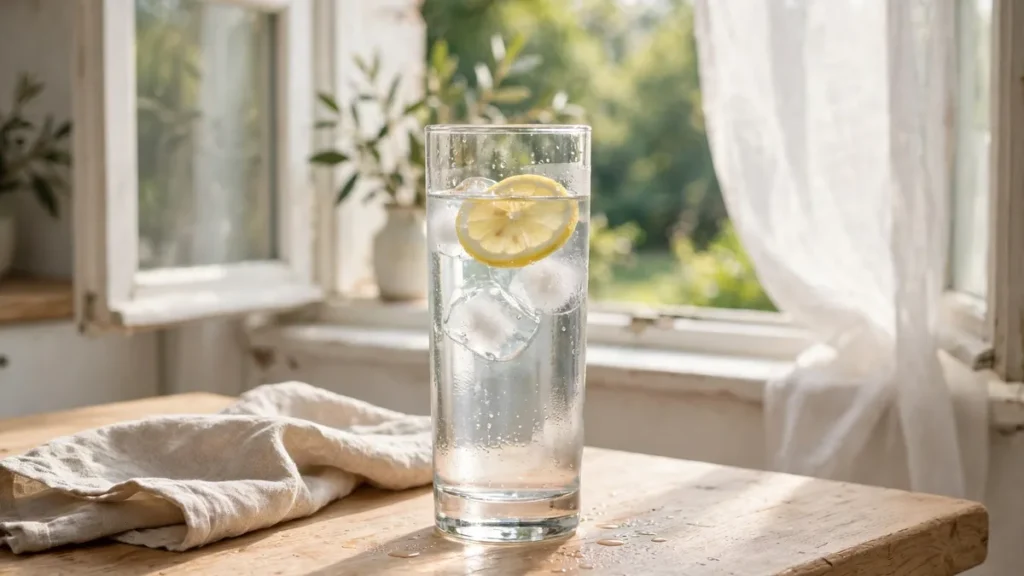
A bright day starts before the kettle boils, sunlight lying in long strips across the kitchen floor, windows open to a clean sky. The rooms feel larger than last night, and breakfast tastes better in that light.
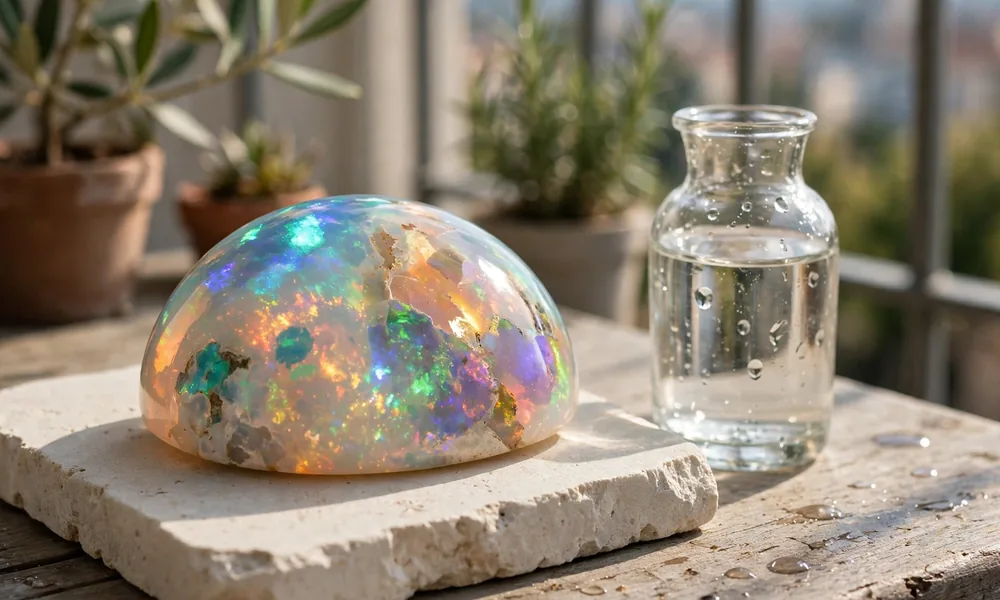
Crystal opal belongs on a tray in that light. It is a clear, see-through opal, pale as a drop of clean water, and when the sun catches it, small rainbow colours drift deep inside the stone.
The pages that follow look closely at this clear stone: what makes it transparent, how its rainbow light differs from the milky opals this journal already covers, what to check before you buy one, and how to set it beside a glass of water. Treat it as a lovely object; it mends nothing and cures nothing.
Key Takeaways
- Crystal opal is a clear, see-through precious opal whose rainbow colours move as it turns.
- Its clear light suits bright days, open windows, morning sun.
- Crystal opal is clear all the way through, while white opal is milky and hyalite shows no rainbow.
- Crystal opal is meant for looking at and holding: keep it dry, next to water, never inside it.
- A single clear stone is plenty for one bright day.
What Crystal Opal Is
Crystal opal is precious opal with a body so clear you can look right through it, like a clean windowpane. Opal grows from tiny balls of silica in neat rows, and when light meets them it splits into rainbow colours. In crystal opal the body is transparent, so the colours glow from deep within, shifting green, then blue, then orange as you tilt the stone.
Most pieces are cut as smooth domed cabochons, which let light sink in and come back coloured. Hold one and it feels cool, smooth and light, with a soft glassy shine. It is softer than quartz, so it asks for careful hands.
Why Clear Light Suits Bright Days
A bright day is a day of strong, honest light, and a clear stone needs exactly that. In a dim room a crystal opal can look plain, almost like a pebble of glass. Carry it to a sunny windowsill and it changes: the clear body turns luminous, and rainbow patches drift across it as the morning passes.
That change matches a bright day itself: windows open, pale wood glowing, a glass of water catching the sun, the room clean and unhurried.
Choosing a Crystal Opal Piece
Look for a stone that stays clear from edge to edge, with no cloudy patches, no grey film, and no dull spots. Turn it slowly under a bright lamp: the best pieces show several colours at once, green and blue with orange, moving smoothly as the stone turns.
Check the polish too, smooth and even, with no sharp chips and no fine cracks through the dome. A piece that fits in your palm is plenty; size matters less than clarity and colour. Ask the seller to name it plainly as crystal opal, and step away from anyone who swears it will improve your health.

A Bright Day with Crystal Opal
Set the crystal opal on a pale tray near the window, a tall glass of cool water standing apart at the far end. Sit down, drink the water in unhurried sips, then lift the stone and hold it to the daylight for a few slow breaths, watching the colours slide from green to blue.
Put the stone back gently and let the day go on around it. The tray stays where the light can reach it, and the stone keeps flashing quietly each time the sun finds it.
Crystal Opal Beside Water
A glass and a crystal opal make a fresh pair on one tray, yet the tray is all they share. Put the water at the far edge and the stone at the near edge, with plain wood showing between them, so the drink stays pure and the gem stays dry. If a drop lands on the stone, wipe it dry at once, but never leave the stone in water.
Wash your hands once you have handled it, and never let it slip into a glass or a jug.
Crystal Opal at a Glance
| Clear see-through | Bright daylight | Display only |
|---|---|---|
| Rainbow flash | Tray, shelf, window | Wash hands |
| Smooth cabochon | Sun, fresh air | Never in water |
Crystal Opal and Hyalite Opal
Hyalite opal is crystal opal's nearest neighbour, because both stones are clear, and the two are easy to mix up. Hyalite opal for bright days covers a glass-like opal with no colour of its own, clear as a drop of water held still, which shows no rainbow colours in ordinary daylight.
The difference sits in what light does inside the stone. Hyalite lets light pass straight through without splitting it, so it stays plain in the sun, and only glows green under a special ultraviolet lamp. Crystal opal splits the light, so rainbow colours bloom inside it in plain daylight, with no lamp needed.
Crystal Opal and White Opal
White opal is the milky cousin of the family, a soft contrast with a stone you can see through. White opal for bright days covers a soft white stone with a gentle rainbow flash across its milky surface in bright light.
White opal hides its light behind milkiness. Its body is opaque and pale, like fresh milk, and the flash stays near the surface. Crystal opal hides nothing: clear-bodied, its rainbow colours shine from deep inside, visible through the stone.
Crystal Opal and Its New Siblings
Three more opals join the journal in this batch, each easy to tell apart from crystal opal. Jelly opal, the sibling numbered 752, is a soft, jelly-like opal, translucent and cloudy, with a gentle glow from inside. Wood opal, the sibling numbered 754, is opal that took the shape of wood, keeping the grain and rings of a tree. Australian opal, the sibling numbered 756, is opal from the dry fields of Australia, a place name covering many kinds, dark and pale.
Crystal opal is none of those three. It is not jelly-soft and cloudy, it carries no grain of wood, and it belongs to no single country. It is the clear opal, the one whose rainbow light you can see straight through.
Crystal Opal and the Other Opals
Beyond its nearest cousins, the opal family keeps many more colours. Common opal is milky white and quiet, with no rainbow play, while black opal is dark grey and near-black, its flashes glowing like stars. Ethiopian opal is the closest cousin: a pale, clear stone with vivid flashes, from the hills of Ethiopia. Ethiopian opal for fresh days covers that one bright stone from one country, while crystal opal is the general clear kind, found in more than one place.
Boulder, matrix and yowah opal carry their colour in dark ironstone rock, warm brown and rusty, nothing like a clear stone. Peruvian and blue opal hold one soft, even blue with no flash, pink opal holds one soft pink, and dendritic opal is milky white marked with grey fern-like branches. Fire opal burns warm orange, andamooka opal is milky white with only the palest light, opalite is man-made glass, and copal is young tree resin, no opal at all.
Caring for Crystal Opal
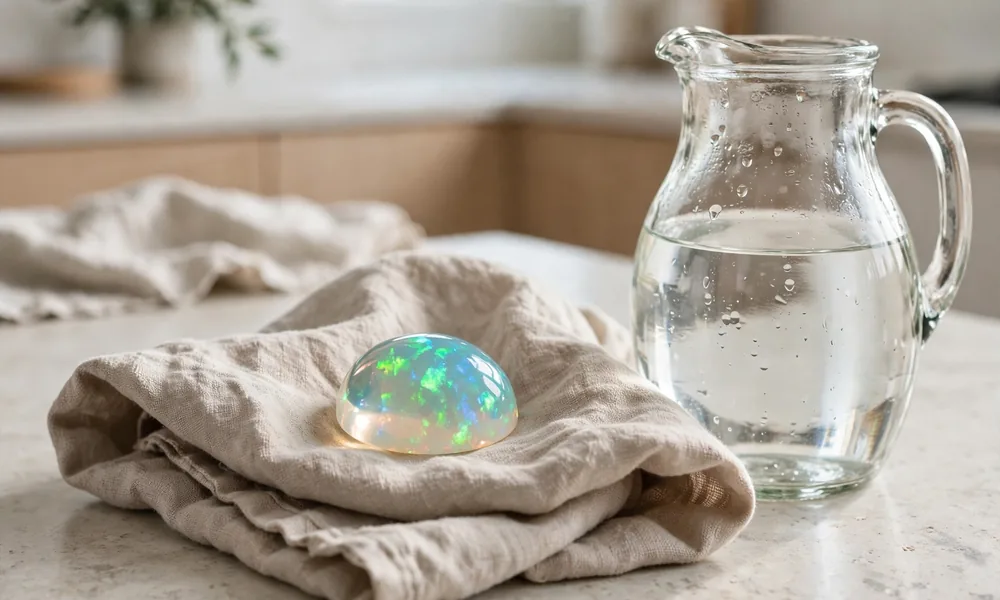
Crystal opal is a soft stone, so it likes a gentle hand and a safe home. Keep it dry and cool, tucked in a padded case, or on a shelf where nothing weighty can fall on it. Sharp knocks can chip a dome, and long heat can dry the stone, so keep it away from radiators and hot windowsills.
Brush dust away with a dry cloth, stroking lightly over the dome. Leave soap, sprays and polishing creams in the cupboard, and never wash the stone under a running tap.
Stones That Must Never Touch Water
Some minerals have no place near a drink, so keep this short list in mind. Malachite tops it: never dropped into a cup or a jug, and never swirled through water meant for drinking. Hematite sits on the same list, kept well clear of drinking water even for the quickest dip.
Apatite and lepidolite want the same wide berth, and lepidolite carries lithium inside its flaky layers, one more reason it stays far from any glass. Pyrite, angelite and amber join them on the dry list, nowhere near a cup, a jug, or a soaking bowl. Crystal opal rests dry beside its glass too.
Your Bright Days Checklist
- Set the crystal opal on a dry tray, a full glass standing apart.
- Drink slowly as daylight moves rainbows across the clear stone.
- Rinse your hands with soap after putting the stone back down.
- Buy only from a seller who names crystal opal without hesitation.
- Store it dry, up high, away from small children.
- If a health worry will not leave you, ask a doctor; a stone cannot answer it.
Frequently Asked Questions
What is crystal opal?
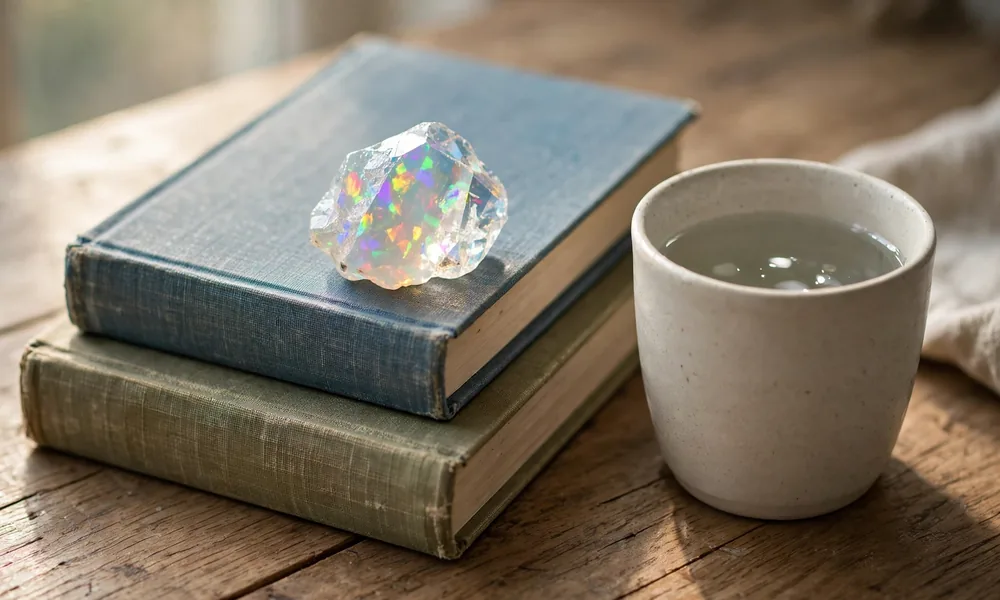
Crystal opal is precious opal with a clear, transparent body, formed from tiny spheres of silica in neat rows. Light splits as it passes through, so rainbow colours glow from deep inside and shift as the stone turns.
How is crystal opal different from white opal?
Both are opal, but white opal has a milky white body, its gentle flash playing across the surface. Crystal opal is clear through and through, and its rainbow colours shine from inside, visible through the body.
How is crystal opal different from hyalite opal?
Hyalite opal is clear like glass, but shows no rainbow colours in ordinary daylight; it only glows green under ultraviolet light. Crystal opal shows rainbow play-of-colour in plain daylight, with no lamp needed.
Is crystal opal the same as Ethiopian opal?
No, although the two look alike at first glance. Ethiopian opal is one bright stone from Ethiopia, with a pale clear base and vivid flashes. Crystal opal is the general clear kind, found in more than one place.
Is crystal opal safe to hold?
Holding it briefly is fine, if you wash your hands with soap after setting it down, and keep it far from small children and food. Lift it gently and set it down softly, so the smooth dome stays whole.
Where should I keep crystal opal at home?
Choose a bright, dry spot, a pale tray, a quiet shelf, or a windowsill, the glass close by but apart, where small children cannot reach it.
The Bottom Line
A crystal opal suits bright days: one small clear see-through stone in sunshine, kept on a pale dish near a full glass, looked at often, never swallowed, never drunk.
A Note for Bright Days
Keep the window open and the stone dry. One clear gem, one glass of water, and a morning of light are all you need.