Crystal clear skin is a phrase that promises a lot: skin with nothing in the way, a clear, calm surface that catches the light. Clear skin is not perfect skin. It is skin that feels comfortable, looks even and rested, and is cared for with steady, gentle habits.
Water sits at the centre of those habits, and water is where the confusion begins. Some water habits genuinely help skin, and some do not help at all, however often they are repeated. Drinking more water will not clear acne, fade dark spots, erase fine lines, or cure any skin condition, and this article says so plainly at the start. The habits that do help are quieter and closer to home: how you wash, how warm the water is, and what you do in the minutes after.
This guide sorts the habits honestly: what water can and cannot do, and the washing, temperature, and routine steps that help. It is plain water, looked at honestly, with no stone in any drink.
Key Takeaways
- Drinking water does not clear acne, fade spots, erase lines, or cure skin conditions.
- Washing gently with lukewarm water is the water habit that helps skin most.
- Very hot water can leave skin dry and tight; lukewarm water cleans just as well.
- Moisturiser works best on slightly damp skin, straight after washing.
- Plain water only: no stone ever goes in drinking water, and rainwater is not for drinking or skin.
What Crystal Clear Skin Really Means
Crystal clear skin is best understood as a feeling as much as a look. It is skin that is clean without feeling stripped, hydrated without feeling greasy, and calm rather than irritated. Nobody's skin looks the same every day. Weather, sleep, stress, and the time of the month all leave their mark, and a realistic goal is skin that is comfortable most days, not flawless every day.
The phrase is also a reminder to be careful with promises. Products and routines that claim to make skin crystal clear in days are usually selling hope, not results. Skin changes slowly, over weeks, and the habits that matter are the small ones you repeat: a gentle wash, lukewarm water, moisturiser on damp skin, and enough sleep.
The Honest Truth About Drinking Water
Drinking water matters for the whole body, and skin is part of the body, so it is natural to ask whether drinking more water gives clearer skin. The honest answer is that it helps a little, indirectly, and far less than the promises suggest. Water keeps the body hydrated, and skin that has enough fluid tends to feel softer and look less tired. But no amount of water will clear acne, fade dark spots, erase fine lines, or cure a skin condition on its own. Those problems have their own causes, and water does not reach them.
This matters because the drinking-water promise wastes effort that could go to habits that work. The water that helps skin most is the water you wash with, at the right temperature, followed by moisturiser. A fuller look at the drinking question itself is a fresh look at drinking water and skin glow, which explains what water does and does not do when drunk.
Washing Well: The Habit That Matters Most
Washing is the water habit that helps skin most, and it is also the one most people rush. Done well, it takes about two minutes: clean hands, comfortable water, a little cleanser if you use one, a gentle rinse, and a soft pat dry. Done badly, it takes twenty seconds of scrubbing with water that is too hot, and skin pays for it by feeling tight and looking dull.
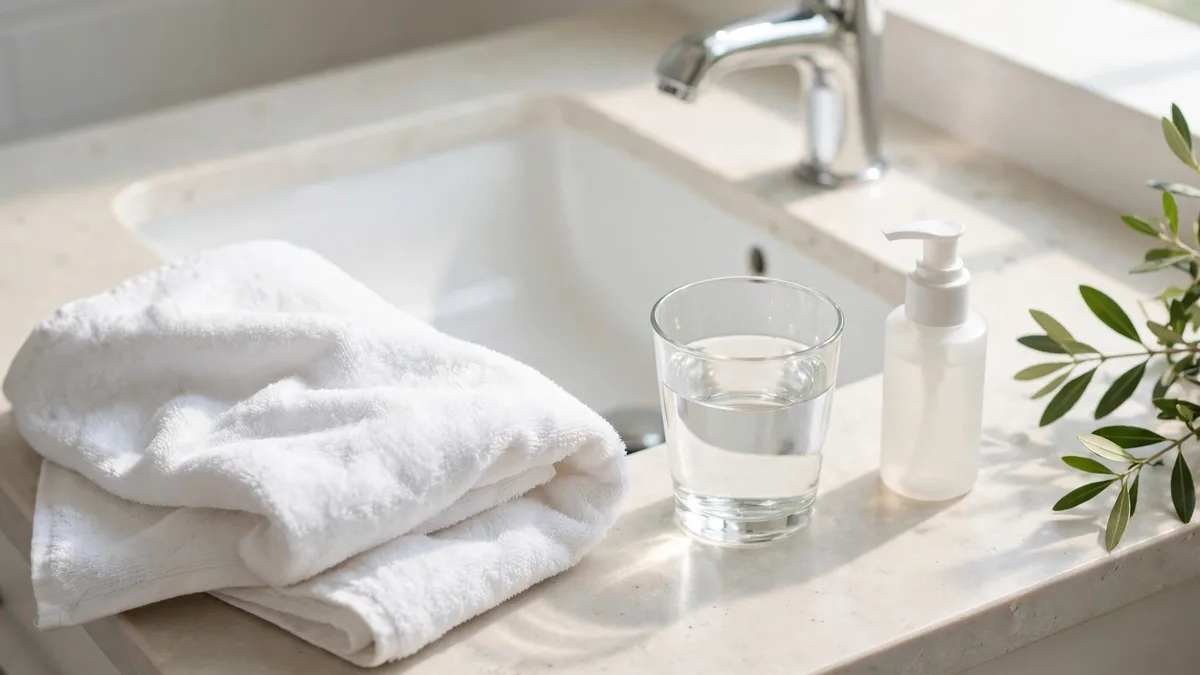
Start with clean hands, washed with soap and rinsed well. Wet your face with lukewarm water, then use a small amount of gentle cleanser, massaged lightly with your fingertips in small circles. There is no need to scrub. Rinse well, because cleanser left on the skin can irritate it, then pat dry with a clean, soft towel. Never rub.

Wash twice a day, morning and evening, and after sweating. More washing is not better washing: too much washing strips the skin and leaves it dry. A detailed walk through the whole wash is a calm guide to washing your face well.
Water Temperature: Lukewarm Wins
Lukewarm water, close to body temperature, rinses cleanly and leaves skin feeling comfortable. Very hot water feels relaxing in the moment, but it strips the skin's natural oils and can leave it dry, tight, and irritated. Very cold water does not close pores or tighten skin: pores do not open and close like doors.
The test is easy: run the water over the inside of your wrist. If it feels comfortable there, it will feel comfortable on your face. If it feels hot on your wrist, it is too hot for your face. This one check, done once, will save your skin more trouble than any product. In the shower, the same rule holds: warm, not hot, and keep the face out of the strongest spray where you can.
The Routine Around the Water
Good skin habits are a routine, not a single act. The wash is the centre, but the minutes around it decide how much good it does. Keep the routine short and steady: wash, pat dry, moisturise while the skin is still slightly damp, and then stop. A routine you can repeat every morning and evening is worth far more than a long one you abandon by the second week.
Consistency matters more than variety. Changing cleansers every week makes it impossible to tell what helps and what irritates. Choose a gentle cleanser and a plain moisturiser, use them for a month, and notice how your skin feels. If it feels sore or tight, change one thing at a time, not everything at once.
Moisturiser on Damp Skin
Moisturiser is the partner of water, and the timing matters. Apply it while the skin is still slightly damp, within a minute or two of washing, when the skin holds the most water. The moisturiser seals that water in, and skin stays soft and comfortable for hours. Applied to bone-dry skin, the same moisturiser does far less, because there is less water to seal in.
Choose a plain moisturiser that suits your skin, and use enough of it. A pea-sized amount is rarely enough for the whole face. If your skin feels greasy afterwards, you have used too much. If it still feels tight an hour later, you may need a richer cream.
The same habit works for the body: moisturise after a shower, while the skin is still damp. A guide to choosing the right product is how to choose a moisturiser that suits your skin.
What Helps and What Does Not
| Water habit | Helps skin? | Keep in mind |
|---|---|---|
| Lukewarm wash | Yes, gently | Twice a day |
| Damp skin cream | Yes, seals water | Apply quickly |
| Steady drinking | A little, indirectly | Sip through day |
| Very hot water | No, dries skin | Feels tight after |
| Stone in water | No, never safe | Keep stones dry |
When Skin Needs More Than Water
Water habits can only do so much. If your skin is persistently sore, broken, very dry, or covered in spots that do not settle, no amount of careful washing will fix it. Skin conditions have causes that water cannot reach, and they deserve proper attention, not another homemade remedy.
The signs to take seriously are pain, swelling, blistering, cracking that bleeds, or a rash that spreads or does not fade after a few weeks. These are reasons to speak to a pharmacist or a doctor, not to wash harder or try a stronger product.
Stones have no place in this part of the story. A stone can sit beside the sink as a beautiful object, but it is never a treatment. Malachite must never touch water, hematite must never go in drinking water, and rainwater is not for drinking or for skin.

Your Crystal Clear Skin Checklist
- Wash twice a day with lukewarm water and a gentle cleanser.
- Pat dry with a clean, soft towel, and never rub.
- Apply moisturiser while skin is still slightly damp.
- Drink plain water steadily through the day, and keep stones out of it.
- Keep showers short and warm, never very hot.
- Change one product at a time, and give it a month.
Frequently Asked Questions
Does drinking more water clear acne?
No. Drinking water supports the body, but it does not clear acne, fade spots, erase lines, or cure any skin condition. Acne needs proper care, not extra glasses of water.
What water temperature is best for washing my face?
Lukewarm water, close to body temperature, is best: it rinses cleanly and leaves skin comfortable. Very hot water strips natural oils and can leave skin dry and tight, while very cold water does not close pores. Test the water on the inside of your wrist first.
How often should I wash my face?
Twice a day, morning and evening, and after sweating, is enough for most people. More washing is not better washing: too much washing strips the skin and leaves it dry.
Should I put a crystal or stone in my drinking water?
No, never. No stone goes in drinking water. Malachite must never touch water, hematite must never go in drinking water, and rainwater is not for drinking or for skin. A stone can sit dry beside the glass, never in it.
Does moisturiser really need damp skin?
It works best on slightly damp skin, applied within a minute or two of washing, because it seals the water in. Applied to bone-dry skin, the same moisturiser does far less.
When should I see a doctor about my skin?
See a pharmacist or a doctor if skin is persistently sore, broken, very dry, or covered in spots that do not settle, or if there is pain, swelling, blistering, or a rash that spreads. These need proper attention, not harder washing.
The Bottom Line
Crystal clear skin comes from steady water habits, not dramatic promises: a gentle lukewarm wash, moisturiser on damp skin, and plain water drunk steadily through the day. Drinking water will not clear acne, and no stone belongs in any drink.
Start tomorrow with one change: wash lukewarm, and moisturise while the skin is still damp.
A Note for Clearer Skin Days
Keep it gentle, keep it steady, keep it honest. Small water habits, repeated daily, will carry your skin further than any grand promise ever could.