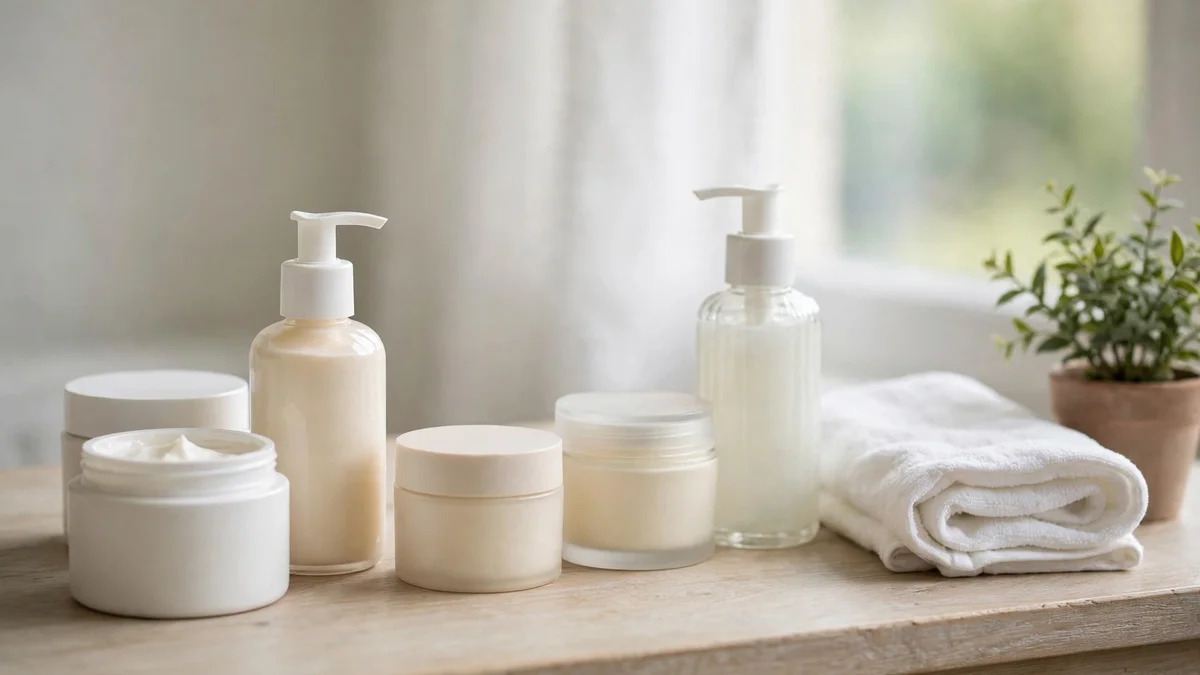
The moisturiser shelf in any shop stretches further than seems reasonable: jars, tubes and pump bottles in every shade of white and cream, each promising soft, comfortable skin. It is easy to leave with the prettiest jar rather than the right one.
A moisturiser has one main job: to help your skin hold on to water so it feels comfortable through the day. Once you know your skin, the texture it likes, and the few label words that matter, the choice narrows quickly.
This guide covers what a moisturiser does, how to work out your skin type, which textures suit which skin, how to read a label, how to patch test, and how the seasons change what you need.
Key Takeaways
- A moisturiser helps skin hold on to water, so slightly damp skin is the best time to apply it.
- Judge your skin type by how it feels a few hours after washing.
- Gels suit oilier skin, lotions suit most skin, and creams suit drier skin.
- A short ingredient list and a patch test matter more than price or packaging.
- One moisturiser rarely suits every season — keep a lighter one for warm months and a richer one for cold.
What a Moisturiser Actually Does
Skin loses water all day, faster in dry air, heated rooms and cold wind. A moisturiser slows that loss, forming a light layer that helps water stay where it belongs, so skin feels softer and less tight.
That is the whole job, though labels promise far more. A moisturiser will not erase fine lines, clear spots or fade marks, and it will not cure dryness from an underlying skin condition or replace sun protection. What it can do, day after day, is keep ordinary skin feeling comfortable.
Most moisturisers combine three kinds of ingredients: humectants, such as glycerin, draw water towards the skin's surface; emollients smooth the surface so skin feels soft; occlusives sit on top and slow water loss, the way a balm seals in moisture. A gel is mostly humectant and water, so it feels light and sinks in fast. A rich cream carries more emollients and occlusives, so it feels heavier and lasts longer.
Know Your Skin First
Before you choose anything, spend a few days noticing your skin: wash with a gentle cleanser, pat dry, and use nothing for an hour. Then notice how it feels.
Comfortable and calm means fairly balanced skin, and most light moisturisers will suit you. Tight, dull, or fine dry lines mean it leans dry, and it will thank you for something richer. Shine on the forehead and nose while the cheeks stay comfortable means combination skin — start with a light lotion. Shine all over means oily skin — a gel or a very light lotion will feel best. Stinging, flushing or itching easily means sensitive skin — choose fragrance-free formulas with short ingredient lists.
Watch your skin over a week, not a single morning. A skin routine with room to breathe is easier to keep than a long shelf of half-used jars, and noticing comes before buying. Skin type also shifts with age, the seasons and where you live, so choosing well is a habit you repeat.
Match the Texture to Your Skin
Texture is where most choices go wrong: a moisturiser that feels wrong sits unused, however good its ingredients are.
Gels are water-light and almost clear. They sink in within moments, leave no shine, and feel cool on the skin, suiting oily skin and warm, humid weather. Their limit: they hold in less water than heavier textures, so very dry skin usually finds them too light.
Lotions are the middle ground: fluid, white, easy to spread, and comfortable for most people on most days. They suit balanced and combination skin, and they are the safest first choice if you are unsure.
Creams are thicker, richer and slower to sink in. They suit dry skin, cold weather and heated rooms, and they comfort skin that tightens by midday. Their limit is weight: on oily skin they can feel heavy and look shiny. Balms, thicker still, are best kept for small dry patches, such as around the nose in winter.
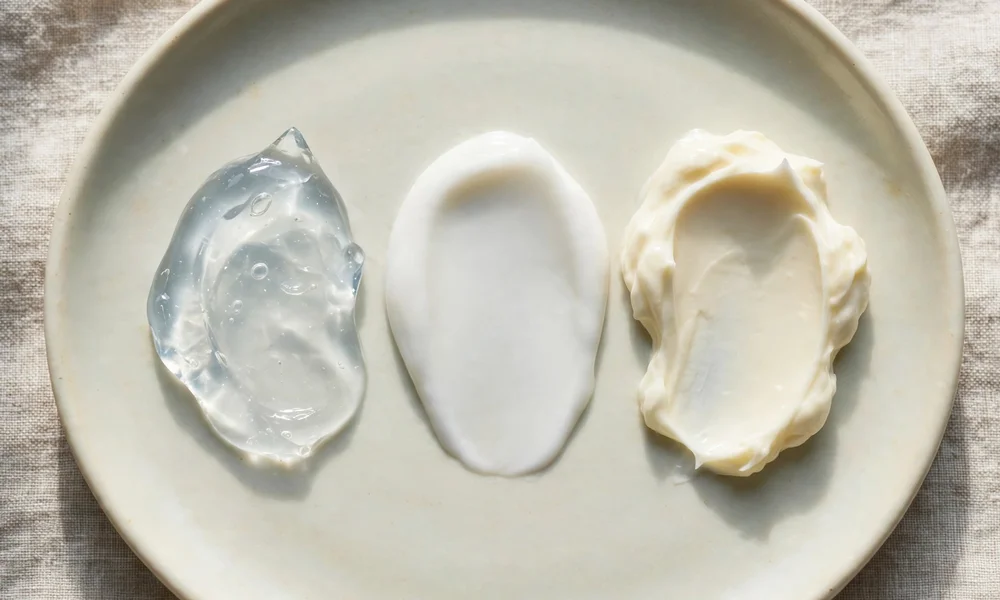
Test a texture the way you would use it: a pea-sized amount on the back of your hand or along your jaw, then wait a few minutes. The first touch tells you about thickness; the feeling after five minutes tells you about the day ahead.
Your moisturiser is usually the last step before sun protection in the morning: thin, watery products go on first and richer ones last. How to layer light skincare without overdoing it explains that order in detail.
Reading the Label Without a Chemistry Degree
The front of the jar is advertising; the back is information.
Start with the ingredient list: ingredients appear in order of amount, so the first few matter most. Look for water near the top, then glycerin or a similar humectant. A list of ten to twenty ingredients is normal; a list of forty is a reason to pause.
Fragrance deserves a pause of its own: a strongly scented cream may feel luxurious, but fragrance is a common source of irritation, especially for sensitive skin. If your skin reacts easily, choose fragrance-free — not just unscented, which can still contain masking fragrance. A plain cream that smells of almost nothing is often the kindest choice.
Claims on the front need a calm eye. Words like "hydrating" and "for all skin types" are not regulated promises. "For sensitive skin" usually means it was tested on sensitive skin — reassuring, but not a guarantee. "Non-comedogenic" means the maker believes it is less likely to block pores — useful if your skin is prone to spots, but still a claim, not a certainty. Price is a poor guide, too: an expensive jar cannot tell you how the cream will feel on your face. Choose by texture and by how your skin responds.

The Patch Test: Two Minutes That Save Weeks
A patch test takes two minutes and can spare you weeks of redness and regret.
Choose a small, discreet patch of skin — behind the ear or along the jawline is ideal — and apply a small amount once a day for three days. If the area stays calm, with no redness, itching, stinging or new spots, the product is probably fine for your face. If anything flares up, stop.
This matters most for sensitive skin, or for a product with a long ingredient list or a strong scent. It also matters when you change more than one thing at once: start a new cleanser, toner and moisturiser in the same week, and if your skin reacts you will have no idea which one caused it. One change at a time, with a patch test, keeps the detective work simple.
Seasons, Rooms and Changing Needs
One moisturiser rarely suits every season — that is not a failure of the product or of your skin.
In warm, humid months, skin loses less water to the air, and heavy creams can feel sticky by midday. A gel or a light lotion usually feels right. A water-light layer underneath, such as an aloe water toner for light hydration, can add moisture without weight on the warmest days.
In cold months, dry outdoor air and heated indoor air both pull water from the skin. This is when a richer cream earns its place: it holds water in for longer and cushions skin against wind and central heating.
The practical answer is to keep two textures, not ten products: a light one for warm days and a richer one for cold days, and to switch between them as the weather turns.

Common Mistakes When Choosing a Moisturiser
Most moisturiser mistakes are about buying the right product for someone else's skin, or using a good product in the wrong way.
| Mistake | What happens | Better choice |
|---|---|---|
| Richest jar first | Heavy, shiny skin | Start light, add richness |
| Skipping patch test | Redness, wasted jar | Test three days first |
| Judging by scent | Irritation, wrong texture | Judge by feel, not smell |
The richest jar is the most tempting mistake: a thick, luxurious cream feels like it must work harder, so people with oily or combination skin buy it and then wonder why their face shines by noon.
The second mistake is choosing by scent or packaging: a beautiful jar tells you nothing about how the cream will feel at three in the afternoon. The third is using too much — a pea-sized amount covers the face, and more product does not mean more moisture.
Your Moisturiser Checklist
- Wash, wait an hour, and notice how your skin feels.
- Pick a texture that matches your skin: gel for oily, lotion for most skin, cream for dry.
- Read the back of the jar: water and glycerin near the top, short list, fragrance-free if sensitive.
- Patch test behind the ear or along the jaw for three days before full use.
- Apply a pea-sized amount to slightly damp skin, morning and evening.
- Keep two textures — light for warm months, richer for cold.
Frequently Asked Questions
How do I know my skin type for choosing a moisturiser? Wash, wait an hour, then notice how your skin feels. Comfortable means balanced; tight means dry; shiny on the forehead and nose means combination; shiny all over means oily; stinging easily means sensitive.
Should I choose a gel, a lotion or a cream? Gels suit oily skin and warm weather; lotions suit most skin on most days; creams suit dry skin and cold weather. If you are unsure, start with a lotion — the safest middle ground.
Is an expensive moisturiser better than a cheap one? Not necessarily. Price often reflects packaging, scent and branding rather than performance. A modestly priced moisturiser with water and glycerin near the top of its list can suit your skin just as well as a luxury jar.
Do I need a different moisturiser for day and night? Not always — many people use the same one morning and evening. A richer cream at night can suit dry skin, but it is a preference, not a rule.
Can a moisturiser cause spots? A very heavy cream can feel too rich for oily or spot-prone skin. If your skin is prone to spots, choose a light gel or lotion, look for "non-comedogenic" on the label, use a pea-sized amount, and patch test first. If spots persist, speak to a dermatologist.
How long should I try a moisturiser before deciding? Give it at least a week, and two weeks is better. Skin adjusts slowly. If it stings, itches or causes redness, stop straight away.
The Bottom Line
Choosing a moisturiser comes down to three steps: know how your skin feels, match the texture to that feeling, and test before you commit. Start with a lotion if you are unsure, and let your skin — not the shelf — make the final decision.
A Note for Your Next Jar
Buy the smallest size first, patch test it, and give it a week. The right moisturiser is the one you reach for without thinking, because it simply feels right.