Some days ask for nothing grand. They ask for a slow morning, a quiet room, and one small thing to look at while the kettle boils. A stone can be that small thing, and nothing more.
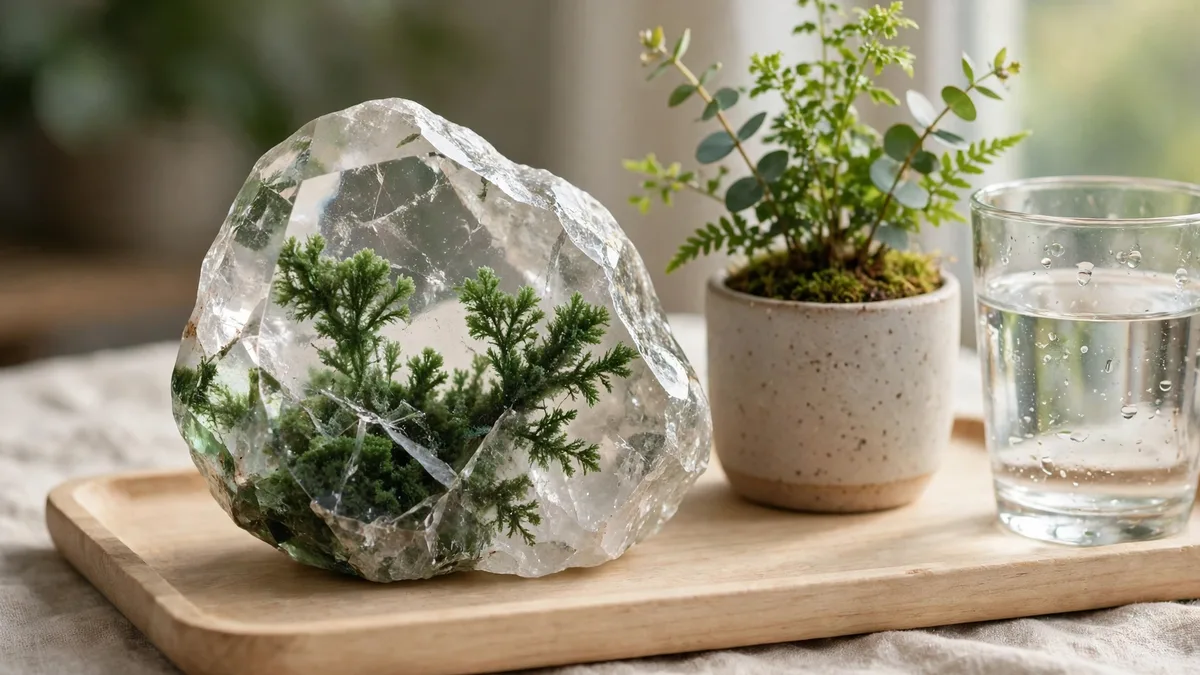
Garden quartz is a stone that looks like a tiny garden caught inside glass. It is clear quartz with green chlorite inclusions, soft green shapes that branch and gather like moss, ferns and little trees.
This guide explains what garden quartz is, how to choose one, how to keep it safely beside water, and how to build small calm moments around it. It is a display and handling stone only, and it will not heal anything.
Key Takeaways
- Garden quartz is clear quartz with green chlorite inclusions like tiny gardens.
- Every stone holds a different garden, so choose the one you enjoy.
- Keep the stone beside water, never inside drinking water.
- A calm day needs only short pauses: morning, desk and evening.
- Garden quartz is display and handling only, and it will not heal anything.
What Garden Quartz Is
Garden quartz is clear quartz that grew with green chlorite trapped inside it. Chlorite is a soft green mineral, and inside the quartz it forms shapes like moss, ferns, small bushes and little forests. The quartz is clear and glassy, so the green garden shows through as if it were growing inside a drop of water.
The name comes from what you see. Hold the stone up to the light and the green shapes seem to float inside it, layered like a garden seen through a window. Some gardens are pale and feathery, some are deep green and dense, and some are a single small sprig. There is no right garden, only the one that pleases your eye.
Why Green Gardens Feel Calm
Green is the colour of leaves, moss and quiet woods, and most people find it restful. A garden quartz stone brings that green indoors in a small, still form. It does not move, it does not ask for anything, and it gives the eye a gentle place to rest. On a busy day, that rest matters.
The calm here is simple. Looking at a beautiful stone for a minute can slow your breathing and soften a hurried morning, as looking out at a garden can. The stone does nothing to you. It simply sits there, green and still, while you take a pause.
Choosing Your Stone
Choose a garden quartz stone the way you would choose a small picture: by looking at it. Pick it up, turn it in natural light, and look at the green shapes inside. A pale feathery garden suits a bright shelf, while a deep green garden stands out on a dark table. Size matters less than the view. A small stone that fits in your palm is easy to hold and place.
Buy from a seller who tells you plainly what the stone is, and check it for cracks before you pay. A small chip is fine, but a deep crack can make it fragile. Where strawberry quartz soft pink for spring skin is a soft pink stone speckled with red flecks for spring, garden quartz is a clear stone with green gardens inside for calm days, and the two suit very different moods.

Garden Quartz Beside Water
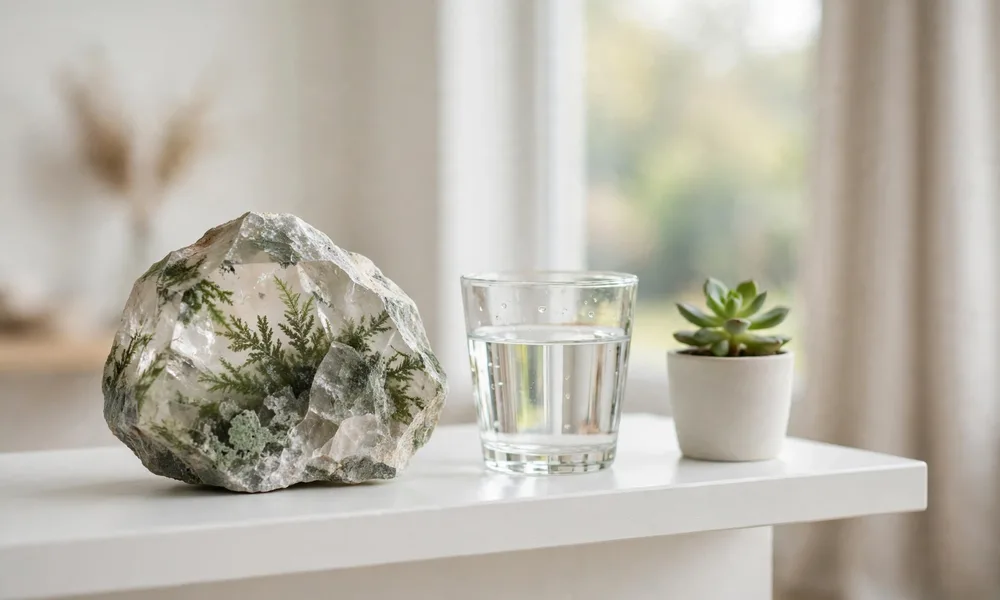
Garden quartz looks its best beside a glass of fresh water. The water catches the light, the stone catches the green, and the two together make a small calm corner. Place the stone next to the glass, never inside it. The stone is a display object, and drinking water should stay plain and clean.
Some stones can stain water, flake into it, or carry dust from handling, and garden quartz is safest kept dry and beside the glass. Fill the glass fresh each morning, set the stone beside it, and let the pair mark the start of a calm day.
A Calm Morning With Garden Quartz
A calm morning with garden quartz takes only a few minutes. Set the stone on the table beside a glass of fresh water, and sit with it while the morning wakes up. Look at the green garden inside the stone, turn it slowly in the light, and follow one green branch at a time. Drink the water slowly, and let the morning begin without rushing.
Keep the morning simple. One stone, one glass of water, and a few quiet minutes are enough. You do not need a long ritual or anything new. The calm comes from the pause itself, not from any object.
A Slow Evening With Garden Quartz
The evening is the same as the morning, only slower. Place the stone on the bedside table beside a glass of fresh water, and let it be the last small thing you look at before rest. The soft lamp light will catch the green inside the stone, and the room will feel a little quieter. Put the phone away, close the notebook, and let the day settle.
An evening stone is not a treatment for sleep, and it will not fix a restless night. It is simply a calm object in a calm room, a small reminder to slow down. A glass of water, a quiet room and a dark hour are enough.
Garden Quartz at Your Desk
A garden quartz stone suits a desk because it is small, quiet and green. Place it where you can see it without moving your head, beside a glass of fresh water and away from the edge. When the work grows heavy, look at the stone for a minute. Take a slow breath, then return to the work. The pause is short on purpose, and it is the pause that helps.
Keep the desk simple. One stone is enough, and a crowded desk will hide the garden. Where rutilated quartz golden threads for focused days carries fine golden threads for a focused workday, garden quartz carries soft green gardens for a calm one.

Garden Quartz on a Shelf
A shelf is the easiest home for garden quartz. Choose one that catches natural light, and give the stone room to breathe. Place it beside a small green plant and a clear glass of fresh water, with space around it so the garden inside shows clearly. A crowded stone will disappear, and a stone with space will hold the eye.
Dust the shelf once a week with a soft dry cloth, and wipe the stone gently at the same time. Where clear quartz clusters for bright shelves fill a bright shelf with groups of pointed clear crystals, a single garden quartz stone makes a quieter centrepiece, and that quiet is the point.
Garden Quartz at a Glance
| Green inside | Calm day | Keep safe |
|---|---|---|
| Mossy green | Slow morning | Beside water |
| Leafy green | Quiet evening | Dry hands first |
| Pale green | Short pause | Soft cloth only |
| Deep green | Gentle light | No strong soap |
Cleaning Your Stone Gently
Garden quartz is easy to clean, and gentle care is all it needs. Wipe it with a soft dry cloth to remove dust, and if it needs more, wash it briefly in plain lukewarm water with clean hands, then dry it at once with a soft towel. Do not use strong soap or harsh cleaners, and do not leave the stone soaking. A short wash and a quick dry will keep it clear and bright.
Dry the stone fully before you put it back. Water left on the surface can leave marks, and a damp stone picks up dust more easily. Store it in a soft pouch when you travel, so it does not knock against harder objects and chip.
Stones That Must Never Touch Water
Not every stone is safe near water, and this matters most when water is for drinking. Garden quartz is safe beside a glass, but some stones must never go in water or elixirs at all. Malachite must never touch water or elixirs, because it can release harmful substances. Hematite must never go in drinking water. Apatite, lepidolite, which contains lithium, pyrite, angelite and amber must never go in drinking water or soaks either.
The rule is simple: stones stay beside water, never inside drinking water. If you are ever unsure about a stone, keep it dry and on display only. A stone on a shelf is safe, and a stone in a glass is a risk no calm day needs.
Your Calm Days Checklist
- Choose a garden quartz stone whose green garden pleases your eye.
- Keep the stone beside a glass of fresh water, never inside it.
- Take one slow morning pause with the stone and a glass of water.
- Take one short desk pause when the work grows heavy.
- Wipe the stone with a soft dry cloth once a week.
- Remember the stone is display only, and it will not heal anything.

Frequently Asked Questions
What is garden quartz?
Garden quartz is clear quartz with green chlorite inclusions inside it. The green shapes look like moss, ferns and tiny gardens caught inside a clear stone.
Will garden quartz calm me?
No stone can calm you on its own. Garden quartz will not heal anything, and it is not a treatment. Looking at a beautiful green stone for a quiet minute can help you pause, and the pause is what feels calm.
Can I put garden quartz in water?
No. Keep garden quartz beside a glass of fresh water, never inside it. Drinking water should stay plain and clean, and the stone is safest kept dry.
How do I clean garden quartz?
Wipe it with a soft dry cloth, or wash it briefly in plain lukewarm water and dry it at once with a soft towel. Do not use strong soap, and never leave it soaking.
Is garden quartz the same as clear quartz?
Garden quartz is a kind of clear quartz, but with green chlorite gardens inside it. Plain clear quartz is clear throughout, while garden quartz carries soft green shapes like tiny gardens.
Which stones must never touch water?
Malachite must never touch water or elixirs, hematite must never go in drinking water, and apatite, lepidolite, pyrite, angelite and amber must never go in drinking water or soaks. Keep stones beside water.
The Bottom Line
Garden quartz is clear quartz with tiny green gardens inside, kept beside water for calm days. Choose the garden you love, take short quiet pauses with it, and remember it is display only — it will not heal anything.
A Note for Calm Days
Keep it green, keep it beside water, keep it slow. A small garden in a clear stone is enough for a calm day.



