Layering skincare sounds like a skill for people with long shelves and longer mornings: seven bottles in a row, a timer, and a face that feels coated before the day has begun. It is easy to decide that layering is not for you.
Light layering is a different idea. It means using a few thin, watery products, one after another, letting each one settle before the next. Nothing is heavy, and the whole routine still fits into a few unhurried minutes.
This guide explains how to layer light skincare without overdoing it: what order makes sense, how much to use, how long to wait, and how to tell when you have done enough — with products you already own.
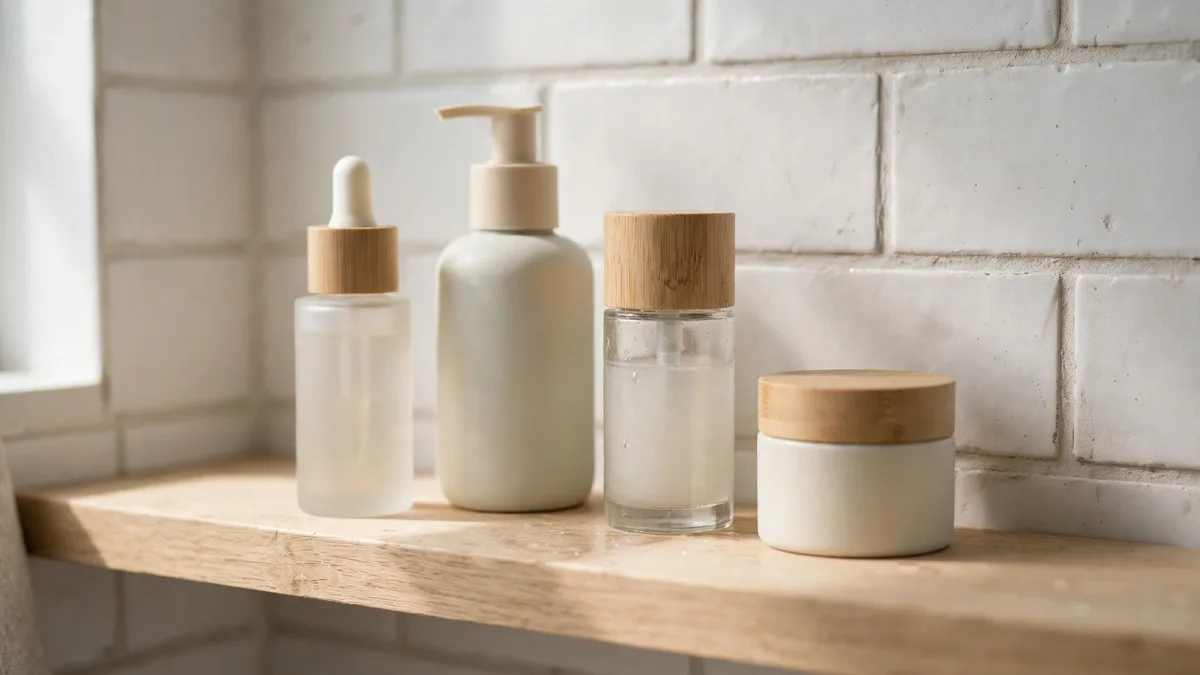
Key Takeaways
- Layer light skincare means thin layers in a calm order, from the most watery product to the richest.
- Use less than you think at each step: a few drops or a pea-sized amount is usually enough.
- Wait about a minute between layers so each one can settle before the next goes on.
- Three or four layers are plenty for most days; more rarely adds comfort.
- Sticky, shiny or pilled skin usually means too much product or too little waiting.
What Layering Light Skincare Really Means
Layering is simply putting one product on top of another, in an order that helps each one sit well. A light layer is a thin one: a splash of watery toner, a few drops of serum, a light moisturiser. Each is almost weightless on its own, and together they add up to skin that feels comfortable and cared for.
The idea is simple. Skin that is slightly damp takes in a light product more easily than skin that is completely dry, so a watery first layer prepares the way for the next one, and a light cream at the end helps hold the earlier layers in place. Nothing here is a treatment or a cure; it is a way of applying ordinary products so they feel better.
Light layering is not about buying more. It works best with fewer products, because each one has a clear job and you can tell how it feels. Three or four products you know well will take you further than twelve half-used bottles.
Why Light Layers Suit Most Skin
Heavy creams have their place, especially in cold weather or for very dry skin. But for most people on most days, a heavy layer feels like too much: it sits on the surface, looks shiny by midday, and can make makeup slide. Light layers avoid that by spreading the same care across several thin steps.
Thin layers also let you adjust. On a warm day you might stop after two layers; on a cold day you might add a third and a little more cream. The routine bends to the day instead of forcing the day to fit it. That flexibility is the real advantage of layering light.
The Order That Makes Sense
The order for layering light skincare is simple to remember: thinnest first, richest last. Watery products go on first because they settle quickly; oils and rich creams go on last because they sit on the surface and help hold the earlier layers in place. Reverse the order and the rich layer can block the lighter ones.
A useful morning order is: wash, then a watery toner or essence, then a few drops of serum, then a light moisturiser, then sun protection. In the evening the order is similar, minus the sun protection, with the option of a slightly richer night cream if your skin feels dry. You do not need every step every day; the order stays the same, and you simply leave out the steps you do not need.
If you are unsure whether a product is thin or rich, put a drop on the back of your hand. If it spreads like water, it goes early; if it holds its shape like a cream, it goes late. That small test is more reliable than reading a dozen labels.
How Much to Use at Each Step
Using too much is the most common layering mistake. A generous squeeze feels caring, but a thick layer cannot settle properly, so it sits on the skin and can pill when the next layer goes on. A thin layer settles in a minute and leaves the skin ready for the next step.
| Step | How much | Wait before next step |
|---|---|---|
| Watery toner or essence | A small splash, about a teaspoon | About 30 seconds |
| Serum | Three or four drops | About 1 minute |
| Light moisturiser | A pea-sized amount | About 1 minute |
| Sun protection (morning) | About a fingertip length | Let it settle before makeup |
These amounts are starting points, not rules. If your skin still feels tight after the moisturiser, use a little more cream next time rather than adding another product. If it feels sticky, use a little less serum. Small adjustments, made one at a time, will teach you what your skin needs.
The Morning Layering Routine
A morning routine should be short, because mornings are busy and a long routine is one you will skip. Wash with lukewarm water, then smooth a watery toner or essence over damp skin with your palms. There is no need to rub; light pressing movements are enough.
Next, warm three or four drops of serum between your palms and press them gently over your face, taking care around the eyes. Wait about a minute, then apply a pea-sized amount of light moisturiser the same way. Finish with sun protection, applied after the moisturiser has settled. A simple foundation of cleansing, moisturising and sun protection is easier to keep than a long shelf of products, and a skin routine with room to breathe shows why keeping it simple works.
The whole morning routine takes five minutes. If you are short on time, leave out the serum: wash, moisturise, protect. The layers you do use will work better because each one had a moment to settle.
The Evening Layering Routine
Evenings are kinder to layering, because there is no rush and no sun protection to fit in. Begin the same way: wash gently, then a watery first layer on damp skin, taking a little more time with each step and letting the serum settle for a minute or two.
A light mist can be a pleasant evening layer for tired skin: a few gentle passes, followed by moisturiser so the water is not left to dry alone. How moonstone hydration mists refresh tired skin explains how to use one well. A mist adds water, but it cannot lock it in by itself.
Finish with moisturiser, or a slightly richer night cream if your skin feels dry. That is enough. An evening routine does not need to undo the day; it only needs to leave your skin feeling clean, calm and comfortable before bed.
When Layers Go Wrong: Pilling, Shine and Sticky Skin
Pilling is the clearest sign that layering has gone wrong. Little rolls of product appear when a new layer is rubbed over one that has not settled, or when too much product was used. The fix is simple: use less, wait longer, and press products on instead of rubbing them in. If pilling keeps happening with the same product, it may simply not layer well with the others.
Shine by midday often means the moisturiser was too rich for the day, or that too many layers were used. Try leaving out the serum on warm days, or using a lighter moisturiser. Sticky skin usually means a layer has not settled yet; give it another minute before the next step, and the stickiness often fades on its own.
Keeping the Shelf Small
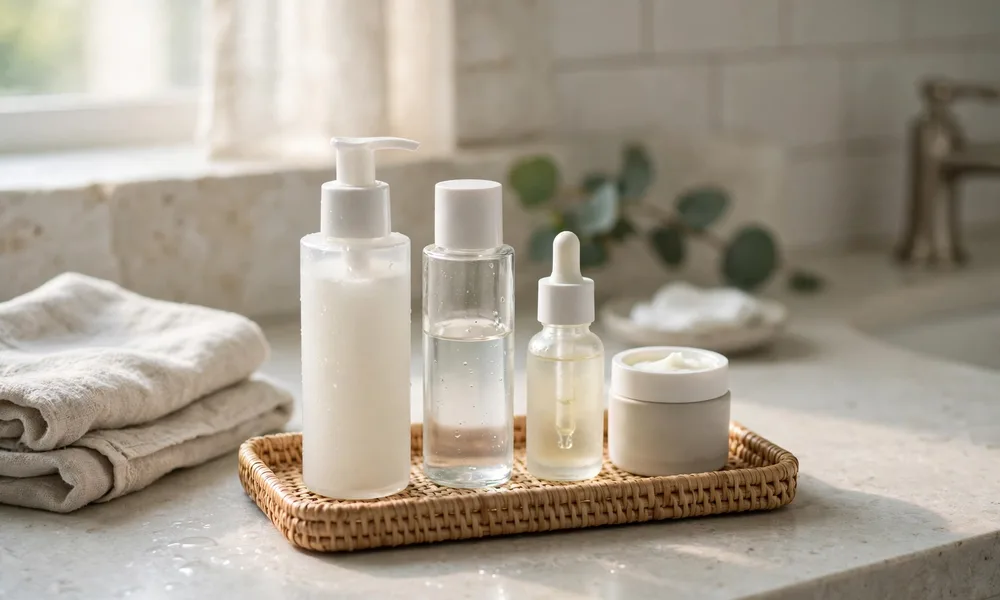
Layering works best when the shelf is small enough to see at a glance. When every product is visible, you reach for the ones you actually use, and the ones you do not use become obvious. A small tray on the counter can hold the whole morning routine: cleanser, toner, serum, moisturiser, sun protection.
Before buying something new, ask what it would replace. If it does the same job as a product you already own, it is a duplicate, not an addition. If it does a new job, ask whether that job needs doing at all. A gentle tool can also earn its place: a cool stone roller used lightly on moisturised skin can be a calm evening step, and a gentle guide to jade stone facial rolling explains how to begin, with clean skin, a little slip and feather-light pressure.
Keep the shelf clean and the bottles closed. Products kept in a cool, dry place away from direct sunlight last better, and a tidy shelf makes a short routine feel pleasant instead of cluttered.
Your Light Layering Checklist
- Start with clean, slightly damp skin and wash your hands first.
- Apply the thinnest product first and the richest last.
- Use a small amount at each step: drops of serum, a pea-sized amount of cream.
- Wait a minute between layers so each one can settle.
- Stop at three or four layers; more is rarely better.
- Notice how skin feels an hour later; adjust one thing at a time.
Frequently Asked Questions
How many layers should I use? Three or four layers suit most people: a watery first layer, a serum, a moisturiser, and sun protection in the morning. If two feels comfortable, two is enough.
Do I need to wait between layers? A short wait helps: about thirty seconds after a watery layer, about a minute after a serum. It lets each layer settle so the next one sits well instead of pilling.
Why does my skincare pill? Pilling usually means too much product, too little waiting, or rubbing a new layer over one that has not settled. Use less, wait longer, and press products on gently.
Can I layer skincare if my skin is sensitive? Yes, if you keep it simple. Fewer layers, smaller amounts and products you already know suit you are the safest way to begin. Introduce one new product at a time, and stop using anything that leaves your skin irritated.
Should layering be different in summer and winter? Yes. In warm weather, fewer and lighter layers often feel better; in cold weather, you might add a little more moisturiser or a slightly richer cream. Let the season and the day decide.
Do I need expensive products to layer well? No. Layering is about order, amount and patience, not price. Simple, affordable products layered thinly serve skin better than expensive ones used too thickly.
The Bottom Line
Layering light skincare without overdoing it comes down to three habits: thinnest first, a little at a time, and a minute of patience between layers. Three or four thin layers, applied calmly, leave skin feeling comfortable and cared for, without shine, stickiness or pilling. You do not need more products, steps or time — just less of each, done with a little more attention.
Begin tomorrow with what you already own: wash, press on a watery layer, add a few drops of serum, finish with moisturiser and sun protection, and notice how your skin feels by midday.
A Note for Slow Mornings
Keep it simple, keep it light, and keep it yours. The best routines are rarely the longest; they are the ones you can repeat on an ordinary morning and still feel good about by lunchtime. Stay curious. Stay clear. Layer lightly.



