
Tiredness often settles behind the eyes first. A long day of screens, a short night, or hours of reading can leave the eyes heavy and slow to focus. A chamomile water compress is one of the oldest, simplest answers: a cool, damp cloth laid gently over closed eyelids for a few quiet minutes.
Chamomile has been brewed as a tea and used in gentle skin care for centuries, and its soft, apple-like scent is part of the comfort. But a compress is not a cup of tea, and it is not a treatment — just a clean cloth, a little cooled chamomile water, and ten minutes of doing nothing else.
This article explains what a chamomile water compress is, how to make one safely, and when to seek professional advice instead — everything here is comfort care, not a cure, and the safety rules matter most.
Key Takeaways
- A chamomile water compress is a cool, damp cloth over closed eyelids only — never anything in the eye.
- Make it fresh each time: dried flowers steeped in boiled water, cooled, strained well.
- Patch-test on your wrist first; skip chamomile if you are allergic to the ragweed or daisy family.
- Keep the compress cool, not icy, and keep it brief: about five to ten minutes is enough.
- A compress is comfort care, not a treatment; seek advice for pain, redness, discharge, vision changes, or infection.
What a Chamomile Water Compress Is
A compress is a clean cloth soaked in a liquid and laid against the skin. Here the liquid is chamomile water — water steeped with dried flowers, then strained and cooled — and the cloth is a soft white cotton square folded to rest over closed eyelids. It holds cool moisture against the eyelids and encourages you to keep your eyes closed and still.
Chamomile water starts like chamomile tea, but it is used very differently: dried flowers are steeped in freshly boiled water, then strained twice so no tiny pieces remain. Nothing else goes into it — no essential oil, no honey, no salt, no soap — and it is used only on the outside of closed eyelids, never put into the eye.
Why Tired Eyes Notice a Cool Compress
Tired eyes are usually eyes asked to do too much without a break. Screens are the most common cause: we blink less often at a screen, sometimes half as often as usual, and the surface of the eye dries between blinks. Reading, driving, and long days in heated or air-conditioned rooms do the same: heavy eyes, tight lids, and focusing that takes more effort.
A cool compress answers that tiredness directly: coolness feels pleasant after hours of warmth and dryness, and the damp cloth keeps the lids from drying further. Lying down with a compress also makes resting easy, because the cloth gently blocks the light and the urge to look at something.
Making Your Chamomile Water
Use dried chamomile flowers from a trusted shop, smelling fresh and sweet rather than stale. You will need freshly boiled water, a clean cup, a fine sieve, and a clean cotton cloth. Wash your hands well.
Put one teaspoon of dried flowers in a clean cup, pour over about 150 millilitres of freshly boiled water, and cover with a small plate. Steep for five minutes, no longer: stronger is not better here. Strain it through a fine sieve, then again through a clean cotton cloth, so no tiny flower pieces remain — they would irritate the eyelid.

Most important of all, let the water cool completely: it should feel cool on the inside of your wrist, never warm. If you are short of time, stand the bowl in cold water and test again. Make it fresh every time, and throw away what is left — stored chamomile water grows bacteria quickly, and yesterday's batch has no place near your eyes.
The Compress, Step by Step
Wash your hands and dry them on a clean towel. Take a clean, soft, white cotton cloth — a small face cloth, or a square cut from an old sheet — and fold it into a pad about the size of your hand.
Soak the folded cloth in the cooled water, then squeeze it gently until damp but not dripping. Lie down, close your eyes, and lay the cloth lightly over both closed eyelids, resting under its own weight. Rest for five to ten minutes; when the cloth feels warm or dry, the compress is done — take it off and do not re-soak it. Afterwards, pat the skin around your eyes dry gently. If tired eyes are part of a tired face, a cold water splash for tired skin is a quick companion habit.
How Long and How Often
Five to ten minutes is right: long enough to refresh and rest the eyes, short enough that the cloth does not dry out. A gentle timer helps, so you do not keep checking the clock with one eye open.
Once a day, in the evening, is enough — after a long day of screens is the most natural time. More often does not make it work better: eyelid skin is the thinnest on the face and likes gentle, occasional care. If you want a compress every few hours, look at sleep, screen breaks, and fresh air instead.
When to Skip It and When to Seek Advice
A compress is for tired, healthy eyes, and there are times it should not be used at all. The most important is allergy: chamomile belongs to the daisy family, and anyone allergic to ragweed, daisies, chrysanthemums, or marigolds should avoid it entirely, even on the skin. If you have hay fever or a plant allergy, patch-test first: dab cooled water on the inside of your wrist, wait a full day, and use the compress only if the skin stays calm.
Skip the compress, too, if the skin around your eyes is broken, sore, or sunburnt, or if you have an eye infection, a stye, or an injury. Never use a compress to soothe an eye that hurts. Pain, lasting redness, discharge, swelling, worsening itching, or any change in vision are all reasons to stop and seek professional advice promptly — from a doctor, an optician, or an eye specialist. This is comfort care, not medical advice. Take contact lenses out first; use prescribed eye drops exactly as your doctor told you.
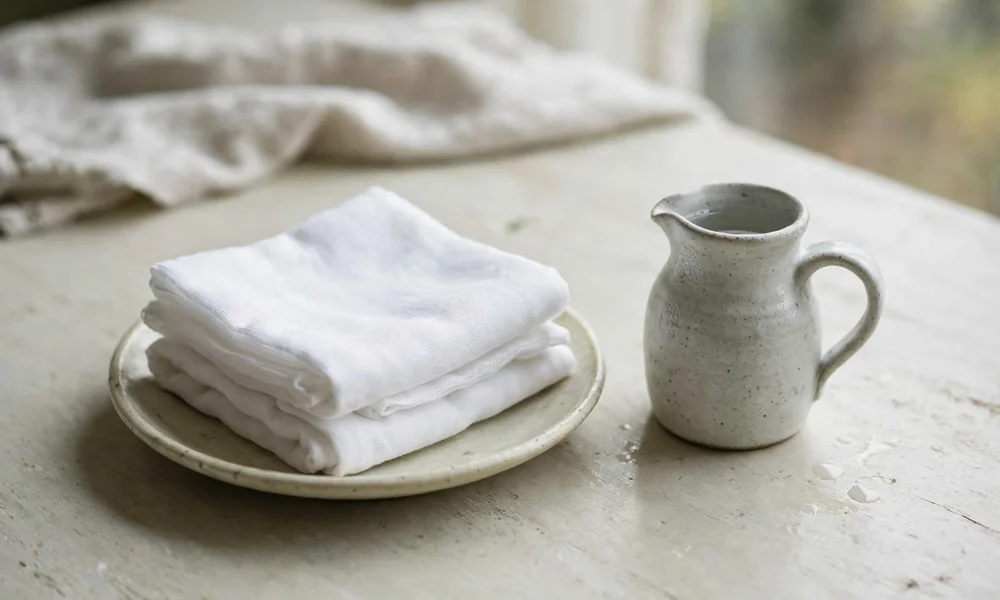
A Calmer Evening Around the Compress
A compress works best as part of a calmer evening, not a rushed fix between tasks. The last hour of the day is the right place for it: screens put away, the room a little cooler, a glass of water on the bedside table, ten minutes set aside for nothing. The compress becomes a small signal that the day is ending, worth more than the cloth alone.
A gentle evening face wash before the compress is a good habit, too. Wash with lukewarm water, kinder to skin than hot water — why lukewarm water works better for morning skin explains the case for gentle water temperatures at any time of day. After washing, pat the skin dry, lie down with the compress, and let the evening stay slow. A calm guide to washing your face well is a useful reminder that a short, gentle routine beats a crowded shelf of products every time.
What a Compress Will Not Do
Say it plainly: a chamomile water compress will not cure dry eyes, clear an infection, reduce dark circles permanently, remove puffiness for good, or improve your eyesight. It will not treat allergies, conjunctivitis, a stye, or any eye condition, and it will not replace glasses, eye drops, or an eye professional.
What it can do is simpler: it can make tired eyelids feel cool and rested for a while, give your eyes a reason to stay closed for ten minutes, and make the end of a long day feel softer. That is a real comfort, and it is enough — a small ritual worth keeping, as long as it is never mistaken for a treatment.
| Compress choice | Best for | Keep in mind |
|---|---|---|
| Chamomile water compress | Tired eyelids at the end of a long day | Patch-test first; closed eyelids only |
| Plain cool water cloth | Sensitive skin, or if chamomile is not suitable | Just as restful; no flower allergy risk |

Your Chamomile Compress Checklist
- Patch-test cooled water on your wrist first; skip chamomile if you are allergic to the ragweed or daisy family.
- Make the water fresh each time: steep briefly, strain twice, cool completely.
- Wash your hands; use a clean, soft, white cotton cloth folded into a small pad.
- Soak, squeeze until damp, and rest the cloth over closed eyelids only — never anything in the eye.
- Rest five to ten minutes, then take the cloth off and pat the skin dry gently.
- Seek advice for pain, redness, discharge, swelling, vision changes, or infection.

Frequently Asked Questions
Can I put chamomile water directly in my eyes? No, never. A compress is a damp cloth on closed eyelids only; nothing should ever be put into the eye itself.
How do I know if I am allergic to chamomile? Chamomile is in the daisy family, so avoid it if you are allergic to ragweed, daisies, chrysanthemums, or marigolds. Patch-test cooled water on your wrist and wait a full day; if the skin reddens or itches, do not use it.
How long should I leave the compress on? Five to ten minutes is enough; when the cloth feels warm or dry, the compress is done.
Can I make a big batch of chamomile water and keep it? No. Make it fresh each time and throw away what is left. Stored chamomile water grows bacteria quickly.
Can I use a chamomile tea bag instead of dried flowers? A plain, unflavoured chamomile tea bag works the same way: steep it briefly in freshly boiled water, remove it, strain the liquid, and let it cool completely. Check the bag contains only chamomile.
Will a compress help my dark circles? A cool compress may make the eye area look a little fresher for a short while. It will not remove dark circles permanently; rest, sleep, and a professional opinion matter far more.
The Bottom Line
A chamomile water compress is a small, gentle ritual for tired eyes: fresh water, cooled completely, on a clean cotton cloth over closed eyelids for five to ten minutes. It is comfort care, not a treatment, and its safety rules — patch-test first, avoid it with a daisy-family allergy, never put anything in the eye, and seek advice for pain, redness, discharge, or vision changes — are the heart of it.
Try it tonight, screens put away, ten minutes of quiet. Let your eyes rest, and let the evening slow down with them.
A Note for Tired Eyes
Keep it cool, keep it clean, keep it brief. A little calm at the end of the day is often all tired eyes were asking for.



