
Rough elbows are easy to ignore until you notice them. You rest your arms on a desk, you fold them while you read, or you catch sight of them in a mirror, and there they are: dry, greyish patches of skin that feel rough to the touch. They are not painful, and they are not a crisis, but they can make you feel a little less comfortable in your own skin.
The good news is that rough elbows answer to something very simple. Warm water, gentle washing, a soft towel and a plain moisturiser applied while the skin is still damp will do most of the work. No scrubbing, no strong products, no complicated routine.
This guide explains what rough elbows are, why elbows get rough, how water should be used, and how to build a simple softening ritual for morning and evening. It is gentle general information only, never medical advice, and it promises no cure.
Key Takeaways
- Rough elbows are dry, thickened patches of skin that feel rough to the touch.
- Elbows get rough because the skin there bends, rests and dries out.
- Lukewarm water is the gentlest wash, close to body temperature.
- Wash briefly, pat dry softly, and moisturise while the skin is still damp.
- Never scrub rough elbows, and see a doctor for real skin problems.
What Rough Elbows Are
Rough elbows are patches of skin on the elbows that feel dry, thick and slightly grey or pale. The skin may look a little darker or lighter than the skin around it, and it may feel like fine sandpaper when you run a finger over it. The patches are usually small, and they often appear on both elbows at once.
Rough elbows are common, and they are not a sign of dirty skin. The skin on the elbows is thicker than the skin on most of the body, and it holds less of its own natural oil. When it dries out, it turns rough. That is all it is: dry skin in a place that dries easily.
Why Elbows Get Rough
Elbows get rough because they work hard and get little care. They bend all day, they rest on desks and tables, and they rub against sleeves and chairs. Each bend and rub takes a little moisture away, and the skin grows thicker to protect itself. That thick skin then feels rough to the touch.
Cold air, dry indoor heating, long hot showers and harsh soaps all make it worse. Hot water strips the skin bare, and a strong soap takes away the little oil the elbows have. Where water and dry skin a gentle routine explains tight, dry facial skin, this guide looks at a different place: the elbows, where thick skin and daily rubbing do the damage.
Why Water Comes First
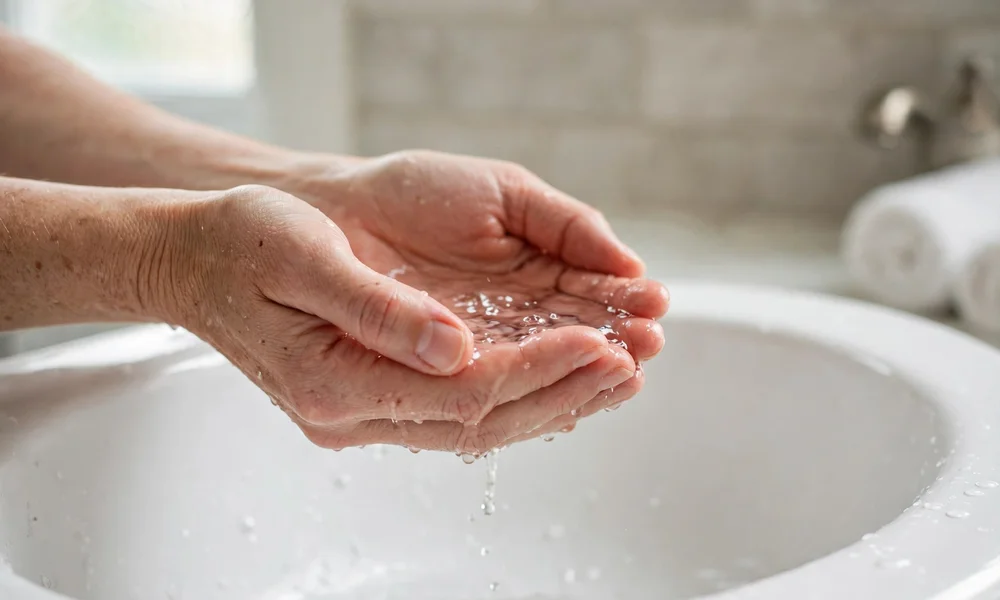
Water comes first because it is the gentlest thing that touches the elbows each day. It softens the dry patches, rinses away dust and sweat, and leaves the skin slightly damp, which is exactly what a moisturiser needs. Dry skin takes in very little cream, but slightly damp skin holds it well.
Water also slows the ritual down. A minute of warm water over the elbows is a small pause, and a pause is what rough skin needs. A hurried scrub will only make the patches rougher, while a slow, gentle wash lets the skin soften on its own.
Lukewarm Water, Clean Hands
Lukewarm water feels neither hot nor cold on the inside of your wrist, close to body temperature and comfortable. It softens rough skin without stripping it bare. Hot water can leave the elbows tight and red, and cold water can feel sharp on dry patches. Lukewarm water is the middle that suits rough elbows best.
Clean hands matter just as much as clean water. Wash your hands with soap and water before they touch your elbows, and keep the wash itself short. A short wash with lukewarm water is enough, and it is kinder than a long soak in hot water.
A Simple Morning Ritual
A simple morning ritual takes only a few minutes. Start by washing your hands, then splash lukewarm water over your elbows, using your fingertips in slow, light circles. If you use a cleanser, choose a mild one, use a small amount, and rinse it away fully. Pat the skin dry with a soft towel, pressing gently instead of rubbing, and leave the skin slightly damp.
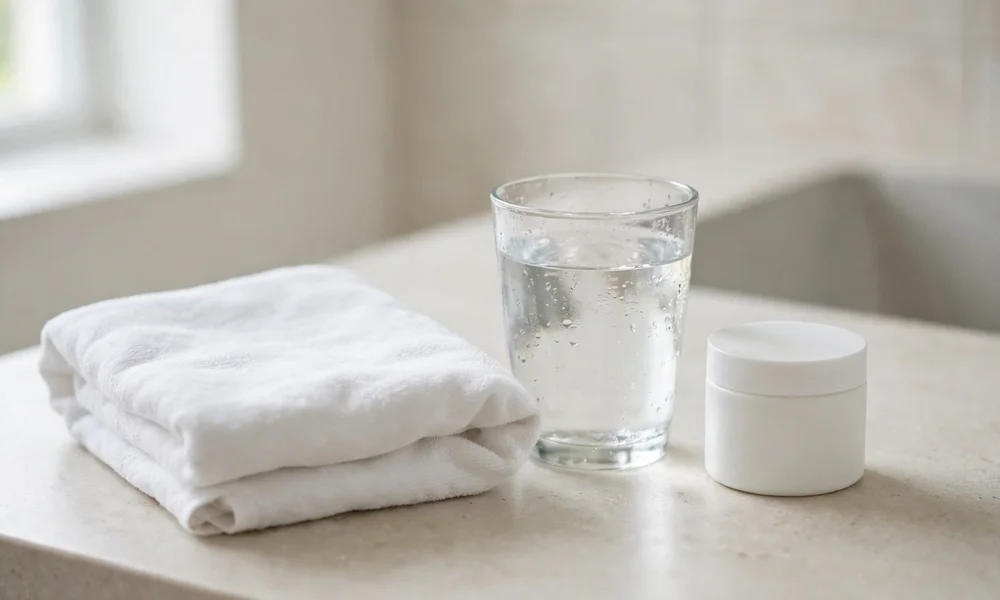
While the elbows are still slightly damp, apply a plain moisturiser, using a small amount and a gentle hand. Then drink a glass of fresh water and let the morning begin. The whole ritual is short on purpose: a short ritual is easier to keep, and rough elbows do better with less, not more.
A Simple Evening Ritual
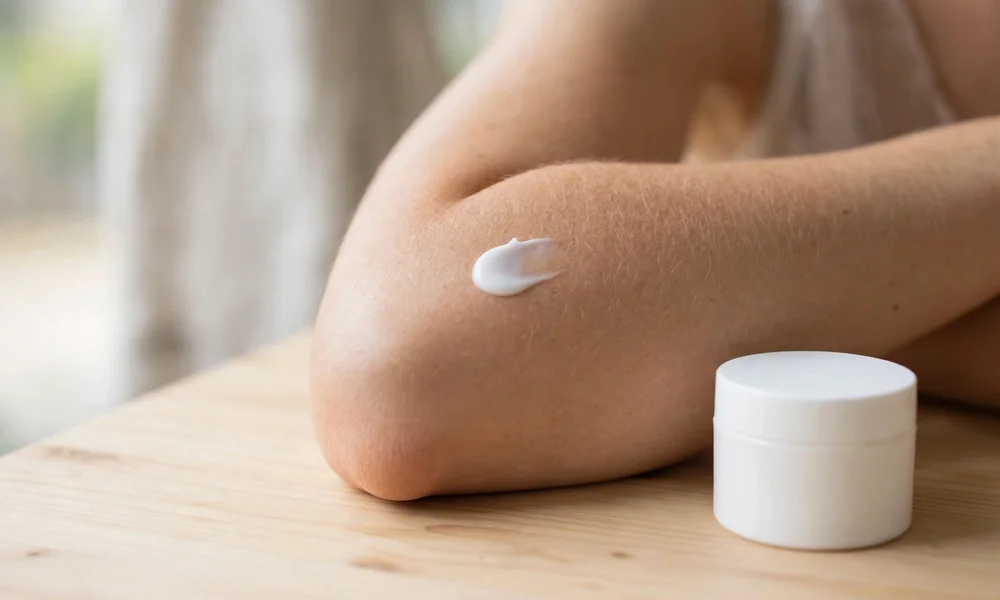
The evening ritual is the same as the morning, with one extra step: the day itself. Wash your hands, splash lukewarm water over your elbows, and rinse away the dust and sweat of the day. A mild cleanser can help here, used in a small amount and rinsed away fully. Pat dry softly, apply a plain moisturiser while the skin is still slightly damp, and then leave the elbows alone.
No extra products, no scrubbing, no picking at the dry patches. The evening ritual is a quiet end to the day, and the elbows will soften slowly, over weeks, if the ritual is kept. Where water and dull skin a simple glow routine builds a glow routine for the face, this guide builds a softening ritual for the elbows, and the two should never be mixed up.
Moisturiser While the Skin Is Damp
Moisturiser works best on slightly damp skin, and this is the most important step of the whole ritual. After washing, pat the elbows dry softly, but leave them a little damp, not dripping and not fully dry. Then apply a plain, fragrance-free moisturiser, using a small amount and a gentle hand.
The moisturiser holds the water in the skin, and that is what softens the rough patches over time. A thick cream suits elbows well, because the skin there is thick too. Use a small amount twice a day, morning and evening, and be patient. Softening takes weeks, not days.
What Not to Do
The hardest part of the ritual is what not to do. Never scrub rough elbows. A rough brush, a harsh sponge or a strong scrub will strip the skin bare, and the elbows will grow even thicker to protect themselves. Scrubbing makes rough elbows rougher, not smoother.
Do not pick at the dry patches, and do not try a new strong cream every week. Keep the shelf simple: lukewarm water, a mild cleanser, a plain moisturiser, and nothing else until the elbows feel softer. If a product stings, turns the skin red, or makes the patches worse, stop using it at once.
Rough Elbows at a Glance
| Gentle wash | Moisturise damp | Never scrub |
|---|---|---|
| Lukewarm water first | Plain cream only | No harsh brushes |
| Clean hands always | Small amount twice | No picking patches |
| Pat dry softly | Damp skin holds | One mild cleanser |
| Short wash only | Softening takes weeks | Stop if it stings |
Patch Testing and When to See a Doctor
Patch testing is a small habit that protects the skin. Before a new moisturiser touches your elbows, put a tiny amount on the inside of your wrist, and wait a full day. If the skin stays calm, with no redness, itching or sting, the product is probably safe to use. If the skin turns red, itches or stings, do not use it.
Some skin problems need a doctor or dermatologist, not a home ritual. See one if the elbows are cracked, bleeding, very painful, spreading, or not changing after several weeks of gentle care. This guide is gentle general information only, never medical advice, and it will not cure any skin condition. Where water and older hands a gentle care ritual cares for thin, dry hands, this guide cares for thick, rough elbows, and both agree on one thing: ask a professional when the skin needs more.
Your Softening Ritual Checklist
- Wash your hands before they touch your elbows, every single time.
- Wash with lukewarm water, briefly, morning and evening.
- Pat the elbows dry softly with a clean, soft towel, never rub.
- Apply a plain moisturiser while the elbows are still slightly damp.
- Never scrub, pick or press the rough patches.
- See a doctor or dermatologist if elbows crack, bleed or spread.

Frequently Asked Questions
What are rough elbows?
Rough elbows are patches of skin on the elbows that feel dry, thick and slightly grey or pale. The skin may feel like fine sandpaper, and the patches often appear on both elbows at once.
Will water cure my rough elbows?
No. Plain water will not cure rough elbows, and no home ritual can promise a cure. Water is the gentlest way to wash dry skin, and a gentle ritual gives the elbows room to soften slowly over weeks.
Should I scrub my rough elbows?
No. Scrubbing strips the skin bare, and the elbows will grow even thicker to protect themselves. A gentle wash with lukewarm water and a plain moisturiser is kinder and works better.
Is hot water better for rough elbows?
No. Hot water can leave the skin tight and red, and it can strip away the little oil the elbows have. Lukewarm water, close to body temperature, is the gentlest wash for rough elbows.
How do I patch test a new moisturiser?
Put a tiny amount on the inside of your wrist, and wait a full day. If the skin stays calm, with no redness, itching or sting, the product is probably safe to use on the elbows.
When should I see a dermatologist?
See a dermatologist if the elbows are cracked, bleeding, very painful, spreading quickly, or not changing after several weeks of gentle care. A professional can look at your skin and suggest a treatment that fits.
The Bottom Line
Water and rough elbows need a simple softening ritual: lukewarm water, gentle washing, moisturiser while the skin is still damp, and no scrubbing. Keep it simple, keep it gentle, and ask a doctor when the skin needs more.
A Note for Softer Elbows
Keep it lukewarm, keep it short, keep it gentle. Your elbows are doing their best, and so are you.



