Mornings ask a lot of your skin. You wake, you wash, and the water from the tap is often whatever temperature it happens to be: icy in winter, surprisingly warm in summer, and rarely the temperature you would choose.
Lukewarm water is not a new discovery or a complicated technique. It is simply water close to the temperature of your own skin, neither cold enough to make you flinch nor hot enough to leave your face feeling tight. It is the middle of the range, and a comfortable place for a morning wash.
This article explains what lukewarm means in practice, why hot and cold water are less kind than they seem, and how to build a short morning wash around lukewarm water that you can keep on ordinary days.
Key Takeaways
- Lukewarm water for morning skin means water close to your own skin temperature, neither hot nor cold.
- Very cold water can leave skin feeling tight, while very hot water can leave it feeling dry and stripped.
- A lukewarm wash works with your cleanser, rinsing cleanly without a shock.
- The whole morning wash takes about five minutes, and keeping it the same each day matters more than doing it perfectly.
- Water temperature is a small, free choice, and small choices repeated daily shape how your skin feels.
What Lukewarm Water Actually Means
Lukewarm is a word everyone knows and nobody measures. It means water that feels neither warm nor cool when you hold your wrist under the tap. If you have to decide whether it is warm or cold, it is probably about right.
You do not need a thermometer. Run the tap and adjust it until the water feels neutral on the inside of your wrist, where the skin is thin and sensitive. In winter you will turn the hot tap further than in summer; the seasons change the tap, not the target.
Think of lukewarm water as the temperature that disappears. Hot water announces itself, and cold water announces itself, but lukewarm water simply lets you get on with washing your face. A morning wash should be a quiet, comfortable start, not a small ordeal before breakfast.
Hot and Cold: Why the Extremes Disappoint
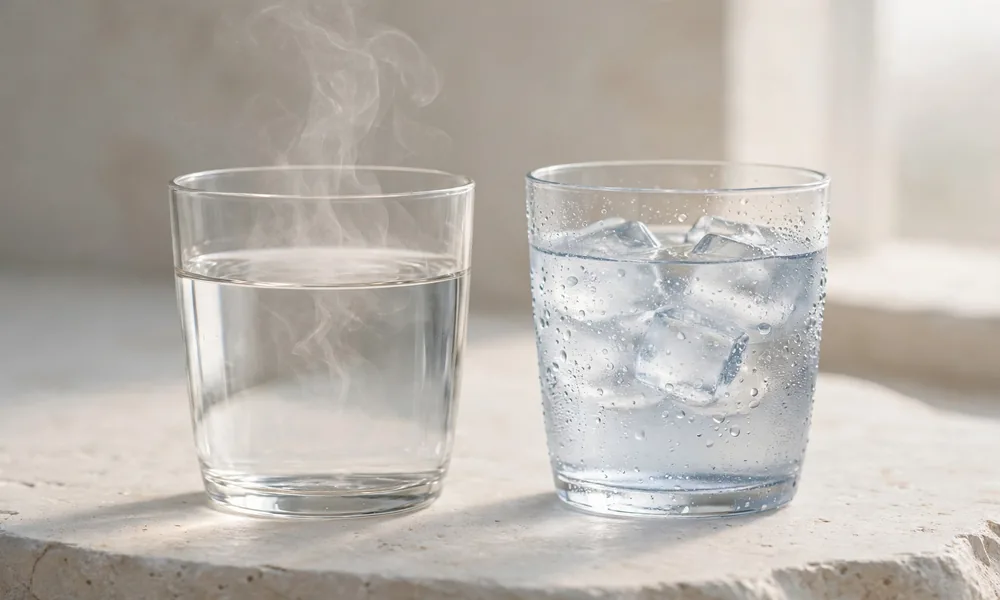
Cold water has a loyal following. A splash of cold water feels instantly awake, and on a hot morning it can feel like the only sensible choice. The trouble is that the wake-up feeling fades quickly, and for many people it leaves the skin feeling tight. Cold water can also make it harder for a gentle cleanser to rinse away cleanly, leaving a faint filmy feeling.
Hot water has the opposite appeal. A long, hot wash feels soothing in the moment, especially on a cold morning when the bathroom is chilly. But very hot water can leave skin feeling dry and stripped once the warmth fades, and the effect builds up over weeks of hot morning washes. Facial skin is thinner than the skin on your arms, so it notices hot water sooner.
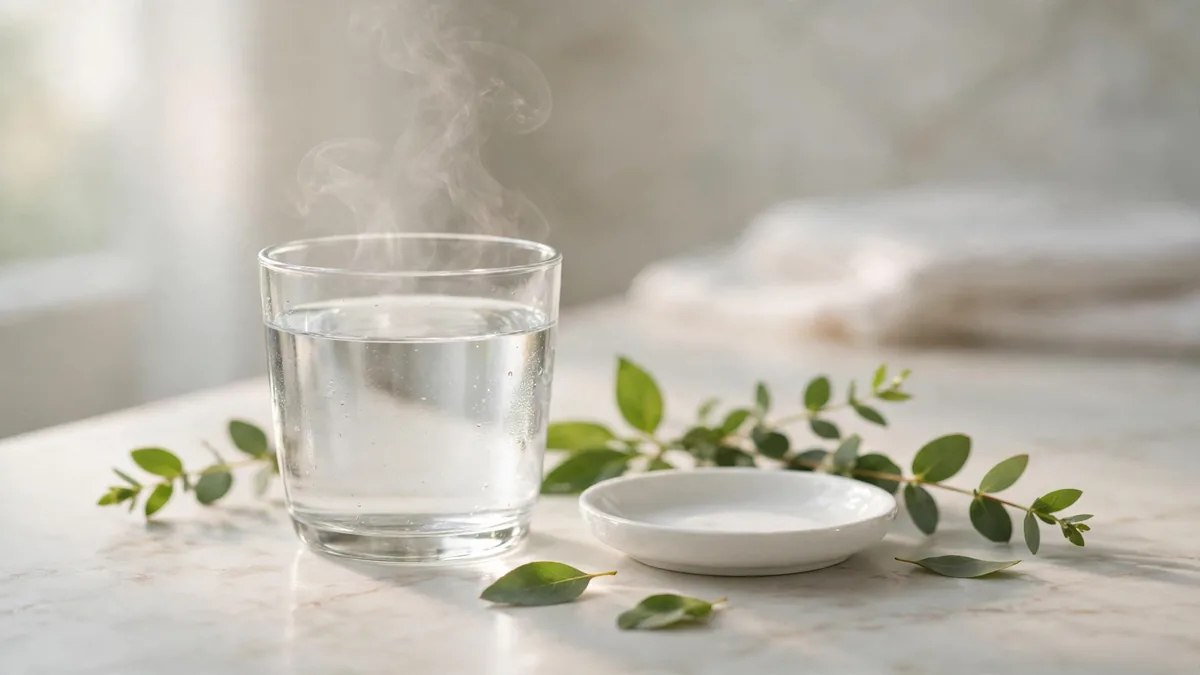
Neither extreme will ruin your skin in a single morning. The case for lukewarm water is gentler: it simply avoids both problems at once. It rinses cleanly, it does not shock, and it leaves your skin feeling like itself afterwards. Water itself has a visual language worth noticing: the faint steam above a warm glass, the stillness of a cool one.

The Morning Wash, Step by Step
A good morning wash is short, and keeping it short is what makes it repeatable. Begin by washing your hands with soap and lukewarm water. Then run the tap until the water feels neutral on your wrist, and splash your face two or three times.
If you use a cleanser, choose a gentle one and use a small amount, about the size of a pea. Smooth it over damp skin with light, circular movements, taking care around the eyes, then rinse with lukewarm water until the skin feels clean and free of residue. Slow, light movements are kinder than fast, firm ones.
| Stage | Time | What to do |
|---|---|---|
| Hands | 30 seconds | Wash hands with soap and lukewarm water |
| Splash | 30 seconds | Splash the face with lukewarm water |
| Cleanse | 1 minute | Smooth a pea-sized amount of gentle cleanser over damp skin |
| Rinse | 1 minute | Rinse with lukewarm water until no residue remains |
| Pat dry | 30 seconds | Pat gently with a clean, soft towel, never rub |
| Finish | 1 minute | Apply moisturiser while skin is still slightly damp |
Pat your face dry with a clean, soft towel, pressing lightly instead of rubbing. Rubbing is rough on skin that has just been washed. Finish by applying moisturiser while the skin is still slightly damp.
Setting Up a Calm Morning Corner
A morning wash goes better when everything you need is already in place. You do not need a new bathroom or a long shelf of products. A small tray or a clear corner of the counter is enough: your cleanser, a clean towel, and a glass of fresh drinking water for yourself.
Light matters more than most people expect. A bathroom lit by a single harsh overhead bulb makes every morning feel rushed and clinical. If you can, use the softer light of a window, or a small lamp, and let the morning come in gently. A glass of water catching the early light is a small, pleasant thing to see first thing.
Keep the towel fresh. A soft towel, washed regularly and hung where air can reach it, is one of the simplest upgrades a morning routine can have. Replace it every couple of days.

Lukewarm Water and the Rest of Your Routine
Water temperature is only one part of the morning, and it works best when the rest of the routine is equally gentle. A simple routine, built on cleansing, moisturising, and sun protection, is a practical foundation, and a skin routine with room to breathe is easier to keep than a long shelf of products. Lukewarm water fits that routine: just a turn of the tap.
Sun protection deserves its place in the same morning. A broad-spectrum sunscreen, applied after moisturiser, is the most useful single step in a morning routine. If a formula feels uncomfortable, try a different one rather than skipping sun protection.
Drinking water in the morning is a separate habit from washing with it. A glass of fresh water beside your breakfast, drunk slowly, is a calm way to begin the day, and a gentle approach to staying hydrated through the morning is one of the easiest small habits to keep.
A Gentler Start for Different Skin Days
Not every morning is the same, and skin has its own weather. On a day when your skin feels dry or tight, lukewarm water is at its most useful: it cleans without adding to the dryness. Use a little less cleanser, rinse gently, and let the moisturiser do the heavier work.
On a warm, humid morning, lukewarm water still works; if you want a cooler finish, a final splash of slightly cooler water is a pleasant compromise. On a cold winter morning, resist the urge to turn the tap hot: your skin will feel the difference by midday.
If your skin is feeling sensitive or irritated, keep the wash shorter still. Lukewarm water alone, with no cleanser, is enough for some mornings. Notice how your skin feels an hour after washing, not just in the moment. The goal is skin that feels comfortable through the morning.
What Lukewarm Water Will Not Do
Say plainly what lukewarm water will not do. It will not shrink your pores, erase fine lines, or give you glowing skin on its own. It will not cure acne, redness, or any skin condition, and it will not replace a cleanser, a moisturiser, or sun protection.
What it can do is simpler. It can make the morning wash comfortable, help your cleanser rinse cleanly, and leave your skin feeling like itself rather than tight or stripped. That modest promise holds up every morning.
If a skin concern is persistent, changing, or worrying you, please speak to a qualified health professional or dermatologist. A gentle wash can support healthy skin, but it cannot replace care.
Your Morning Checklist
- Run the tap until the water feels neutral on the inside of your wrist.
- Wash your hands first, then splash your face with lukewarm water.
- Use a pea-sized amount of gentle cleanser, smoothed lightly over damp skin.
- Rinse with lukewarm water until no residue remains.
- Pat dry gently with a clean, soft towel, never rub.
- Apply moisturiser while skin is still slightly damp, then sun protection.
Frequently Asked Questions
How do I know the water is lukewarm and not too warm? Hold your wrist under the tap. If the water feels neither warm nor cool, it is lukewarm. If it feels clearly warm, turn the cold tap up a little.
Is cold water bad for my skin? No, and a cool splash can feel refreshing. Lukewarm water is simply more comfortable as the main wash, because it rinses cleanser cleanly without leaving skin feeling tight.
Should I wash my face with hot water in winter? It is tempting, but very hot water can leave skin feeling dry and stripped. Lukewarm water is kinder even on cold mornings, and a warm towel makes the wash comfortable without hot water.
Do I still need a cleanser if I use lukewarm water? Most people benefit from a gentle cleanser in the morning, used in a small amount. On a calm day, lukewarm water alone can be enough, and you can return to cleanser the next morning.
How long should the morning wash take? About five minutes is plenty. A short, gentle wash done every morning is worth more than a long one done occasionally, and keeping it short is what makes it repeatable.
Can lukewarm water help with dry skin? It can help by not adding to dryness the way very hot water can, and by leaving skin ready for moisturiser. It will not cure dry skin on its own, so keep moisturising and ask a professional if dryness persists.
The Bottom Line
Lukewarm water works better for morning skin because it does the least harm and the most good at once: it rinses cleanly, it does not shock or strip, and it leaves your skin feeling comfortable. It costs nothing, needs no new product, and takes no extra time. It is simply a turn of the tap, made with a little attention.

Begin tomorrow morning with whatever you already have: a tap, a towel, and a few unhurried minutes. Turn the water until it feels like nothing at all, wash gently, pat dry, and step into the day.
A Note for Slow Mornings
Keep it simple, keep it gentle, and keep it yours. The best mornings are rarely the most elaborate. They are the ones where a small, comfortable habit repeats itself, day after day, until it becomes part of how you live. Stay curious. Stay clear. Wash well.



