
Some mornings feel like sunshine poured straight into the room, warm on the floorboards and bright on the white walls. The curtains glow, the kettle sings, and even a plain glass of water looks golden where the light passes through it.
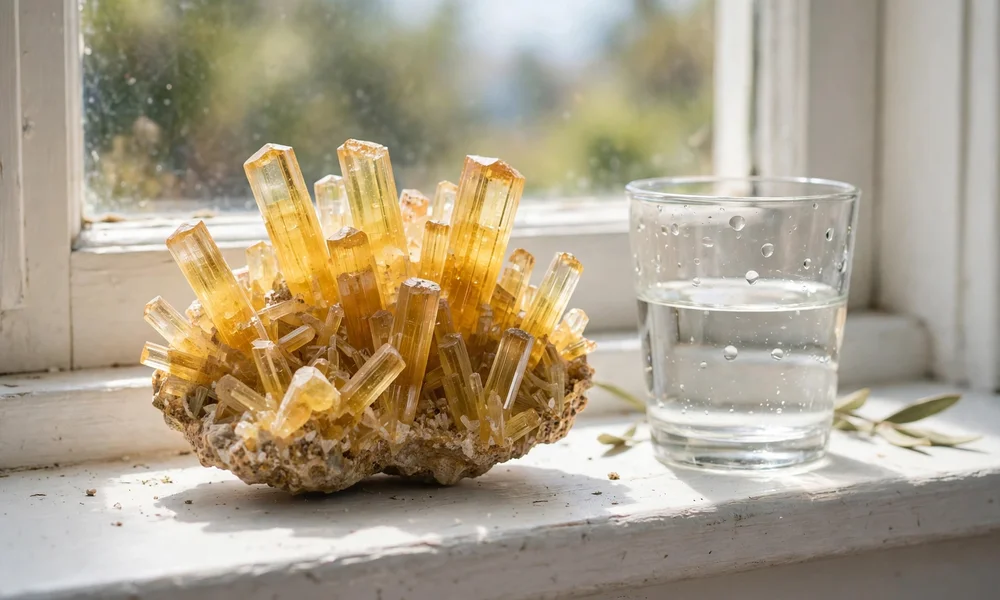
Canary tourmaline belongs to mornings like that. It is the warm yellow member of the tourmaline family, the colour of a canary's wing in full sun, glowing without ever shouting. Set on a tray beside cold water, it looks like a small piece of summer that someone left on the table.
Here is canary tourmaline in plain terms: the yellow stone itself, what makes a piece worth buying, and the safe way to set it out next to a glass of water. Enjoy it with your eyes; it treats nothing and cures nothing.
Key Takeaways
- Canary tourmaline is the warm yellow tourmaline, sunny and golden.
- Its warm yellow colour suits bright days, strong sun and open windows.
- Canary tourmaline differs from pink, black and green tourmaline in colour and mood.
- Display it only: the stone stays beside the glass, out of every drink.
- One small yellow piece on a dry tray is enough for a bright day.
What Canary Tourmaline Is
Canary tourmaline is tourmaline in a warm, sunny yellow. Tourmaline is a mineral family that grows in many colours, and each shade comes from tiny traces of other elements held inside the crystal while it forms. In canary tourmaline, those traces paint the stone a clear, cheerful yellow, like lemon peel held up to the light.
A good piece forms as a long, slim crystal, usually striped with faint lengthwise lines and topped by a small bright face. Lift it toward a window and the light comes through tinted gold, spilling a warm patch across the table. It feels cool and glassy to hold, and it is hard enough to keep its polish when handled with care.
Why Warm Yellow Suits Bright Days
Yellow is the shade of a day that wakes up early, with the sun already high at breakfast and every room feeling alert. It suits noise and movement, and it leaves the brightness to the daylight itself. A warm yellow stone carries that wide-awake feeling better than any pale one.
Choosing a Canary Tourmaline Piece
Let your eyes do the choosing, outdoors or by a window when possible. Pick a piece whose yellow runs warm and steady from end to end, free of muddy brown blotches and faded pale edges. The long faces should look straight and unmarked, and the top face should shine.
Stay small: a cluster the size of a matchbox fills a tray nicely, and one lone crystal about as long as your thumb does the job too. An oversized piece can weigh a small table down, while a modest one lets the yellow glow without elbowing the glass aside.

A Bright Day with Canary Tourmaline
Start the morning by putting the canary tourmaline on its tray in a patch of sun, the cold glass standing nearby but well clear of the stone. Sip the water unhurriedly, glance at the yellow crystals as they catch the light, and breathe slowly once before the day fills up.
Canary Tourmaline Beside Water
The glass and the canary tourmaline can share one tray, and the tray is the closest they ever come. Keep the glass at one end and the stone at the other: a stone meant for looking at has no place in anything you drink. Wipe a stray splash off at once, and never leave the stone soaking.
Canary Tourmaline at a Glance
| Warm yellow crystals | Bright days | Display only |
|---|---|---|
| Golden yellow, clear | Tray, desk, windowsill | Rinse hands afterwards |
| Cool touch, sturdy feel | Sunshine, fresh air | Keep out of water |
| Slender prisms, bright tops | Dawn, noon, dusk | Wipe with dry cloth |
Canary Tourmaline and Pink Tourmaline
Pink tourmaline is the gentlest shade in the family, and placed next to canary tourmaline the difference jumps out at once. Pink tourmaline for tender days is about a rose-pink stone with a mild, blushing tone, made for unhurried, tender mornings.
Canary Tourmaline and Black Tourmaline
Black tourmaline is canary tourmaline's opposite in the family, and the two look almost unrelated when placed together. Black tourmaline for grounded days is about a stone of solid black, cool and weighty, its sides scored with long straight grooves.
Where black tourmaline is dark, canary tourmaline is light; where one is solid, the other is see-through; where one is calm, the other is warm. The black stone steadies a hushed room like a paperweight, while the yellow one cheers a sunny room like a lamp. Both are tourmaline, yet each wants a different kind of day, and learning that is half the fun of the family.
Canary Tourmaline and Green Tourmaline
Green tourmaline is the liveliest green in the family, and it sets off warm yellow canary tourmaline beautifully. Green tourmaline for new routines is about a clear green stone the shade of new leaves after rain, restful rather than showy and even rather than dazzling.
There is no green hiding in canary tourmaline, not even a faint trace. Green tourmaline shines with a cool leafy light, while canary tourmaline shines warm, the way late-morning sun falls on a yellow wall. One feels like spring just arriving; the other feels like summer already settled in, and each deserves its shelf.
Canary Tourmaline and the Other Tourmalines
Past those three close kin, the tourmaline clan still shows further hues. Watermelon tourmaline runs pink inside with green along the rim, paraiba tourmaline shines a vivid blue-green, and chrome tourmaline comes in a rich woodland green. Achroite, the clear white tourmaline without tint, keeps no hue of its own, and the tourmaline guide looks at the whole clan for busy days.
Canary tourmaline stands apart by being warm yellow through and through: no other tourmaline on the shelf glows quite like a small sun. Two more yellow-hearted cousins are being written about in this same batch, and they deserve a mention so the family stays clear. Orange Tourmaline is the warmer, deeper orange cousin, richer and darker than canary yellow, while Bi-Colour Tourmaline is the stone that carries two colours in one crystal, often yellow at one end and another shade at the other. Canary tourmaline is the single warm yellow, plain and sunny, with no second colour and no orange depth.

Caring for Canary Tourmaline
Canary tourmaline needs very little looking after. Give it a dry corner away from heat, such as a lined box with a lid, or a shelf that stays out of direct sun once the day is over. Never let it knock about loose in a pocket beside keys or coins, or the crystal edges may chip.
Brush the dust off with a soft dry brush, and skip soap, sprays and polishing creams entirely. If the tray gets wet, lift the stone off, dry the tray completely, and only then set the stone back down. That small habit keeps the yellow glowing for years.
Stones That Must Never Touch Water
A few minerals should stay well away from any glass you plan to drink from, so learn their names now. First is malachite: never put it in a jug or a cup, because it can shed substances that must not end up in a drink. Hematite, too, stays out of drinking water altogether, not even for a quick dip.
Apatite needs the same care, as does lepidolite, whose flakes carry lithium within them. Pyrite, angelite and amber also stay dry, so keep every one of them out of glasses, jugs and soaking bowls. Canary tourmaline is gentler than those, but the rule does not change for it: the stone sits beside the glass, and the water never meets it.
Your Bright Days Checklist
- Put the yellow stone on a dry tray with a tall glass of iced water.
- Drink the water in slow sips as the morning grows brighter.
- Wash your hands with soap after you set the stone back down.
- Buy from a seller who can say plainly it is tourmaline.
- Keep the stone somewhere dry, out of reach of children and away from food.
- If a health worry troubles you, a doctor is the right person to ask, not a stone.

Frequently Asked Questions
What is canary tourmaline?
Canary tourmaline is tourmaline in its warm yellow form, one shade among many in a mineral family that grows in a wide range of colours. Minute traces inside the crystal give it that sunny yellow, and it forms as slim, glass-like prisms that light up in daylight.
Is canary tourmaline the same as yellow quartz?
No, though they can look alike at first glance. Canary tourmaline is a tourmaline, its prisms lined with faint lengthwise grooves, while yellow quartz is another mineral with its own build and feel and its own way of catching light.
Is canary tourmaline safe to touch?
Picking it up for a look is fine, provided you wash your hands with soap once you set it down, and keep it away from little children and from anything you eat. It is meant for display, not for wearing pressed against the skin all day.
Why must canary tourmaline never go in water?
A stone meant for display sits next to the glass, never in it. Keep canary tourmaline out of every drink, out of every soak, and never use it for stirring water, dabbing any splash dry at once.
Will canary tourmaline heal anything?
No. It is a lovely warm yellow stone to set out and admire, and if a quiet minute beside it leaves you feeling calmer, that calm comes from the pause itself, not from anything within the stone.
Where should I keep canary tourmaline at home?
Pick a spot where the morning sun lands and the air stays dry, such as a wooden tray, a sunlit shelf or a bedside table, with a glass of water close by but always apart, and far out of the reach of small children.
The Bottom Line
Canary tourmaline lends bright days a warm yellow glow: sunny crystals shining like a kept piece of summer, resting on a dry tray beside a glass of water, admired and never sipped from.
A Note for Bright Days
Keep the light golden and the stone dry. A single small cluster, a glass of water, and a few unhurried minutes are plenty.


