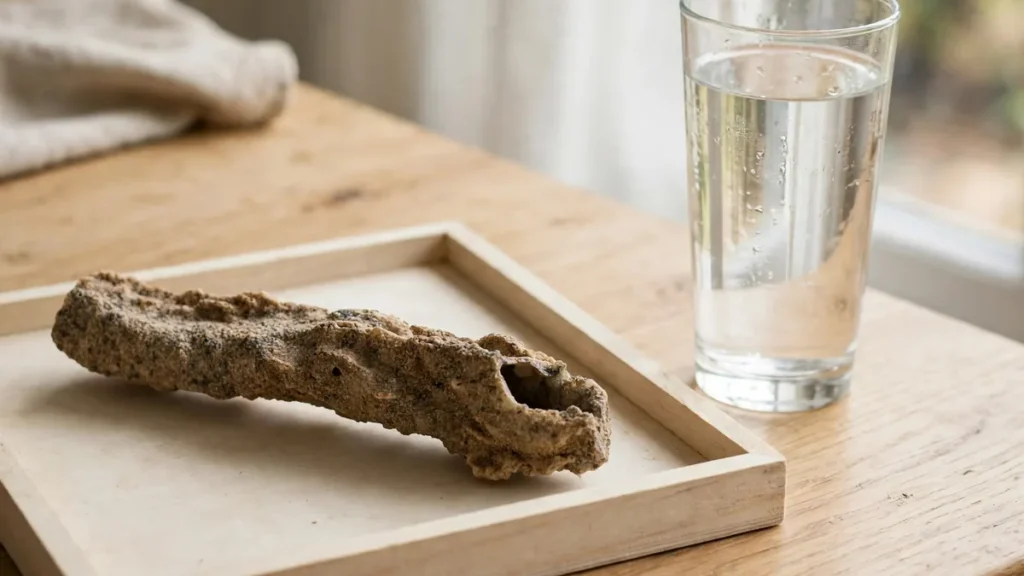
The morning starts with sunlight spilling across the kitchen table and a glass of water catching the light beside the window. The day ahead looks open and full of promise.
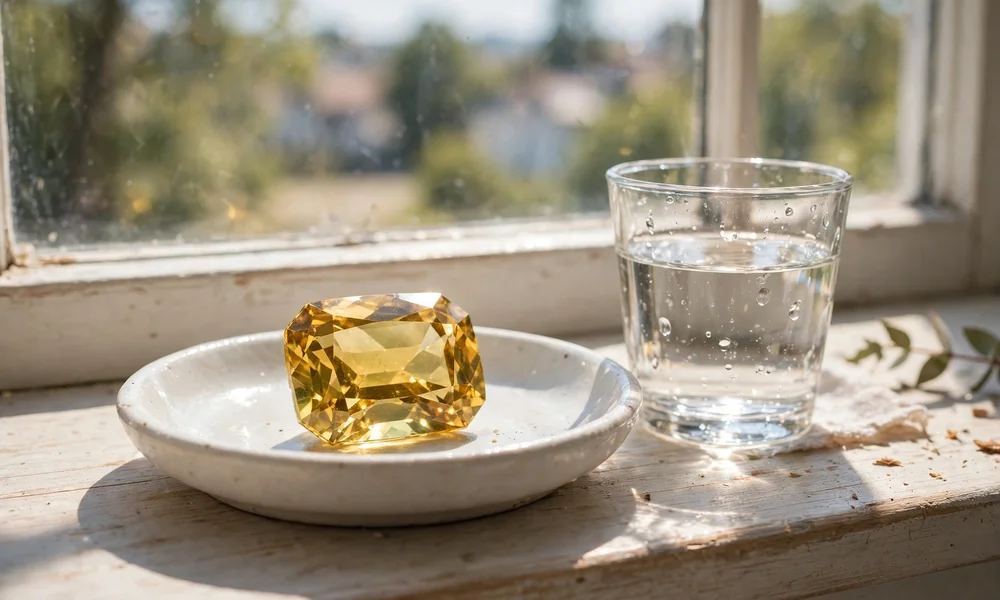
Yellow topaz fits that feeling. It is a warm yellow stone, clear and sparkling, the colour of lemon peel held up to the sun, and it seems made for mornings when the sky is blue and the light is strong.
This guide takes a close look at yellow topaz: what the stone is, how it differs from the other topazes already on this site, how to pick a piece worth keeping, and how to enjoy it through a bright day. The stone is for looking at and handling only, and it will not heal anything.
Key Takeaways
- Yellow topaz is a clear warm yellow topaz, bright and sparkling.
- Its sunny yellow colour suits bright days, strong light, and open mornings.
- Yellow topaz is brighter than champagne topaz and paler than imperial topaz.
- Yellow topaz is for display and handling only; it will not heal anything.
- The stone rests dry beside drinking water, never inside it.
What Yellow Topaz Is
Yellow topaz is topaz in its sunny yellow form, a mineral that grows in clear crystals and takes its colour from tiny traces held inside the stone. Pure topaz has no colour at all, and the yellow comes from small amounts of other elements caught in the crystal as it formed, sometimes helped along by gentle heat treatment that jewellers have used for a long time.
The colour runs from pale lemon to a deeper honey gold, always clear and bright rather than cloudy. Most pieces are sold as small faceted gems or smooth tumbled stones, and a good one feels cool and solid in the hand.
At Crystal by Ayesha, yellow topaz is a beautiful object and a source of visual pleasure, not any kind of remedy.
Why Warm Yellow Suits Bright Days
Warm yellow is the colour of the sun itself, so it belongs on bright days the way shade belongs on hot afternoons. Think of the first light on a white wall, the yellow of a lemon on a market stall, or the glow of a lamp switched on in a sunny room: all of them feel wide awake and full of energy.
On a bright day, a yellow topaz stone holds that feeling in a small space. Set it on a desk near a window and the facets catch the sun as it moves, throwing small sparks of gold across the wood.
Choosing a Yellow Topaz Stone
Choosing a yellow topaz stone is mostly a matter of looking closely and trusting your own eye. A good piece shows a clear, even yellow with bright facets that flash as you turn it, not a dull or milky yellow with no light inside it at all.
The cut should be neat, with crisp edges where the facets meet, and the surface should be free of large chips or cloudy patches.
Buy from a seller you trust, one who names the stone plainly as yellow topaz. Wash your hands after handling it, and keep it away from food and small children.

A Bright Day with Yellow Topaz
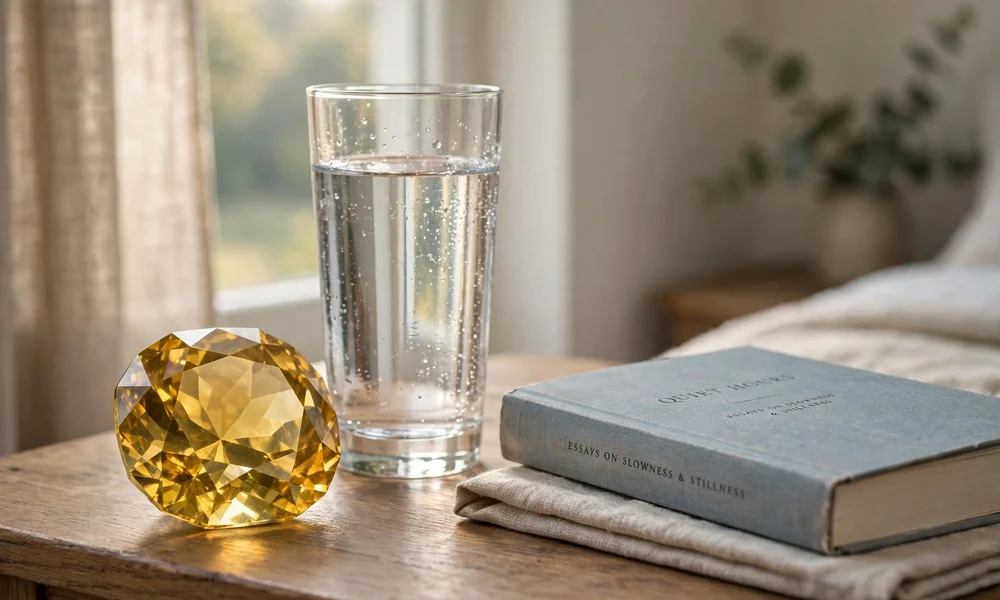
A bright day with yellow topaz needs only a few minutes of preparation. Set the stone on a light wooden tray near a window, place a tall glass of cool water a little way off, and let the morning sun do the rest.
Drink the water slowly, watch the light move across the facets, and take one long breath before the day gathers speed.
Yellow Topaz Beside Water
On a tray, a yellow stone and a glass of water look lovely side by side, and side by side is as near as they get. Put the tumbler at one end and the gem at the other, leaving bare wood in the middle, so the gem never gets wet and the drink never gets touched.
A single splash dabbed away right away will not spoil anything, yet the gem should never be left sitting in liquid, tossed into a pitcher, or swirled through something you plan to sip. After picking the stone up, give your hands a wash, and keep the gem away from meals and from young children.
Yellow Topaz at a Glance
| Warm sunny yellow | Bright days | Display only |
|---|---|---|
| Faceted gem, hard stone | Desk, shelf, windowsill | Wash hands after |
| Honey gold, clear | Morning light, open rooms | Never in water |
| Lemon gold, sparkling | Walks, bright afternoons, rest | Dry cloth wipe |
Yellow Topaz and Champagne Topaz
Champagne topaz is the nearest neighbour yellow topaz has, and the two are easy to confuse on a first look. Champagne topaz for bright days covers a pale warm gold stone, light and sparkling, with the soft glow of pale gold wine.
The difference sits in the strength of the colour. Champagne topaz is softer and paler, a gentle golden wash, while yellow topaz is bolder and more lemon-gold, the colour of a fresh lemon rather than a glass of wine.
Yellow Topaz and Imperial Topaz
Imperial topaz is the deeper, richer cousin, and it makes a striking contrast with bright yellow topaz. Imperial topaz for special days covers a warm golden-orange stone, deeper than pale champagne topaz and richer than a summer sunset.
Yellow topaz is lighter and fresher than imperial topaz, with a clear lemon brightness where imperial topaz carries a deeper orange-gold warmth. Imperial topaz suits a special occasion, a golden evening, or a celebration, while yellow topaz suits an ordinary bright day, a walk in the sun, or a morning at an open window.
Yellow Topaz and Green Topaz
Green topaz, the sibling stone in this batch, sits on the cooler side of the topaz family, and the pair could hardly look more different on a tray. Green topaz is cool and leafy, the colour of fresh leaves after rain, while yellow topaz is warm and sunny, the colour of lemon peel in bright light.
Where green topaz suits a calm, shaded afternoon, yellow topaz suits a bright, open morning. Together they show how wide the topaz family runs, from cool green to warm gold, yet each earns its own guide for its own kind of day.
Yellow Topaz and the Other Topazes
Beyond the three nearest cousins, the topaz family keeps more colour still. Peach topaz is a clear soft peach, warm and gentle, while red topaz is a warm red, clear and bright, like a cherry in strong sun. Smoky topaz is a warm brown, earthy and calm, and orange topaz is a clear warm orange, sunny and bright.
White topaz is the clear colourless form, pink topaz is a soft pink for gentle evenings, and blue topaz is a clear cool blue. The general topaz guide, topaz light for bright beauty, gathers the family as a whole, yet none of these carries the clear sunny yellow: yellow topaz alone holds that bright lemon gold, which is why it earns its own guide for bright days.

Caring for Yellow Topaz
Topaz ranks as a tough gem, so it needs less pampering than softer stones, but it still merits a gentle touch. Keep it in a dry spot away from harsh sunlight, tucked in a cloth-lined box with a lid, or on a shelf where nothing weighty can fall on it.
Brush the dust away with a soft, dry cloth, moving lightly along the facets. Leave soap, sprays, and polishing creams in the cupboard.
Stones That Must Never Touch Water
A handful of minerals should never come near anything you might drink, so hold these names in mind when a tray is set out. Malachite comes first: never let it rest in a mug, a pitcher, or a tumbler, and never swirl it through water you mean to swallow. Hematite sits in the same group, held well away from drinking water even for a single brief dip.
Apatite and lepidolite want the same space, and lepidolite hides lithium in its pale grey layers, so it stays clear of every drink. Pyrite, angelite, and amber likewise stay on the dry side, nowhere near tumblers, pitchers, or bowls of water. Yellow topaz itself is a tougher, steadier gem, yet it still sits dry next to the glass.
Your Bright Days Checklist
- Set the yellow topaz on a dry tray, with a full glass beside it.
- Drink the water unhurriedly while sun plays over the facets.
- Wash your hands well once you put the stone down.
- Buy from a seller who calls it yellow topaz outright.
- Keep the stone in a dry spot, out of children's hands, far from meals.
- If a health concern stays with you, see a doctor; a gem will not fix it.
Frequently Asked Questions
What is yellow topaz?
Yellow topaz is topaz in its sunny yellow form, a clear mineral coloured by tiny traces held inside the crystal as it formed. It is usually sold as a small faceted gem or a smooth tumbled stone, ranging from pale lemon to deeper honey gold.
How is yellow topaz different from champagne topaz?
Both are pale warm topazes, but yellow topaz is bolder and more lemon-gold, the colour of a fresh lemon, while champagne topaz is softer and paler, like a glass of champagne in bright daylight.
How is yellow topaz different from imperial topaz?
Imperial topaz is deeper and richer, a warm golden-orange like a summer sunset, while yellow topaz is lighter and fresher, with a clear lemon brightness.
Is yellow topaz safe to hold?
Holding it briefly is fine. Wash your hands with soap after you set it down, keep it away from little children and from anything you eat, and lift it gently rather than letting it drop.
Why must yellow topaz never go in water?
The glass is for water and nothing else. Never drop the gem into a mug, leave it soaking in a tub, or stir it through a drink, and if a splash reaches it, dry it with a soft cloth at once.
Where should I keep yellow topaz at home?
Choose a sunny, dry spot: a light wooden tray, a bright windowsill, or a bedside table, with drinking water close by but apart, and far beyond the reach of small children.
The Bottom Line
Yellow topaz gives bright days a warm sunny glow: a small lemon-gold gem in morning light, sitting on a pale wooden tray beside a glass of water, looked at and never swallowed.
A Note for Bright Days
Let the sun shine and the stone stay dry. One small warm yellow gem, one glass of water, and a few bright hours are all you need.