
A soup pot is the quietest tool in the kitchen. It has no dials, no timer, and nothing to plug in: a deep pot, a little water, a few vegetables, and a low flame. The work it does is slow, and the kitchen fills with a soft, warm smell long before anything is ready to eat.
Simmering is what makes the pot worth having. A simmer is not a boil: the water moves in small, lazy bubbles, just enough to carry flavour from the vegetables into the liquid, and never so hard that it clouds the soup. A low flame and a little patience do more than any fierce heat.
This guide stays with the pot itself: what a soup pot is, why a slow simmer works, how it differs from the vessels already in this journal, and how to serve from it safely. Everything here is gentle general information only, and nothing in it is medical advice.
Key Takeaways
- A soup pot is a deep pot for simmering soup slowly over a low flame.
- Simmering means small, lazy bubbles, never a hard rolling boil.
- A soup pot suits slow mornings and unhurried meals.
- It cooks soup and nothing else: it is no treatment and no cure.
- Keep the pot clean and dry, and store it where air can reach it.
What a Soup Pot Is
A soup pot is a deep cooking pot with two handles and a lid, made to hold plenty of water and to sit steadily on a stove for a long time. Most are steel, with a thick base that spreads the heat evenly. A medium pot, about twenty-four centimetres across, suits most kitchens: big enough for soup for four, and small enough to lift with both hands when it is full.
The depth is the whole idea. A shallow pan lets water escape as steam, while a deep pot keeps the water where it belongs, simmering gently under a loose lid. The pot asks for very little: fresh water, a few vegetables, a pinch of salt, and time on a low flame.
Why Simmering Works
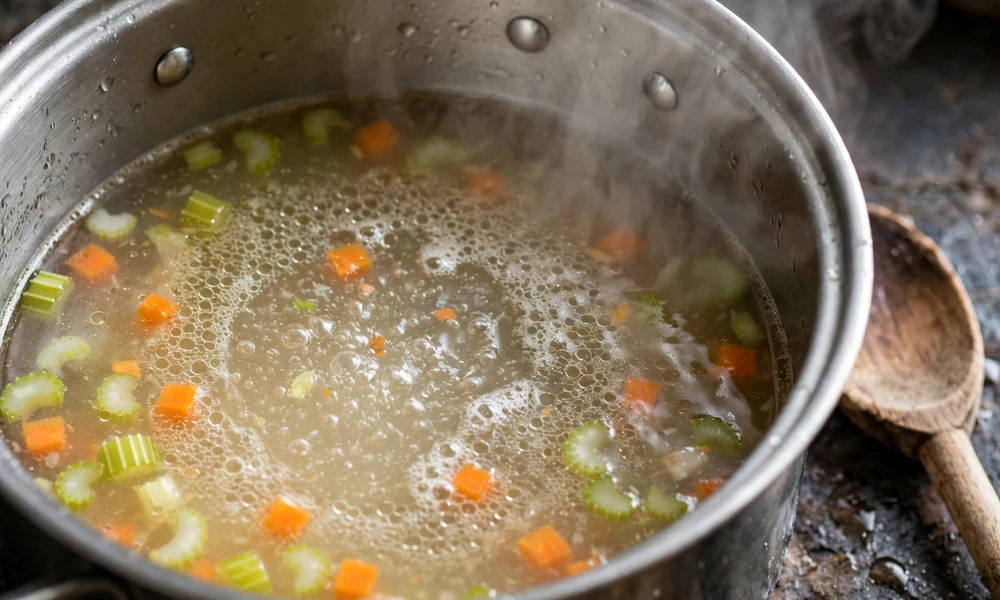
Simmering works because it is gentle. At a simmer, the water is hot enough to soften vegetables and draw out their flavour, but calm enough to leave the liquid clear. A hard boil breaks the vegetables into pieces and turns the soup cloudy, while a simmer lets each piece keep its shape.
Time does the rest. Forty minutes on a low flame turns plain water, carrots, celery and onion into something warm and golden. The pot can be left alone while it simmers, as long as the flame stays low and the lid stays loose.
A Soup Pot and a Broth
Water in cooking for skin: simple broths is a gentle guide to the clear liquid itself: water simmered with carrots, celery, onion and herbs until the water tastes of them, then strained and sipped warm. A broth is the result, a clear, light liquid.
A soup pot is the vessel that makes the broth possible, and that is the difference. The broth guide follows the liquid from pot to bowl, while this guide follows the pot from shelf to stove. One is the food, and the other is the tool that cooks it.
A Soup Pot and a Copper Pot
Water and a copper pot: a simple fresh ritual follows a copper pot kept filled with fresh water on the counter, a morning habit built around order: water to cook with, water for tea, and a small glass sipped slowly before the day starts. The copper pot is a centre for the kitchen, and its ritual is about readiness rather than cooking.
A soup pot does a different job in the same kitchen. It is not kept filled on the counter, and it is not a vessel for storing water. It comes out of the cupboard when there is soup to make, goes onto the stove for an hour of simmering, and goes back clean and dry when the meal is done. The copper pot waits with water in it, while the soup pot works with heat and steam.
A Soup Pot and a Cast Iron Pan
Water and a cast iron pan: a simple fresh ritual follows a heavy, black iron skillet, a shallow pan with a long handle that holds little water and cooks food in a thin film of oil over direct heat. The pan is seasoned, wiped, and never soaked, because water left sitting in iron invites rust.
A soup pot is built the other way round. It is deep where the pan is shallow, it holds litres of water where the pan holds almost none, and it simmers where the pan fries. A pan gives food a crisp edge, while a pot gives soup its slow warmth.
Choosing a Soup Pot
Begin with the base. Set the pot on a flat counter and press it gently: it should sit steady, with no rocking, and the base should feel thick and even under your palm. A thin base scorches, while a thick one spreads the heat. Lift the pot with both hands and feel its weight: solid, but not so heavy that you cannot carry it full.
Look next at the lid and the handles. The lid should sit flat without rattling, and the handles should be fixed firmly with rivets and stay cool enough to hold with a cloth. Buy from a seller who names the steel and the base thickness plainly, and walk away from any claim that a pot can improve your health.
A Slow Simmer, Step by Step
Put the pot on the stove, add cold water, and set the flame to low. Chop the carrots, celery and onion, drop them in with a pinch of salt, and bring the pot to a soft, lazy simmer, never a rolling boil. Lift off any foam with a spoon, cover loosely, and leave it for forty minutes.
While the soup bubbles away, tidy as you go: rinse the board and knife, clear the counter, and lay out the bowls. Taste the soup, add a little more salt if it needs it, and ladle it into bowls to serve warm.
Serving from the Pot
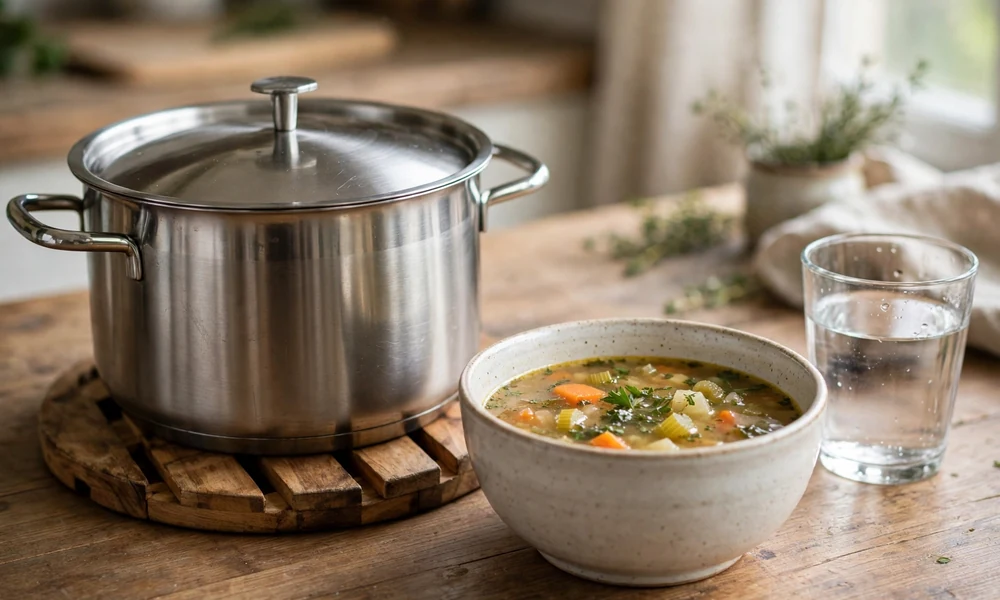
Set the pot on a wooden trivet in the middle of the table, lid on, with a ladle resting beside it. Let the soup settle for a few minutes off the flame, then ladle it slowly into bowls, a little at a time, with a glass of water beside each plate.
Serve it warm, not scalding, and eat it sitting down, without hurry.
A Soup Pot at a Glance
| Deep steel pot | Stove, table, shelf | Lift with both hands |
|---|---|---|
| Thick base, lid | Slow mornings, quiet meals | Wash and dry fully |
| Twenty-four centimetres | Simmer, never boil | Store with air |
| Water, vegetables, salt | One pot, one flame | Keep handles dry |
A Soup Pot Among the Other Waters in This Batch
Four other water guides share this batch, and each one works with water in a different place. A watering can carries cold water out to the plants, giving a thin stream at the roots, while a soup pot keeps hot water on the stove and never leaves the kitchen. A rain barrel stores rain for the garden, an aquarium holds water for fish, and a swimming pool holds water for swimming. None of them simmers, and none of them serves soup.
Five stones share the batch too. Faden quartz is a clear crystal with a white thread through it, kept dry on a tray beside a glass of water, and never near a stove. Enhydro quartz holds a tiny pocket of ancient water inside it, beryllonite is a pale, glassy stone, vivianite is a deep blue mineral that fades in light, and afghanite is a soft blue stone. None of them is a pot.
Where a Soup Pot Lives at Home
Give the pot a shelf close to the stove but away from the sink's spray. Keep it upright with the lid off or set loosely on top, so air can move around it and the inside stays dry. A damp cupboard with the lid sealed tight is the one place it should never sit.
Hang the ladle nearby, and keep the trivet on the same shelf.
Keeping a Soup Pot Clean and Safe
Wash the pot while it is still warm, with hot water and a little soap, and dry it fully before it goes back on the shelf. A pot put away damp will spot and smell stale. Handles stay safe when they are dry, and a wet handle slips, so wipe them before you lift a full pot.
Mind the steam when you lift the lid, and open it away from your face. Never put a stone or crystal into the pot: stones belong on a dry shelf, and a soup pot is for water and vegetables only. If your skin reacts to a new soap or ingredient, stop using it, rinse well, and ask a doctor if the reaction worries you.
Your Fresh Ritual Checklist
- Fill the pot with cold water, vegetables and a pinch of salt.
- Set the flame low and wait for small bubbles.
- Skim the foam, cover loosely, leave it forty minutes.
- Ladle the soup slowly into bowls, water beside each plate.
- Wash the pot while warm, dry it fully, store it lid-off.
- If a health worry lingers, a doctor is the one to ask — a pot holds soup, not answers.

Frequently Asked Questions
What is a soup pot, in simple terms?
A soup pot is a deep steel pot with two handles and a lid, made to hold plenty of water and to sit steadily on a stove while soup simmers slowly.
Why simmer instead of boiling soup?
A simmer keeps the liquid clear and the vegetables whole, while a hard boil breaks them apart and clouds the soup.
How is a soup pot different from a broth?
A broth is the clear liquid made by simmering vegetables in water, while a soup pot is the deep vessel it is cooked in.
How is a soup pot different from a copper pot?
A copper pot is kept filled with fresh water on the counter for cooking and tea, while a soup pot comes out only when there is soup to make.
How do I choose a good soup pot?
Pick a pot with a thick, flat base that sits steady, a lid that closes without rattling, and handles fixed firmly.
Where should a soup pot be kept?
Keep it on a shelf close to the stove, upright with the lid loose, where air can move around it.

The Bottom Line
Cold water, a low flame, and forty unhurried minutes: that is all a soup pot needs to do its work.
A Note for Fresh Days
A pot that simmers slowly, a bowl served warm, and a kitchen that stays calm: that is the whole of it.


