
Some mornings the kitchen feels like the calmest room in the house. The kettle has not yet boiled, the light is still pale at the window, and there is time to do one thing properly before the day starts. A cast iron pan suits that hour: heavy, black, and plain, a pan that asks for a little care and gives back steady, even heat.
The ritual itself is short, and that is the point. A tall glass of water first, drunk slowly at the counter, then the pan on the stove, then one simple dish cooked gently and eaten without hurry. No fancy tools, no long list of steps, just water, heat, and a pan that has served kitchens for a hundred years.
Read this as gentle general information, not medical advice. A pan and a glass of water will not heal anything, and if something about your health worries you, a doctor is the person to ask. What follows is simply a calm way to begin a morning in the kitchen.
Key Takeaways
- A cast iron pan is a heavy, plain iron pan that holds heat steadily and lasts for decades with simple care.
- The ritual is water first, then the pan, then one simple dish.
- A cast iron pan suits fresh, simple food: eggs, vegetables, and bread.
- The pan is a cooking tool, not a treatment, and it will not heal anything.
- Keep the pan dry after washing, lightly oiled, and stored where air can reach it.
What a Cast Iron Pan Is
A cast iron pan is made from a single piece of iron, poured molten into a mould and left to cool, with no coating and no non-stick layer. The classic shape is a shallow skillet with a long handle and a rough black surface, far heavier than a steel pan of the same size. That weight is the whole idea: once the iron is hot, it stays hot, and it gives its heat back slowly and evenly, so food cooks gently instead of scorching.
Cast iron has been in kitchens for generations, and old pans are still in daily use, passed down from one cook to the next. The surface improves with use, growing smoother and darker as thin layers of oil bake onto it, a process cooks call seasoning.
Picking a Cast Iron Pan
Choosing a cast iron pan starts with lifting it, because the weight tells you most of what you need to know. A good skillet feels solid and heavy in the hand, with a flat base and a handle that fits your grip. Look for a smooth, even surface inside, with no rough pits or flaking patches.
A pan about twenty-six centimetres across suits most kitchens, big enough for breakfast and small enough to lift with one hand. Buy from a seller who can tell you whether the pan comes pre-seasoned, and walk away from any claim that cooking in iron will fix your health.
Water First in the Kitchen
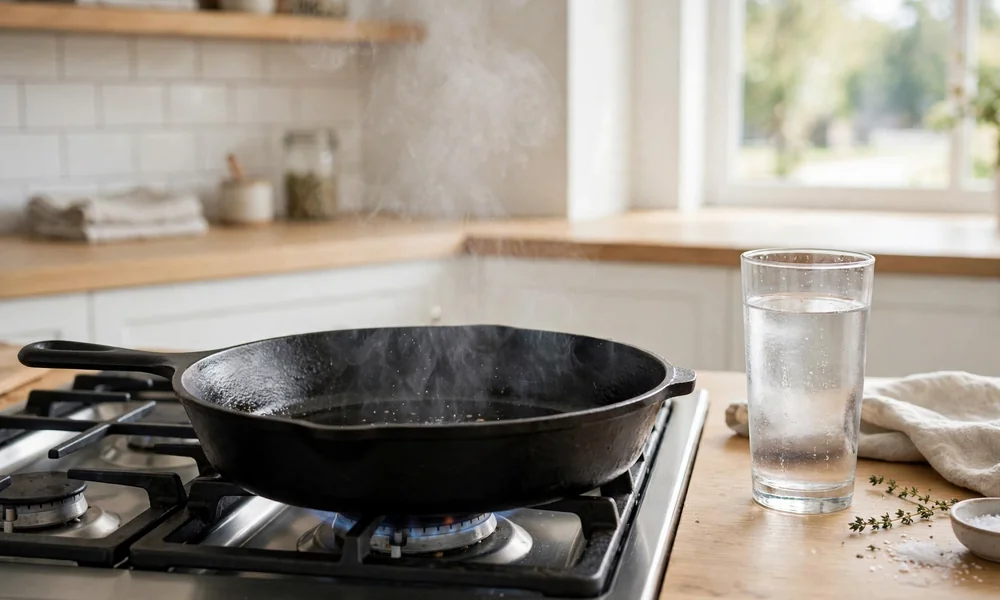
Water comes first in this ritual, before the pan and before the food. Fill a tall glass with cool water, and drink it slowly, a little at a time, standing at the kitchen counter by the window. Plain water is all you need. Drinking water slowly before you cook sets a calm pace for everything that follows.
While you sip, look at the kitchen the way a cook does: the pan on its hook, the board wiped clean, the vegetables washed and waiting.
A Simple Fresh Ritual, Step by Step
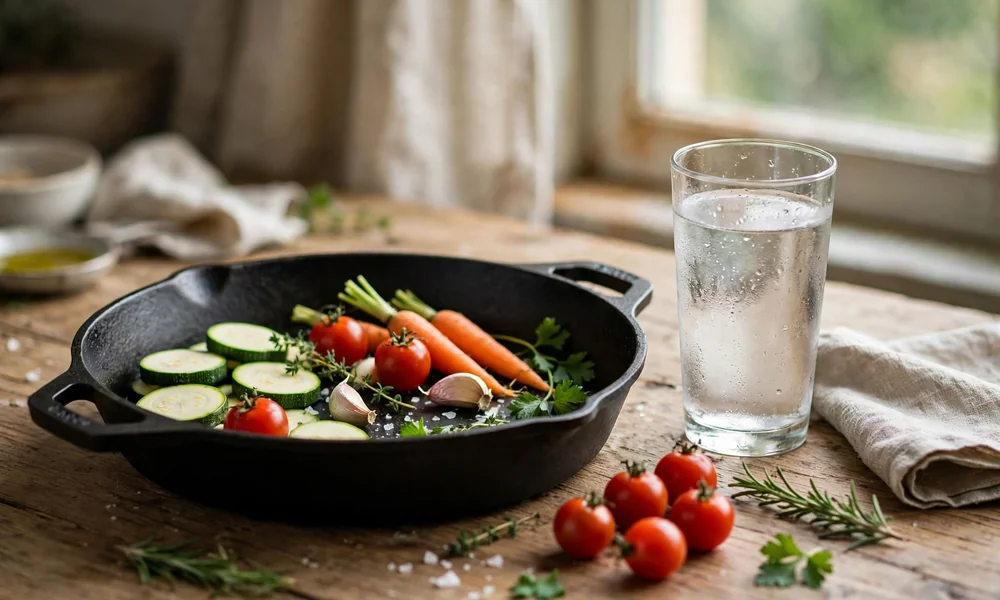
The whole ritual fits inside a single morning hour, moving in a short line from tap to table. First, drink your glass of water slowly at the counter. Second, set the pan on the stove over a low flame and let it warm for two minutes, then add a small spoon of oil and swirl it round. Third, lay in the vegetables or the eggs, and let them cook gently, turning them once. Fourth, slide the food onto a plate, carry it to the table with your glass of water, and eat it slowly. Fifth, wash the pan while it is still warm, dry it on the stove, and hang it back on its hook.
Cast Iron Pan at a Glance
| Water first, slow | One heavy pan | Dry pan always |
|---|---|---|
| Cool water, sips | Low flame, gentle | Light oil, thin |
| Simple fresh food | Eggs, greens, bread | Hang on hook |
| Glass beside plate | One dish, plain | Wash while warm |
| Calm morning hour | No rush, no phone | Air can reach |
Cast Iron Pan and Broths
Water in cooking for skin, simple broths is a gentle guide to simmering vegetables in plain water until the water tastes of them, then straining it into a clear broth to sip warm. It is food, not medicine, made in a pot, not a pan.
A cast iron pan does a different job in the same kitchen. Broth is mostly water, simmered slowly in a deep pot, while a pan holds little water at all and cooks food in a thin film of oil over direct heat. One is a warm drink made in a pot, the other a simple dish made in a pan.
Cast Iron Pan and Brunch
Water and brunch is a slow late-morning meal: water first, then a light plate of eggs, toast, and a little fruit, eaten at a table by the window, with tea afterwards.
A cast iron pan fits a brunch table very well, and the two guides agree on the order: water first, then food, then rest. The difference is the tool. Brunch is a meal, a late plate eaten slowly, while the pan is the thing that cooks it. One is the meal itself, the other is the pan that made it.
Cast Iron Pan and Dinner Parties
Water and dinner parties, a simple fresh ritual is an evening meal shared with friends at one table, with water first, shared dishes passed from hand to hand, and candles lit.
A cast iron pan can serve a dinner party too, carrying roast vegetables straight from the stove to the middle of the table, yet the two guides belong to different hours. Dinner parties are evening and shared, with friends gathered and talk stretching for hours, while this ritual is a quiet morning, one pan and one plate. One gathers friends, the other gathers the morning.
Cast Iron Pan and the Other Water Rituals in This Batch
Away from the stove, this batch of the journal holds four more water rituals, each in a different corner of the day, and none needs a pan at all. A sleep mask belongs to the night, a soft cover for the eyes that keeps the bedroom dark while you rest. Pedicures belong to the bathroom, warm water and a towel for tired feet. A bakery visit belongs to the morning street, a walk out for warm bread. A muslin cloth belongs to the wash basin, a soft square of cotton for gentle washing. The pan stays in the kitchen, and each of the four keeps its own place.
Caring for Your Pan
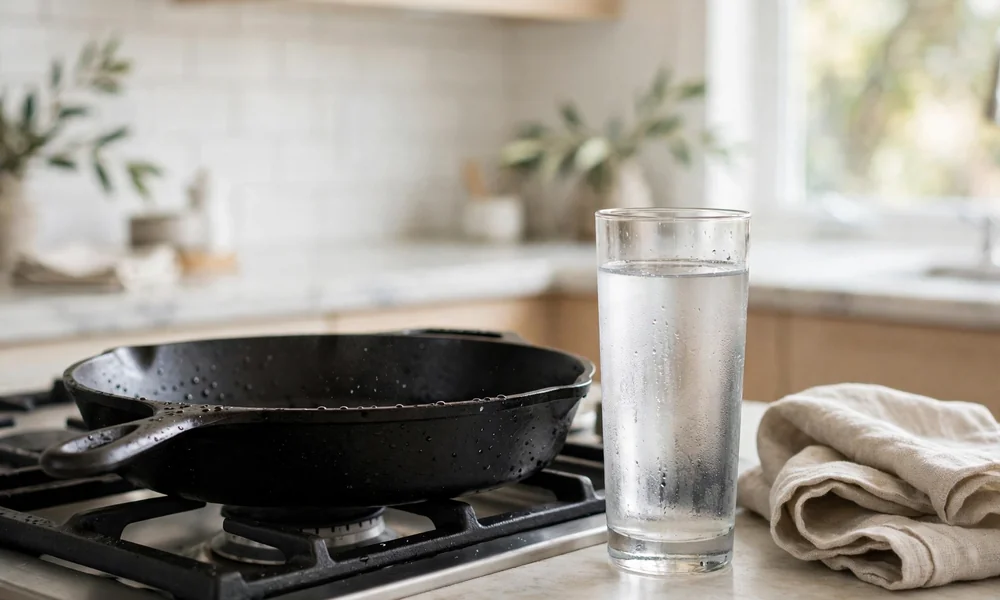
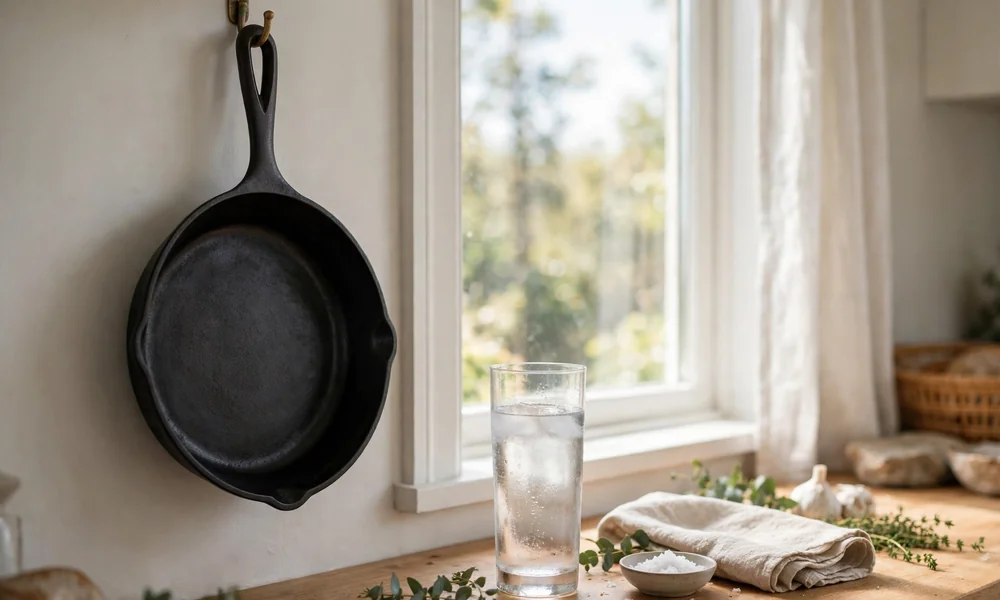
A cast iron pan asks for a little care after every use. Wash it while it is still warm, with hot water and a stiff brush, then dry it at once on a low flame, so no water stays on the iron. Rub in a thin film of oil, wipe off the extra, and hang the pan where air can reach it.
Never leave the pan soaking in the sink, and never put it in the dishwasher, because standing water is the one thing that harms iron. A pan kept dry and lightly oiled will stay black and smooth for decades.
What This Ritual Will Not Do
Be honest about what a pan and a glass of water can and cannot do. This ritual will not heal anything. It cannot cure an illness, settle a medical condition, or mend skin troubles by itself. It is a calm way to cook and eat, and its value is the warmth, the water, and the simple food in it. A glass of fresh water drunk slowly is good for you, but neither the water nor the meal is a treatment. If a health problem lasts week after week, ask a doctor, and take this guide as gentle general information only.
Your Cast Iron Pan Checklist
- Pour a tall glass of cool fresh water before any cooking.
- Drink the water slowly, in small sips, at the counter.
- Warm the pan on a low flame, and cook one simple dish gently.
- Eat slowly at the table, with your glass of water beside the plate.
- Wash the pan while it is warm, dry it on the stove, and oil it lightly.
- If a health worry keeps coming back, ask a doctor about it.
Frequently Asked Questions
What makes a cast iron pan different from other pans?
A cast iron pan is made from a single piece of iron, with no coating, and it is far heavier than a steel pan, so it holds its heat steadily and cooks food gently.
Do I need to season a new cast iron pan first?
Many new pans come pre-seasoned, so check with the seller first. If yours is bare iron, rub it thinly with oil and heat it until the oil bakes on, then repeat once more.
Can I wash a cast iron pan with water?
Yes, wash it with hot water and a stiff brush while it is still warm, then dry it at once on a low flame. Never leave it soaking, because standing water rusts iron.
What should I cook first in a new cast iron pan?
Start with something simple and a little oily, like fried eggs, roast vegetables, or flatbread, which help the seasoning settle.
Is cooking in cast iron safe for everyday meals?
Yes, for most people a well-kept cast iron pan is fine for everyday cooking, as long as it is washed, dried, and lightly oiled after use. If you have a health question about iron, ask a doctor.
When should I ask a doctor instead of changing my routine?
If a health worry will not go away, book a visit with your doctor. Nothing in this guide is medical advice, and a pan cannot answer a health question.
The Bottom Line
Water and a cast iron pan go together simply: cool water first, one heavy pan on a low flame, and a simple dish eaten slowly. Cook one quiet breakfast this week, and let the kitchen stay calm.
A Note for Fresh Rituals
Keep it simple, keep it slow, keep it fresh. A glass of cool water, one heavy pan, and an unhurried hour can carry a whole morning.


