Some of the kindest food is also the simplest. A pot of water, a few fresh vegetables, a little salt, and time on a low flame. Nothing fancy, nothing rushed, and the kitchen fills with a soft, warm smell.
Water in cooking is the quiet base of that kindness. Broths are mostly water, and the water carries the flavour of the vegetables gently, without oil or heavy sauces.
This article is a gentle guide to water in cooking for skin: what a simple broth is, how to make one well, how to store it safely, and how to build a soft daily habit around it. Broths are food, not medicine, and this is general information only.
Key Takeaways
- Water in cooking means fresh water as the base, with vegetables simmered gently into a clear broth.
- A simple broth needs very little: water, carrots, celery, onion, herbs, and time on a low flame.
- Broths are food, not medicine: they will not cure skin problems or detox the body.
- A clear broth suits gentle everyday meals, sipped warm, slowly, and in small amounts.
- Good broth habits are simple: fresh water, clean tools, safe storage, and a calm kitchen.
What Water in Cooking Means
Water in cooking means using fresh, clean water as the base of a dish, rather than as an afterthought. In a broth, water does most of the work: it draws flavour from vegetables slowly, keeps the pot from drying out, and turns a few simple ingredients into a warm, drinkable meal.
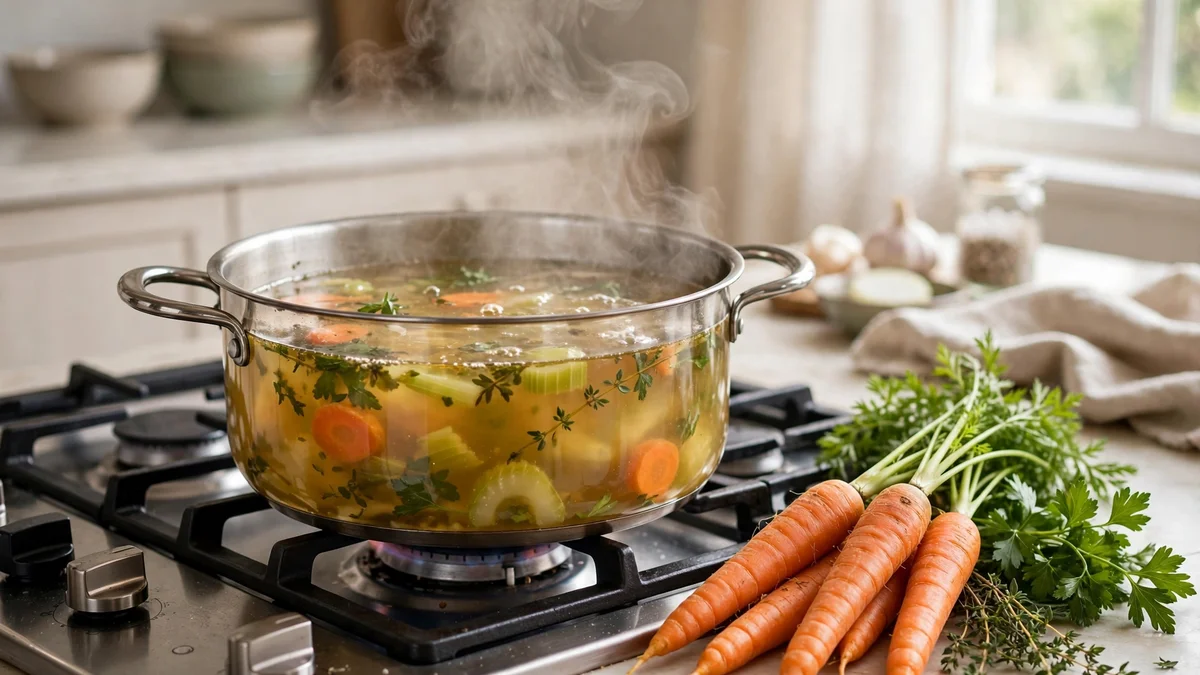
A broth is not a sauce and not a soup with cream. It is a clear, light liquid, made by simmering vegetables in water until the water tastes of them. The vegetables soften, the water turns golden, and the result is gentle on the stomach.
Why Broths Feel Gentle
A broth feels gentle because it asks very little of the body. It is warm, mostly water, and easy to sip slowly, which makes it a kind choice on a tired day or a cold evening. There is no heavy fat, no sharp spice, and nothing to chew through in a hurry.
Broths also feel gentle because they are simple to make. One pot, one flame, and a short list of vegetables you already know. The kitchen stays calm, the washing up is small, and the meal is ready when the vegetables are soft. There is also comfort in the smell alone: warm vegetables and herbs fill the kitchen slowly, and the house feels cared for long before the broth reaches the table.
Choosing Simple Broth Ingredients
Choose broth ingredients you can see and smell before you buy them. Pick firm carrots, crisp celery, and onions with dry, papery skins. Fresh parsley and a bay leaf add a soft, green flavour, and a pinch of salt is enough to start.
Keep the list short. Carrots, celery, onion, parsley, and one bay leaf make a clear, golden broth. Avoid wilted vegetables, soft spots, or anything with a sour smell, and wash everything well under fresh running water before it goes into the pot.

Water First: The Base of Every Broth
The water comes first, before any vegetable. Fill the pot with fresh, cold drinking water, and use enough to cover the vegetables by a hand's width. Cold water draws the flavour out slowly, while hot water can make the broth cloudy.
Use plain water, with nothing added at the start. No oil, no stock cubes, and no salt until the end. The water should taste clean and fresh on its own, because a broth can only be as good as the water it is made from.
A Simple Vegetable Broth, Step by Step
A simple broth takes one pot and about an hour. Wash the vegetables, peel the carrots and onion, and cut everything into large, even pieces. Put them in the pot, cover with cold water, and set the flame to low.
Let the pot come to a gentle simmer, never a hard boil. Skim off any foam with a spoon, cover the pot loosely, and leave it for forty-five minutes. Then taste, add a pinch of salt, strain the liquid, and the broth is ready to sip or to cook with. While the pot simmers, wash the board and the knife, wipe the counter, and set out the bowls, so the kitchen is tidy when the broth is ready to serve.

Broth for Skin: A Gentle Habit
Skin likes gentle habits, and a warm broth can be one of them. Sipping a clear vegetable broth with a meal adds warm water and simple vegetables to the day, which supports the ordinary care skin already gets from water, food, and rest.
Keep the habit small. A cup of warm broth with lunch, drunk slowly, is enough. This is general information only: a broth is food, not a treatment, and it will not clear spots, smooth wrinkles, or fix skin problems on its own.
Storing Broth Well
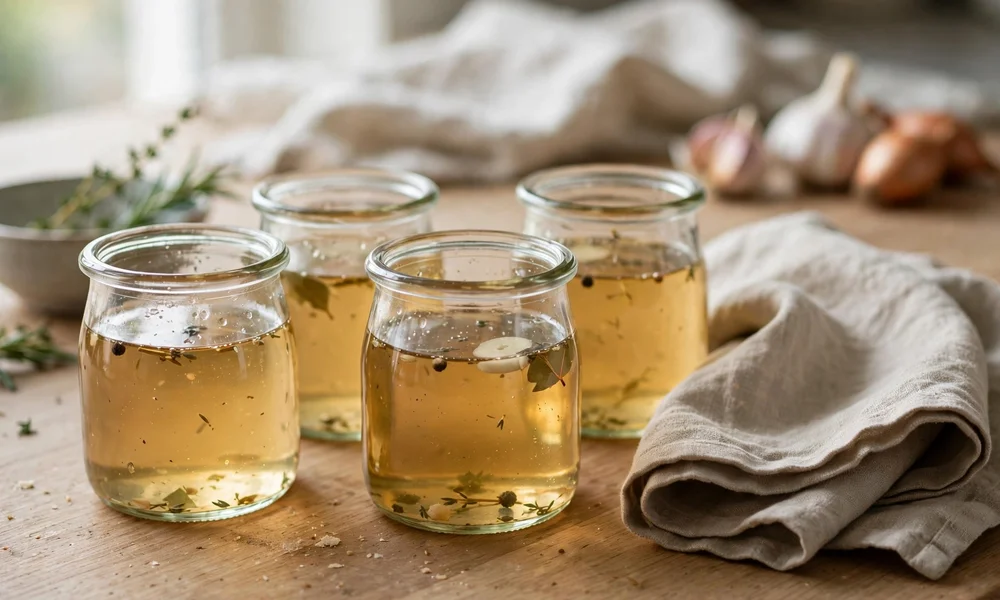
A broth keeps well if it is cooled and stored safely. Let the strained broth cool on the counter for no more than two hours, then pour it into clean glass jars with lids. Keep the jars in the fridge and use the broth within three days.
For longer storage, freeze the broth in small portions and use it within a month. Always reheat broth until it is steaming hot, and never reheat the same portion twice. If a jar smells sour or looks cloudy, throw it away. A warm cup in the evening can be a quiet ritual of its own, as in quiet evening tea and water, where a warm drink closes the day gently.
Broth in Everyday Meals
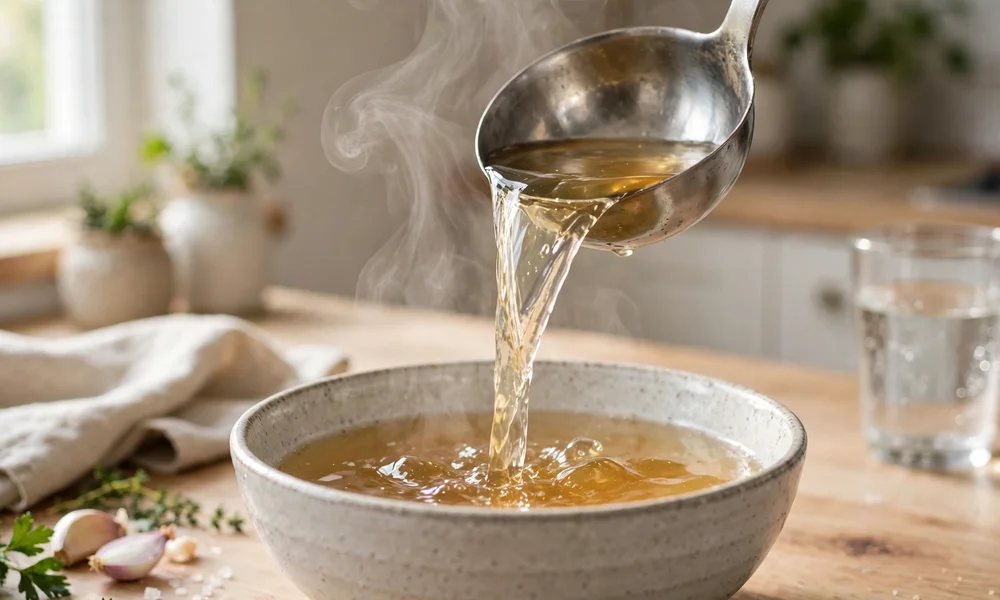
A clear broth fits into everyday meals without fuss. Use it as the base for rice, lentils, or noodles, or sip a cup on its own with bread. A little broth in a pan also keeps vegetables soft while they cook. A spoonful of broth can also loosen rice that has stuck to the pan, soften day-old bread for a light supper, and warm a simple plate of greens without any extra fat.
Keep the meals simple. A bowl of rice cooked in broth, a plate of steamed vegetables, and a glass of fresh water make a gentle lunch. The same calm idea runs through ocean-inspired beauty with salt and water, where salt water and soft light shape a gentle routine.
Caring for Your Pot and Your Routine
A good broth starts with a clean pot. Wash the pot, the ladle, and the jars with hot water and soap, and dry them well before use. A clean pot keeps the broth clear and fresh, and it makes the whole routine feel calm. Keep the ladle and the strainer clean too, and let the jars dry upside down on a cloth, so no water stays inside them before the broth goes in.
Keep the routine small and steady. One pot of broth a week, made on the same quiet morning, is better than a big batch made in a rush. The same gentle idea runs through water first morning routine, where a glass of water starts the day simply.
What Broths Will Not Do
Be honest about what food can and cannot do. A broth will not cure skin problems, detox the body, clean the blood, or replace medicine. It will not make skin glow overnight, heal acne, or fix dryness on its own. It is food, and its value is the warmth, the water, and the simple vegetables in it.
The same honesty applies to the water in it: fresh water drunk slowly is good for you, but it is not a treatment either. If skin problems last week after week, the answer is a lighter routine, or advice from a doctor or a skin professional.
| Broth step | Water beside | Pot care |
|---|---|---|
| Wash vegetables well | Cold water first | Wash pot hot |
| Simmer low flame | Sip broth slowly | Dry jars well |
| Strain broth clear | Glass water daily | Store fridge cold |
| Salt at end | Reheat steaming hot | Freeze small portions |
Your Simple Broth Checklist
- Fill the pot with fresh, cold drinking water before adding any vegetables.
- Wash carrots, celery, onion and parsley well, and cut them into large pieces.
- Simmer on a low flame for forty-five minutes, never a hard boil.
- Strain the broth, add a pinch of salt, and sip it warm and slowly.
- Cool the broth quickly, store it in clean jars, and use it within three days.
- Remember broths are food, not medicine: no cure claims, no detox claims, ever.
Frequently Asked Questions
What is a simple vegetable broth?
A simple vegetable broth is clear water simmered gently with carrots, celery, onion, parsley and a bay leaf. The water draws flavour from the vegetables slowly, and the strained liquid is a light, warm food.
Can I drink broth every day?
Yes, a small cup of warm vegetable broth with a meal is fine for most people as part of an ordinary diet. Keep it simple, keep the salt light, and eat a varied diet alongside it.
Does broth help skin?
Broth is food, not a treatment. Sipping warm broth adds water and simple vegetables to the day, which supports ordinary skin care, but it will not cure spots, smooth wrinkles, or fix skin problems on its own.
How long does homemade broth keep?
Strained broth keeps in the fridge for up to three days in clean, covered jars. For longer storage, freeze it in small portions and use it within a month, reheating each portion until steaming hot.
Can I add salt at the start?
It is better to add salt at the end. Salt added early can make the broth taste harsh as the water reduces, while a small pinch at the end lets you season the finished broth gently and exactly.
Will broth detox my body?
No. Broth will not detox the body, clean the blood, or flush anything out. The body manages that itself, and a broth is simply a warm, gentle food made with fresh water and vegetables.
The Bottom Line
Water in cooking means a pot of fresh water, a few vegetables, and a clear broth sipped warm and slowly.
Make one pot this week, and let the kitchen stay calm while it simmers. Keep a small cup ready, and sip it slowly while the pot cools.
A Note for Simple Broths
Keep it clear, keep it gentle, keep it fresh. The warm hours can still belong to you.