Some afternoons the house goes still in a good way. The post has been read, the washing is folded, and the light through the north window is cool and even. Nothing in the room needs finishing.
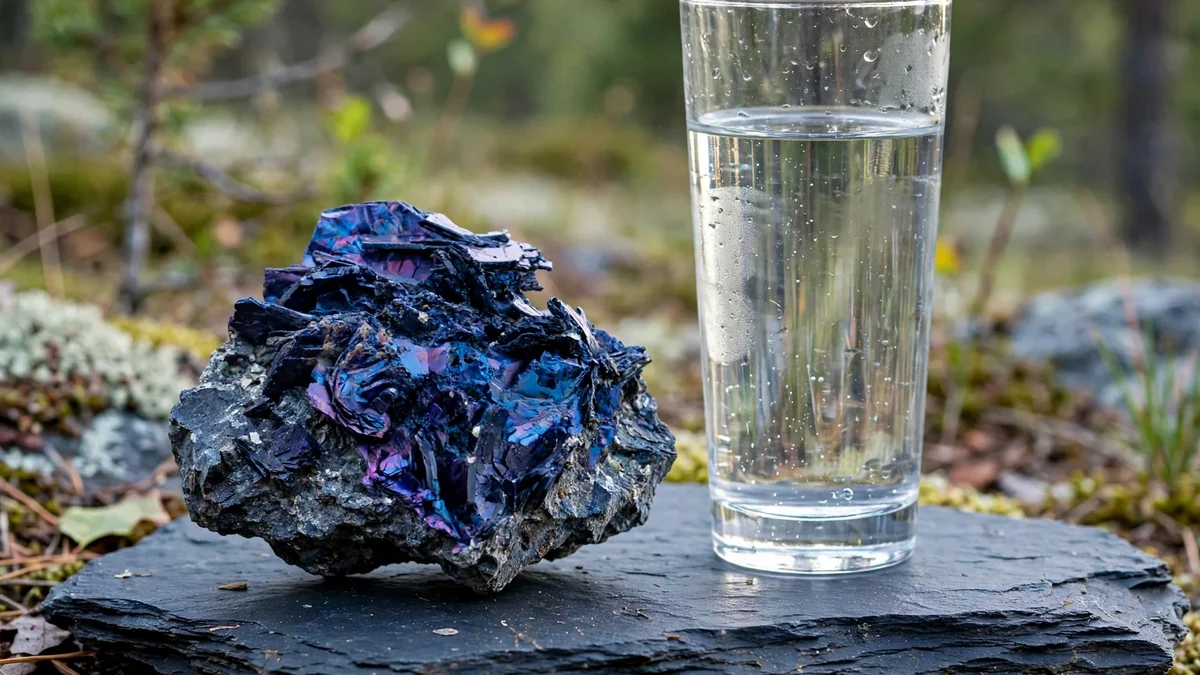
A piece of covellite belongs on a shelf in that kind of light. It is a mineral the colour of deep indigo ink, dark blue with a metallic gleam sliding across its thin plates as you move past. From across the room it looks almost black; up close, the blue opens out.
This guide looks at covellite in plain words: what the mineral is, why its dark blue suits quiet days, how to pick a sound piece, and how to show it dry beside a glass of water. It is a copper mineral, for looking at only, and it never goes near a drink.
Key Takeaways
- Covellite is a deep indigo-blue copper sulfide mineral with thin plates and a metallic gleam.
- Its dark blue suits quiet days, still rooms, and slow afternoons without plans.
- Covellite is a display mineral only, and it must never touch water or a drink.
- Wash your hands after handling it, and keep it where children cannot reach it.
- One small specimen on a slate slab is enough for the day.
What Covellite Is
Covellite is copper sulfide, a mineral that forms in copper-rich ground where other copper ores weather. Its shorthand is CuS, and it grows in thin flat plates packed together in a dark blue mass. The colour runs from deep indigo to a purple-blue that catches the lamp.
Hold a piece up to the window and the surface gives back a metallic shine, brighter along the plate edges than across their flat faces. The plates feel smooth to the touch, and the mineral is soft, so a fingernail can scratch it and a knock can chip a flake away. It takes its name from Niccolò Covelli, an Italian mineralogist who first described it, and good pieces still come from copper mines in Italy and the Americas.
Choosing a Covellite Piece
Choose covellite in daylight, turning the piece under a window. Look for a blue that stays deep and even as the plate moves, indigo rather than pale, with a clean gleam and no dull grey crust. The plates should lie flat and whole, without crumbling edges or loose flakes.
Ask the seller where the piece was found and whether it has been coated or sealed, since a seal can change how the blue looks. Walk away from anyone who cannot answer, and faster from anyone who claims the stone will mend your health, because no mineral can do that.

A Quiet Day with Covellite
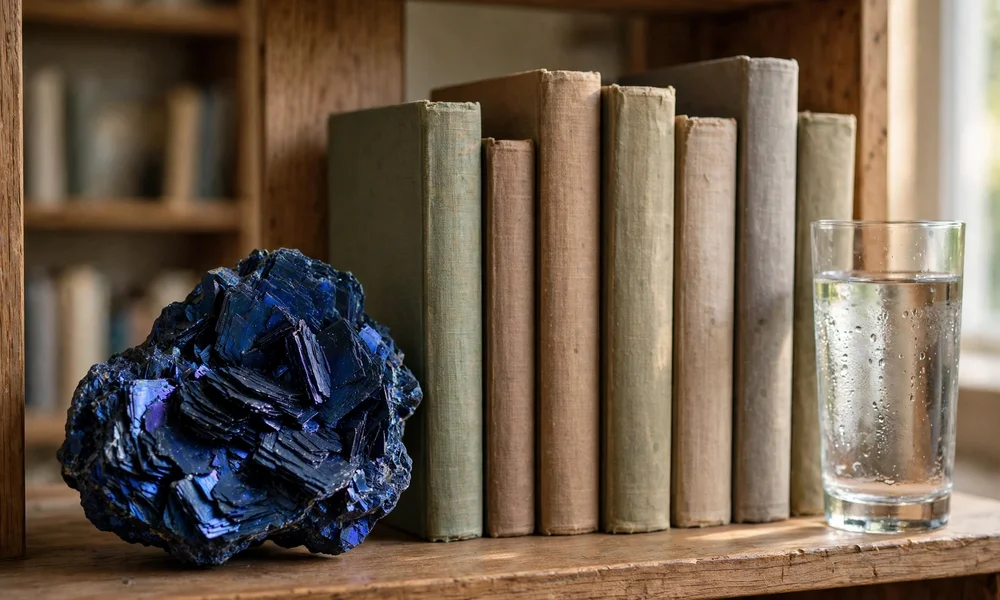
A quiet day with covellite asks for very little. Set the specimen on its slate slab at one end of a low shelf, and stand a tall glass of water at the other end, with clear wood between. Sit nearby with a book, and let your eyes drift to the dark blue between pages.
Pick the piece up once, feel how light and smooth the plates are, and set it back where it was. It is there to give the room one deep colour to rest on, not to carry the afternoon.
Covellite Beside Water
Water and covellite look handsome side by side, but they must stay apart. Keep your glass at one end of the slab and the mineral at the other, with dry space between them, so the drink stays clean and the specimen stays dry. A mineral left in water loses its gleam, and a damp copper mineral can stain whatever it touches.
If a glass tips over, lift the covellite clear at once and dry the shelf, leaving the piece out in the air until it is dry again. Never put covellite in a glass, a jug, or a bath.
Covellite at a Glance
| Deep indigo blue | Quiet shelf, desk | Display only |
|---|---|---|
| Thin plates, metallic | Slow afternoons, still | Glass kept apart |
| Soft, light, smooth | Cool window light | Never in drinks |
| Copper sulfide, CuS | One slab, one glass | Wash hands after |
| Dark blue, gleaming | Dry room, calm | Never soak it |

Covellite and Blue Zircon
Blue zircon for calm days is the brightest blue stone in this journal. Blue zircon is a vivid sparkling blue, the colour of clear water under a bright sky, and it suits calm days in soft daylight.
Covellite is darker beside it, a deep indigo that holds its colour in shadow rather than throwing light. Blue zircon flashes and sparkles; covellite gleams quietly along its plate edges. One is bright blue for open mornings, the other dark blue for still afternoons.
Covellite and Blue Sapphire
Blue sapphire for calm days is the classic deep blue gem of this journal. Blue sapphire is a faceted corundum, hard and bright, cornflower blue with sharp flashes, for calm days at a desk in soft daylight.
Covellite is softer and darker beside it, a mineral of thin plates rather than a cut gem, indigo rather than cornflower, with a gleam instead of bright facets. Blue sapphire is a hard jewel that keeps its polish for years; covellite is a soft specimen that asks for gentle hands.
Covellite and Blue Pearl
Blue pearl is the softest blue in this journal, a round pearl the colour of a clear sky just after dawn, smooth and cool, for calm mornings with the windows open. It is jewellery, worn on a strand or set in a pendant, and its shine slides gently across the bead.
Covellite is nothing like a pearl. It is rough and plated where a pearl is round and smooth, dark indigo where a pearl is pale sky blue, and it sits on a slab rather than around a neck. The pearl suits bright calm mornings; covellite suits the slower hours of a quiet afternoon.
Covellite and the Other Blue Stones
The rest of the blue stones in this journal spread out around covellite, each with its own blue. Blue agate is a soft banded blue crossed by fine white lines, like ripples on a still pond, for unhurried mornings at home. Blue jasper is a pale dusty blue with faint grey marbling, plain and quiet, for slow hours.
Blue obsidian for calm days is a soft blue glass pebble, smooth and cool, and most pieces sold in shops are man-made glass coloured blue in a furnace rather than lava glass from a volcano. Covellite stands apart from all three: darker than agate and jasper, plated rather than smooth like obsidian, a copper mineral with a metallic gleam none of the others carries.
Where Covellite Rests at Home
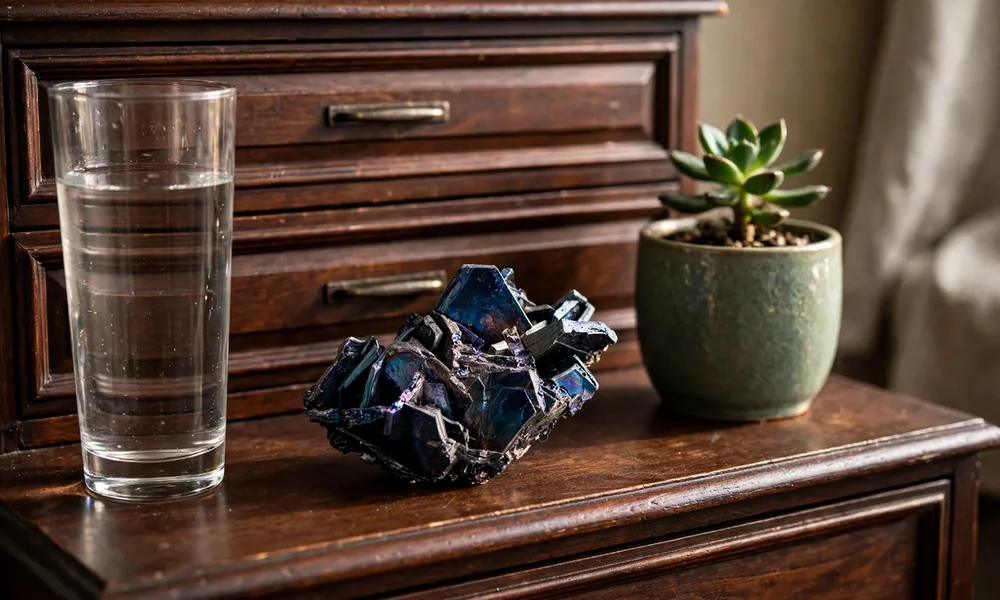
Covellite likes a spot where the light is cool and the air is dry. A low shelf, a desk corner away from the window, or a slab on the drawers all work, as long as the piece is easy to see and clear of elbows. It looks best in the even light of an afternoon.
Keep the slab clear of sinks, kettles, and steamy bathrooms, and above the reach of small children. Pick one place for it and leave it there, so the piece is never carried about in a pocket.
Keeping Covellite Clean and Dry
Covellite asks for little care, but dry care. Brush the dust off once a week with a soft dry brush. Keep soap, polish, and sprays off it, since moisture and chemicals dull the gleam and stain the plates.
Off display, wrap it by itself in clean cotton cloth, far from keys, coins, and harder stones that could scratch its soft plates. Keep it off sunny sills too, where strong sun can fade the blue.
Stones That Must Stay Away from Water
Some minerals hide things no drink should ever carry, and covellite is among them. Being copper through and through, it stays on its slab for looking at, and it never goes into water, a bath, or anything meant for swallowing. Rinse your hands with soap once you have set it down, and keep it far from food and little children.
Other minerals belong on that same dry shelf. Malachite carries copper in green stripes and must stay out of every cup and bath. Hematite spots with rust when damp and marks all it meets. Angelite thins in water until it is gone, amber clouds after soaking since it is hardened tree sap, apatite crumbles when bathed, lepidolite holds lithium, and pyrite decays in moist air. Keep them all from food and drink, and keep covellite the same: beside the glass, never inside it.
Your Quiet Days Checklist
- Set the covellite on its dry slab, glass a little apart.
- Sip the water slowly, without hurrying.
- Lift the piece once, feel its smooth plates, set it back.
- Wash your hands after handling the mineral.
- Buy from a seller who says plainly where the piece was found.
- If a health question comes up, take it to a doctor, not a stone.
Frequently Asked Questions
What is covellite?
Covellite is copper sulfide, CuS, forming in copper-rich ground as thin flat plates packed into a dark blue mass, deep indigo with a metallic gleam along the plate edges.
Is covellite safe to handle?
Covellite is safe to look at and hold briefly, as long as you wash your hands with soap and water afterwards. It is for display only, never in drinking water, never in soaks, and kept away from small children.
Why must covellite never go in water?
Covellite is a copper mineral, and copper compounds have no place in a drink. Water also dulls its gleam and can stain the plates, so the mineral stays dry on its slab beside the glass.
How is covellite different from blue zircon?
Blue zircon is a vivid sparkling blue stone, bright and full of small flashes, for calm days in soft daylight. Covellite is a darker indigo mineral of thin plates, with a quiet metallic gleam instead.
How is covellite different from blue sapphire?
Blue sapphire is a hard faceted corundum, cornflower blue with sharp bright flashes, for calm days at a desk. Covellite is a soft plated mineral, darker indigo, asking for gentler handling and a dry shelf.
Where should I keep covellite at home?
A cool dry shelf, a desk corner, or a slab on the drawers all work. Keep the mineral and the glass apart, out of harsh sun and away from damp rooms.
The Bottom Line
Covellite suits quiet days: one deep indigo-blue specimen on a dry slab in cool light, water in its own glass nearby, and the mineral kept dry and handled with clean hands.
A Note for Quiet Days
Dark blue, dry hands, a full glass — a quiet day asks for nothing more.