The house next door is the nearest elsewhere there is: its gate is a few steps from yours. A neighbour visit is a short call across that small distance, asking for almost nothing: a knock, a smile, and a glass of something fresh.
It is not a party, and it is not an errand: no invitation to send, no food to cook, no reason to dress up. You walk through the gate with a small jug of water or a pot of tea, sit for twenty minutes, and come home lighter than you left.
This guide sets out that visit in plain words: what to carry, how to knock, how the water is shared, and how to leave kindly before the visit grows long. Read it as gentle general information only, never as medical advice; any health question belongs with a doctor.
Key Takeaways
- A neighbour visit is a short, planned call next door, not a party or an errand.
- Bring water or tea; a small jug and two glasses are enough.
- Keep it short: twenty minutes and a kind goodbye.
- It differs from a library visit and a housewarming.
- If a health worry lingers, ask a doctor, not a visit.
What a Neighbour Visit Is
A neighbour visit is a call to the person who lives beside you, there and back in less than an hour, with a little water or tea. You knock at their door or meet them at the garden gate, exchange a few words, and sit together for a short while. Then you thank them and walk home through your own gate.
One neighbour, one door, one pot of tea: that is the whole shape of it. It is the smallest social call a street can hold, and that smallness is its charm: nobody prepares the house, nobody cooks, and nobody stays long enough to grow tired.
Why a Short Call Next Door Feels Fresh
A short call next door feels fresh because it breaks the day without breaking it. The house is the same, the street is the same, yet for twenty minutes you sit somewhere else, looking at your own roof from the other side of the fence.
Water adds to the freshness: a cool glass on a warm afternoon, poured slowly at a garden table, gives both people something to hold and a reason to pause between sentences. The talk wanders from the roses to the rain to the new shop at the end of the road.
Before You Knock
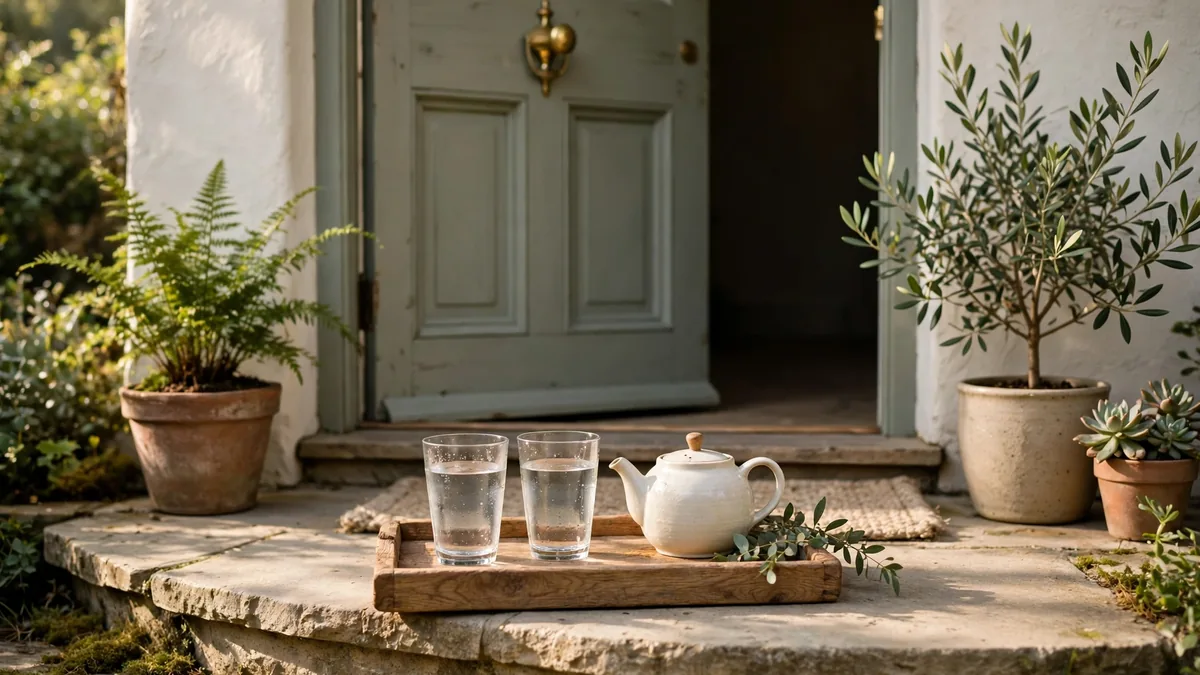
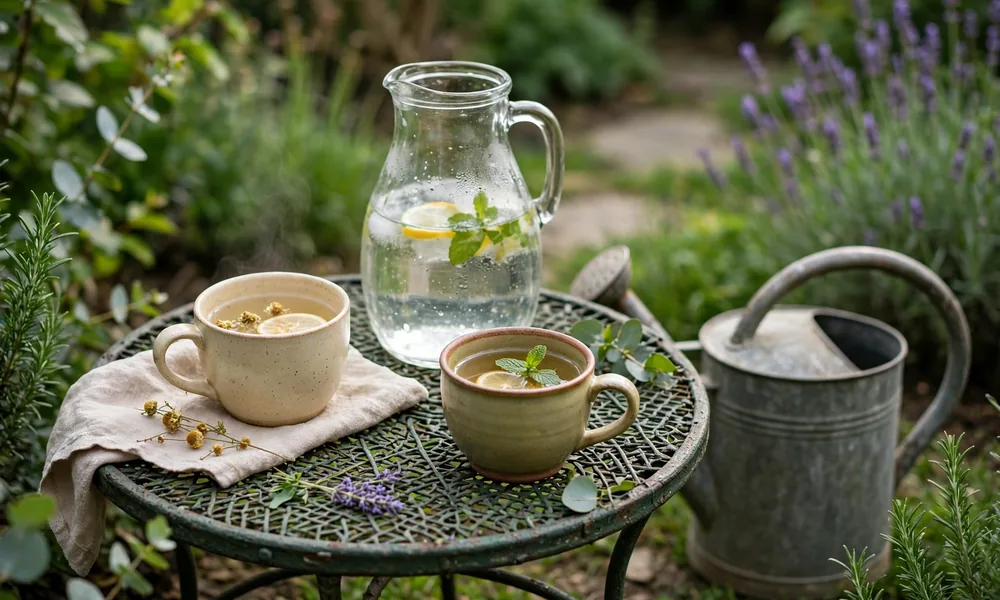
Before you knock, take five minutes: fill a small jug with fresh water, or make a pot of tea, and set out two clean glasses on a tray. Keep the tray light: one jug, two glasses, and a cloth for spills are the whole list.
Choose the mildest part of the day, usually the late morning or early afternoon, and avoid mealtimes and fading light. If your neighbour keeps different hours, a short word the day before is kinder than a surprise knock: a visit that is expected is a visit that is welcomed.
A Neighbour Visit in Small Steps
Walk through the gate slowly, tray steady in both hands, and knock once at the door. If nobody answers, knock once more, and if the house stays quiet, leave the visit for another day.
When the door opens, smile and hold up the tray. Step inside only if you are invited in, and sit where you are shown. Pour two glasses and let the talk find its own pace. Twenty minutes is plenty: when the tea is finished, thank your neighbour and walk home through the gate.
Water at a Neighbour's Door
Water at a neighbour's door follows one simple rule: the drink is shared, and the sharing is the point. Set the jug between you, pour slowly, and sip at the same pace as your neighbour. A lidded jug is best outdoors, because a glass knocked over on a garden table is a mess nobody wants, and a lid keeps the dust out.
If your neighbour offers a drink of their own, accept it gladly and sip a little. If they offer a herbal tea you have never tried, take a small sip first; a new herb deserves a cautious first taste, and patch-test any homemade balm on the skin before rubbing it in.
A Neighbour Visit at a Glance
| Short call | Next door | Twenty minutes |
|---|---|---|
| Two glasses | Tea, water | Leave kindly |
| Small jug | Garden gate | Come home light |
| One pot | Doorstep chat | Wash cups after |
Neighbour Visits and Library Visits
Water and a library visit is the nearest visit guide to this one, and the difference is between a place and a person. A library visit is a trip to a public building: a lidded bottle in a tote, a card in your pocket, an hour among the shelves, and books to carry home.
A neighbour visit has no building and no books: its destination is a person, its setting is a doorway or a garden, and its pleasure is the talk. The library asks for a list and a card; the neighbour asks only for a knock and a jug.
Neighbour Visits and Housewarmings
Water and a housewarming belongs to the host's own new home, a celebration, not a call: guests arrive with gifts and wander from room to room, while a jug on the counter welcomes everyone.
A neighbour visit is the opposite shape: you go out to someone else's door, with no celebration, no gift, and no crowd. One neighbour, one tray, one short sit-down: the visit is small on purpose. A housewarming opens a home to many; a neighbour visit opens a gate to one.
Neighbour Visits and Friendship Rituals
Water and friendship is the closest of all the live guides, because a friend and a neighbour can be the same person. But they point in different directions: a friendship ritual is a habit kept at home, a friend drops by, and two glasses on your own table start a good hour.
A neighbour visit is a call you make, not a call you receive: you carry the tray through the gate, knock at their door, and sit in their garden or at their table. The friendship guide shares water with someone who comes to you; this guide carries water to someone who lives beside you.
Neighbour Visits and the Other Visits
Beyond the nearest three, the other visits wear different shapes. A day trip means one long day outdoors, from breakfast until dusk, with a bag packed and a bottle filled for the hours in the sun. A cafe visit is a public table you pay for, with a tall glass of water beside a coffee you ordered; a neighbour visit costs nothing.
A reunion gathers old friends or family after years apart, with a jug on the table and stories catching up; a neighbour visit gathers one person, with no past to catch up on at all. A grandmother visit in this batch is a journey to a person too, but further than next door and longer by far: a quiet hour in her front room, not ten minutes at a garden gate.
After the Visit: Home Again
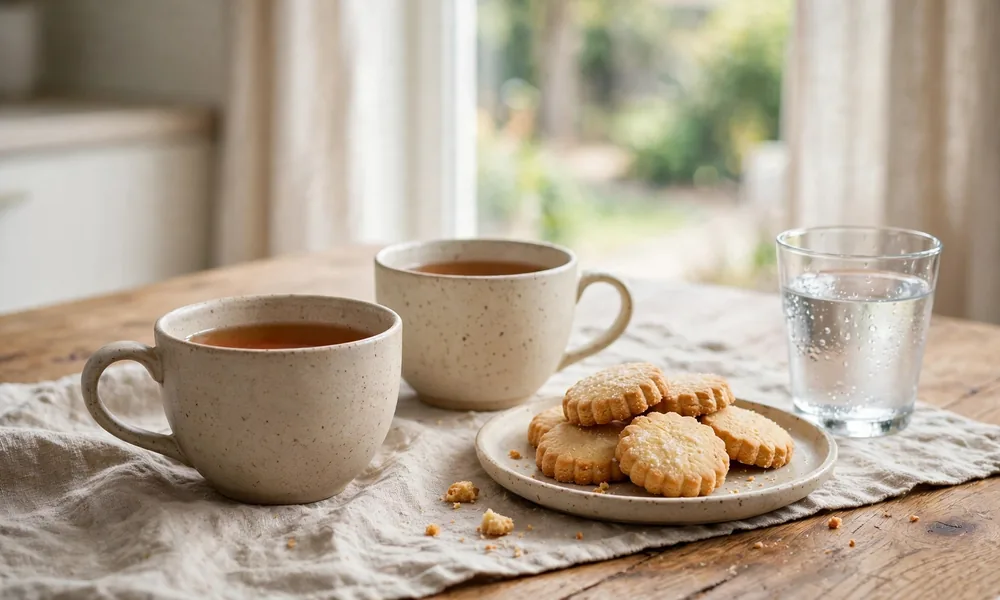
Come home, set the tray down, and drink a glass of fresh water slowly. Wash the cups and the jug and leave them by the door for tomorrow.
If the visit went well, a word at the gate next week is enough to keep it alive. Neighbours grow closer the way gardens do, a little at a time. One short call, kept kind and kept short, is worth more than a long visit that overstays its welcome.
When to Ask a Doctor
Everything here is gentle general information, not medical advice, and no ritual in this guide can mend a health problem. If you feel unwell on the way to the gate, or during the visit, sit down where you are and sip plain water slowly. If a concern keeps returning, or an ache will not settle, get a doctor's guidance and follow it.
Never take a herbal tea or a homemade remedy as a treatment, and patch-test any new balm on a small patch of skin first. A cup of tea is a kindness, not a cure.
Your Neighbour Visit Checklist
- Fill a small jug with fresh water before you leave.
- Knock once, wait, and smile at the door.
- Pour two glasses and let the talk wander slowly.
- Keep the visit short and leave before the tea goes cold.
- Wash the cups when you get home and put the jug by the door.
- If a health worry keeps returning, speak to a doctor.
Frequently Asked Questions
What is a neighbour visit?
A neighbour visit is a short, planned call to the person beside you, there and back in less than an hour, with a little water or tea to share. You knock at their door or meet them at the garden gate, sit for twenty minutes, and walk home.
How long should a neighbour visit last?
Twenty minutes is plenty, and an hour is the most it should ever take. When the tea is finished, thank your neighbour and leave while the visit is still warm.
What should I bring to a neighbour visit?
Bring a small jug of fresh water or a pot of tea, two clean glasses, and a cloth for spills. A few biscuits are a pleasant extra, though nothing beyond the drink is needed.
How is a neighbour visit different from a friend dropping by?
A friend dropping by comes to your home, and you pour two glasses on your own table. A neighbour visit is a call you make: you carry the tray through the gate and knock at their door.
How is a neighbour visit different from a housewarming?
A housewarming is a celebration in a new home, with many guests and a jug on the counter for everyone. A neighbour visit is a small call to one person next door, with no celebration and no crowd.
When should I see a doctor instead of going out?
If your chest hurts, your breathing turns sharp and short, you feel dizzy, or an ache returns again and again, get medical help at once. A neighbour visit is gentle general information, never a treatment.
The Bottom Line
Water and a neighbour visit make a small fresh ritual: one jug filled, one knock, twenty minutes of talk, and a kind goodbye at the gate.
A Note for Neighbour Days
Keep the call short, the water fresh, and the goodbye warm. One gate, one jug, one neighbour.