
A bright morning does not creep in quietly. The sun is already up when the kettle boils, and light spills through the curtains from the first hour. On a morning like that, a pale stone can fade into the brightness, and a dark one can look out of place, yet a warm orange crystal holds its own in the light. Zincite is that warm orange crystal: a bright, glassy orange stone the colour of a peeled clementine, of marigolds in a jar, of late sun on a kitchen wall.
Most zincite on sale today was grown in a laboratory, not pulled from a mine, and this guide says so plainly. Zinc oxide crystals form where zinc vapour cools in furnace heat, and the orange pieces sold as gems are almost always those lab-grown crystals, cut and polished for the shelf. The zincite you buy is almost certainly lab-grown, and that does not make it less pretty — it only means you should never pay a mined-stone price for it.
This guide looks at zincite in plain terms: the crystal itself, the way its orange fits bright days, the marks of a good piece, and the dry-tray habit beside a glass of water. It is a thing to look at and hold, nothing more, and it will not heal anything.
Key Takeaways
- Zincite is a warm orange zinc oxide crystal, mostly lab-grown, not dug from the ground.
- Its bright orange suits sunny mornings, open windows, and rooms full of daylight.
- Zincite is for looking at and holding only; it heals nothing at all.
- The stone rests dry on its tray, with the glass kept apart from it.
- One small orange piece is enough for a whole bright day.
What Zincite Is
Zincite is zinc oxide, a mineral that forms when zinc vapour meets oxygen and cools into crystals. In nature that happened in the waste heaps of old zinc mines in Poland, where furnace heat left small orange crystals among the slag. Nearly every zincite crystal on the market was grown on purpose in a laboratory. The lab-grown pieces are real zinc oxide, with the same chemistry as the natural ones, but they were made by people, not by the earth.
The colour runs from pale honey orange to deep burnt orange, and the best pieces glow when light passes through them. A polished zincite feels cool and smooth, with a bright glassy shine. It is soft for a gem, around four to five on the Mohs scale, so it scratches easily, and it deserves a tray of its own.
Why Warm Orange Suits Bright Days
Warm orange suits a bright day because it answers the sun. A bright day is full of open windows and small plans, and a warm orange stone joins that mood rather than fighting it. A pale stone would fade in that sunshine, and a dark one would sit unnoticed. Warm orange meets the light halfway, and looks as good in sharp mid-morning white as in late-afternoon gold. The sun, the water, and your own plans make the bright day, not the stone.
Choosing a Zincite Piece
Look for orange that is clear and even, not painted-looking. Turn the piece slowly in daylight and watch the colour hold steady: pale honey at the thin edges, deeper orange in the middle, with no ashen patches and no murky corners. The face should feel even all over, with no pitted spots and no nicked rims. Ask the seller outright whether the piece is lab-grown, and expect an honest yes. A grape-sized piece is plenty.
At home, give zincite one settled corner where daylight falls gently: a low shelf, a desk corner, or a tray on the drawers. Keep that corner far from taps and steam. Once a week, dust it with a soft, dry cloth, and rest it alone in a lined box when it is not on show.
A Bright Day with Zincite
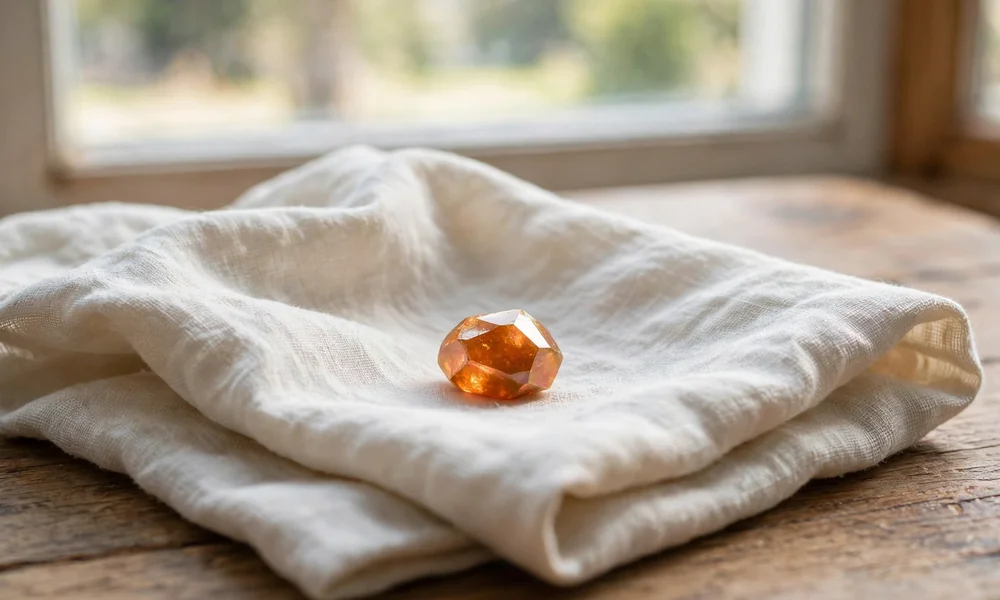
Set the scene before the day gets going. Spread a pale cloth on the side table, rest the crystal near one edge, and put a tall glass of cool water near the other, with bare cloth showing between them. Sip the water at an easy pace while the sun rises, and pick the crystal up once to see the orange catch the light. Then leave it where it is while you get on with the morning.
Zincite Beside Water
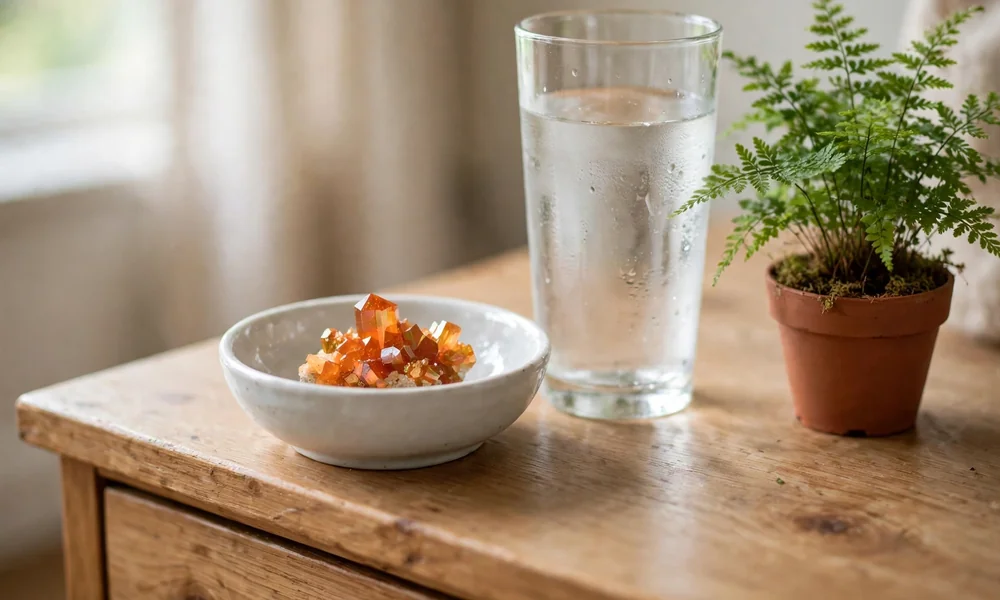
Zincite and a glass of water share a tray, never a glass. Put the glass at one end and the stone at the other, so the drink stays pure. Wash your hands after setting the crystal down, before you reach for your drink. Keep the crystal clear of every container: no tumbler, no jug, no bath. A soak would dim its shine, so the crystal rests beside the glass, never in it.
Zincite at a Glance
| Warm orange crystal | Bright daylight | Display only |
|---|---|---|
| Lab-grown, mostly | Tray, shelf, sill | Dry hands only |
| Smooth, glassy shine | Sun, open windows | Glass kept apart |
| Small pieces usual | One tray, one glass | Never in drinks |

Zincite and Orange Agate
Orange agate for bright days is a warm orange banded chalcedony, built up in thin glassy layers. It formed slowly in volcanic rock, and its charm is the banding: deep apricot beside pale peach, with thin cream lines between them.
Zincite is a different kind of orange altogether: no bands at all, just one warm honey orange all the way through, smooth and unbroken. Where agate is a natural stone with layers to follow, zincite is usually a lab-grown crystal with a single clear colour. Pick the agate for fine banding, and pick zincite for a plain, even orange that glows when light passes through it.
Zincite and Orange Jasper
Orange jasper for bright days is a plain warm orange jasper, an opaque quartz coloured by iron. Its colour runs from pale peach to deep apricot, and it feels cool, solid, and earthy in the palm.
Zincite is the more open of the two: daylight slips a short way under its face, so the honey orange seems lit from inside, while jasper stays flat and earthy. Jasper is ordinary and tough, while zincite is softer and smoother, a crystal that likes a tray to itself. Jasper is dug from the ground; zincite is usually grown in a laboratory. Jasper suits a bright day that wants an earthy orange, and zincite suits one that wants a clear, glowing orange.
Zincite and Orange Sapphire
Orange sapphire for bright days is a warm orange corundum, clear and bright, coloured by tiny traces of iron, and very hard. Its colour runs from soft peachy orange to rich burnt orange.
Zincite shares the warm orange and little else. Sapphire is a natural corundum, hard enough to keep a sharp polish for years, while zincite is a softer zinc oxide crystal, usually lab-grown, that scratches more easily. Sapphire is the stone for sparkle and staying power; zincite is the stone for a calm, even glow at a smaller price.
Zincite, Orange Coral and Clinohumite
Two other live orange stones sit apart from zincite, each with its own nature. Orange coral is the hardened frame left by tiny sea creatures, shaped by hand into branches and beads. Because coral is protected, buy it only from a lawful seller with a clear origin. Clinohumite is a rare warm orange mineral, a magnesium silicate, honey orange and smooth.
Zincite is none of those: not a sea branch, not a rare mountain mineral. It is a zinc oxide crystal, mostly grown in a laboratory. Coral is for branches and beads, clinohumite is for rare-stone collectors, and zincite is for a bright tray at an honest price.
Zincite and the Other Stones in This Batch
This run of guides holds four more stones beside zincite, each taking a different colour and hour of the day. Staurolite is a dark brown stone that often grows in crossed shapes, quiet and earthy. Barite is a pale, glassy mineral, soft and clear. Titanite is a warm golden-green gem with a bright, almost fiery shine. Vesuvianite is a deep green to brown stone, rich and forest-like. Zincite sits among them as the bright orange one, the colour of sunlit mornings.
Stones That Must Stay Away from Water
Keep every stone dry as a rule, and learn the few that are truly risky near a drink. Malachite is first among them: its green bands hold copper, and copper has no business in any cup or jug. Hematite comes next, since wetting it can freckle the stone with rust. Lepidolite holds lithium in its pale flakes, so it never meets water meant for drinking, and the same goes for apatite. Pyrite, angelite, and amber all stay on dry shelves too. Zincite follows the same habit: beside the glass, never inside it.
Your Bright Days Checklist
- Set the zincite on a dry tray, with a full glass standing apart.
- Sip the water slowly while the morning light fills the room.
- Lift the stone, watch its orange glow, and set it down again.
- Dust it with a dry cloth and wash your hands after handling it.
- Buy only from a seller who says plainly whether the piece is lab-grown.
- For a health worry that stays, ask a doctor — a crystal holds no answers for it.
Frequently Asked Questions
What is zincite?
Zincite is a warm orange zinc oxide crystal, mostly grown in laboratories, with the same chemistry as the rare natural pieces.
Is zincite natural or lab-grown?
Almost all zincite on sale is lab-grown, made by people in a furnace rather than by the earth in a mine, and an honest seller will say so plainly.
How is zincite different from orange agate?
Orange agate is a natural banded chalcedony with apricot, peach, and cream bands, while zincite has no bands at all, just one warm honey orange all the way through.
Is zincite safe to hold?
Most adults can hold a small polished piece briefly without trouble.
Can I put zincite in water?
No. Zincite stays out of drinking water, out of soaks, and out of baths, because a soak would dull its shine, so the crystal sits beside the glass, never in it.
Where should I keep zincite at home?
Pick a dry spot in bright light — a tray, a shelf, or a sill — with the glass close by but apart.

The Bottom Line
For bright days, zincite is enough: one warm orange crystal, honestly lab-grown, a glass of water close by, and the crystal dry.
A Note for Bright Days
Keep the morning sunny and the stone dry. One small orange crystal, one glass of water, and a few bright hours are plenty.


