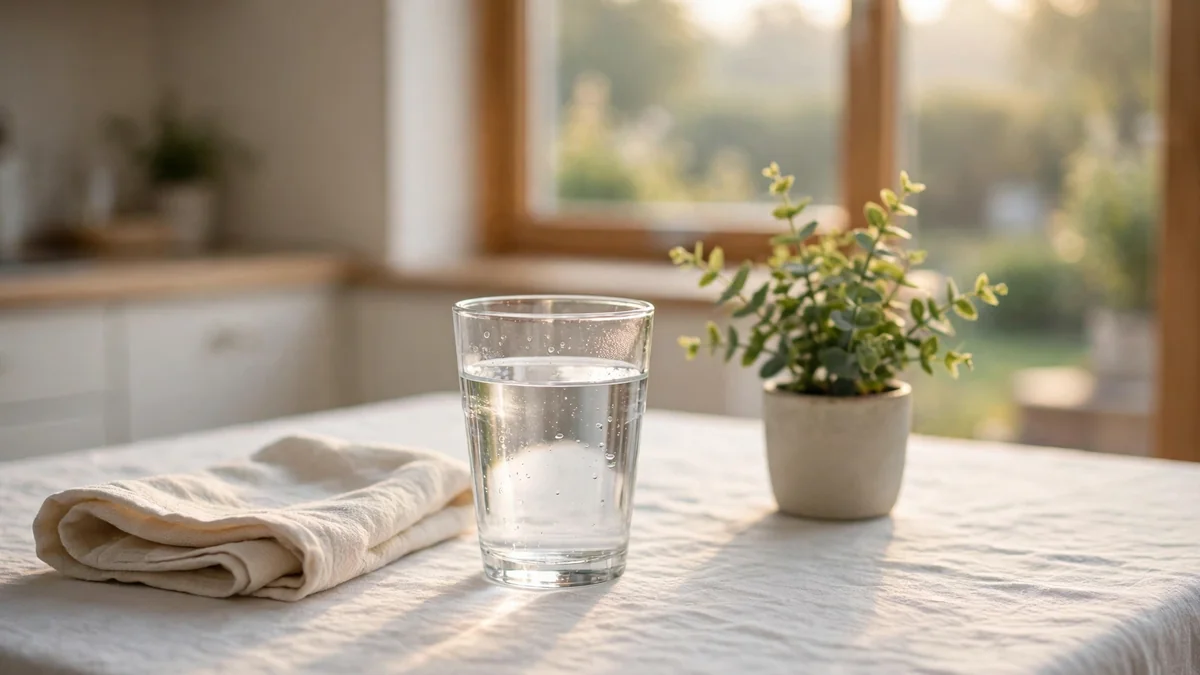
Most mornings begin in a rush. The alarm rings, the phone lights up, and the day starts before you have properly woken up. The morning feels like something to survive. A water-first routine changes that order: it puts one calm thing first, and lets the rest follow.
A water-first morning routine means building the first hour of your day around plain water: a glass to drink when you wake, water to wash with, and a slow, unhurried pace. There is no stone in the water, no powder, and nothing added. The water is simply water, and the routine is a sequence of small steps, each one leading gently into the next.
This article shows you how to build that routine, step by step: the night before, the first glass, the wash, light care for your skin, breakfast, and the pace of the rest of the morning.
Key Takeaways
- A water-first morning puts plain water first: a glass to drink, water to wash with, and a slow pace.
- The routine starts the night before, when you set out a clean glass of fresh water.
- Drink the first glass slowly, in small sips, before coffee, tea, or your phone.
- Wash with lukewarm water and apply light care while skin is still slightly damp.
- No stone ever goes in drinking water; any stone stays beside the glass.
What a Water-First Morning Means
A water-first morning is not a list of products or a strict timetable. It is a way of ordering the morning so that water comes before everything else: before the news, before the emails, before the rush. When water comes first, the morning feels steadier, and the choices that follow feel easier.
Think of the morning as a short sequence with four parts. First, you drink a glass of plain water. Second, you wash your face and hands with lukewarm water. Third, you give your skin light care while it is still slightly damp. Fourth, you eat a light breakfast with another glass of water beside your plate. That is the whole routine.
The Night Before: Setting Water Out
Every good morning routine starts the night before. Before bed, wash a clean glass, fill it with fresh drinking water, and set it on your bedside table or the kitchen counter, wherever you will reach it first. That is all the preparation the routine needs, and it takes less than a minute.
Setting the water out does two useful things. First, it removes a decision from the morning: when you wake, you do not have to think about what to do first, because the glass is already there, waiting. Second, it makes the routine visible: seeing the glass is a small reminder to begin.
Keep the preparation simple. Use the same glass every day, so the habit has a shape you can recognise, and keep a small towel nearby. If you keep a stone on your bedside table, it stays beside the glass, never in it. Stones are beautiful objects to look at, and some, like malachite, selenite, and pyrite, must never touch water at all.

Step One: A Glass of Plain Water
When you wake, sit up slowly and drink the glass of water you set out last night. Drink it slowly, in small sips, rather than all at once. There is no target to hit and no timer to watch. The point is not the amount; it is the pause. Those first slow sips are the moment the day begins properly.
Keep the water plain. Do not add anything to it, and do not put any stone in it, even for a few minutes. Some stones contain minerals that should never be swallowed, and the safest rule is the simplest one: stones stay beside the water, never in it. Keep any stone on the table next to your glass.
Step Two: Washing with Lukewarm Water
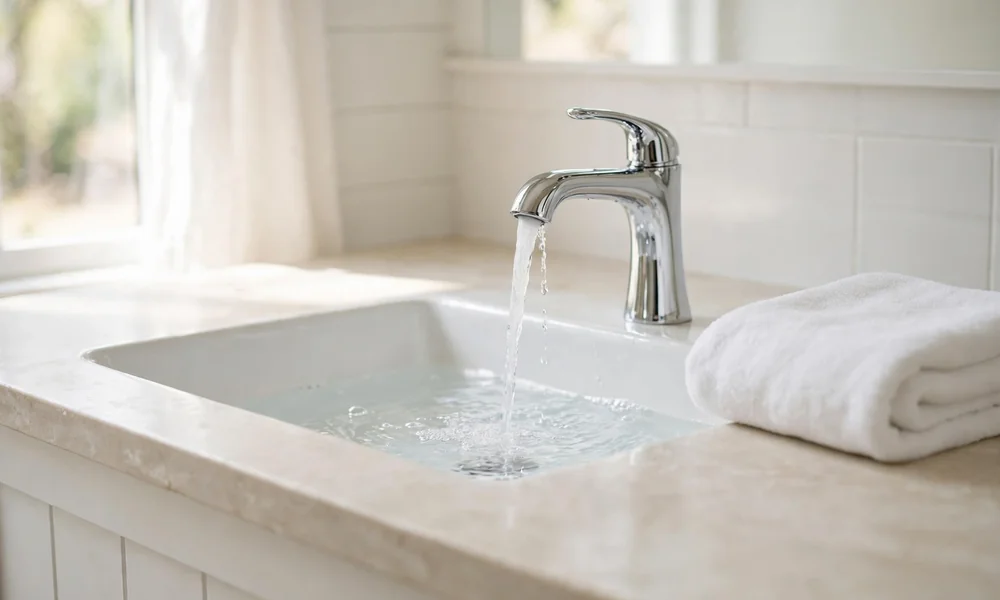
After the first glass, go to the bathroom and wash your face and hands with lukewarm water. Lukewarm means water close to the temperature of your own skin: neither cold enough to make you flinch nor hot enough to leave your face feeling tight. Test it on the inside of your wrist first.
Wash gently and without hurry. Splash the water over your face, and use a mild cleanser only if your skin feels oily. Rinse well, then pat your face dry with a soft towel instead of rubbing it. Patting is kinder and leaves a little moisture behind, which is exactly what the next step needs.
The temperature matters more than most people expect. Very hot water can leave skin feeling dry, and very cold water can feel like a shock. For a fuller explanation, lukewarm water for morning skin explains the difference in detail.
Step Three: Light Care on Damp Skin
While your skin is still slightly damp from washing, apply light care: a simple moisturiser, or a light serum if you use one. Damp skin holds moisture well, so this is the best moment for a thin layer of cream. Use a small amount, spread it gently over your face and neck.
Keep this step short and simple. If you wear sunscreen, apply it after the moisturiser has settled. If you wear makeup, keep it light in the morning and add more later only if the day calls for it. The aim is freshness, not a full face of makeup before breakfast, and light care leaves your skin looking like itself.
On busy days, the whole wash-and-care sequence takes about five minutes, and it still counts. A five-minute glow routine for busy days shows how those five minutes can be arranged when time is short.
Step Four: A Slow Breakfast and a Second Glass
Now sit down to a light breakfast, with a second glass of plain water beside your plate. Eat slowly, without your phone in your hand, and drink the water in small sips as you eat. Breakfast does not need to be elaborate: fruit, bread, yoghurt, or eggs. The point is the pace. A breakfast eaten sitting down sets a calmer tone for the day.
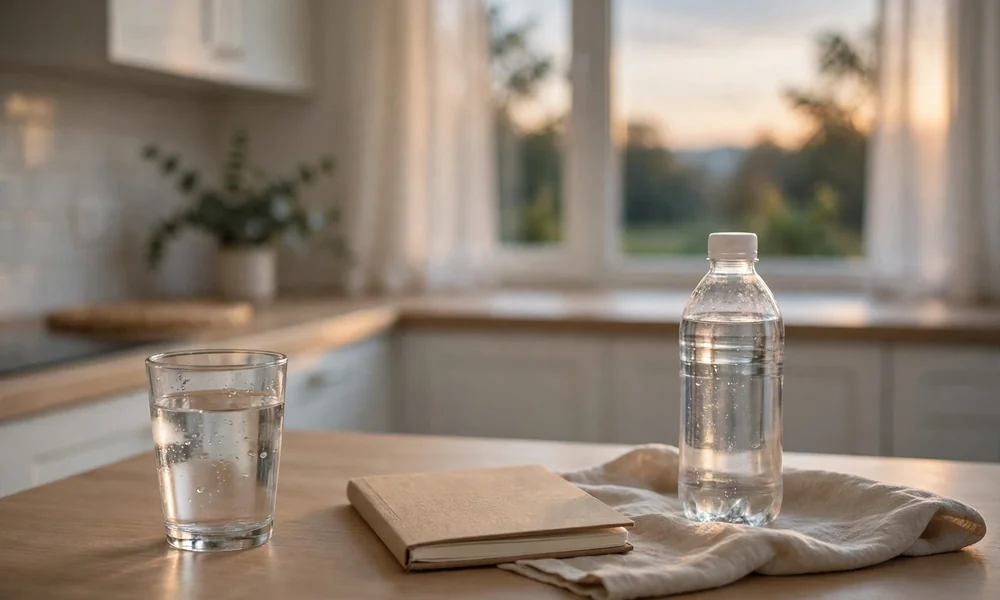
This is a good moment to look at the day ahead, briefly and without worry. A notebook on the table helps: write down the one or two things that matter most today, and leave the rest for later. The notebook is not a diary and not a plan for the whole week; it is a small anchor, a way of choosing what the morning is for before the day chooses for you.

Pacing the Rest of the Morning
Once breakfast is done, the routine is nearly complete, but its effect should last into the rest of the morning. Keep a bottle or a glass of water where you work, and sip from it through the morning. You do not need to count glasses or set reminders; just keep water within reach and drink when you feel like it. Drinking more water gently explains why the gentle approach works better than forcing it.
Pacing also means leaving gaps. Do not fill every minute between breakfast and work with tasks. A few unhurried minutes are part of the routine, not a waste of it. Calm mornings tend to stay calm.
A Simple Week of Mornings
Try the routine for one week, with a small focus each day. By the end of the week, you will know which parts fit your life and which parts need adjusting.
| Morning | Focus | Keep it |
|---|---|---|
| Monday | Set out glass | One glass |
| Tuesday | Slow first sips | Small sips |
| Wednesday | Lukewarm wash | Gentle patting |
| Thursday | Light care | One thin layer |
| Friday | Slow breakfast | Phone away |
| Saturday | Longer pause | Extra ten minutes |
| Sunday | Rest and repeat | Keep what fits |
Start on a Monday if you can, but any day will do. Write a short note each evening about what worked and what did not, and adjust the next day. If the first glass feels like too much, try half a glass. If the wash feels rushed, wake five minutes earlier. Small adjustments, made daily, are how a routine becomes a habit.
Your Water-First Morning Checklist
- Set out a clean glass of fresh water before bed.
- Drink the first glass slowly, in small sips, before your phone.
- Keep the water plain: no stone ever goes in drinking water.
- Wash with lukewarm water and pat dry with a soft towel.
- Apply light care while skin is still slightly damp.
- Eat a slow breakfast with a second glass of water beside your plate.
Frequently Asked Questions
How long does a water-first morning routine take?
About twenty to thirty minutes from waking to the end of breakfast. On busy days, a shorter version still counts.
Should the first glass be cold or lukewarm?
Room-temperature or lukewarm water suits most people first thing in the morning. Very cold water can feel like a shock when you have just woken up.
Can I put a crystal in my drinking water?
No. Stones should stay beside the water, never in it. Some stones contain minerals that should never be swallowed, and malachite, selenite, pyrite, and hematite must never go in drinking water. Keep any stone on the table next to your glass.
What if I forget to set the water out the night before?
Just pour a fresh glass when you wake and drink it slowly. The night-before step makes the routine easier, but it is not a rule that must never be broken.
Do I need special products for this routine?
No. You need a clean glass, fresh water, a soft towel, and a light moisturiser. The routine is about order and pace, not about buying anything new.
Will a water-first morning fix my skin?
Not on its own. Drinking water, washing gently, and caring for damp skin can help your skin look fresh and feel comfortable, but water is not a treatment. It will not cure dryness, spots, or any skin condition.
The Bottom Line
A water-first morning routine is a simple order for the first hour of the day: a glass of plain water, a lukewarm wash, light care on damp skin, and a slow breakfast with a second glass. It costs almost nothing and takes twenty to thirty minutes.
Set out a glass tonight, and start tomorrow morning with water first.
A Note for Quiet Mornings
Keep it plain, keep it slow, keep it yours. A glass of water and a few unhurried minutes are enough to begin the day well, and a beginning like that is worth keeping.


