Sustainable living sounds like a big project, and that is why so many people never start it. The words bring to mind a perfect home, a perfect routine, and a long list of things to buy, change and learn. Real life is smaller than that, and a smaller start is a better one. One bottle, one bag, one jar at a time is enough.
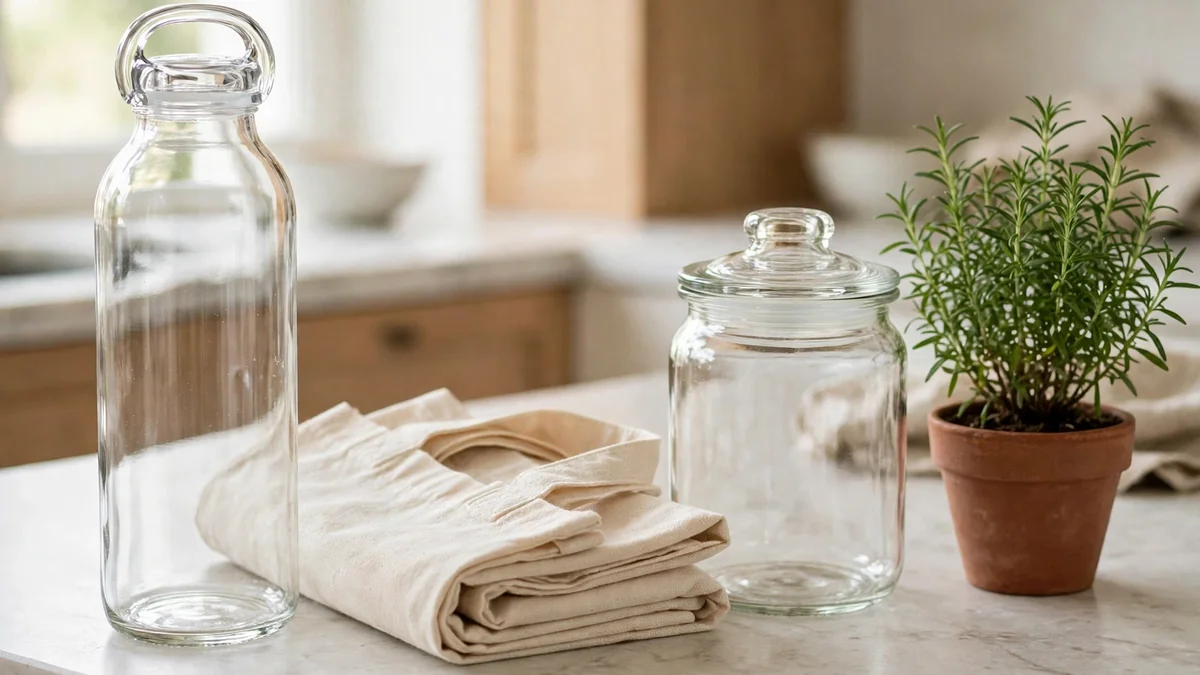
Water is the easiest place to begin. A glass bottle by the tap, a cloth bag by the door, and a jar on the shelf are small, plain things, and they quietly replace a dozen throwaway habits. Nothing here needs a new lifestyle, a big budget, or a perfect week. It only needs a few simple swaps, kept where you can see them.
This guide explains what sustainable living means in plain terms, which swaps to try first, how to keep your water plain and your reusables clean, and how to build a calm daily routine around them. The swaps are simple household habits, never treatments, and they will not fix everything on their own.
Key Takeaways
- Sustainable living means using a little less, reusing a little more, and wasting less water.
- The easiest swaps start with water: a refillable bottle, a cloth bag, and glass jars.
- Keep drinking water plain, and keep reusables clean and dry between uses.
- One swap at a time is enough; a perfect home is not the goal.
- A lighter home needs very little: tap water, one bottle, one bag, and a calm routine.
What Sustainable Living Means
Sustainable living means living in a way that uses a little less and wastes a little less, day after day, without making life harder. It is not a perfect home or a strict set of rules. It is a series of small choices: refilling a bottle instead of opening a new one, carrying a cloth bag instead of taking a plastic one, and keeping a jar instead of throwing it away. Each choice is small, and the small choices add up over a year. The idea is simple enough for any home. Use what you have, refill what you can, repair what breaks, and buy only what you truly need. A home that follows that idea feels calmer, because there is less clutter, less waste, and less to buy again next week.
Why Simple Swaps Suit Busy Homes
Simple swaps suit busy homes because they ask for almost nothing. A refillable bottle takes the same time to fill as a shop bottle takes to open, and a cloth bag takes the same time to fold as a plastic bag takes to throw away. The swap fits inside a habit you already have, so it does not need a new routine or a free afternoon. Busy homes also benefit most from fewer things to buy. When the bottle, the bag and the jar are already in the cupboard, the weekly shop gets shorter, the bin gets lighter, and the kitchen feels calmer. A swap that saves a small effort every day is worth more than a grand plan that lasts a week.
The Gentle Rule First: Keep Water Plain
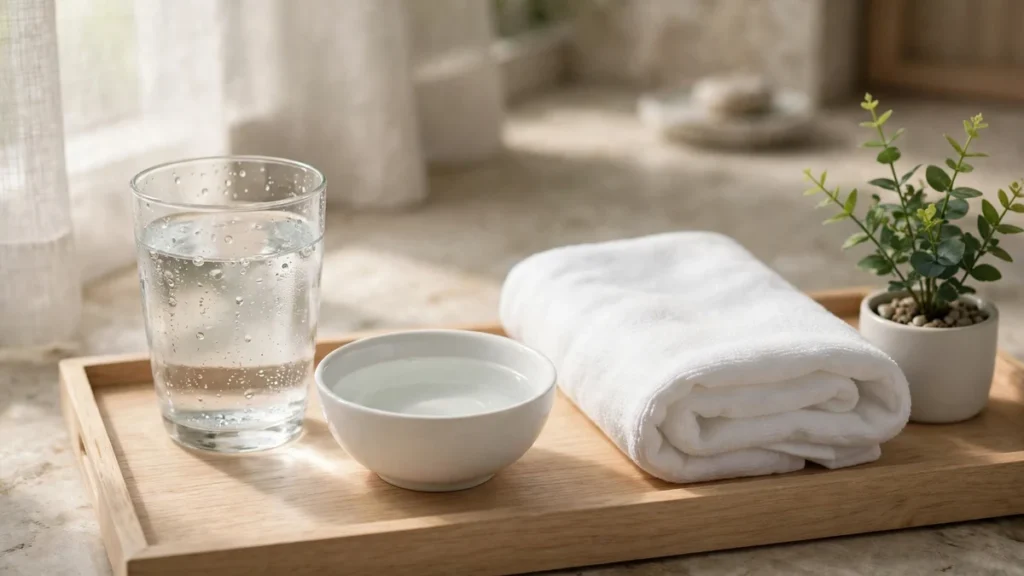
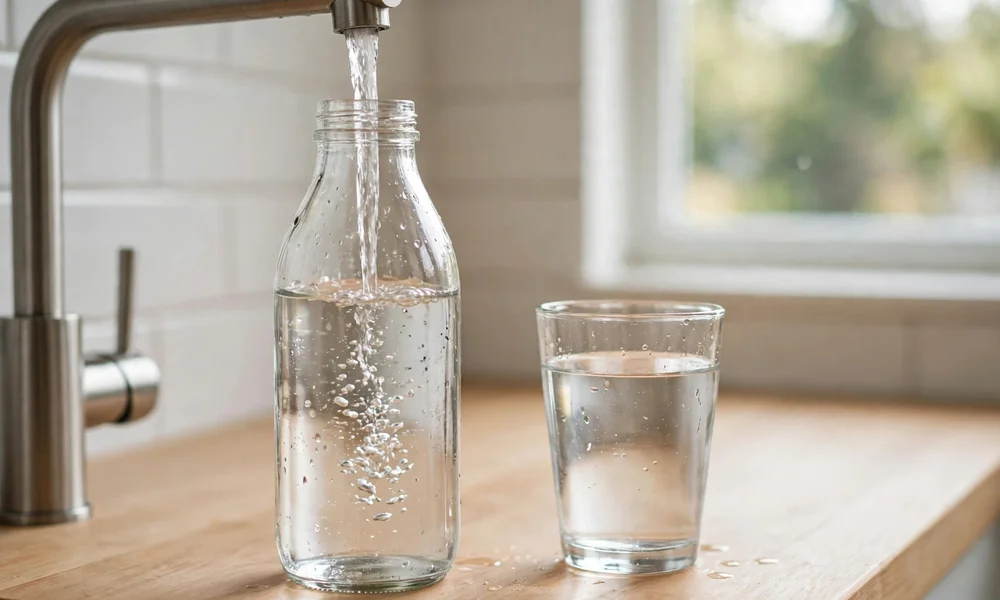
The first rule is gentle and simple: keep drinking water plain. Tap water, poured into a clean glass or bottle, is all you need, and nothing should be added to it for the sake of a trend. Do not soak stones, shells, herbs or anything else in drinking water, and never use a bottle that has held chemicals or cleaning products. If a bottle ever smells odd or looks cloudy, wash it well with hot soapy water, rinse it twice, and let it dry fully before use.
Stones that must never touch water at all are worth naming here, because this journal often pairs stones with water. Malachite must never go in water or elixirs, apatite and lepidolite must never go in drinking water, lepidolite contains lithium, pyrite must never go in drinking water, angelite must never be soaked, and amber must never go in drinking water or soaks. Hematite must never go in drinking water either. The stone always stays beside the glass, never in it.
Choosing Your First Swaps
Choose your first swaps the way you would choose any household tool: plain, sturdy and easy to clean. A glass or steel bottle with a wide mouth is easy to wash, a cotton bag that folds small is easy to carry, and a glass jar with a tight lid keeps food fresh without plastic. Look for things you will actually enjoy using, because a bottle you like will travel with you and a bag you like will live by the door. Avoid buying a whole new set at once. Start with one bottle and one bag, use them for a week, and only then choose the next swap. A swap that earns its place is worth more than a shelf full of things bought in a hurry.
A Lighter Morning with Simple Swaps
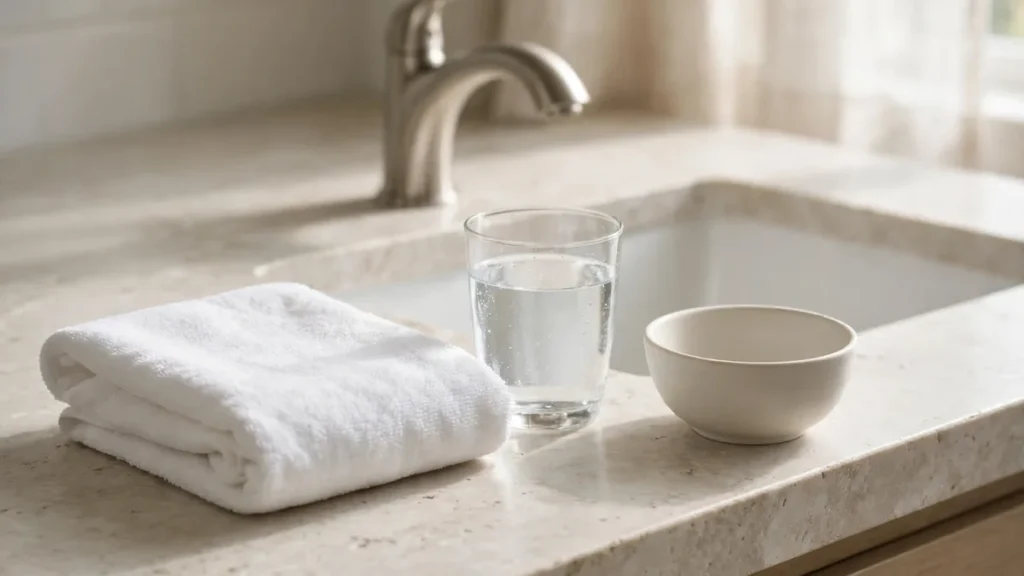
A lighter morning takes only a few minutes to set up, and it starts the evening before: leave the bottle washed, the bag folded by the door, and the jar ready on the shelf. When the morning comes, fill the bottle at the tap, pour a glass of fresh water, and drink it slowly before the day begins. Take the bottle with you, and the bag too, so the shop on the way home needs no new plastic.
Water first, then a plain breakfast, then nothing else until the morning has settled. Light mornings reward a slow start.
Your Kitchen, One Swap at a Time
The kitchen is where most swaps live, and one at a time is the right pace. Start with the bottle, because water is the habit you repeat most. Next, try the cloth bag, kept folded by the door so it leaves with you. Then try glass jars for rice, oats and leftovers, where you can see what is inside. Where water and a new home, a simple first week sets up water habits for a new home, this guide sets up simple swaps for any home. The kitchen is the same, but the job is different: one is a fresh start in a new place, and the other is a lighter routine in the home you already have.

Sustainable Living and a Slow Routine
Sustainable living likes a slow routine. Plain water, a filled bottle, a folded bag and a jar on the shelf will carry most days. Where water and golden hour light, a simple evening keeps a golden-hour water ritual for the evening, this guide keeps simple swaps for the whole day. One is a quiet hour at dusk, and the other is a lighter way of living from morning to night. The same calm water serves both, but the habits are different: one is a ritual for the evening light, the other is a routine that lightens every hour.
Simple Swaps at a Glance
| Simple swap | Daily water | Lighter home |
|---|---|---|
| Glass bottle | Tap water first | One less bag |
| Cloth shopping bag | Refill each morning | Jars instead of plastic |
| Bamboo toothbrush | Short cool rinse | Soap refill bottle |
| Cotton cloths | Drink before errands | Wash and reuse |
Caring for Your Reusables
Reusables need a little care to stay fresh. Wash the bottle every day with hot soapy water, rinse it well, and let it dry with the lid off. Wash cloth bags and cotton cloths with the regular laundry, and let them dry fully before folding. Wipe glass jars with a clean cloth, and check the lids for wear, because a jar that seals well keeps food fresh for longer.
A brief wash is enough for most days. Do not use a bottle that smells odd, and never store chemicals in a food jar.

What Simple Swaps Will Not Do
Be honest about what simple swaps can and cannot do. A bottle and a bag will not fix everything: they will not clean the air, change the world, or make a busy week calm by themselves. They are small household habits, and small habits are all they are. The lighter home is the part that helps: less clutter, less waste, and less to buy again can make a week feel calmer. The swaps keep you company while you do that work.
No swap or routine will replace rest, sleep and medical advice. If a health problem stays with you week after week, the answer is a doctor, not a new bottle.
Your Simple Swaps Checklist
- Fill a clean glass or steel bottle at the tap each morning.
- Keep a folded cloth bag by the door, ready to leave with you.
- Store rice, oats and leftovers in glass jars you can see through.
- Swap one plastic item for a reusable one each week, no faster.
- Wash the bottle daily and let it dry fully with the lid off.
- Drink your water slowly, and let the lighter routine settle in.
Frequently Asked Questions
What is sustainable living?
Sustainable living means using a little less and wasting a little less, day after day, without making life harder. It is a series of small choices, like refilling a bottle and carrying a cloth bag.
Which swap should I try first?
Start with a refillable water bottle, because water is the habit you repeat most. Use it for a week, then add a cloth bag, and only then choose the next swap.
Can I put stones in my drinking water?
No. Keep drinking water plain, and keep any stone beside the glass, never in it. No stone belongs in a drink, and some stones must never touch water at all.
How do I keep a reusable bottle clean?
Wash it every day with hot soapy water, rinse it well, and let it dry fully with the lid off. If it ever smells odd, wash it again and let it dry before use.
Are glass jars better than plastic?
Glass jars are easy to clean, easy to see through, and easy to reuse for years. Where water and crystal gifts, a simple guide keeps water gifts simple and thoughtful, this guide keeps everyday swaps simple and reusable.
Do small swaps really make a difference?
Yes, slowly. One bottle, one bag and one jar, used every day, replace hundreds of throwaway items over a year. Small habits, kept daily, add up.
The Bottom Line
Sustainable living is a filled bottle, a folded bag, and a jar on the shelf. Start with one swap tonight, and let tomorrow be a little lighter.
A Note for Lighter Days
Keep it plain, keep it simple, keep it slow. The lighter days belong to you.