Flat hair is a quiet frustration. Clean and brushed, it still falls straight down, with no lift at the roots and no air between the strands. Heavy products promise to fix it, and most only make it heavier, coating each strand until the hair looks flatter.
Water is the lightest tool hair has. Used well, at the right temperature, with a gentle wash, a long rinse, and a soft dry, plain water can make hair look airier and fuller without adding anything heavy. The routine is simple.
This guide explains a light hair routine for water and volume: why water matters for fullness, what temperature to use, how to wash and rinse gently, and how to dry softly. Everything here is gentle general information only, never a treatment.
Key Takeaways
- Water and volume means airy, full-looking hair built on light water habits.
- Lukewarm water is kindest; hot water flattens hair and dries the scalp.
- Wash gently with fingertips, rinse longer than you think, and dry softly without rubbing.
- A light routine adds nothing heavy: no thick creams, no heavy oils, no heat.
- This is gentle general information only; real problems belong to a doctor or dermatologist.
What Water and Volume Means
Water and volume means hair that looks full because it is light, not loaded with product. Volume is the space between the strands, the lift at the roots, and the way the hair moves when you turn your head. When the strands are clean and light, they stand a little apart, and the hair looks fuller.
The routine is light in every sense: plain water, a small amount of mild shampoo, a light rinse, and a soft towel, and nothing else heavy. It is not a styling routine, and it is not a treatment. It is simply washing and drying that leaves the hair as light as possible.
Why Water Matters for Volume
Water matters for volume because it decides how clean and light each strand feels. Hair that still carries shampoo residue feels coated and heavy, and the strands stick together. Hair that has been rinsed well feels clean, and the strands move separately, which reads as fullness.
Water also decides how the roots sit. Hot water strips the scalp's natural oils, and the scalp answers by making more oil, which weighs the roots down and flattens the hair by midday. Lukewarm water cleans without stripping, so the roots stay light.
Lukewarm First, Cooler Last
The most useful water habit for volume is also the simplest: wash lukewarm, rinse cooler. Lukewarm means water around body temperature, comfortable on the inside of your wrist. If it makes your skin pink, it is too hot, and it will flatten your hair.
Start by wetting the hair fully with lukewarm water, for a full minute if it is thick. Then wash as usual, and rinse until the water runs clear. For the final rinse, turn the temperature down a notch, to cool rather than cold, and run it over the lengths for thirty seconds. Cool water helps the hair's outer layer lie flat. The same gentle logic runs through glossy healthy hair with a water guide, where lukewarm washing and a cooler finish make ordinary hair look cared for.
The Gentle Wash, Step by Step
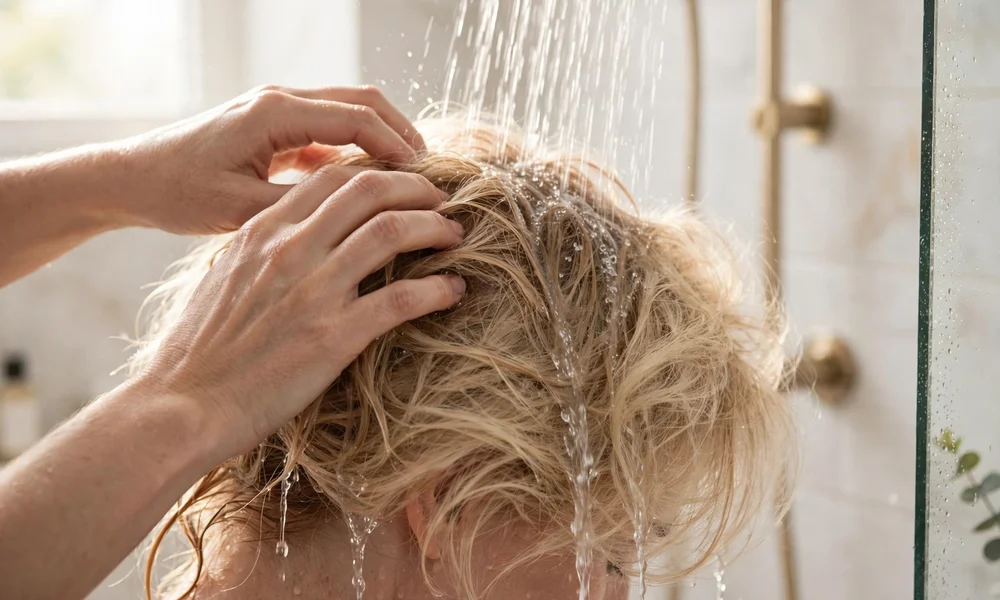
A gentle wash is a slow wash with lukewarm water, a small amount of mild shampoo, and soft fingertips. Before you wash, brush the hair gently with a wide-tooth comb to loosen tangles. Put a clean towel nearby, and a glass of fresh water on the shelf to drink afterwards.
Pour a small amount of mild shampoo into your palms, rub them together, and work the lather into the scalp with soft fingertips, in small slow circles. Use the pads of your fingers, never your nails, and keep the pressure light. Work across the whole scalp, then let the suds run down the lengths as you rinse. The lengths do not need scrubbing. The same gentle hands are at the heart of water and a gentle scalp wash, where the scalp is treated like the skin it is.
Rinsing Well for Lightness
Rinsing well is the part most people rush, and it matters most for volume. Shampoo left on the hair leaves a film that weighs the strands down, and conditioner left on the roots does the same. Rinse until the water runs clear and the hair feels clean but not squeaky.
Take your time with the rinse, longer than you think. Lift the hair at the roots with your fingers as the water runs through, so the rinse reaches the scalp. If you use conditioner, apply it to the mid-lengths and ends only, never the roots, leave it for two or three minutes, and rinse again, finishing cooler. Light roots are the whole secret of volume.
Drying Softly for Airy Hair
Drying is where volume is won or lost. Wet hair is weaker and stretches more easily, so rough drying breaks the strands and flattens the roots. Never rub the hair with a towel. Instead, squeeze out the extra water gently, then pat the hair with a soft towel.
Let the hair air-dry when you can, with the roots lifted a little. If you must use a dryer, use the lowest heat, hold it at arm's length, and keep it moving. Heat flattens hair and dries it out, and no styling can put back the lightness heat takes away.
Salt Water and Volume
Salt water can give hair a little texture and lift, but it comes with a clear warning first. Salt draws moisture out of each strand as it dries, so the hair holds a bend, which can look like volume. Used carelessly, it leaves hair rough, tangled, and dull, and left in overnight it can do real damage.
Use salt water gently, and only now and then. A light spray on damp hair is the kindest way, because you control how much salt lands on each strand. Always rinse with fresh water afterwards, and condition the lengths well. The full careful method is in salt water hair and beach waves, where a fresh rinse and a soft dry carry the day.
Hard Water and Flat Hair
Every wash has one ingredient that never appears on a label: the water from your tap. Hard water is rich in calcium and magnesium, and it can leave a thin mineral film on the hair. That film weighs the strands down, so hair turns dull and flat, shampoo lathers poorly, and the roots lose their lift.
Suspect hard water if your shampoo barely foams, your hair feels coated even when clean, or it tangles more than it used to. The fixes are practical: rinse longer, since time and water volume carry minerals away, and lather shampoo in your palms so it spreads evenly.
Water and Volume at a Glance
| Lukewarm wash | Long cool rinse | Soft dry |
|---|---|---|
| Light mild shampoo | Roots lifted high | Pat, never rub |
| Fingertips, never nails | Conditioner ends only | Air-dry when possible |
| Small amount only | Water runs clear | Cool air, low heat |
A Light Routine in Small Steps
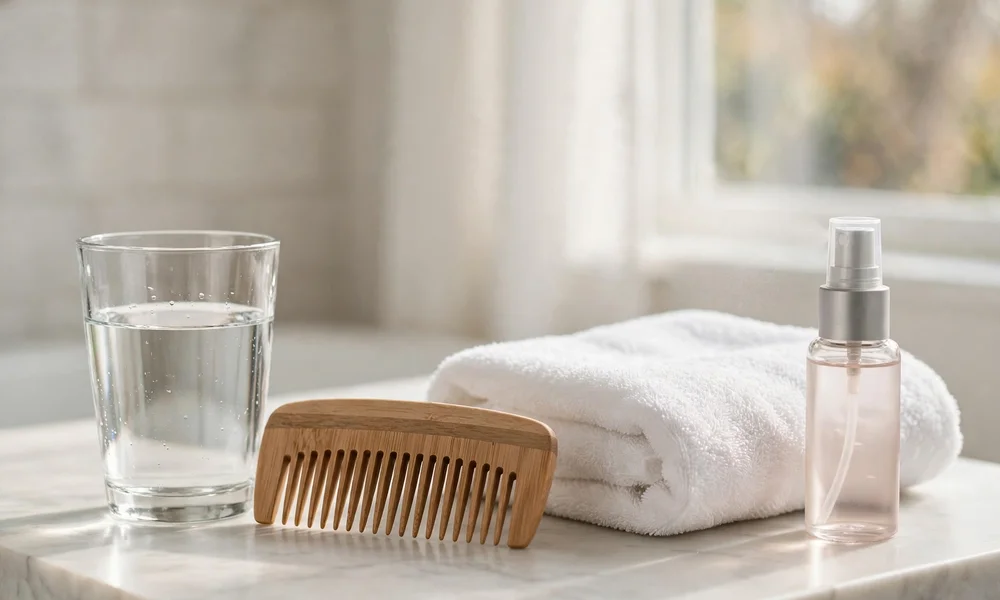
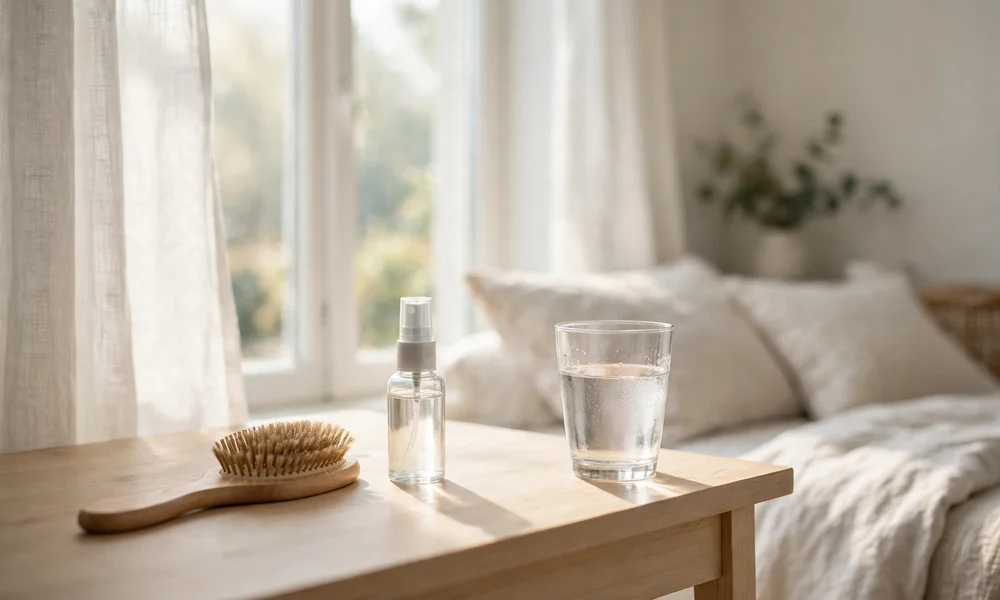
A light routine takes no planning, and it starts the night before. Set out the towel, the wide-tooth comb, and the light hair mist, so the morning does not begin with searching. Keep the counter clear, with only what the routine needs on it.
When you wake, drink a glass of fresh water, then wash lukewarm, rinse long and finish cooler, pat the hair dry, and let it air-dry with the roots lifted. The whole routine takes less than fifteen minutes.

What Water Will Not Do
Be honest about what water will not do. It will not repair split ends, regrow hair, thicken thin hair, or cure a scalp condition. It will not fix hair loss or dandruff. Water can only help the hair you already have look its best, one wash at a time.
If your hair is falling out in large amounts, or your scalp is sore, itchy, or flaking badly, or a problem does not improve with gentle care, see a doctor or dermatologist. Real problems belong to a doctor. The routine is care, not a cure.
Your Light Hair Checklist
- Wash lukewarm, and finish with a cooler rinse.
- Use a small amount of mild shampoo, lathered in your palms.
- Rinse until the water runs clear, lifting the roots.
- Keep conditioner on the lengths only, never the roots.
- Pat dry with a soft towel, and air-dry when you can.
- See a doctor or dermatologist for real hair or scalp problems.
Frequently Asked Questions
Does water really add volume to hair?
Water does not add volume on its own, but how you use it decides how light your hair feels. A gentle lukewarm wash, a long rinse until the water runs clear, and a soft dry leave the strands clean and free of residue, so they stand apart.
What water temperature is best for volume?
Lukewarm water is best for washing, because it cleans without stripping the scalp's natural oils, so the roots stay light. Finish with a cooler rinse, not cold, for thirty seconds, which helps the hair's outer layer lie flat and the strands look smooth and separate.
How do I rinse for lighter hair?
Rinse longer than you think, until the water runs clear and the hair feels clean but not squeaky. Lift the hair at the roots as the water runs through, and keep conditioner on the mid-lengths and ends only.
Can salt water give my hair volume?
Salt water can give a little texture and lift, because the salt draws moisture from each strand as it dries and the hair holds a bend. But it dries hair out, so use it gently and only now and then, and always rinse with fresh water afterwards.
Why does my hair fall flat by midday?
Flat hair by midday usually means heavy roots: hot water, shampoo or conditioner left on the roots, or hard tap water leaving a film. Wash lukewarm, rinse until the water runs clear, keep conditioner off the roots, and rinse longer if your water is hard.
When should I see a doctor about my hair?
See a doctor or dermatologist if your hair is falling out in large amounts, if your scalp is sore, itchy, or flaking badly, or if a problem does not improve with gentle care. This routine is general information only, never a treatment.
The Bottom Line
Water and volume is a light routine: lukewarm wash, long cool rinse, soft dry.
Keep it light, keep it gentle.
A Note for Light Hair
Keep it lukewarm, keep it light, keep it airy. The volume will follow.