The scalp is easy to forget. We wash our hair, dry it, brush it, and hurry on, while the skin underneath does all the quiet work of holding every strand in place. When the scalp feels tight, itchy or dry, the whole wash can feel like a chore instead of care.
Water is the gentlest tool the scalp has. Used slowly, at the right temperature, with soft hands and a patient rinse, plain water can make wash day feel calm and kind. No special product is needed, and no harsh scrubbing ever helps.
This guide explains a gentle wash routine for water and scalp: how to prepare, what temperature to use, how to wash with fingertips, how to rinse well, and how to dry softly. Everything here is gentle general information only, never a treatment, and it will not cure any scalp problem.
Key Takeaways
- The scalp is skin, and it likes the same gentleness as the skin on your face.
- Lukewarm water is kindest; hot water dries the scalp and cold water shocks it.
- Wash with soft fingertips, never nails, and let the suds run down the lengths.
- Rinse longer than you think, until the water runs clear and the hair feels clean.
- A gentle wash is care, not a cure; real scalp problems belong to a doctor.
What a Gentle Scalp Wash Is
A gentle scalp wash is a slow wash with lukewarm water, a small amount of mild shampoo, and soft fingertips. The shampoo is worked into the scalp only, never piled onto the lengths, and the rinse is long and patient. Nothing is scrubbed, scratched or rushed.
The point is simple: the scalp is skin, and skin likes to be treated softly. A hard scrub feels thorough in the moment, but it can leave the scalp sore, tight and flaky the next day. Gentle hands clean just as well, and the scalp stays calm afterwards.
Why the Scalp Needs Gentleness
The scalp is skin with hair growing through it, and it works hard every day. It makes natural oils, sheds old skin cells, and holds each hair in place, all while sitting under hair that traps heat and sweat. That is a lot of work for one small patch of skin.
Harsh washing makes that work harder. Hot water strips the scalp's natural oils, strong shampoo left on too long can irritate it, and nails can scratch tiny cuts into skin that is already tender. Gentle washing gives the scalp a chance to do its work in peace, and a calm scalp usually feels more comfortable between washes.
Before You Wash
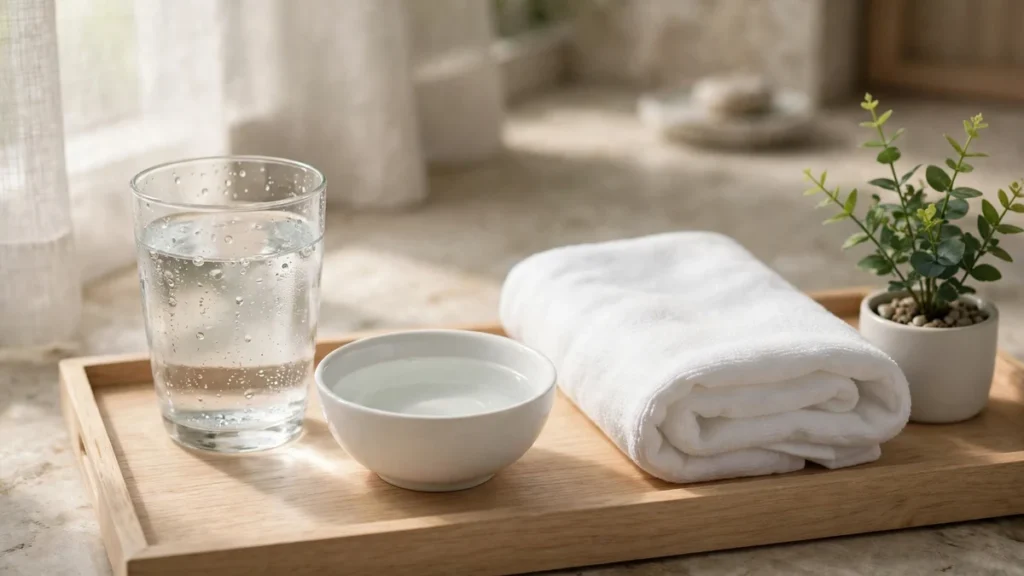
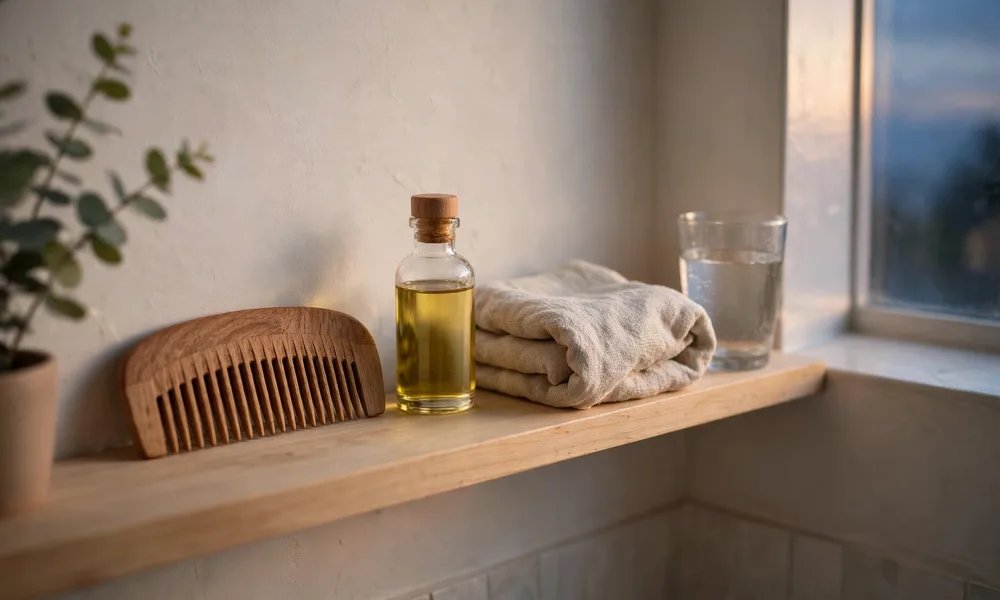
Before you wash, take a minute to get ready. Brush the hair gently with a wide-tooth comb to loosen tangles, so the wash does not pull. If your hair is long, gather it loosely first, so the water reaches the scalp without tangles forming. Put a clean towel nearby, and a glass of fresh water on the shelf to drink afterwards, because a slow wash is easier when nothing is rushed.
Check the water first with your wrist, the way you would for a baby's bath. The wrist feels temperature honestly, and lukewarm there means lukewarm on the scalp. If the water feels hot on your wrist, turn it down before it touches your head.
Water Temperature and the Scalp
Water temperature matters more than most people think. Lukewarm water is kindest to the scalp: warm enough to lift oil and dirt, cool enough not to strip the skin dry. Hot water feels relaxing in the moment, but it dries the scalp and can leave it tight and itchy later.
A cooler final rinse can help the hair feel smoother, because cool water helps the hair's outer layer lie flat. Keep it cool, not cold, and only for the last few seconds. The same care with water runs through hard water hair: a practical fix guide, where hard tap water leaves a dull film that a longer rinse helps to clear.
The Gentle Wash, Step by Step
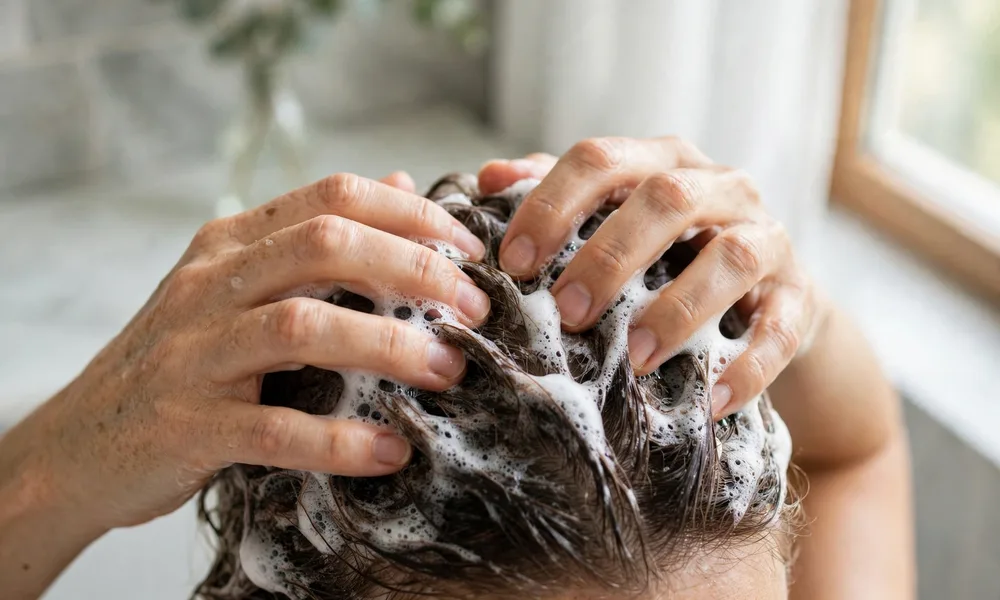
Start by wetting the hair fully with lukewarm water, letting the water run over the scalp for a slow count of ten. Pour a small amount of mild shampoo into your palms, rub them together, and work the lather into the scalp with soft fingertips, in small slow circles.
Use the pads of your fingers, never your nails, and keep the pressure light, as if you were touching a ripe peach. Work across the whole scalp, front to back, then let the suds run down the lengths as you rinse. The lengths do not need scrubbing: the rinse carries the shampoo down, and that is enough.
Rinsing Well
Rinsing well is the part most people rush, and it matters most. Shampoo left on the scalp can dry it out and leave flakes behind, so rinse until the water runs clear and the hair feels clean and slippery-free under your fingers.
Take your time with the rinse, tilting the head back so the water runs over the whole scalp. A slow rinse takes a minute or two, and it is worth it: a well-rinsed scalp feels lighter, and the hair dries softer afterwards. If the water still feels slippery on the scalp, rinse a little longer; a few extra seconds now save a flaky scalp later.

Drying Without Roughness
Drying is part of the wash, and rough drying can undo gentle washing. Pat the hair dry with a soft towel, pressing gently instead of rubbing hard. Rubbing tangles the hair and can irritate the scalp, while patting leaves both calm.
Let the hair air-dry when you can, and detangle with a wide-tooth comb once it is mostly dry, starting from the ends and working up. A second dry towel helps if the first one grows damp, and the comb should wait until the hair is mostly dry. The same soft touch runs through a simple guide to glossy, healthy-looking hair with water, where gentle drying helps hair look smoother and shinier.
How Often to Wash
How often to wash depends on your hair, your scalp and your days. Some scalps feel comfortable washed every other day, some are happy once or twice a week, and some need a wash after a sweaty day. A wash after a dusty day outdoors or a long workout is sensible too, because sweat and dust sit on the scalp and can make it feel itchy. There is no single right answer, and the best guide is how your own scalp feels.
Watch for signs instead of following a fixed rule. If the scalp feels oily and heavy, it may want a wash; if it feels tight and dry, it may want a gentler wash or a little more time between washes. Keep the routine steady for a few weeks before judging it, because scalps take time to settle into a new rhythm.
When to See a Doctor
A gentle wash helps with ordinary comfort, but it cannot fix a real scalp problem, and it should never be asked to. See a doctor or dermatologist if flaking does not ease after a few weeks of gentle washing, if the scalp stays sore, red or swollen, or if you notice sores, crusts or patches that do not heal.
See a doctor promptly too if hair is falling out in clumps, if bald patches appear, or if itching keeps you awake at night. These are signs for a professional, not for a stronger shampoo. A doctor can look closely, name the problem, and give real treatment, which no wash routine can do.

| Wash step | Water tip | Gentle touch |
|---|---|---|
| Wet hair fully | Lukewarm, never hot | Fingertips, never nails |
| Lather scalp only | Rinse until clear | Pat towel, never rub |
| Cool final rinse | Drink water after | Comb wide-tooth first |
| Wash when needed | Steady routine weeks | Doctor for real problems |
Your Water and Scalp Gentle Wash Checklist
- Check the water with your wrist first; lukewarm is kindest to the scalp.
- Use a small amount of mild shampoo, lathered in your palms first.
- Wash the scalp with soft fingertips, never nails, in slow small circles.
- Rinse until the water runs clear and the hair feels clean.
- Pat dry with a soft towel and detangle with a wide-tooth comb.
- See a doctor for flaking that will not ease, sores, or hair loss.
Frequently Asked Questions
What is a gentle scalp wash?
A gentle scalp wash is a slow wash with lukewarm water, a small amount of mild shampoo, and soft fingertips on the scalp only. The rinse is long and patient, nothing is scrubbed or scratched, and the hair is patted dry with a soft towel.
How hot should the water be?
Lukewarm is kindest: warm enough to lift oil and dirt, cool enough not to strip the scalp dry. Check it with your wrist first, and finish with a cool, not cold, rinse for the last few seconds to help the hair feel smoother.
Should I scrub my scalp with my nails?
No. Use the soft pads of your fingertips, never your nails, and keep the pressure light. Nails can scratch tiny cuts into tender skin, and a hard scrub can leave the scalp sore, tight and flaky the next day.
How often should I wash my scalp?
It depends on your hair, your scalp and your days. Some scalps are comfortable washed every other day, some are happy once or twice a week. Watch how your own scalp feels, and keep a steady routine for a few weeks before judging it.
When should I see a doctor about my scalp?
See a doctor or dermatologist if flaking does not ease after a few weeks of gentle washing, if the scalp stays sore, red or swollen, or if you notice sores, crusts or patches that do not heal. See one promptly for hair falling out in clumps or bald patches.
Can a rinse help my hair feel softer?
A cool final rinse can help hair feel smoother, and a simple rinse ritual can make wash day feel like care. One gentle example is described in green tea rinse for hair: a water ritual, where cooled brewed tea is poured over hair as a final rinse.
The Bottom Line
Water and scalp care is simple: lukewarm water, soft fingertips, a long rinse, a gentle dry.
Wash slowly, and let the scalp rest.
A Note for Gentle Wash Days
Keep it lukewarm, keep it soft, keep it slow. Your scalp will thank you.