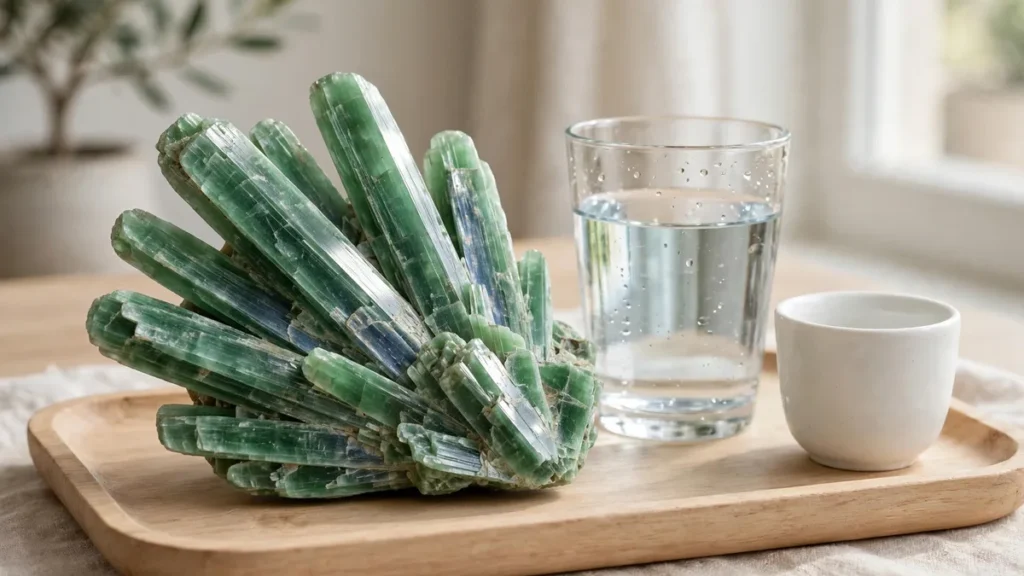
Some mornings begin before you are ready for them. The alarm rings, the phone lights up, and the day starts rushing before you have had a single quiet minute to yourself.
Water and gratitude is a small answer to mornings like these. A glass of fresh water, drunk slowly, and three small thanks, named quietly before the day begins, can turn the first ten minutes into something calm and your own.
This guide shows you how to build that simple morning ritual: what it is, how to set it up, how to name three thanks, and how to keep the habit light enough to enjoy. It is general information only, never a treatment, and it will not heal anything.
Key Takeaways
- Water and gratitude means a glass of water first, then three small thanks.
- The ritual takes five quiet minutes, before the phone and the rush.
- Gratitude here means small true things, not big speeches or perfect words.
- The water is plain water only, drunk slowly, with nothing added.
- Keep the ritual simple, daily and gentle; it will not heal anything.
What Water and Gratitude Is
Water and gratitude is a simple morning ritual with two parts. First, you drink a glass of fresh water slowly, in small sips, letting the morning begin with something plain and calm. Then you name three things you are thankful for, quietly, in your own words.
The thanks can be small: a warm bed, a kind message, a clear sky, a good night of sleep. Nothing here needs special skill or expensive equipment. A glass, a little water, and a few honest words are enough. The ritual asks for no perfect mood and no long silence, only a few minutes in which the morning belongs to you, before the messages, the news and the noise begin.
Why Mornings Suit Gratitude
Mornings suit gratitude because the day is still soft. Nothing has gone wrong yet, the list has not grown long, and the mind has room for one kind thought before the rush begins. A thank-you named early can set a gentle tone for the hours that follow.
Gratitude in the morning also suits water, because both are simple: water needs no recipe, and thanks need no speech. Together they make a quiet start, a small pause that belongs to you alone. A morning that begins with thanks also feels lighter later, because the first thought of the day was a kind one, not a worried one, and that small kindness is easy to carry into the hours that follow.
Setting Up Your Morning Tray
Setting up takes one minute the night before, and it makes the morning much easier. Place a clear glass on a small tray, beside a plain notebook if you like to write your thanks down. Set the tray where the morning light will find it, near a window or on a bedside table.
Fill the glass in the morning, never the night before, so the water is fresh. Keep the tray the same from day to day, so the ritual becomes a habit instead of a decision. If you share a home, tell the others the tray is yours for five minutes, and ask for the same quiet you would give them. A small tray, kept ready, is all the preparation this ritual ever needs.

The Five Minute Ritual
The ritual itself takes five minutes, and it follows the same order every morning. Wake, sit up, and reach for the glass. Drink the water slowly, in small sips, and feel the coolness as you swallow. Then close your eyes for a moment and breathe.
Now name three thanks, one at a time, quietly or in your head. Write them down if you like, or simply say them and let them go. Then open the curtains, and let the day begin. If the morning feels rushed, shorten the ritual rather than skipping it: one slow drink and one thank-you still count, and a short ritual kept daily is worth more than a long one kept only once.
Naming Three Small Thanks
Naming three thanks is easier when they are small and true. A good thank-you names one clear thing: the rain on the window, a friend who called, a warm cup, a quiet street. Vague thanks feel empty, but a small true thing feels real.
If three feels hard, start with one, and let the other two come later in the day. If a thank-you feels forced, choose a simpler one. The ritual works best when the words are honest, even if they are plain. Over time the thanks become easier, because you begin to notice small good things during the day, knowing you will name them in the morning, and that noticing is itself part of the habit.
Water First, Then Thanks
Water comes first because the body wakes thirsty, and a slow drink gives the morning a calm order. Where water first morning routine builds the first hour around plain water, drinking and washing at a slow pace, this ritual adds one small step after the water: three thanks, named before the phone.
Drink first, then thank. The water wakes you gently, and the thanks give the waking a kind direction. Neither step needs to be long; together they take five minutes. On mornings when the day starts badly, the order matters even more: water first steadies the body, and thanks steady the thoughts, before either one has time to rush ahead.

Water and Gratitude at a Glance
| Plain water first | Three thanks | Keep it simple |
|---|---|---|
| Slow sips, calm start | One line each | Same time daily |
| Clear glass, fresh water | Small true things | Five quiet minutes |
| No stone, no extras | Say them aloud | Never rush it |
A Quiet Corner for the Ritual
A quiet corner gives the ritual a home, and a home makes it easier to keep. Choose a small, clear surface near a window: a bedside table, a shelf, or a corner of a desk. Set down a small tray, the glass on it, a notebook beside it, and little else.
Keep the corner the same from day to day, and keep the phone out of it. A tidy corner also keeps the morning calm, because nothing in it asks for attention. If the corner is shared, a small tray marks it as yours for five minutes, and the tray can be moved away when the ritual is done, leaving the surface clear for the rest of the day.
Water and Gratitude, or Journaling
Water and gratitude is close to journaling, but it is not the same thing. Where water journaling morning ritual pairs a glass of water with a notebook for writing three simple lines, this ritual pairs the water with three spoken thanks, which need no notebook at all.
If you like writing, you can write your thanks down. If you do not, you can simply say them. The ritual stays yours either way, and the water stays plain. Some mornings the notebook helps, because the written words slow the mind down; on other mornings the spoken words are enough, and the notebook stays closed.
Water and Gratitude, or Meditation
Water and gratitude is also close to meditation, but it is gentler and shorter. Where water meditation five minute reset pairs a glass of water with five quiet minutes of sitting still, this ritual pairs the water with three named thanks, spoken in your own words.
Sitting still can feel hard on a busy morning. Naming three thanks gives the quiet minutes something kind to hold, and the ritual ends when the third thank-you is said.
Stones, Water and This Ritual
This ritual uses plain water only, with no stone in it and no stone beside it. No crystal is needed, and none is added, because the ritual is about water and words, not about objects on a tray.
That matters for safety too: stones stay out of drinking water, always. Malachite must never go in water or in elixirs, hematite must never go in drinking water, and apatite, lepidolite — which contains lithium — pyrite, angelite and amber must never go in drinking water or in soaks either.
When a Ritual Is Not the Answer
A morning ritual is not the answer to a health problem, and gratitude is no exception: it will not heal anything, and it will not replace rest, food, water or a doctor. A calm morning can feel good, but feeling good is not the same as being treated.
If you feel unwell or worried about your health, please see a doctor, and enjoy the ritual for what it is: plain water, three honest thanks, and a few quiet minutes.

Your Morning Ritual Checklist
- Set out a clear glass on a small tray the night before.
- Fill the glass with fresh water when you wake.
- Drink the water slowly, in small sips, before the phone.
- Name three small true things you are thankful for.
- Keep the water plain, with no stone and nothing added.
- Remember the ritual will not heal anything; see a doctor for health problems.
Frequently Asked Questions
What is the water and gratitude ritual?
It is a simple morning ritual: drink a glass of fresh water slowly, then name three things you are thankful for, before the phone and the rush.
How long does the ritual take?
It takes about five minutes: a minute to fill the glass, a few minutes to drink it slowly, and a moment to name three thanks.
Do I need to write my thanks down?
No. You can say them quietly, think them, or write them in a plain notebook if you like. The ritual works either way.
Can I add anything to the water?
No. The water is plain water only, with nothing added and no stone in it. Fresh, plain water is the whole of it.
What if I cannot think of three thanks?
Start with one small true thing, and let the others come later. A warm bed, a kind message or a clear sky are all enough.
Will gratitude heal anything?
No. Gratitude will not heal anything. It is a calm habit for the morning, and the calm comes from the pause, the water and the kind words.
The Bottom Line
Water and gratitude brings a calm start to the morning: a glass of fresh water, drunk slowly, and three small honest thanks before the day begins. Keep it plain, keep it simple, keep it daily.
A Note for Quiet Mornings
Keep it plain, keep it kind, keep it short. A glass of water and three small thanks can begin a quiet morning well.