Some mornings begin before you are ready for them. The alarm rings, the phone lights up, and the day starts rushing before you have had a single quiet minute to yourself.
Water and journaling is a small answer to mornings like these. A glass of fresh water and a notebook, set out the night before, can turn the first ten minutes of the day into something calm and your own.
This article is a gentle guide to water and journaling as a morning ritual pair: what the pair is, how to set it up, how to write three simple lines, and how to keep the habit light enough to enjoy. It is general information only, never a treatment.
Key Takeaways
- Water and journaling means a glass of fresh water and a notebook, paired for ten quiet morning minutes.
- Water and journaling is a simple ritual pair, not a cure, a therapy, or a treatment of any kind.
- The pair starts the night before, when you set out a clean glass and an open notebook.
- Three short lines are enough: one for today, one for gratitude, and one for how you feel.
- Water and journaling is a gentle habit, and it will not fix stress or solve problems on its own.
What Water and Journaling Means
Water and journaling means pairing two simple things at the start of the day: a glass of plain water to drink slowly, and a notebook to write a few lines in. The water wakes you gently, and the writing gives the morning a shape before the phone and the list take over.
The pair asks for very little. There is no special notebook, no special pen, and nothing added to the water. A plain glass, a plain page, and ten minutes are enough, and the ritual works best when it stays this simple.
Why Mornings Feel Better Slow
A slow morning feels better because nothing in it is rushed. There is time to drink a glass of water in small sips, time to look out of the window, and time to choose the first task instead of being pulled into it. The morning stretches out gently, and the rest of the day follows at a kinder pace.
A small ritual can mark a morning like this. When the glass and the notebook are already waiting on the table, the day begins with a choice you made last night, not with a notification. That quiet start is the whole point of the pair.
Setting Up Your Morning Table
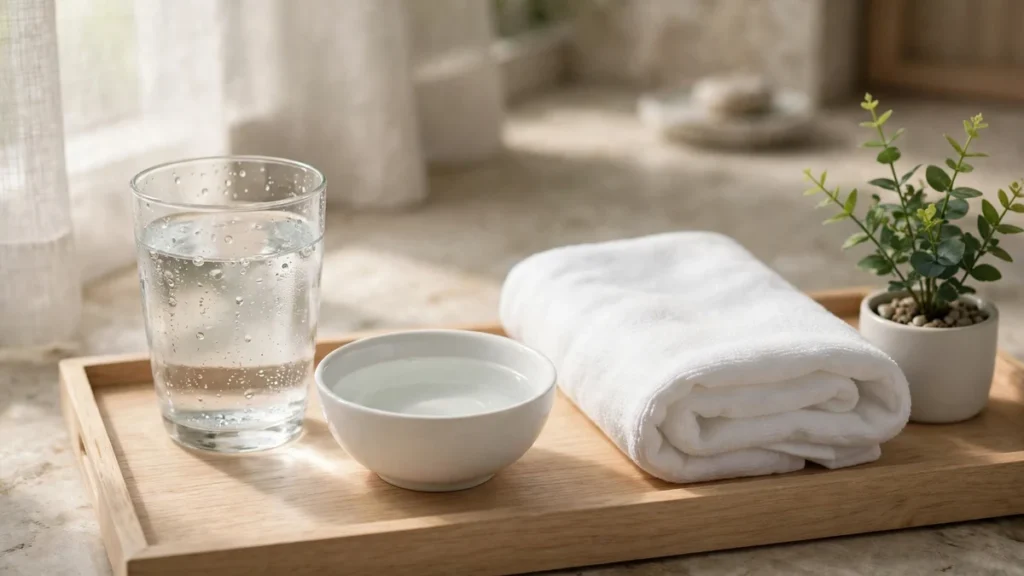
Set up the table the night before, so the morning asks nothing of you. Put a clean glass of fresh water on the table, beside a notebook and a pen, where you will see them the moment you sit down. Add nothing else: no phone, no list, no clutter.
Choose a spot you like, near a window if you can, and keep it the same every day. When the table is ready, the habit needs no willpower in the morning, because the decision was already made. The same gentle idea runs through how to build a water-first morning routine, where plain water comes before everything else.

The First Glass of Water
The first glass is the simplest part of the pair. When you sit down, pick up the glass and drink it slowly, in small sips, before coffee, tea, or your phone. The water is plain, fresh and cool, and it is the first thing the morning gives you.
Drink at your own pace, and let the glass sit empty for a minute when you are done. That minute is part of the ritual: a small pause between waking and writing, when the day is still quiet and nothing is asking for your attention yet.
Writing Your First Three Lines
Three lines are enough, and they can be as plain as you like. Write one line about today, one line about something you are glad for, and one line about how you feel right now. There is no right way to write them, and nobody else needs to read them.
Keep the lines short, and stop after three. The point is not to write a lot, but to write a little every day. A short entry you finish is worth more than a long one you abandon, and three lines fit into any morning.

Journaling Without Rules
Journaling works best without rules. You do not need neat handwriting, full sentences, or a clever thought, and you do not need to write about the same thing every day. Some mornings the lines will be about plans, and other mornings they will be about the weather, the light, or a dream you half remember.
Let the notebook be messy. Cross things out, draw a small star, or leave a line half finished. The notebook is yours alone, and the only rule is that it stays kind: write the way you would talk to a friend, gently and without judgement.
Water Through the Rest of the Morning
The glass does not have to end the ritual. After your three lines, refill it and keep it beside you as the morning goes on. Sip it slowly while you wash, while you dress, and while you eat breakfast, so water stays within reach for the whole first hour.
Drinking water gently through the morning is an ordinary daily habit, as in drinking more water gently, where small sips through the day are enough. There is no target to hit and no glass to count, only a glass that stays full and near.
A Quiet Corner for the Pair
The pair deserves a quiet corner, and a small one is enough. A tidy desk, a chair by the window, or a bedside table can hold the glass and the notebook, where you will see them every time you walk past.
Keep the corner clear: one glass, one notebook, one pen, and a small plant if you like. Wipe the table once a week, wash the glass every day, and keep the notebook closed when you are done, so the corner stays inviting for tomorrow.

Carrying the Habit Through the Day
Some mornings still ask you to move fast, and the pair can travel with you. A small notebook in your bag and a bottle of fresh water can carry the ritual into a busy day, so the habit does not depend on being at home.
Take the notebook out at a quiet moment, write your three lines, and put it back. The habit travels well, as in slow sunday bath ritual, where a slow ritual marks a gentle hour at home. A short pause in the middle of a busy day can feel like a second morning.
Keeping the Notebook and Glass Clean
The pair needs a little care, and the care is simple. Wash the glass every day with plain water and a little soap, then dry it and set it out fresh. Keep the notebook dry and away from the glass, so a spill never ruins a page.
Choose a notebook that lies flat and a pen that writes smoothly, and keep a spare pen in the drawer. When the notebook is full, start a new one and keep the old one on a shelf, as a quiet record of ordinary mornings.
What Water and Journaling Will Not Do
Be honest about what a ritual can and cannot do. Water and journaling will not fix stress, cure low mood, solve problems, or change your life. It will not replace rest, sleep, or support from the people around you, and it is not a treatment for any health concern.
The same honesty applies to the water: fresh water drunk slowly is good for you, but it is not a treatment either. No morning ritual will replace professional help when it is needed. If low mood or stress feels constant week after week, please speak to a qualified health professional.
| Morning pause | Water beside | Notebook care |
|---|---|---|
| Drink fresh water | Glass beside notebook | Keep pages dry |
| Write three lines | Sip water slowly | Store pen nearby |
| Look out window | Refill glass often | Close book gently |
| Rest eyes briefly | Lukewarm water first | Keep shelf tidy |
Your Water and Journaling Morning Checklist
- Set out a clean glass of fresh water, a notebook and a pen the night before.
- Drink the first glass slowly, in small sips, before coffee, tea, or your phone.
- Write three short lines: one for today, one for gratitude, and one for how you feel.
- Refill the glass and keep water within reach for the whole first hour.
- Keep the notebook dry, the glass clean, and the corner tidy for tomorrow.
- Stop after three lines, close the notebook, and let the day begin gently.

Frequently Asked Questions
What is water and journaling?
Water and journaling is a morning ritual pair: a glass of plain water to drink slowly, and a notebook to write three short lines in. It takes about ten minutes, and it gives the morning a calm shape before the phone and the list take over.
Do I need a special notebook or pen?
No. Any notebook that lies flat and any pen that writes smoothly will do. The pair works best when it stays simple, and a plain notebook you enjoy opening is better than an expensive one you are afraid to spoil.
What should I write in the morning?
Write one line about today, one line about something you are glad for, and one line about how you feel right now. There is no right answer, and nobody else needs to read it. Short, plain lines are enough.
Can I do water and journaling in the evening instead?
Yes, if evenings suit you better. Set out the glass and the notebook, drink the water slowly, and write your three lines about the day that has passed. The ritual is the same; only the hour changes.
How long should the ritual take?
About ten minutes is enough: a few minutes to drink the water, and a few minutes to write three lines. If you have more time, you can sit a little longer, but the habit should never feel like a task.
Will water and journaling fix my stress?
Water and journaling is a gentle habit, but it will not fix stress or low mood on its own. It is general information only, not a treatment. If stress or low mood feels constant, please speak to a qualified health professional.
The Bottom Line
Water and journaling is a glass of water, a notebook, three short lines, and ten quiet minutes at the start of the day.
Set the glass and the notebook out tonight, and let tomorrow begin a little more gently.
A Note for Quiet Mornings
Keep it plain, keep it short, keep it yours. The quiet minutes can still belong to you.