
Muscovite is the quietest stone in the mica family: a soft silver mineral that grows in thin, flat sheets, each one catching the light like a small mirror. It has no bold colour and no loud sparkle, only a pale, pearly shimmer that shows itself slowly as you turn it.
A quiet day suits it because the stone asks for nothing. There is no ritual to learn and no hurry at all: you set the stone on a tray beside a glass of water, sit down, and let the slow hours pass. The pleasure is in looking, not in doing.
This guide explains what muscovite is, how to choose a good piece, and the best ways to spend a quiet day with it. It is gentle general information, and it promises nothing for health.
Key Takeaways
- Muscovite is a soft silver mica stone in thin, flat, glittering layers.
- Its pale shimmer suits slow hours and unhurried days.
- Choose a piece with even silver and a gentle, scattered sparkle.
- Keep muscovite beside a glass of water, never in it, and never soak it.
- Muscovite is for looking at and holding; it cannot heal anything.
What Muscovite Is
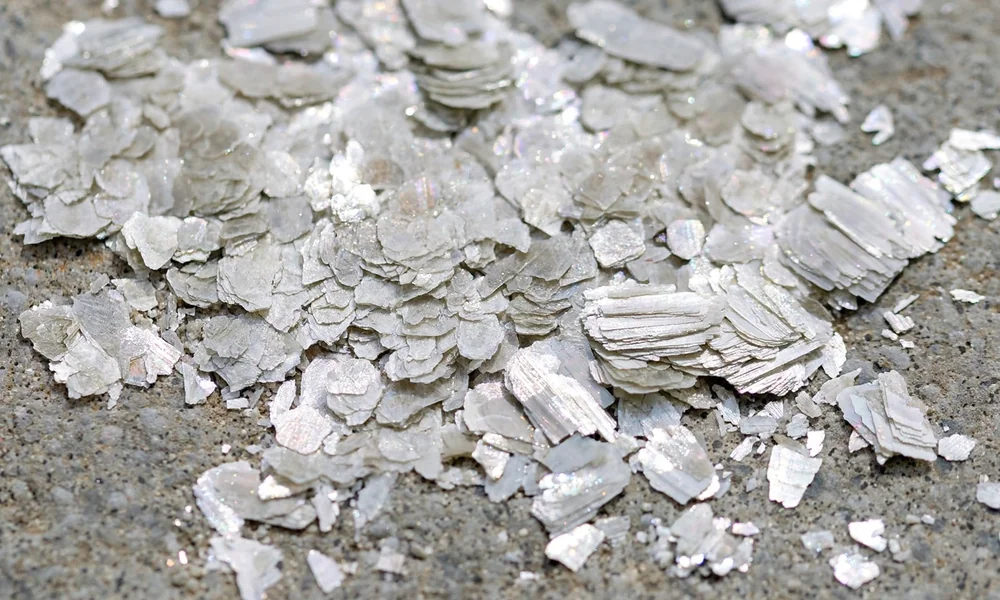
Muscovite is a mica mineral, and its nature shows in the way it is built. It grows in thin, flat sheets stacked like the pages of a book, and each sheet can be peeled away with a fingernail. The sheets are silvery and almost clear, with a pearly shine that shifts as the light moves.
The mineral is common in the ground, found in granite and pegmatite rocks, yet a good display piece still feels special in the hand. Hold a sheet up to a window and the light comes through it faintly, like sun through thin paper.
Why Silver Suits Quiet Days
Silver suits a quiet day because it never demands attention. A bright colour pulls the eye and holds it, while silver lets the eye wander and rest, and that rest is what a slow day is for.
A quiet day is not an empty day. It is full of small, gentle things: a glass of water, a chair by the window, a stone that catches the light. Silver fits among them because it belongs to the same mood, calm and unhurried.
Flakes, Sheets and Palm Stones
Muscovite reaches a shop in three shapes, and each suits a different kind of quiet day. Loose flakes are thin, papery pieces that glitter in a small dish, best for looking at rather than handling, since they are delicate and can crumble. A flat sheet is a single broad layer, lovely on linen in daylight.
A palm stone is muscovite polished into a smooth, rounded shape that fits the hand, cool at first and warming slowly as you hold it. It is the shape for sitting with, while flakes and sheets are for displaying. Choose the shape that matches how you want to spend the hour.
Choosing a Muscovite Piece
Choose in daylight, near a window, and take your time. Look for silver that is even and clean, without brown patches or grey streaks, and for a sparkle that is soft and scattered rather than harsh. A sheet should lie flat and feel firm, with edges whole rather than ragged.
Pick the piece up and feel its weight: muscovite is light for a stone, and a heavy piece may be mixed with other rock. Ask the seller plainly what it is. One good piece is enough to start.
A Quiet Day with Muscovite
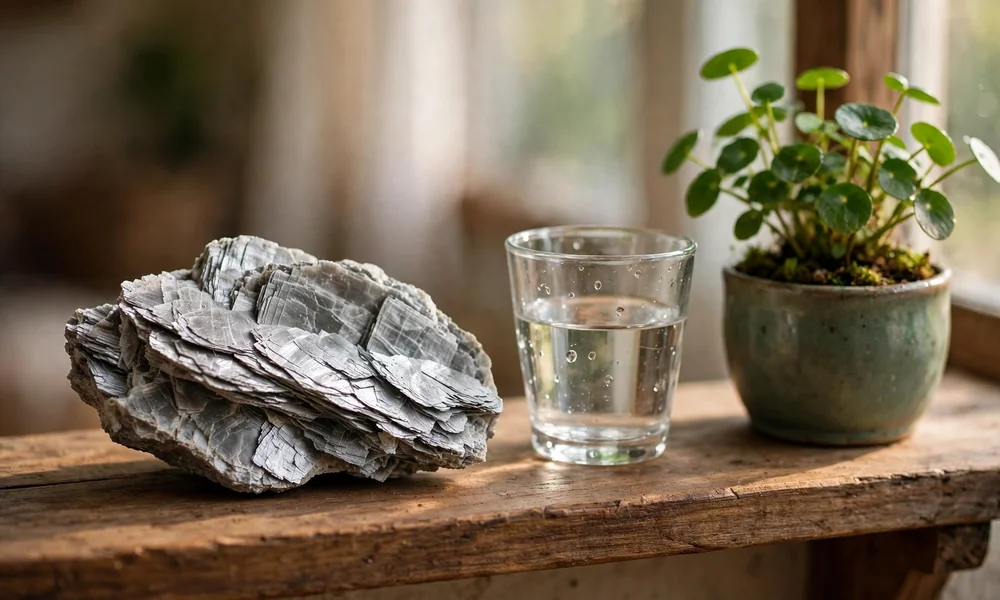
A quiet day with muscovite begins with setting the scene. Put the stone on a small wooden tray, set a glass of fresh water beside it, and place the tray where the daylight reaches it, perhaps on a windowsill or a bedside table. Sit nearby with nothing urgent to do.
Turn the piece slowly in your hand, or tilt the tray so the light moves across the layers. The shimmer changes with every small movement, and watching it is the whole activity. When the hour ends, put the stone back on its tray, ready for the next slow day.

Where Muscovite Lives in the Home
Muscovite lives best where the light is gentle and the air is dry. A windowsill that catches morning sun suits it, as does a shelf in a quiet room, or a bedside table. The stone needs no special care beyond a dry spot and a tray to keep it safe from knocks.
Keep it away from the bathroom, where steam and splashes can reach it, and away from the kitchen sink, where it might be knocked into water. A dry room, a steady surface, and a little daylight are all it asks.
Muscovite at a Glance
| Silver mica sheets | Soft pearly shine | Light in hand |
|---|---|---|
| Display on tray | Keep beside water | Never soak it |
| Choose in daylight | Dry shelf suits | One piece enough |
Lepidolite for Anxious Evenings
Lepidolite calm stones for anxious evenings sets aside a brief evening pause: lilac stone in hand, fresh water in a glass nearby, and several slow minutes kept free for yourself. Its colour comes from lithium, and its rule matters above all: the stone is for handling only, and it must never go in water.
Muscovite differs in colour, in mood, and in purpose. Lepidolite is lilac and purple, made for anxious evenings and the slow wind-down of the day; muscovite is silver and clear, made for quiet days with no worry attached. One is lilac for evenings, the other silver for daylight hours.
Lepidolite for Calm Nights
Lepidolite soft purple for calm nights keeps a lilac stone on a bedside dish, beside a glass of water, as a small purple reminder to let the night be slow. Its soft purple is the colour of dusk, and its warning is the same: lepidolite contains lithium and must never touch water.
Muscovite is not a night stone and not a sleep aid. It belongs to the daytime, to a tray in the daylight and an hour with nothing urgent to do, while the lepidolite guide belongs to the bedside and the dark. The two stones share the mica family, but their hours and uses are not the same.
Fuchsite for Calm Days
Fuchsite soft green for calm days is about a soft green mica stone whose whole appeal lies in a quiet glitter: as the piece turns in the hand, small flakes flash one by one in the light. Its green comes from a small amount of chromium, and it is a green variety of muscovite mica.
That is the difference in one line: fuchsite is muscovite with green in it. The plain muscovite of this guide has no green at all, only silver and clear sheets. Fuchsite is the green child of the family; muscovite is the plain silver parent.
Nine Neighbours in This Batch
Nine other guides stand beside muscovite in this batch, each minding a different corner of home and garden. The rainbow fluorite guide admires bands of colour, the rolling pin guide flattens dough on a kitchen counter, and the linarite guide wonders whether a deep blue stone belongs on display at home. The terrarium guide builds a small glass garden, the pumice guide studies a light stone, and the conch guide listens to a pink shell on tender days.
Three more keep them company: the cookie jar guide keeps biscuits fresh after baking, the bonsai guide tends a tiny tree in a pot, and the baking tray guide washes the flat metal that carries bakes into the oven. Muscovite is the only one of the ten that turns silver mica over on quiet days.
Stones That Must Never Touch Water
Muscovite itself asks for dry hands and a dry shelf: never soak it, because its thin sheets peel apart. The glass of water stays beside the stone on the tray, and the stone never goes into it. Other stones are stricter still, and they stay far from every cup and jug. Apatite loses its polish in a soak and the dullness stays.
Lepidolite carries lithium in its lilac layers, which is why it never goes near a cup. Leave pyrite dry or its bright face darkens and flakes away; angelite softens and swells the moment it is wet, so its smooth surface is lost for good; amber, hardened tree resin and no true stone, clouds over in water and never clears again. None should ever sit in drinking water.
Your Muscovite Checklist
- Choose in daylight, looking for even silver and a soft sparkle.
- Set the stone on a tray with a glass of water beside it, never in it.
- Give it a dry shelf or windowsill, away from steam and splashes.
- Handle sheets gently, since thin layers can peel or chip.
- Put the stone back on its tray when the quiet hour ends.
- If a stone ever worries you, or your skin reacts to it, put it down and ask a doctor — muscovite is a quiet object, not a cure.

Frequently Asked Questions
Can muscovite go in water?
No, muscovite should never be soaked or dropped into water, because its thin sheets peel apart and lose their shine. Keep the stone on a dry tray with a glass of water beside it, and wipe it only with a dry cloth.
How is muscovite different from lepidolite?
Muscovite is silver and clear, while lepidolite is lilac purple and coloured by lithium. Lepidolite is for anxious evenings and calm nights, and it must never touch water; muscovite is for quiet days, and it stays dry because its sheets are delicate.
What does muscovite look like in daylight?
In daylight, muscovite shows a pale silver shimmer that moves across its flat layers as you turn it. The shine is pearly rather than bright, and a sheet held to a window lets a little light through.
Is muscovite safe to hold every day?
Yes, holding a dry muscovite piece is safe for most people, and a smooth palm stone suits daily handling best. Wash your hands after handling rough pieces, since thin flakes can come away, and stop if your skin feels irritated.
Where should I keep my muscovite stone?
Keep it on a dry shelf, windowsill, or bedside table, on a small tray or dish where it will not be knocked. Avoid bathrooms and kitchen sinks, where steam and splashes can reach it.
Can muscovite help me sleep better?
No, muscovite cannot help you sleep, heal anything, or cure poor sleep. Any rest you feel comes from the slow, quiet hour itself, not from the stone. If poor sleep worries you, speak to a doctor.
The Bottom Line
Muscovite suits quiet days best when it sits on a dry tray beside a glass of water, chosen in daylight, handled gently, and never soaked.
A Note for Quiet Days
A silver stone, a glass of water, a tray in the daylight, and an hour with nothing urgent to do — that is all a quiet day asks for.


