
Some calm hours need more than a quick cup. The morning is still young, the house is quiet, and you have time to do one thing properly instead of rushing through three. On an hour like that, a hurried mug at the kitchen counter feels wrong.
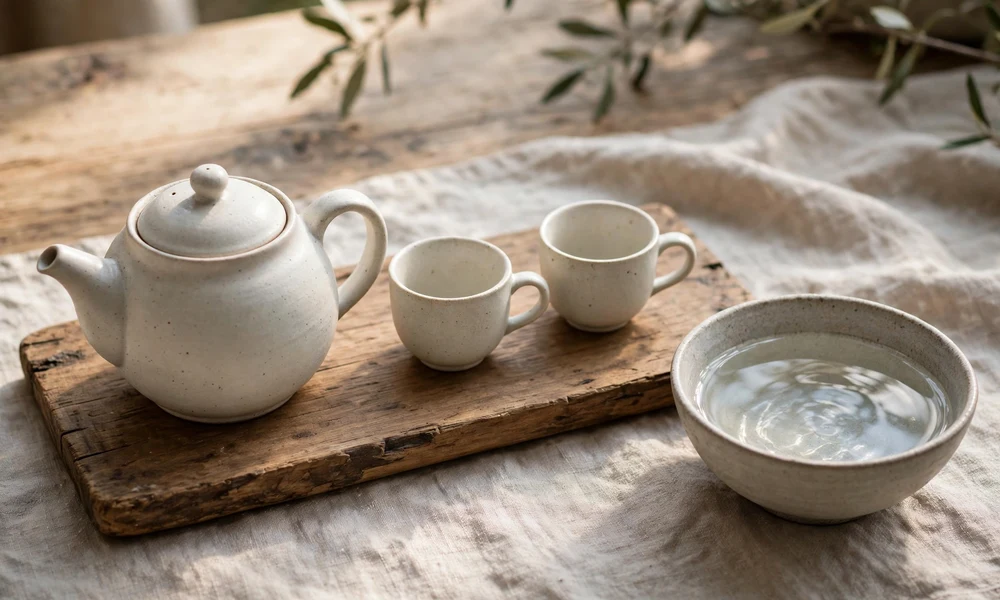
Water and a tea ceremony give that hour a shape. A small teapot, two tiny cups, and a bowl of clear water sit on a wooden tray, and each step follows the last in a slow, deliberate order. Nothing is rushed, nothing is measured for show, and the whole ritual takes about half an hour.
Below, the ceremony gets a full look: what it is, what you need, each step in order, and how water carries the whole ritual. Tea here is a drink only, never a medicine, and it promises nothing more than a calm hour.
Key Takeaways
- A tea ceremony is a slow, step-by-step ritual with a teapot, small cups, and a bowl of water.
- The ceremony takes about half an hour, done in one quiet place.
- Tea is a drink, never a medicine, and it will not cure anything.
- Water is the heart of the ceremony: it warms the pot, rinses the cups, and cools the tea.
- A calm hour needs very little: a tray, a pot, two small cups, and a bowl of water.
What a Tea Ceremony Is
A tea ceremony is a deliberate way of making and drinking tea, step by step, with full attention on each small act. You warm the pot, rinse the cups, pour the water, wait for the leaves to open, and pour the tea into tiny cups, one slow pour at a time. A bowl of clear water stands on the tray throughout, ready for rinsing and cooling.
The ceremony is not a performance and it needs no special skill. It is simply tea made slowly, in a set order, so that the making itself becomes the calm part of the hour. The tea is plain, the cups are small, and the pace is unhurried from the first pour to the last.
Why a Slow Ceremony Suits Calm Hours
A calm hour is an hour with room in it. There is no list waiting on the table, no message that needs an answer, and nothing that must be finished before lunch. A slow ceremony fills that room gently, giving your hands something small to do and your eyes something quiet to follow.
Each step asks for a little patience, and that patience is the point. Warming the pot takes a minute, waiting for the leaves takes a few more, and a tiny cup cannot be filled in a hurry.
Choosing Your Tea and Your Pots
Choose a tea you already like, plain and gentle: a soft green tea, a light black tea, or a mild herbal tea you know well. The ceremony suits loose leaves best, since you can watch them open in the pot, but a plain tea bag works too when that is what you have.
Pick a small ceramic teapot that pours cleanly, two tiny cups without handles, and a plain bowl for the water. Everything should feel comfortable in the hand, with no sharp edges and no wobble on the tray. Keep the set simple, and let the ritual, not the crockery, carry the hour.
Setting the Tray
Lay the tray on a low table near a window, where the light falls softly across the wood. Set the teapot at the back, the two small cups in a row in front of it, and the bowl of clear water to one side, where your hand can reach it without crossing the cups.
Add a folded linen cloth beside the bowl, for wiping drips. Keep the kettle off the tray, so hot water never splashes the wood.
The Ceremony, Step by Step
First, pour hot water into the empty teapot, swirl it once, and tip it into the bowl. This warms the pot so the tea will brew evenly. Next, pour a little hot water over the cups, then tip that water into the bowl too, so the cups are warm and clean.
Now put the leaves in the pot, pour in fresh hot water, and put the lid on. Wait two minutes for green tea, three or four for black tea, a little longer for herbal leaves. Then pour into the small cups in a slow stream, filling each halfway before topping them up.
Water in the Ceremony
Water does more work in a tea ceremony than anything else on the tray. It warms the pot and the cups, it carries the flavour out of the leaves, it rinses everything between pours, and it cools the tea to a comfortable warmth. The bowl of clear water is not decoration: it is the tool you reach for at every step.
Use fresh water, boiled and left to settle for a minute. Sip plain water before the first cup, so your mouth is clean, and again at the end.
Tea Ceremony at a Glance
| Small teapot, tiny cups | Half an hour | Drink only |
|---|---|---|
| Bowl of clear water | One quiet place | Never a cure |
| Warm pot, rinse cups | Slow steps, in order | Let tea cool |
| Loose leaves, plain tea | Tray, window, linen cloth | Wash hands first |

Tea Ceremony and Afternoon Tea
Afternoon tea is the closest tea hour to a ceremony, and the two are easy to mix up until you sit down with each one. Afternoon tea for a fresh afternoon tells of an easy pause midway through the day: a single pot of simple tea, a cup filled at leisure, fresh water in a glass at its side, and maybe a plain biscuit or two.
Afternoon tea is casual and quick, a short pause between lunch and evening. A ceremony is slower and more deliberate, with small cups, a bowl of water, and every step in a set order.
Tea Ceremony and Bedtime Tea
Bedtime tea is a night wind-down, and it belongs to a different hour entirely. Bedtime tea for a calm night describes one little mug of warm herbal tea without caffeine, sipped unhurried next to fresh water in a darkened room before sleep, at the close of day.
A bedtime cup is about ending the day: one cup, one chair, dim light, and then sleep. A tea ceremony is about the middle of the day, with a full tray, two small cups, and half an hour of slow steps. One winds the day down, and the other opens a calm hour up.
Tea Ceremony and Tea Blends
Tea blends are about mixing leaves, and that is a different pleasure from a ceremony. Tea blends for calm afternoons covers two or three gentle teas or herbs brewed together in one pot, like chamomile with a little mint, drunk slowly in a comfortable chair.
A blend is a flavour to enjoy, made from things you already like. A ceremony is a way of making tea, not a flavour: the same plain leaves, brewed step by step, with a bowl of water on the tray.
Tea Ceremony and the Other Tea Hours
Beyond the closest three, the tea hours still keep more variety. A quiet evening with tea is a slow hour with one cup, one glass of water, and a smooth stone resting dry on the table beside them, enjoyed in a comfortable chair. Green tea water is a face rinse, brewed and cooled, patted on with a soft cloth in the morning, and never a drink at all.
Herbal rinses are herb water poured over hair or skin, a rinse only, never a drink. A plain cup of herbal tea is just the drink, with no tray and no steps. None of these is the ceremony.

Keeping the Ceremony Safe and Gentle
Hot water always needs care, so keep the kettle steady and pour slowly, with the tray well away from the edge of the table. Let each cup cool for a minute before you lift it, and never put hot tea on your skin. If a cup feels too hot to hold, set it down and wait.
Tea is a drink, never a medicine, and it will not cure anything. If a health worry keeps nagging, or a sleep problem lasts for weeks, see a doctor. Wash your hands before you begin.
Your Calm Ritual Checklist
- Set the tray near a window, with the pot, two small cups, and a bowl of water.
- Warm the pot and rinse the cups with hot water first.
- Brew the leaves plain, and wait the full two or three minutes.
- Pour slowly into the tiny cups, and sip the tea unhurried.
- Sip plain water before the first cup and after the last.
- If a health worry keeps nagging, see a doctor; tea is a drink, never a cure.

Frequently Asked Questions
What is a tea ceremony?
A tea ceremony is a slow, step-by-step way of making and drinking tea, with a small teapot, tiny cups, and a bowl of clear water on a tray. Each step follows the last in a deliberate order.
How is a tea ceremony different from afternoon tea?
Afternoon tea is a casual pause with one pot, one cup, and a glass of water, perhaps with a biscuit. A ceremony is slower and more deliberate, with small cups, a bowl of water, and set steps.
How long does a tea ceremony take?
About half an hour from setting the tray to finishing the last cup. Warming the pot, waiting for the leaves, and pouring slowly all take a little time, and that slowness is the point.
What tea should I use for a ceremony?
Use a plain tea you already like: a soft green tea, a light black tea, or a mild herbal tea you know well. Loose leaves suit the ceremony best, but a plain tea bag works too.
Is a tea ceremony a treatment?
No. Tea is a drink, never a medicine, and a ceremony will not cure anything or fix a lasting problem. It offers a calm hour only, and lasting troubles always deserve a doctor.
Do I need special equipment for a tea ceremony?
No. A small ceramic teapot, two tiny cups, a plain bowl for water, and a wooden tray are enough. Keep the set simple, and let the slow steps carry the hour.
The Bottom Line
Water and a tea ceremony give a calm hour its shape: a small teapot, two tiny cups, and a bowl of clear water, poured step by step, sipped slowly, and enjoyed for its own sake.
A Note for Calm Hours
Take half an hour and make it slow. One tray, one pot, and a bowl of water are all you need.


