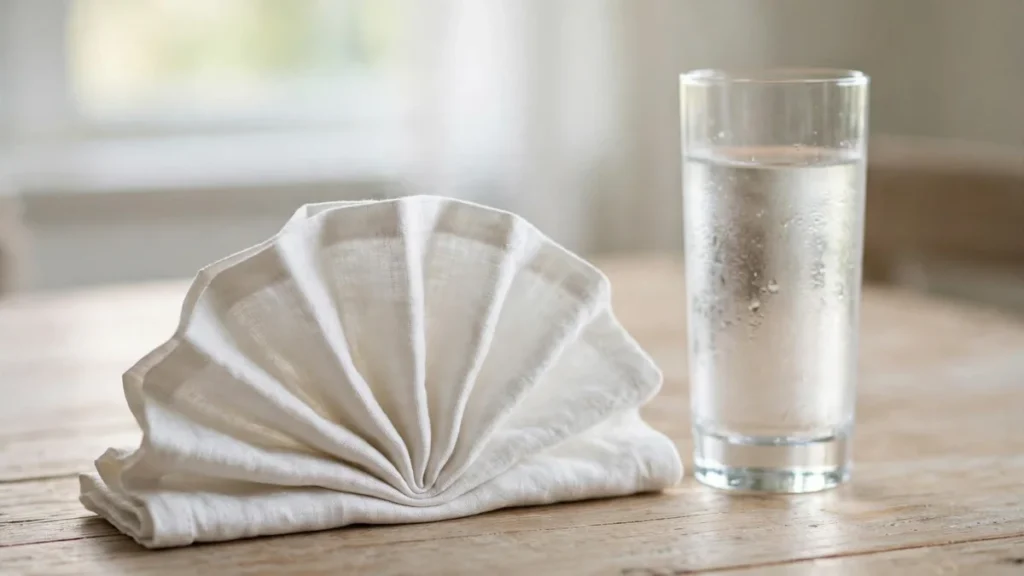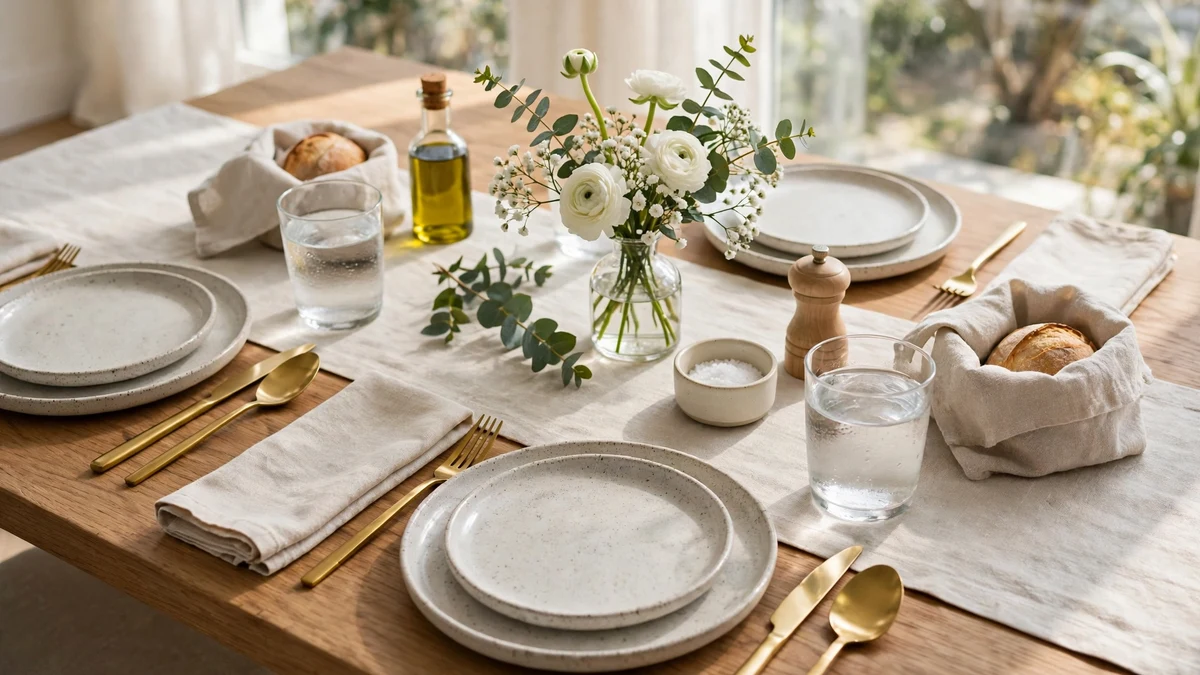
A table that is set before anyone sits down changes the whole meal. The plates are waiting, the glasses are full, the napkins are folded, and nobody has to hunt for a fork while the food cools.
Water comes first in that picture. A jug in the middle of the table and a glass at every place mean the meal begins with something cool and plain, before any dish arrives. That is the heart of this fresh ritual: water first, then food, then talk, in that order.
This guide gathers the top tips for a fresh table setting, step by step: what a setting is, how to lay one place well, where the water goes, and how to keep the whole habit simple enough for an ordinary weekday. Take it as gentle general information, and leave any health question to a doctor.
Key Takeaways
- A table setting is one place laid out: plate, cutlery, napkin and glass.
- Water comes first: a jug in the middle, a glass at every place.
- A fresh table needs only clean things, laid out in the same order each time.
- Keep the setting simple on weekdays and save the extras for guests.
- This is a cheerful household habit, not a remedy, and a doctor is the one for health questions.
What a Table Setting Is
A table setting is the arrangement laid out for one person: a plate in the middle, a fork on the left, a knife on the right, a folded napkin beside the plate, and a glass of water above the knife. The pieces sit in the same order every time, so anyone can find what they need without thinking.
It is not a decoration and not a formal occasion, simply the meal made ready before it begins. Once the places are laid, the table itself tells everyone that food is coming.
Why a Table Setting Suits Fresh Days
Freshness is often small things: a clean cloth, a bright colour on the table, and a cool glass in the hand. A set table brings all three to an ordinary day. The clean plates lift a plain kitchen, the folded napkins give the eye something tidy to rest on, and the water beside each plate keeps the whole table feeling clean.
A set table also slows the meal down in a kind way. Everyone stops at the table and sits down together. It asks for no hurry and no effort, only a few minutes of attention before the food arrives.
Water First, Always
Water comes first at a set table, before the food and before anything else to drink. Fill a jug with clean drinking water, set it in the middle, then pour a glass for every place and set each glass above the knife.
A glass that starts full and is refilled whenever it runs dry keeps the meal calm from bite to last, and it costs nothing at all. Use your usual drinking water, and wash your hands before you pour.
Setting One Place, Step by Step
Lay one place at a time, and the whole table follows. First, wipe the table clean and lay the cloth flat, smoothing out the creases with the palm of your hand. Second, set a plate in the middle of each place, about a hand's width from the edge of the table.
Third, lay the fork on the left of the plate and the knife on the right, with the blade facing in. Fourth, fold a napkin into a plain rectangle and set it on the plate or beside the fork. Fifth, set a glass of water above the knife. Sixth, step back and check the places line up.
The Water Jug and the Glasses
The jug is the centre of a fresh table. Choose a glass jug you can lift with one hand, fill it with clean drinking water, and set it where everyone can reach it without standing. A cloth beneath it catches the drips.
Keep the glasses plain and sturdy, one at every place, and fill each one before anyone sits down. If a glass runs dry, refill it from the jug. At the end of the meal, wash the jug and glasses with soap and hot water, dry them well, and put them back on the sideboard ready for tomorrow.

A Table Setting at a Glance
| Plate, fork, knife | One place each | Water first |
|---|---|---|
| Napkin, glass, jug | Same order daily | Refill as needed |
| Clean cloth below | Weekdays plain, guests more | Wash hands first |
| Six small steps | Table, light, calm | Tidy away after |
A Table Setting and Dinner Parties
Water and dinner parties, a simple fresh ritual follows an evening meal shared with friends at one table, shared dishes, candles and long talk. A dinner party is the meal itself, at the end of the day, when nobody is in a hurry any more.
A table setting is different: it is the preparation, not the party. The same plates and glasses serve a quiet Tuesday supper as well as a gathering of friends, and the setting takes only a few minutes either way. A dinner party needs guests and an evening; a setting needs only a clean table and a jug.
A Table Setting and a Fruit Bowl
Water and a fruit bowl, a simple fresh ritual follows a bowl of whole fresh fruit kept out on the table, with a glass of water standing beside it. The bowl stays out all day, and you take a piece when you like, with nothing chopped, blended or timed.
A table setting differs because it is laid for a meal, not left out for the day. The fruit bowl is a single bowl and a single glass; a table setting is a place for every person, with cutlery and napkins as well as plates. A fruit bowl can sit in the middle of a set table as its centrepiece.
A Table Setting and a Guest Room
Water and a guest room, a simple fresh ritual follows the small care of a room made ready for a visitor: clean sheets, a glass of water by the bed, and a towel folded on the chair. It is the same spirit as a table setting, applied to a bedroom instead of a dining table.
The difference is the room and the hour. A guest room is made ready once, before a visitor arrives, and then left alone. A table setting is laid fresh for every meal, morning and evening, and cleared away again after each one. Both begin with a glass of water placed where it can be reached.
Table Settings Among the Other Fresh Rituals in This Batch
This batch holds four more water rituals beside the table setting, and each one takes place somewhere else in the house. A teapot ritual is a warm guide to pouring tea, where the setting stays cool and plain. A toothbrush ritual is five small ways to keep a brush fresh in the bathroom, far from any plate or jug. A vision board is a calm guide to pinning hopes on a board, a ritual of looking ahead rather than laying a table. A compost bin ritual is about watering scraps at the right time, out in the garden or by the back door.
The stone articles in this batch sit beside them too, and the nearest is sinhalite, a warm brown stone for steady days that loves a tidy tray as much as a table loves a tidy setting. The table setting holds the dining corner of the batch, the one ritual that gathers everyone in the same place at the same hour.
Keeping the Table Fresh Through the Week
A fresh table is a habit, not a project. Each morning, wipe the table and put the jug and glasses back. Each evening, lay the places again before cooking starts, so the meal has somewhere to land when it is ready.
Once a week, wash the tablecloth and napkins, polish the glasses, and check the cutlery for spots. Swap out a stained cloth or chipped glass at once. A small sideboard or drawer that holds the spare napkins, plates and glasses makes the whole routine take minutes instead of half an hour.

A Table Setting for Small Spaces
A small table needs a small setting, and that is no drawback at all. One plate, fork, knife and glass fit on a table barely wider than a tray, and the ritual works as well for one as for six. Fold the napkin small, choose a modest jug, and keep the centre clear.
If the table doubles as a desk or a homework spot, clear it fully before laying the places, and put the work away rather than pushing it to one end. A table that is half work and half meal feels like neither.
Your Fresh Table Checklist
- Wipe the table clean and lay the cloth flat.
- Set a plate, fork, knife, napkin and glass at every place.
- Fill the jug with clean drinking water and set it in the middle.
- Pour a glass for every place before anyone sits down.
- Sip the water slowly while the food is brought out.
- If a health question comes up, ask a doctor — a laid table has no answers for it.
A clean cloth, a full jug, and a glass at every place: that is the whole setting.

Frequently Asked Questions
What belongs in one table setting?
One place needs a plate, a fork on the left, a knife on the right with its blade facing in, a folded napkin, and a glass of water set above the knife.
Where does the water glass go?
The water glass sits above the knife, on the right-hand side of the plate, where it is easy to reach with the right hand and hard to knock over.
Should I set the table before cooking?
Yes, lay the places before cooking, so the meal has somewhere to land and nobody hunts for a fork.
How do I keep a table setting fresh every day?
Wipe the table, use clean cloths and glasses, refill the jug, and wash everything with soap and hot water after the meal.
Is a table setting only for guests?
No, a simple setting suits a weekday supper just as well as a gathering of friends, and the habit is worth keeping even when you eat alone.
What if I only have a small table?
A small table works well with a small setting: one plate, one fork, one knife and one glass per person, a modest jug, and a clear centre, with nothing extra added.

The Bottom Line
For a fresh day, a set table is enough: clean plates, a full jug, water first, and everyone sitting down together.
A Note for Fresh Days
Water in the jug, glasses at every place, and a table laid before the meal — a fresh day asks for little more than that.