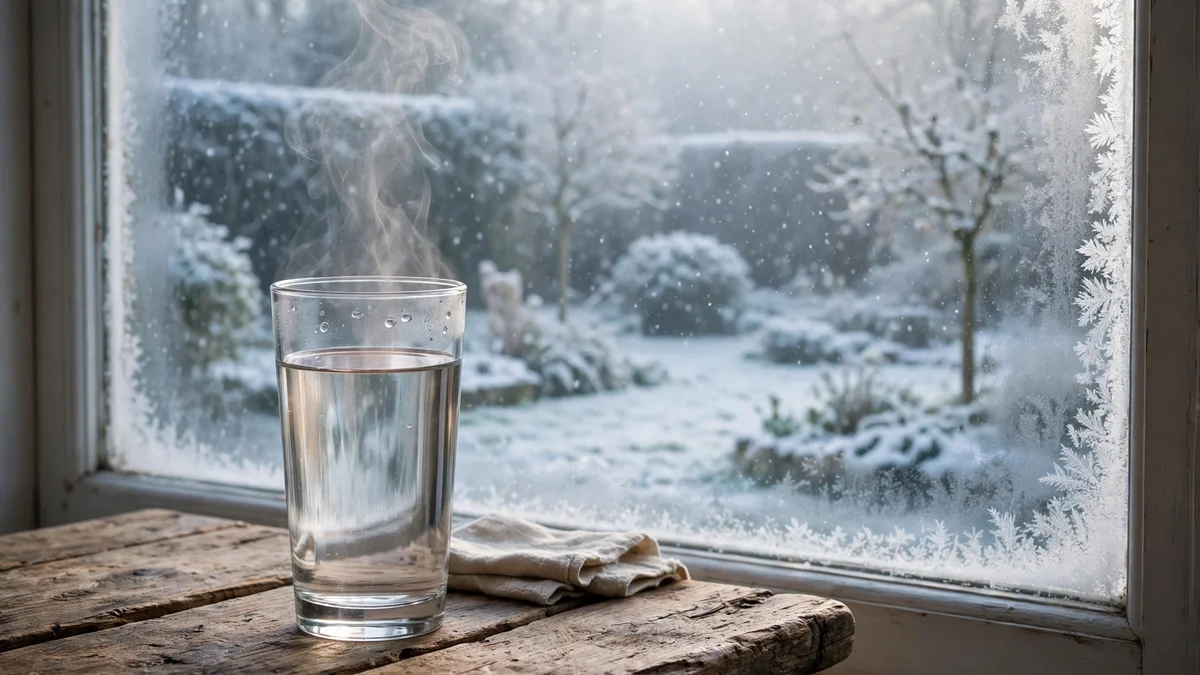
Snow changes a morning the moment you open your eyes. The garden has turned white overnight, the branches are heavy with it, and the street outside sounds muffled, as if the world has put on soft shoes. Frost has traced the corners of the window.
On a morning like that, water is the easiest place to start. A warm drink to wake up with, a gentle wash to clear away the night, and a warm bowl of food eaten slowly while the snow keeps falling. There is nothing elaborate about it, and nothing to rush.
What follows is one snowy morning, taken step by step, from the first warm glass to the moment you open the front door. Please treat it as gentle, general information, not as medical advice. If something is wrong with your skin, a doctor should see it, not a glass of water.
Key Takeaways
- Snow makes a morning quiet and cold, and warm water is the gentlest way to wake up.
- The ritual is short: warm water, a gentle wash, warm clothes, then breakfast, in that order.
- Lukewarm water and soft drying are kinder to winter skin than hot water and rubbing.
- Layers, a scarf and mittens make the walk into fresh snow comfortable.
- Warm food and one more glass of water bring the morning to a calm close.
Why a Snowy Morning Feels Fresh
Fresh snow makes the whole world look new. It covers the garden, the fences and the rooftops in one clean layer, and it throws pale light back into the room even before the sun climbs high.
The freshness is quiet, not bright. Snow soaks up sound, the light stays soft, and nothing outside is in a hurry. Those first still hours are the best part of the day, and they are worth protecting with a slow start.
The Simple Fresh Ritual
Think of the morning as four small acts, done one after the other. You wake and pour warm water, drinking it slowly by the window while you watch the snow. Then you wash your face and hands in lukewarm water and dry them softly. Then you put on warm layers and set a scarf and mittens ready by the door. Last, you eat something warm.
Each act is quick, and none of them calls for anything out of the ordinary. A glass, a tap, a towel and a plain breakfast are the whole of it, done with care and in order.
Warm Water First
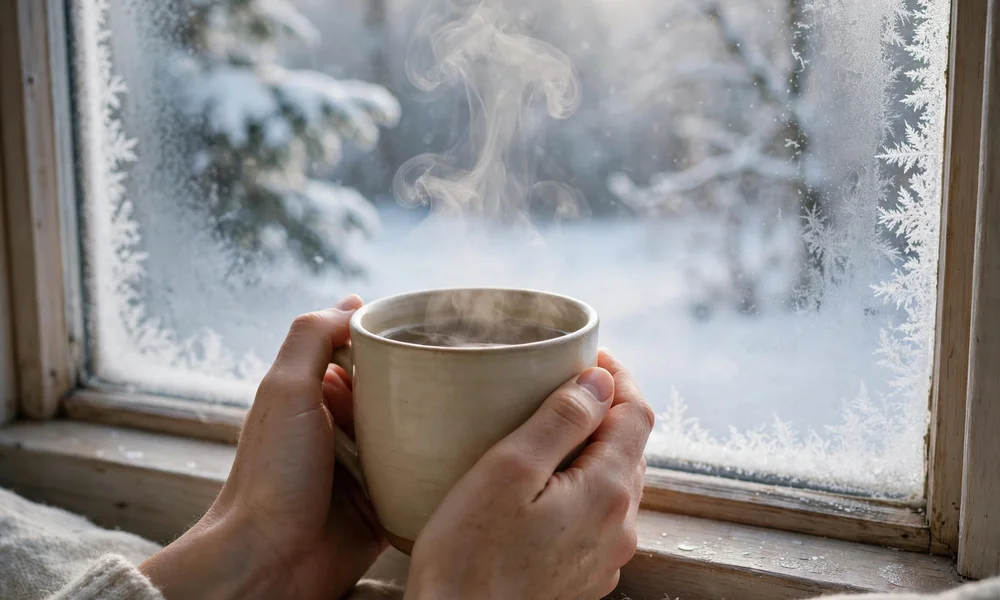
Begin with a tall glass of warm water, not hot, and drink it a little at a time while you sit near the window. The warmth wakes the body gradually, which is exactly what a cold morning needs. Plain water on its own is enough; a thin slice of lemon can be a nice change on a bitterly cold day, but it is never required.
Warm water through the morning helps you feel comfortable in a general way, yet it cannot stand in for warm clothing or a scarf, and it treats nothing.
A Gentle Morning Wash
Washing comes next, and the temperature matters more than anything else. The water should be lukewarm: hot water strips the skin of its natural oils and leaves it feeling tight and dry for hours.
Aim for water that feels close to your own warmth. Let the stream run over the inside of your wrist until it feels neither warm nor cool, and use that. Wash with your hands and a mild, plain cleanser, and keep the whole thing short, around five minutes. A brief splash of cooler water at the end can feel refreshing, but do not linger over it on a snowy day.
Drying Gently, Then a Little Cream
Drying is half the wash, and it deserves the same care. Press a soft towel against your face and hands instead of scrubbing at them: rubbing can upset cold skin, while pressing leaves a little dampness behind, which is what you want for the next step. While the skin is still slightly damp, smooth a thin layer of plain cream over your face and hands.
One plain cream will do for most snowy mornings, and a thin layer is better than a thick one, which can feel sticky once you are back indoors. If soreness, cracks or flaking do not clear up, or the same problem keeps coming back, let a doctor or dermatologist have a look.
A Warm, Light Breakfast
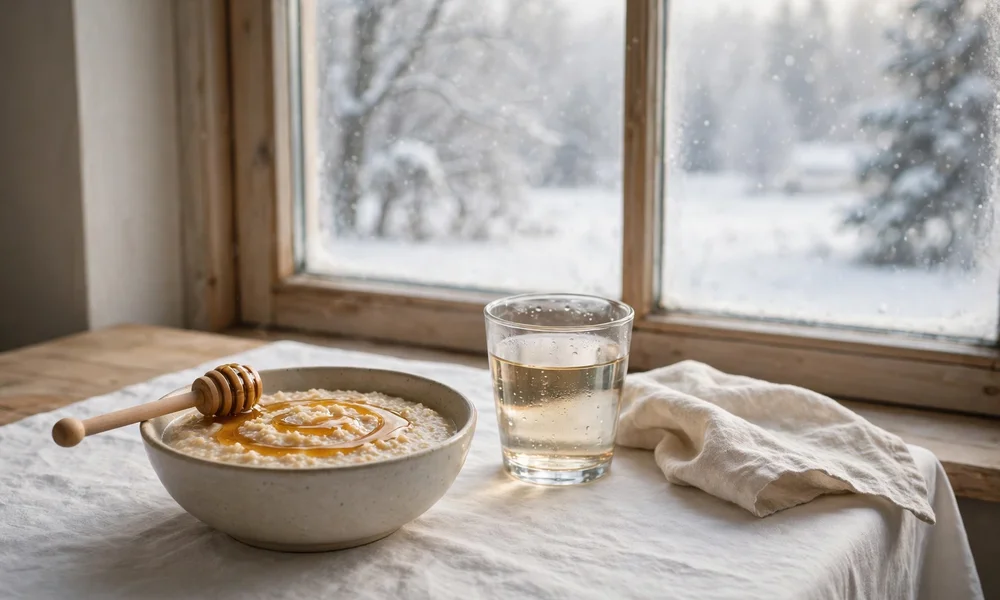
Breakfast is the next part of the ritual, and it should be warm and simple: a bowl of porridge with a spoonful of honey, and a glass of warm water beside it, is plenty. The porridge warms you from the inside, the honey adds a little sweetness, and the water keeps the morning easy.
Take your time over it, sitting by the window where you can watch the snow fall. Ten quiet minutes at the table end the indoor part of the morning the way it began: gently.

Dressing Warmly for the Snow
For a snowy morning, dress in layers rather than one heavy piece. Begin with something warm against the skin, add a jumper, then a coat, and leave a scarf and mittens by the door for the walk outside. Wool holds warmth close to the body, and a coat keeps the snow off your clothes.
Wrap the scarf and pull on the mittens before you step outside, not after, and slip a bottle of water into your bag. Warm clothing is the simplest guard winter skin has, and it needs no special purchase. A hat is worth adding too, since a cold wind can sting uncovered ears.
Stepping Out into Fresh Snow
Go out slowly, and give your body a few minutes to adjust to the cold. Stay on the cleared path at first, and keep your steps unhurried. The world looks new out there, and there is no need to hurry through it.
If your hands start to feel numb, come back inside for a moment and warm them slowly under lukewarm water, never hot. The snow will still be waiting when you go out again, and the morning is not a race to be won.
A Snowy Morning at a Glance
| Warm morning | Fresh ritual | Gentle steps |
|---|---|---|
| Warm water first | Wake, sip, wash | Lukewarm wash |
| Pale snow light | Dress warm, breakfast | Pat dry, cream |
| Frosted window | Scarf, mittens, step out | Warm food, water |
A Snowy Morning and Winter Mornings
A snowy morning sits inside the wider world of winter mornings, but it is not the same guide. Winter mornings keep a warm routine for cold mornings in general: warm water first, clothes set out the night before, and a warm breakfast, with no snow required at all.
This guide is narrower, and it is all about the snow. It begins with waking to a white garden and a frosted window, and it ends with a slow step out into fresh snow. Winter mornings can happen on any cold day; this one can only happen when snow has fallen. The shape is familiar, a short kind order from waking to breakfast, but the snow gives it a different feel.
A Snowy Morning and Snow Days
A snowy morning and a snow day may sound like the same thing, but they cover very different spans of time. Snow days keep a skin guide for a whole day of snow: cold air, wet flakes, wind, and long hours indoors with the heating on, with care for hands, cheeks and lips from morning to night.
This guide covers only the first hour of that day. It stops at the front door, after the warm water, the gentle wash, the warm clothes and the breakfast, with one slow step into the fresh snow. The snow-day guide follows you through outings and back indoors again; this one stays with the morning, while the snow is still untouched.
A Snowy Morning and Winter Skin
A snowy morning and winter skin share the same family, and both lean on lukewarm water and plain cream, yet the two guides do different work. Winter skin keeps a layered routine for the entire cold season, with layers of care through day and night, for skin that stays dry for weeks on end.
This guide is far shorter and far simpler: one snowy morning only, from waking to stepping out, with warm water first and a warm breakfast to finish. The skin guide covers the whole winter; this guide covers the first hour, while the snow outside is still fresh.

Your Snowy Morning Checklist
- Pour a tall glass of warm water as soon as you wake.
- Sip the water slowly, in small mouthfuls, near the window.
- Wash for a few minutes in lukewarm water, never hot.
- Press the skin dry softly, then smooth on plain cream.
- Put on warm layers, with a scarf and mittens waiting by the door.
- Eat a warm breakfast at a slow pace, and let a doctor see skin troubles.
Frequently Asked Questions
What is a simple fresh ritual for a snowy morning?
It is a short, kind order for a cold morning with snow outside: wake slowly, drink warm water, wash in lukewarm water, dry softly and use plain cream, dress in warm layers, and eat a warm breakfast.
Should I drink cold water or warm water in the morning?
Warm water is the better choice on a snowy morning. It wakes the body gradually, while icy water is a shock on a cold day.
Should I wash with hot water on a snowy morning?
No. Hot water strips the natural oils from your skin and leaves it tight and dry. Lukewarm water is kinder in winter, with a brief cooler splash at the end.
When should I put cream on in winter?
Put it on just after drying, while the skin is still a little damp. A thin layer of plain cream is enough, since a thick one feels sticky indoors.
What should I eat for a warm snowy breakfast?
A bowl of porridge with a little honey, and a glass of warm water, is plenty. Eat sitting down, at a slow pace, before the day gets properly going.
When is it time to ask a doctor about my skin?
Book an appointment with a doctor or dermatologist if soreness, cracks or flaking refuse to clear up, or the same trouble returns again and again. This guide is gentle, general information only, and never medical advice.
The Bottom Line
Water and a snowy morning fit together simply: warm water first, a gentle wash, warm clothes, and a warm breakfast. Wake slowly, and let the morning stay fresh around you.
A Note for Snowy Mornings
Warmth, slowness and simplicity are the whole secret. A steaming glass, a soft towel, a scarf and a warm bowl are all a snowy morning needs.


