
Some mornings the face in the mirror looks redder than it did the night before. The cheeks feel warm, the skin looks flushed, and even a gentle wash seems to make the colour deeper. The first instinct is to scrub the redness away or try a strong product. That instinct is understandable, and it almost always makes the redness worse.
Cool water is the calmest place to start. Plain cool water, clean hands, a short wash and a soft towel will not cure redness, but they will not irritate it either. Red-looking skin asks for less: less heat, less rubbing, less product, and more time to settle.
This guide explains what red-looking skin is, why cool water comes first, how to wash gently morning and evening, what to leave alone, and when to ask a doctor or dermatologist. It is gentle general information only, never medical advice.
Key Takeaways
- Red-looking skin often feels warm and flushed, and it needs calm care, not scrubbing.
- Cool water is the gentlest wash for red-looking skin, close to room temperature.
- Wash briefly with clean hands, pat dry softly, and care for skin while it is slightly damp.
- Leave the skin alone: no scrubbing, no hot water, and no strong new products.
- Patch-test every new product, and see a dermatologist for real skin problems.
What Red-Looking Skin Means
Red-looking skin means the face looks flushed, pink or red, often on the cheeks, nose or chin, and it may feel warm or slightly tender to the touch. The colour can come and go during the day, or it can stay for hours. Heat, cold wind, a warm room, a hot wash, strong soap or touching the face can all make the redness look deeper. Red-looking skin is common, and it does not mean the skin is dirty.
The skin turns red when the tiny blood vessels near its surface widen and more blood flows close to the surface. That is a normal response to heat and irritation, but on sensitive skin it happens more easily and fades more slowly. The answer is not to fight the colour: cool the skin gently, touch it less, and give it a quiet routine.
Why Water Comes First
Water comes first because it is the gentlest thing that touches the face each day. It rinses away sweat, dust and the light film of the night without stripping the skin bare. Red-looking skin is already sensitive, and a harsh wash can leave it tighter, warmer and redder than before. Cool water does the opposite: it cleans softly and cools the skin.
Water also slows the routine down. One minute of splashing cool water over the face is a pause between waking and the rest of the day, and a pause is often what flushed skin needs. Where water and dry skin a gentle routine puts moisture back into tight, dry skin, this guide cools red-looking skin first, because redness asks for coolness before anything else.
Cool Water, Gentle Touch
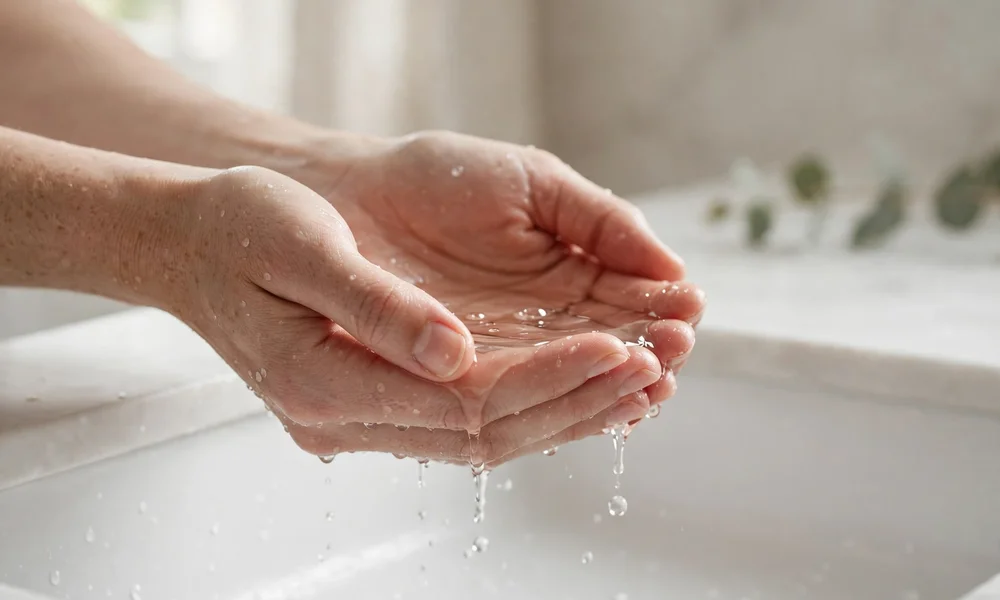
Cool water feels fresh and comfortable on the inside of your wrist, close to room temperature and never icy. It rinses away sweat and dust without shocking the skin. Hot water can leave red-looking skin warmer and redder, and very cold water can feel sharp. Cool water is the middle that suits redness best: run the tap until the water feels cool, not cold, on your wrist.
Gentle touch matters just as much as cool water. Wash your hands with soap and water before they touch your face, and use only your fingertips in slow, light circles. Do not rub, press hard, or use a rough cloth on red-looking skin.
A Calm Morning Routine
A calm morning takes only a few minutes. Start by washing your hands, then splash cool water over your face, using your fingertips in slow, light circles. If you use a cleanser, choose a mild one, use a small amount, and rinse it away fully. Pat the skin dry with a soft towel, pressing gently instead of rubbing.
While the skin is still slightly damp, apply a plain moisturiser if your skin feels dry, using a small amount and a gentle hand. Then drink a glass of fresh cool water and let the morning begin. The whole routine is short on purpose, and red-looking skin does better with less, not more. Avoid a long, hot shower first thing, because steam and heat can deepen the flush.
A Calm Evening Routine
The evening routine is the same as the morning, with one extra step: the day itself. Wash your hands, splash cool water over your face, and rinse away the dust, sweat and sunscreen of the day. A mild cleanser can help here, used in a small amount and rinsed away fully. Pat dry softly, apply a plain moisturiser if the skin feels dry, and then leave the skin alone.
Evenings are a good time to notice what made the redness worse during the day: the heat, a long shower, a new product, or a day spent touching your face. Noticing is enough. A calm evening wash, a soft towel, and a quiet night will do more than a shelf full of strong creams.
What to Leave Alone
The hardest part of a calm routine is leaving the skin alone. Scrubbing red-looking skin can make it warmer, redder and sorer, and a rough cloth or a grainy scrub can scratch skin that is already sensitive. Strong products with heavy scent or alcohol can sting and deepen the flush. Leave them on the shelf.
Leave the mirror alone too. Checking the redness every hour will not make it fade faster, and it often leads to more touching and more worry. Where water and breakouts a gentle routine leaves spots alone so they can settle, this guide leaves red areas alone for the same reason: calm skin needs space, not attention.
Water Through the Day
Water through the day is simple too. Drink plain water when you are thirsty, and keep a glass beside you while you work. Drinking water will not cure redness, but staying hydrated keeps the body comfortable.
Splashing the face with cool water once during a hot day can help as well, especially after sweating or coming in from the sun. Pat the skin dry softly afterwards, and do not rub it. A midday splash is not a full wash, and it does not need a cleanser. If the day is very hot, stay in the shade when you can, because heat is a simple trigger for red-looking skin.
Redness at a Glance
| Cool water first | Leave alone | When to ask |
|---|---|---|
| Cool, not icy | No harsh scrubs | Redness that spreads |
| Clean hands always | No hot water | Painful or blistered skin |
| Pat dry softly | One mild cleanser | No change in weeks |
| Short wash only | Patch test first | Skin that worries you |
Patch Testing Every New Product
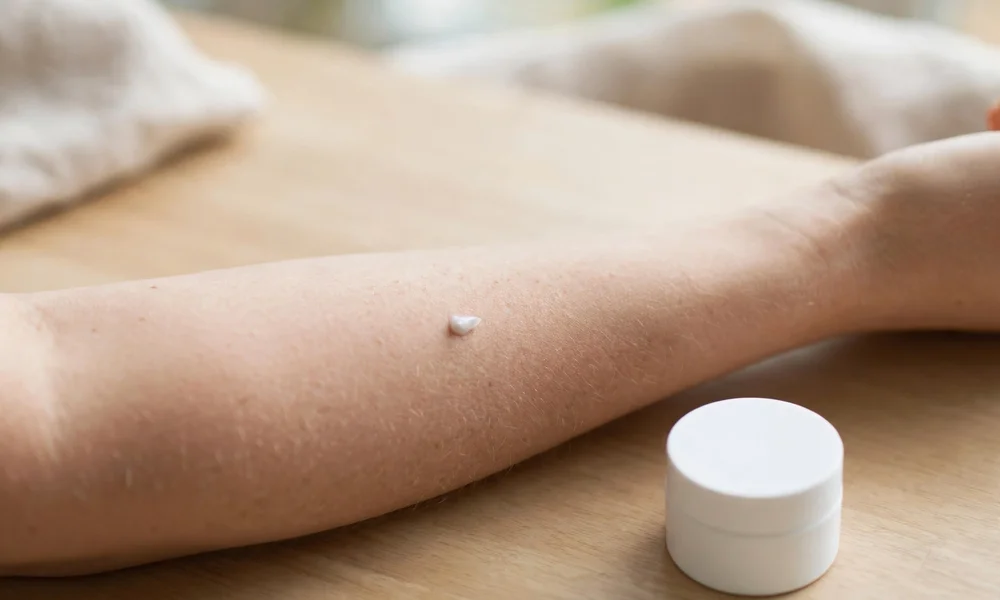
Patch testing is a small habit that protects the whole face. Before a new product touches your face, put a tiny amount on the inside of your wrist or behind your ear, and wait a full day. If the skin stays calm, it is probably safe to use on the face. If it turns red, itches or stings, do not use it.
This matters most for red-looking skin, because sensitive skin reacts more easily than calm skin. A product that suits a friend may not suit you. Where water and normal skin a simple guide patch tests for balanced skin, this guide patch tests for skin that is already red, because a new product on flushed skin can deepen the colour within minutes.
When to See a Doctor
Some skin problems need a doctor or dermatologist, not a home routine. See one if redness spreads quickly, if the skin is painful, blistered or swollen, or if it does not change after several weeks of gentle care. See one too if redness keeps coming back in the same place.
This guide is gentle general information only, never medical advice. It will not cure redness, and it is not a replacement for a doctor. If a skin problem worries you, ask a professional early. A dermatologist can look at your skin and suggest care that fits, which no general guide can do.
Your Calm Redness Checklist
- Wash your hands before they touch your face, every single time.
- Wash with cool water, briefly, morning and evening.
- Pat the skin dry softly with a clean, soft towel, never rub.
- Leave red areas alone: do not scrub, pick or press them.
- Patch-test every new product on your wrist and wait a full day.
- See a doctor or dermatologist if redness spreads, hurts or does not change.
Frequently Asked Questions
What causes red-looking skin?
Red-looking skin happens when the tiny blood vessels near the surface widen and more blood flows close to the surface. Heat, cold wind, a hot wash, strong soap and rubbing can all make the redness look deeper.
Will cool water cure my redness?
No. Cool water will not cure redness, and no home routine can promise a cure. Cool water is the gentlest way to wash red-looking skin, and a calm routine gives the skin room to settle.
Should I scrub red-looking skin?
No. Scrubbing can make red-looking skin warmer, redder and sorer, and a rough cloth can scratch skin that is already sensitive. Use only your fingertips in slow, light circles, and pat the skin dry softly instead of rubbing.
Is hot water bad for redness?
Yes, hot water can leave red-looking skin warmer and redder, and it can irritate sensitive skin further. Cool water, close to room temperature and never icy, is the gentlest wash for red-looking skin, morning and evening.
How do I patch test a new product?
Put a tiny amount on the inside of your wrist or behind your ear, and wait a full day. If the skin stays calm, it is probably safe to use on the face. If it turns red or stings, do not use it.
When should I see a dermatologist?
See a dermatologist if redness spreads quickly, if the skin is painful, blistered or swollen, or if it does not change after several weeks of gentle care. A professional can look at your skin and suggest care that fits.
The Bottom Line
Water and redness need a calm routine: cool water, clean hands, a short wash, and red areas left alone. Keep it simple, keep it cool, keep it gentle, and ask a doctor when the skin needs more.
A Note for Calm Days
Keep it cool, keep it short, keep it gentle. Your skin is doing its best, and so are you.


