
Some rituals need candles, oils, and a free hour. A foot bath needs none of those. It is a basin, some plain lukewarm water, a clean towel, and ten quiet minutes — and it leaves your feet feeling fresh in a way that a quick rinse never quite manages.
The idea is simple: you sit down, rest both feet in a basin of plain water, and do nothing else for a little while. There is no salt to stir in and no scent to add.
This guide treats water and foot baths as a small daily ritual, not as a cure for anything. It explains what a foot bath is, when to take one, how to set it up, how long to stay in, and when to skip it. It is gentle general information only.
Key Takeaways
- A foot bath is a short soak of both feet in a basin of plain lukewarm water.
- It is a fresh ritual for any day, not only for tired feet after long days.
- The water must be lukewarm, never hot, and judged with your hand first.
- Ten minutes is enough; longer soaks leave the skin soft and wrinkly.
- Skip it if the skin is broken or sore, and see a doctor for problems that persist.
What a Foot Bath Is
A foot bath is your feet, resting in a basin of plain water, taken sitting down with the basin in front of you. The water is lukewarm and clear, with nothing added to it — no salt, no soap, no oils, and no bubbles. Your feet go in clean, rest flat on the bottom, and come out after about ten minutes to be dried.
It is not a bath, and it is not a treatment. A bath takes your whole body under water; a foot bath takes only your feet, and it asks for far less time, water, and tidying up afterwards. It is also not a wash: a wash is quick and over in a minute, while a foot bath is slow on purpose.
Why a Foot Bath Feels Fresh
Feet spend the whole day shut inside shoes and socks, warm, pressed, and working. By evening they feel stale: heavy, a little damp, and glad to be free. A basin of lukewarm water meets that feeling directly. The water is still, it is warm, and it asks your feet to do nothing at all.
Part of the freshness is simple and physical. Lukewarm water rinses away the sweat and dust of the day, and the warmth lets the small muscles of the feet rest. Part of it is the pause itself: for ten minutes you are sitting down, and your feet are not carrying anything.
Choosing Your Foot Bath Time
A foot bath fits almost any part of the day, and the best time is the one you will keep. In the morning, a short foot bath wakes the feet up before shoes go on. In the evening, it marks the line between the working day and the rest of the day, and it helps the feet settle before bed. Midday works too, especially on a hot day or after a long walk. Pick one regular time, so the ritual becomes a habit instead of a chore.
Setting Up Your Foot Bath
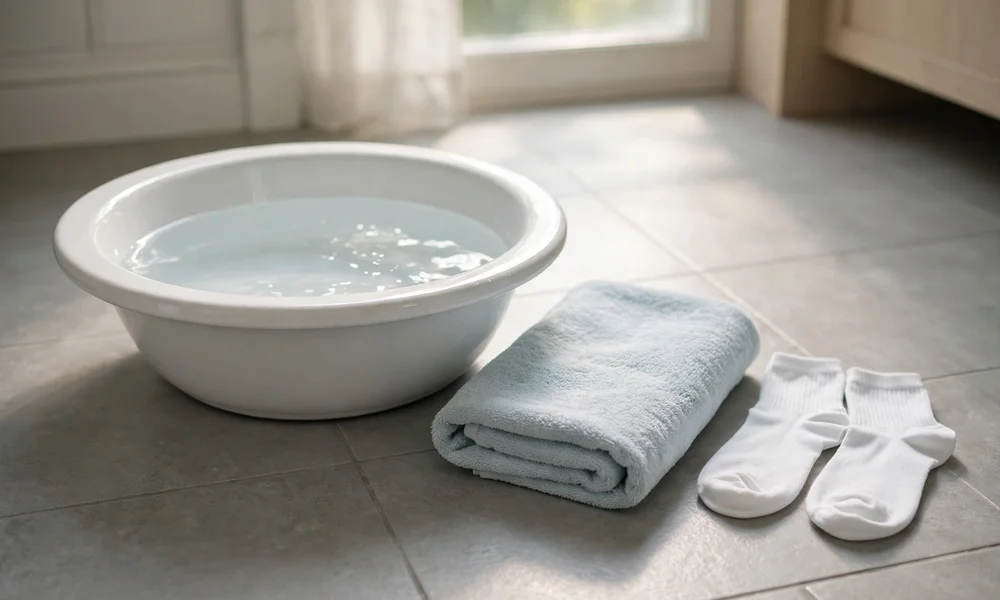
Get everything ready before the water goes in. Lay out a basin that fits both feet, a clean towel, a little plain moisturiser, and clean cotton socks, so that once you sit down there is no reason to stand up again.
Run lukewarm water into the basin — never hot — and dip your hand in to judge it: it should feel mild and kind, with no bite to it. If your hand finds it too warm, it will be too warm for your feet, so mix in cold water until it feels soft. Let the water come up to just above the ankles.

The Foot Bath Itself, Step by Step
Take your seat and ease your feet down a little at a time, giving them a few moments to grow used to the warmth before you rest them flat on the basin floor. The water should feel mild straight away, never sharp. Stay in for about ten minutes. Should the water turn cool, take your feet out, pour in a little more warm water, and dip back in. When the time is up, lift your feet out, pat them dry with the towel, and dry carefully between each toe. Finish with a little plain moisturiser and clean cotton socks.
Foot Baths at a Glance
| Plain lukewarm water | Basin, towel, chair | Ten minutes only |
|---|---|---|
| Nothing added | Morning or evening | Hand test first |
| Both feet, flat | Clean socks after | Pat dry, never rub |
| Sit down, rest | Quiet room, calm | Skip broken skin |
| Fresh ritual daily | Small pause, still | Doctor if worried |
Foot Baths and Tired Feet
Water for tired feet after long days is the closest guide to this one. That guide is about recovery: feet that are heavy and warm after hours of standing, a rinse first to wash the day off, then a soak, then rest with the feet lifted. It belongs to the end of a long day.
A foot bath is different in its purpose. It is a fresh ritual for any day, even a quiet one when your feet are not tired at all. You do not need a long day behind you, and you do not need sore feet to earn it. One guide mends tired feet after long days; this one keeps fresh feet fresh, every day.
Foot Baths and Salt Soaks
Foot soaks with salt water are the other close neighbour. That guide stirs a couple of spoonfuls of sea salt into warm water, and the salt makes the water feel a little softer.
A plain foot bath uses no salt at all. The water is clear and unadorned, and there is nothing to dissolve, nothing to rinse off afterwards, and nothing gritty underfoot if you forget to stir. Salt soaks suit evenings when you want a little extra comfort; a plain foot bath suits every day, because it needs nothing from the kitchen cupboard.
Foot Baths and Ankle Care
Water and ankles looks after the joint where the leg meets the foot: gentle washing, slow ankle circles, and rest with the ankles raised.
A foot bath is wider than that. It rests the whole foot — toes, soles, heels, and ankles together — in one basin of lukewarm water, and it asks nothing of the joints while it does so. You can add slow ankle circles while your feet are in the basin if you like, but the foot bath itself is simpler: sit, soak, dry, and go.
Foot Baths Through the Seasons
A foot bath changes a little with the year. In summer, the basin can be a touch cooler — still lukewarm, never cold — and it feels like a small relief after hot pavements. In winter, the water can be a touch warmer, still lukewarm and never hot, and it takes the chill off feet that have been cold all day. Full-body baths are a different pleasure — bubble baths, milk baths, and oat soaks all fill a tub and take much longer — while a foot bath stays small in every season, a basin and ten minutes.
Keeping Your Foot Bath Kit Ready
A foot bath is easiest when the kit is always ready. Keep the basin, a clean towel, a small bottle of plain moisturiser, and a pair of clean cotton socks together in one place, so you never have to hunt for them. Wash the basin after each use with plain water and a little gentle soap, rinse it well, and let it dry upside down. A kit that is ready is a kit you will use.

When to Skip a Foot Bath
A foot bath is gentle, but it is not for every day and every foot. Skip it if the skin on your feet is broken, cracked open, sore, or blistered, or if there is any cut that has not healed. Water on broken skin can sting, and a soak is the wrong place for an open wound.
Skip it too if your feet are swollen, painful, or numb, or if the skin looks red and angry, and see a doctor instead. People with diabetes, poor circulation, or loss of feeling in their feet should ask their doctor before taking foot baths at all. Stop at once if the water hurts.
Your Fresh Ritual Checklist
- Fill the basin with lukewarm water and test it with your hand.
- Sit down, lower your feet in slowly, and rest for ten minutes.
- Lift your feet out, pat them dry, and dry between each toe.
- Rub in a little plain moisturiser and put on clean cotton socks.
- Wash the basin, hang the towel to dry, and put the kit away.
- If anything hurts or worries you, stop and ask your doctor.

Frequently Asked Questions
What is a foot bath?
A foot bath is a short soak of both feet in a basin of plain lukewarm water, taken sitting down. It is a fresh ritual, not a treatment, and it needs no salt, oils, or gadgets.
How long should a foot bath last?
About ten minutes is enough. Longer soaks leave the skin soft and wrinkly.
How warm should the water be?
Lukewarm, never hot. Dip your hand in first: the water should feel mild and kind, with no bite to it. If your hand finds it too warm, it will be too warm for your feet.
Can I add salt or oils to a foot bath?
You can, but a plain foot bath uses nothing at all. Salt soaks are a separate habit, and this ritual keeps the water clear and simple, with nothing to rinse off afterwards.
Is a foot bath safe for everyone?
No, not everyone. Skip it if the skin is broken or sore, and ask your doctor first if you have diabetes, poor circulation, or loss of feeling in your feet.
When is the best time for a foot bath?
Any time you will keep. Mornings wake the feet up before shoes go on, and evenings mark the line between the working day and rest.
The Bottom Line
Water and foot baths fit any day: a basin of plain lukewarm water, ten quiet minutes, dry feet, clean socks, and a small fresh ritual.
A Note for Fresh Feet
One basin, one towel, ten quiet minutes — fresh feet ask for nothing more.


