Oily hair has a habit of looking flat by midday. The morning wash feels fresh, the hair moves lightly, and then, by lunch, the roots are glossy again and the strands cling together. It is a common, ordinary kind of hair, and it is not dirty; it simply carries more of the scalp's own natural oil than other hair does.
A heavy routine makes it worse. Rich creams, strong shampoos, and hot water strip the hair bare, and the scalp answers by making even more oil. A light routine does the opposite: lukewarm water, a small amount of mild shampoo, and a soft touch.
This guide explains a light wash routine for oily hair, built on water first and light steps after. It is gentle general information only, never medical advice, and it makes no promise to cure anything. Real hair or scalp problems belong with a doctor or dermatologist.
Key Takeaways
- Oily hair carries extra natural oil from the scalp, so it looks flat by midday.
- A light wash suits it best: lukewarm water, a little mild shampoo, soft hands.
- Wash the scalp gently, rinse well, and keep conditioner off the roots.
- Hot water and harsh products strip the hair and can bring more oil.
- This is gentle general information only; see a doctor for scalp problems.
What Oily Hair Means
Oily hair means the scalp makes more sebum, its own natural oil, than other scalps do. Sebum is not a bad thing: it keeps the hair soft and helps hold moisture in. On oily hair there is simply more of it, so the roots shine first and the strands stick together by afternoon.
The oil travels down each strand from the root, so the roots look oiliest and the ends stay drier. Straight hair shows oil fastest, because the oil slides straight down, but any hair type can be oily. For many people it is simply how their hair is, year after year. Warm weather, a long day indoors, and a hat worn for hours can all bring the shine out sooner, and the hair may feel heavier by evening than it did in the morning.
Why a Light Wash Suits Oily Hair
A light wash suits oily hair because it works with the scalp instead of fighting it. Lukewarm water rinses the oil away without shocking the skin, a small amount of mild shampoo cleans without stripping, and soft hands leave the scalp calm afterwards.
A harsh wash feels thorough in the moment, but it can leave the scalp dry and tight, and the scalp may answer by making even more oil. Gentle water habits do the opposite: they clean just as well, and the hair stays light for longer. Less product also means less build-up on the scalp, and less build-up means the roots stay fresh and the strands move more freely through the day.
Wetting Oily Hair First
Wetting oily hair first is the simplest step, and it is easy to rush. Stand under lukewarm water and let it run through the hair for a full minute, until every strand is wet from root to tip. Dry patches hold onto oil, and shampoo cannot spread evenly over dry hair.
Use your fingers to lift the hair at the roots so the water reaches the scalp, and take your time with the back of the head, where water often misses. The water should feel warm and comfortable on the back of your hand, never hot, and never cold enough to make you flinch.
Washing the Scalp Gently
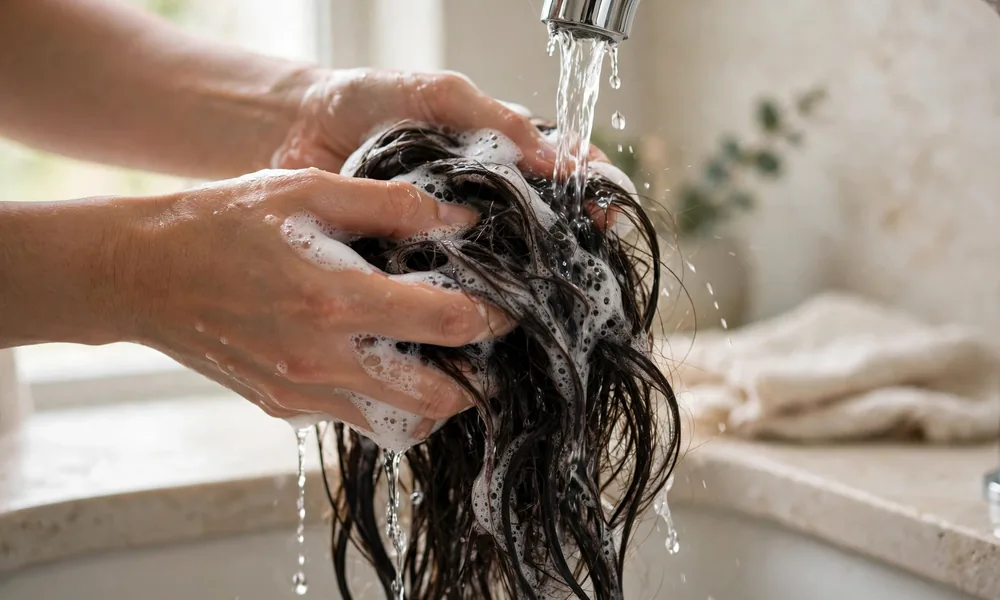
Washing the scalp gently is where a light wash does its work. Take a small amount of mild shampoo, about the size of a coin, and work it into the scalp only, with soft fingertips in slow circles. Never use nails, and never pile shampoo onto the lengths, because the lengths need far less cleaning than the roots.
Let the suds run down the lengths as you rinse, and that is enough for the ends, which are usually drier than the roots. Wash once, and only wash twice on a very oily day, because a second wash can strip the scalp and bring more oil back sooner.
Rinsing Oily Hair Well
Rinsing oily hair well matters more than most people think. Rinse longer than you think, until the water runs clear and the hair feels clean and slippery, with no soapy coating left behind. Leftover shampoo weighs oily hair down and makes it look flat within hours.
Finish with a cooler rinse, not cold, just cooler than the wash water, and let it run over the hair for a few seconds. A cooler finish helps the hair lie smooth and look fresh for longer, and it wakes the scalp gently. If the hair still feels coated after a long rinse, the shampoo may be too rich, and a plainer, milder one is worth trying next time.
Drying Oily Hair Softly
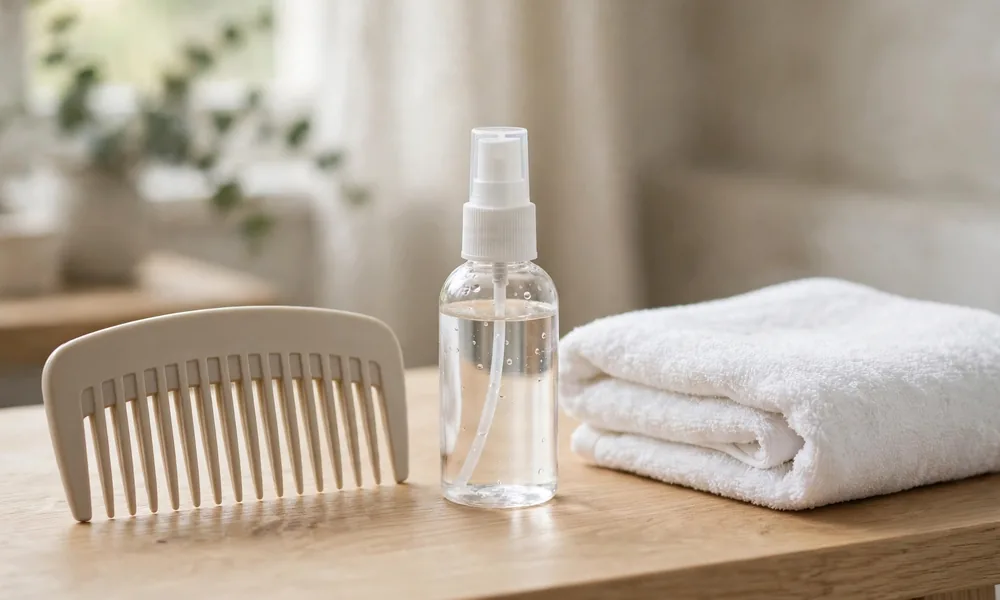
Drying oily hair softly is the last step of a light wash. Press the hair gently with a soft towel, and never rub it, because rubbing roughens the strands and tangles them. Pat the roots first, then press the lengths, and let the towel take the water.
Let the hair air-dry when you can, and use a wide-tooth comb only when the hair is damp, starting at the ends and working up, so you do not pull the roots. Heat styling can dry the scalp and bring oil back, so keep it light and short when you use it, and give the hair a rest on days when you can.

Oily Hair at a Glance
| Oily hair | Light wash | Water first |
|---|---|---|
| Extra scalp oil | Lukewarm water, mild shampoo | Wet hair fully |
| Roots shine first | Wash scalp, rinse well | Cooler final rinse |
| Flat by midday | Soft towel, air-dry | Patch-test new products |
Oily Hair and Oily Skin
Oily hair and oily skin share the same natural oil, sebum, but they are different guides for different places. Oily skin is about the face: the forehead and nose shine by midday, and the routine is a light skin routine with lukewarm water and a thin gel moisturiser.
Oily hair is about the scalp and the strands: the roots shine, the hair clings together, and the routine is a light wash with lukewarm water and a little mild shampoo. Water oily skin light routine keeps a light routine for oily skin; this guide keeps a light wash for oily hair.
Oily Hair and Fine Hair
Oily hair and fine hair often appear together, but they are not the same thing. Fine hair means thin, light strands that are easily weighed down by heavy products, and it can be straight, wavy or curly. Fine hair often looks flat because the strands are thin, not because they are oily.
Oily hair means extra oil from the scalp, whatever the strand thickness, and the fix is a light wash that rinses the oil away. Where water fine hair light wash keeps a light wash for thin strands, this guide keeps a light wash for oily roots.

Oily Hair and the Scalp
Oily hair and the scalp are close neighbours, but they are different guides. The scalp guide is about the skin under the hair: washing it gently with soft fingertips, lukewarm water and a patient rinse, so the skin stays calm and comfortable.
The oily hair guide is about the hair itself: how oil travels down the strands, how the roots shine first, and how a light wash keeps the hair fresh for longer. Water scalp gentle wash keeps a gentle wash for the scalp skin; this guide keeps a light wash for oily hair.
Oily Hair and Other Hair Types
Oily hair is not a hair shape, and it can appear in any hair type. Curls bend and loop, and their ends stay drier because oil travels slowly down a bending strand. Straight hair shows oil fastest, because the oil slides straight down. Thick hair takes longer to wet and rinse, and textured hair needs gentle handling to keep its pattern.
Whatever the shape, the light wash stays the same: lukewarm water, a little mild shampoo, a long rinse, and a soft dry. The shape decides how you comb and dry; the oil decides how lightly you wash.
Your Light Wash Checklist
- Wet the hair fully with lukewarm water for a full minute.
- Use a coin-sized amount of mild shampoo on the scalp only.
- Wash with soft fingertips, never nails, and rinse until clear.
- Finish with a cooler rinse and press dry with a soft towel.
- Keep conditioner off the roots, and patch-test every new product first.
- See a doctor for hair loss, itching, sores or scalp problems that persist.
Frequently Asked Questions
What causes oily hair?
Oily hair comes from the scalp making extra sebum, its own natural oil. The oil travels down the strands, so the roots shine first and the hair looks flat by midday.
How often should I wash oily hair?
Wash oily hair when it feels oily, often every day or every other day, with a light wash. Wash once, and only wash twice on a very oily day.
Does hot water help oily hair?
No. Hot water strips the scalp and can make it produce even more oil. Lukewarm water is kindest, with a cooler finish at the end.
Should I use conditioner on oily hair?
Yes, but only on the ends, never on the roots. Conditioner on the roots weighs oily hair down and makes it look flat within hours.
Will a light wash cure oily hair?
No. A light wash will not cure oily hair, and nothing here is a treatment. It simply keeps the hair clean and light for longer, and real scalp problems belong with a doctor.
Can I use dry shampoo for oily hair?
You can, lightly and only sometimes, as a short pause between washes. It does not replace washing, and it should never build up on the scalp.
The Bottom Line
Oily hair needs a light wash, not a harsh one: lukewarm water first, a little mild shampoo on the scalp, a long rinse, and a soft dry. Keep it light, and the hair stays fresh for longer.
A Note for Oily Hair Days
Keep it light, keep it water-first, keep it gentle. A short wash, a cool rinse, and a soft towel can carry an oily hair day.