Camping mornings are simple in a way that home mornings rarely are. You wake in a tent, the air smells of pine and woodsmoke, and the day begins with the sound of birds instead of an alarm. There is no bathroom down the hall, no tap to turn, and no shower waiting, which means washing has to be planned, just a little, the night before.
A simple wash routine is all you need. With one basin, one bottle of water, a bar of mild soap and a clean towel, you can wash your hands, face and teeth, and feel fresh for the whole day. The routine takes about ten minutes, uses very little water, and leaves nothing behind but a basin to empty.
This guide explains what a camping wash routine is, what to pack, how to wash with little water, and how to keep the campsite clean and dry. It is gentle general information only, never medical advice, and it makes no promises about health or beauty.
Key Takeaways
- A camping wash needs very little: one basin, one bottle, mild soap and a towel.
- A small amount of water is enough when you wash in the right order.
- Wash hands first, then face, then teeth, so each step stays clean.
- Carry used water away from streams and lakes, and scatter it wide on soil.
- A wash kit packed the night before makes the morning calm and easy.
What a Camping Wash Routine Is
A camping wash routine is a short, planned way to wash when there is no running water. Instead of a tap, you carry your water in a bottle, pour a little into a basin, and wash with your hands and a cloth. The whole routine uses about one litre of water, which is less than most people use in a single shower at home.
The routine is the same every morning, which is what makes it easy. You set the basin on a flat surface, lay out the soap and towel, wash in order, and pack everything away dry. Once you have done it twice, you will not need to think about it again.
Why Little Water Is Enough
Little water is enough because washing is about the soap and the rubbing, not about the volume of water. A small splash wets the skin, the soap lifts the dirt, and a second small splash rinses it away. Pouring more water over the same spot does not make it cleaner; it only makes the basin heavier to carry.
This is the same gentle logic that runs through cold showers for beginners, where a short burst of cool water is enough to feel fresh. At camp, a basin of cool water does the same work, and you can stop the moment you feel clean.
Packing Your Wash Kit
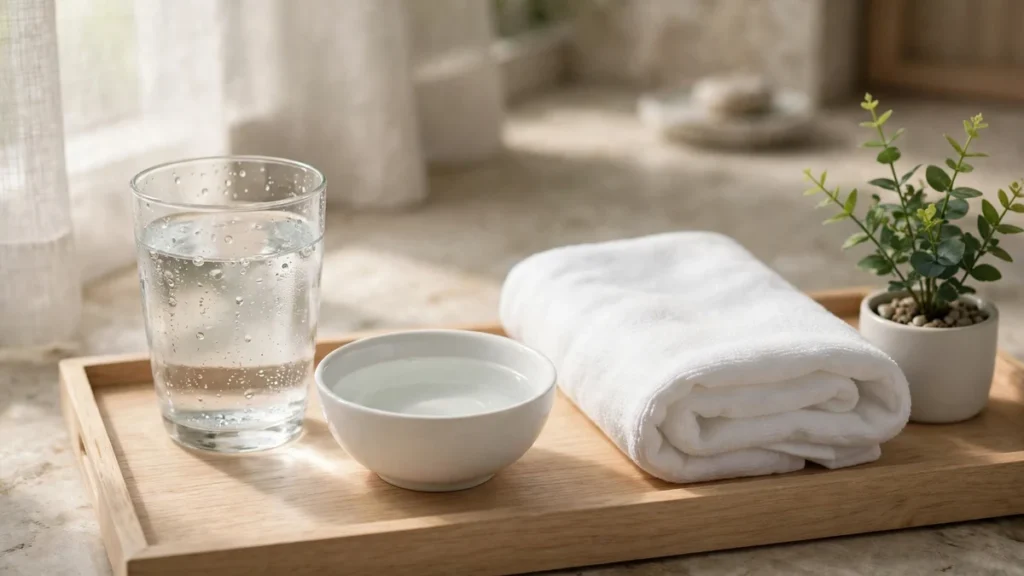
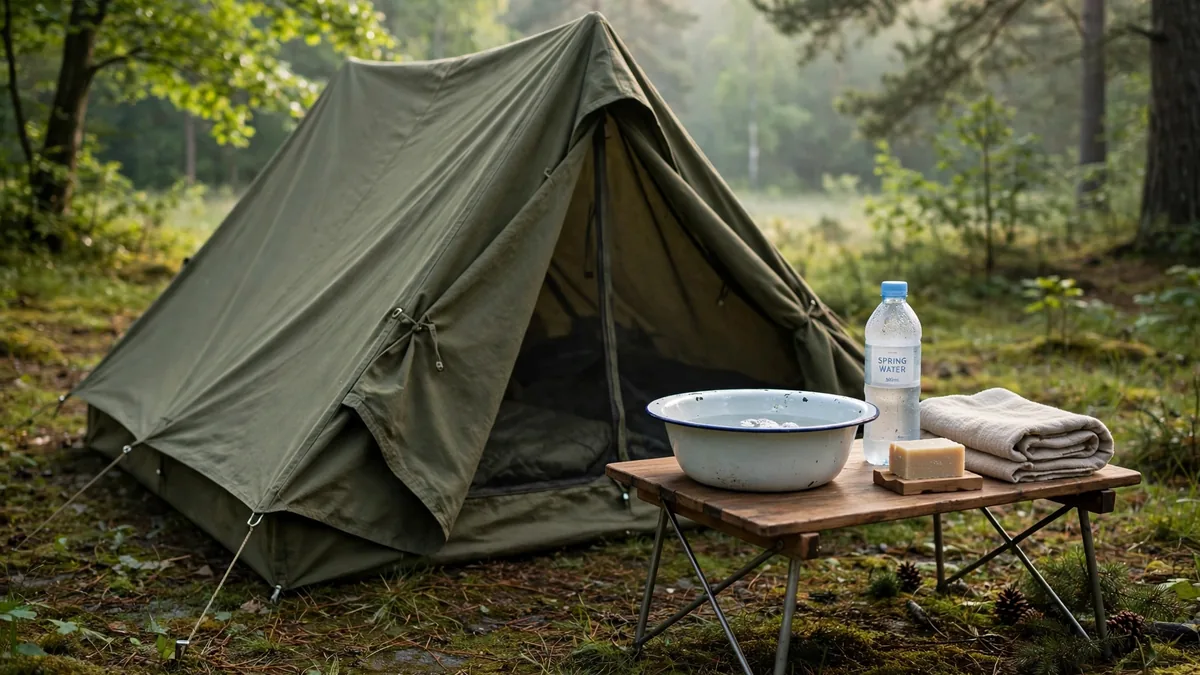
Pack your wash kit the night before, in one small bag, so the morning starts calm. The kit is simple: a folding basin, a bottle of clean water, a bar of mild soap in a small tin, a toothbrush and toothpaste, a soft cloth, and a clean towel. Add a small mirror if you like one, and a comb if your hair needs it.
Keep the kit near the tent door, with the water bottle upright and the soap tin closed. A kit that is packed and ready means you never have to search for anything in the half light of morning.
Setting Up at Camp
Set up your wash spot on flat ground, a little way from the tent and a good distance from any stream or lake. A folding table or a flat rock makes a fine surface, and a picnic table is best of all. Lay the towel over one side, set the basin in the middle, and keep the soap where it cannot slide off.
Choose a spot with morning sun if you can, because the sun dries the towel and the basin quickly after you finish. A wash spot in the shade stays damp all day, and damp cloth is the one thing you do not want at camp.
The Wash, Step by Step
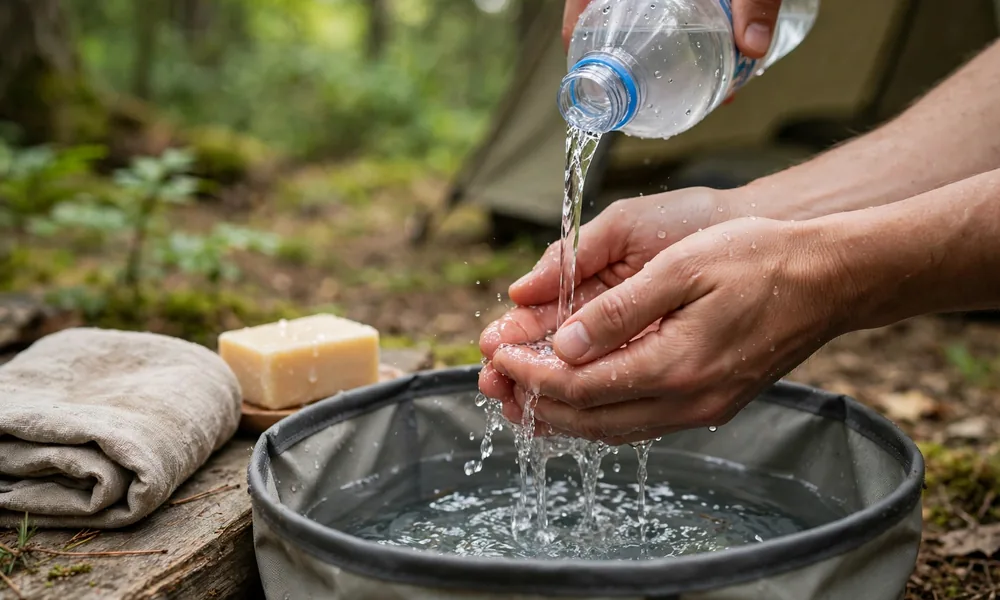
Start with your hands, because clean hands keep everything else clean. Pour a little water into the basin, wet your hands, rub them with soap, and rinse with a second small pour. Then wash your face: wet the cloth, add a little soap, wipe gently, and rinse the cloth in the basin.
Next, brush your teeth over the basin, using a small cup of water to rinse. Finish by wiping your neck and arms with the damp cloth, then dry everything with the towel. Pour the used water out last, and the wash is done.

Washing With Little Water
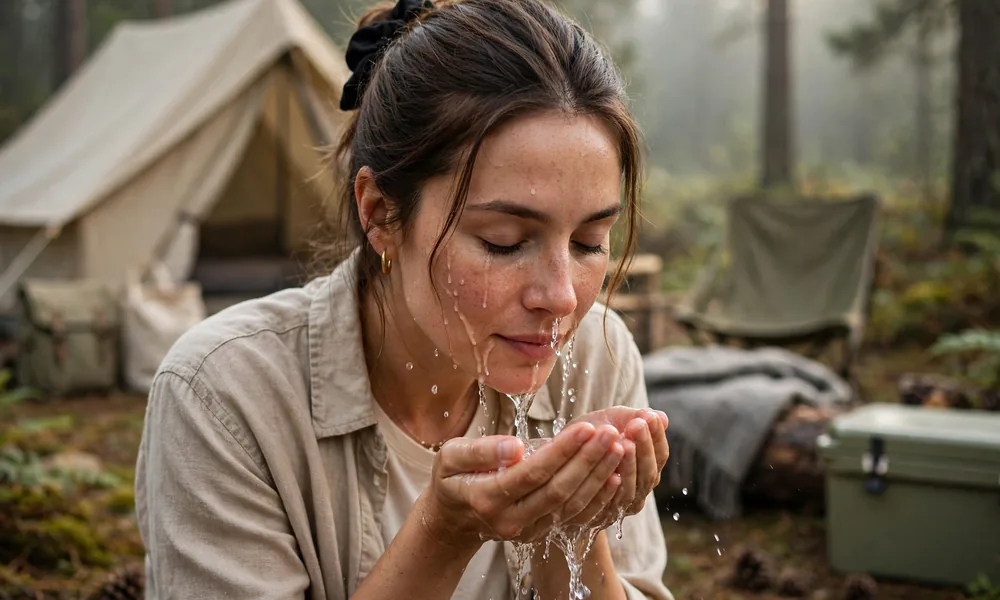
Washing with little water is a skill, and it is learned in one morning. Pour slowly, in small amounts, and let the soap do the work. A cupped hand holds enough water to wet a face, and a second cupped hand holds enough to rinse it. The basin is for catching the water, not for filling it.
If the basin water turns cloudy, pour it out and start the next step with a fresh splash. Clean water for the face matters more than clean water for the hands, so save the freshest water for last. A litre of water, used in small pours, is enough for the whole routine.
Keeping Water Clean at Camp
Keeping water clean at camp starts with the bottle. Fill it only from a safe source, keep the cap on, and never dip a dirty hand or cloth into the bottle itself. Pour the water out; do not reach in. A clean bottle means clean water every morning.
Keep the basin clean too. Rinse it after each wash, tip it upside down to dry, and store it off the ground. A basin left on the ground collects dirt and insects, and the next morning starts with a rinse you could have avoided. If a splash of food or mud marks a shirt, the same gentle start applies, as described in gentle removal of everyday stains, where plain water and patience lift most marks.
Where the Used Water Goes
Used wash water never goes into a stream, a lake, or a spring. Even mild soap can harm the small life in the water, and toothpaste is worse. Carry the basin at least sixty metres from any water, and scatter the water wide over the soil, where the earth can filter it.
Scatter, do not pour in one spot. A wide scatter soaks in quickly and leaves no puddle. If the ground is dry and hard, walk a little further and scatter again. The rule is simple: the water came from the land, and it goes back to the land, never to the stream.
Drying and Packing Away
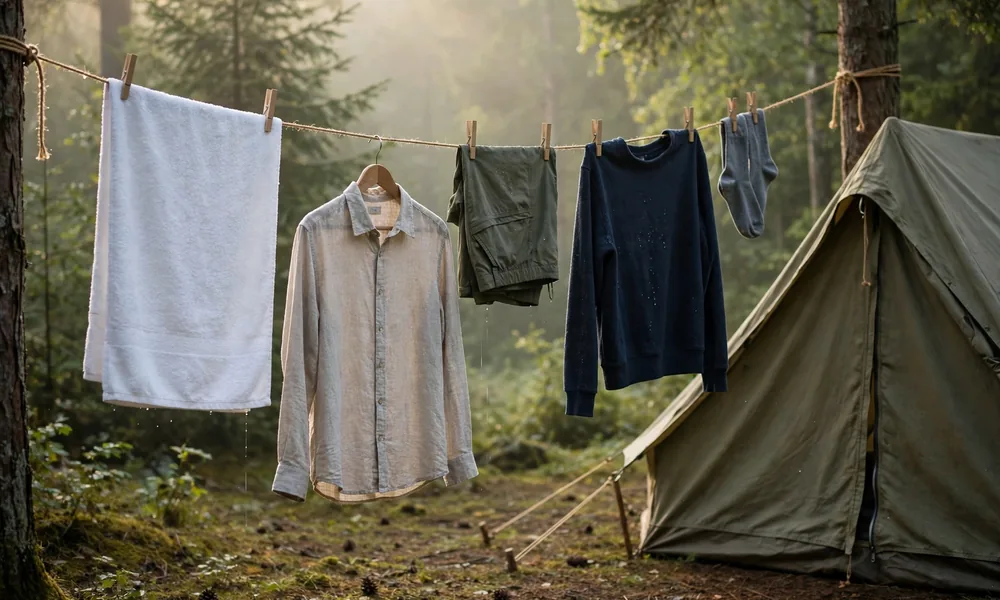
Drying is part of the wash, not an afterthought. Hang the towel and the cloth on a line or over a branch in the sun, and leave the basin upside down to dry. Wet cloth packed into a dark bag will smell by evening, and a damp basin will grow a film overnight.
Once everything is dry, pack the kit in the same order every time: towel at the bottom, basin next, soap tin closed, toothbrush upright. A kit packed the same way is a kit you can find in the dark, and a dry kit is a kit that lasts the whole trip.
Camping Wash at a Glance
| Wash step | Little water | Camp care |
|---|---|---|
| Hands first | One small pour | Basin on flat ground |
| Face next | Cupped hands rinse | Soap tin kept closed |
| Teeth last | Small cup rinse | Scatter water wide |
| Dry all | Towel in sun | Pack kit dry |
Your Camping Wash Checklist
- Pack the wash kit the night before, near the tent door, bottle upright.
- Set the basin on flat ground, away from streams, lakes and springs.
- Wash hands first, then face, then teeth, saving fresh water for last.
- Use small pours and let the soap do the work, not the water.
- Scatter used water wide on soil, at least sixty metres from water.
- Hang the towel and cloth in the sun, and pack the kit away dry.
Frequently Asked Questions
How much water do I need for a camping wash?
About one litre is enough for a full morning wash: hands, face, teeth, and a wipe of the neck and arms. Pour in small amounts, use the soap well, and save the freshest water for your face. A second litre is plenty if two people share the kit.
Can I wash in a stream or lake?
No. Never wash, rinse, or brush your teeth in a stream, a lake, or a spring. Even mild soap and toothpaste can harm the small life in the water. Carry your water away from the water, wash on land, and scatter the used water wide over soil.
What soap should I take camping?
Take a small bar of plain, mild, unscented soap in a closed tin. Mild soap cleans well with little water and rinses off easily. Avoid strong scents, which attract insects, and avoid anything with harsh chemicals, which are harder on the soil.
How do I keep my towel dry at camp?
Hang the towel and the cloth in the sun as soon as the wash is done, and bring them in before the evening damp settles. A towel hung in the morning sun dries in an hour. Never pack a damp towel into a dark bag, or it will smell by evening.
Can I wash clothes the same way?
Yes, small items like socks can be washed in the basin with a little soap, the same gentle way you wash at home. Rinse them in a fresh splash, wring them gently, and hang them in the sun. The same care runs through gentle washing for cashmere at home, where cool water and a light hand keep the cloth safe.
What if my skin feels dry after washing at camp?
Use a little less soap, rinse with a little more water, and dry gently instead of rubbing hard. Camp air is often dry, and a small amount of plain moisturiser after the wash helps. If the dryness lasts or the skin feels sore, stop the routine and ask a doctor, because this guide is general information only.
The Bottom Line
Water and camping need very little: one basin, one bottle, mild soap, and a towel.
Pack the kit at night, wash in order, and scatter the water wide.
A Note for Camping Mornings
Keep it simple, keep it clean, keep it light. The morning will do the rest.