
A dry scalp is easy to miss until it starts to complain. The skin under your hair feels tight after washing, small white flakes appear on dark clothes, and the scalp itches in a quiet, nagging way that makes you want to scratch. It is not dramatic, but it is uncomfortable, and it can make even a good hair day feel spoiled.
Water is the gentlest place to start. Plain lukewarm water, used slowly and kindly, can soothe a dry scalp without stripping it further, and a soft wash can leave the skin feeling calmer than it did before. This routine is built on that simple idea.
This guide is a gentle routine for a dry, flaky scalp: how to prepare, what temperature to use, how to wash and rinse softly, and how to dry without roughness. Everything here is gentle general information only, never a treatment, and real scalp problems belong to a doctor.
Key Takeaways
- A dry scalp is tight, itchy skin that flakes, not a hair problem alone.
- Lukewarm water is kindest; hot water dries the scalp further.
- Wash with soft hands, never nails, and rinse well without scrubbing.
- Dry by patting gently; rough rubbing makes dryness worse.
- Patch-test new products, and see a doctor for lasting scalp problems.
What a Dry Scalp Is
A dry scalp is skin that has lost too much moisture. The scalp is skin with hair growing through it, and like the skin on your hands, it can dry out in cold weather, after hot showers, or after too many strong washes. When it dries, it feels tight, it itches, and it sheds small, dry flakes that fall onto the shoulders.
Dry flakes are usually small and white, and the scalp itself looks dry rather than red or sore. That is different from other scalp troubles, which can look oily, red, or patchy, and those need a doctor, not a home routine. This guide is only for a plain dry scalp that feels tight and flaky.
Why Water Comes First
Water comes first because water is the kindest thing you can put on a dry scalp. It softens the skin, loosens dry flakes without scratching, and gives the wash a gentle start. A wash that begins with plain water asks less of the scalp than a wash that begins with strong products.
Water Temperature for a Dry Scalp
Water temperature matters more than most people think. Lukewarm water is kindest: warm enough to feel pleasant, cool enough not to strip the skin dry. Test it on your wrist first, because lukewarm on the wrist means lukewarm on the scalp.
Hot water feels relaxing in the moment, but it dries the scalp and can leave it tight and itchy later, which is the last thing a dry scalp needs. Cold water shocks the skin and makes the hands tense, so the wash turns rough without you noticing.
For a dry scalp, keep the water lukewarm from start to finish: for wetting, for rinsing, and for the final rinse too. One steady temperature, all the way through, is the kindest choice.
Before You Begin
Before you begin, take a minute to get ready. Wash your hands with plain soap and water, and dry them well, because clean hands are the only tool the routine needs. Put a clean, soft towel nearby, and brush the hair gently with a wide-tooth comb to loosen tangles.
Choose a mild, gentle shampoo, and patch-test it first: put a little on the inside of your wrist, wait a day, and only use it if the skin stays calm. If it stings or reddens, do not use it on your scalp. Keep everything within reach, so the wash stays slow and unhurried.
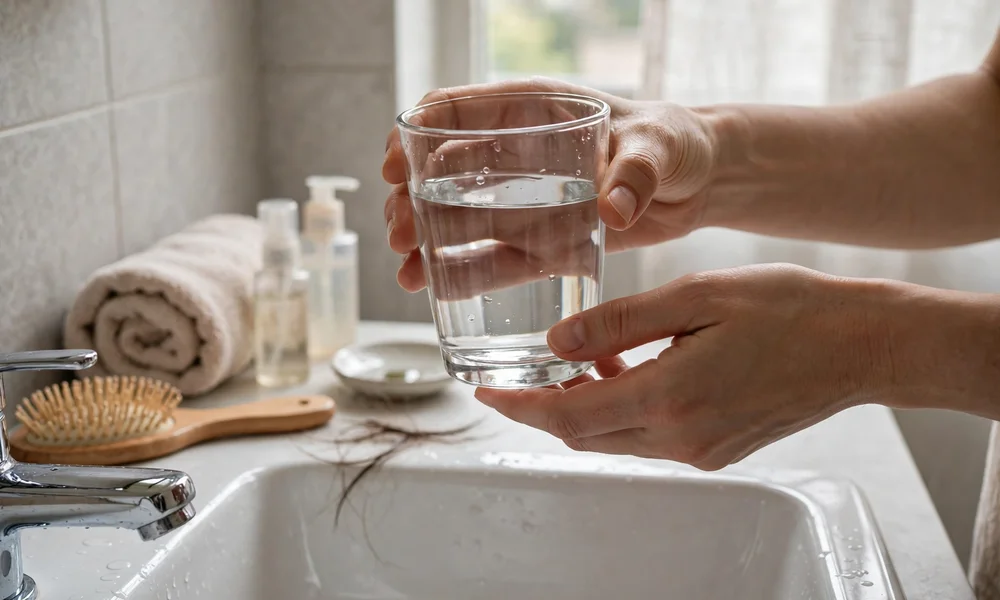
On wash days, give yourself a little extra time, so nothing in the routine feels rushed. A slow wash is a kind wash, and a dry scalp can tell the difference between hurried hands and patient ones. Put the phone down, keep the water lukewarm, and let the routine take the few minutes it needs.
The Gentle Wash, Step by Step
The gentle wash begins with water alone. Cup a little lukewarm water in your hands and pat it over the scalp, or let the shower run softly over the hair until the scalp feels damp all over. Do not blast the scalp with a hard stream; a soft flow is enough.
Take a small amount of mild shampoo in your palm, add a little water, and work it into a soft lather in your hands first, never straight onto the scalp. Then press the lather onto the scalp with the soft pads of your fingertips, in slow, light circles.
Never use your nails, and never scrub. The fingertips should move like they are smoothing cream, not like they are cleaning a pan. Two or three slow minutes of this is enough for a dry scalp.
Rinsing Well Without Scrubbing
Rinsing matters as much as washing, because shampoo left on a dry scalp can make it feel tight and itchy later. Rinse with lukewarm water, letting it run softly over the scalp, and lift the hair in sections so the water reaches the skin underneath.
Drying Without Roughness
Drying is where many dry scalps get hurt, because a rough towel rub can undo a gentle wash in seconds. Instead, press a soft towel against the hair and scalp, hold it for a few breaths, and lift it away. Pat, do not rub, and work around the head in slow sections.

Dry Scalp at a Glance
| Dry scalp | Lukewarm water | Gentle wash |
|---|---|---|
| Tight, flaky skin | Wrist-tested, steady | Soft hands, no nails |
| Itchy, small flakes | Never hot water | Pat dry, no rubbing |
| Needs kind care | Rinse well, plain | Doctor for lasting trouble |
Dry Scalp and Scalp Massage
A dry scalp and a scalp massage are neighbours, not the same thing, and the live massage guide is worth knowing about. Water and scalp massage is a five-minute fingertip massage done before washing, on dry hair or hair lightly dampened with plain water, and it has no wash of its own.
This guide is the wash itself: wetting, washing, rinsing and drying a dry, flaky scalp, with lukewarm water from start to finish. The massage comes first and the wash follows; this guide is the wash that follows. If you enjoy a gentle massage, you can do it before this routine, with soft finger pads and light pressure, and then wash as described here.
Dry Scalp and Curls
Curls and a dry scalp often meet, because curly hair can hide a dry scalp until the flakes show. Water and curls is a wash-day guide for curly hair, built around keeping curls soft and defined, while this guide is built around the skin underneath, whatever the hair type.
If you have curls and a dry scalp, follow this guide for the scalp: lukewarm water, soft hands, a gentle rinse and a patient pat dry. Then care for the curls as the curl guide describes, without scrubbing the scalp to reach the hair. The scalp comes first, and the curls follow.
Dry Scalp and Fine Hair
Fine hair and a dry scalp meet in a different way: fine hair shows flakes easily, and a heavy wash can leave it flat. Water and fine hair is a light wash guide for thin, fine hair, built around keeping it light and full, while this guide is built around the dry skin underneath.
If you have fine hair and a dry scalp, use only a small amount of mild shampoo, rinse very well, and dry by patting gently, so the hair stays light and the scalp stays calm. A light wash suits fine hair, and a gentle wash suits a dry scalp, and this routine gives you both.
A Simple Weekly Rhythm
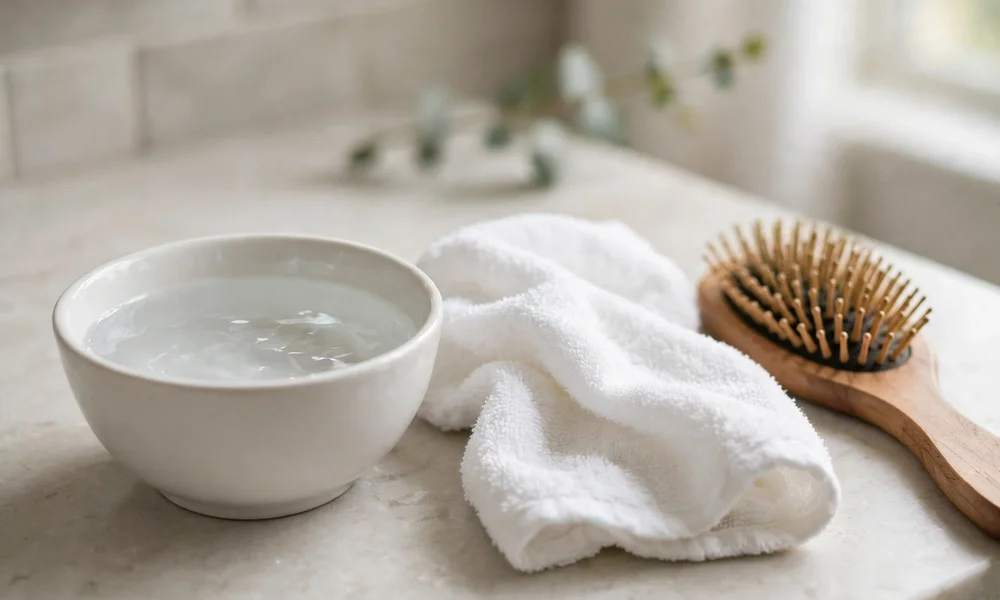
A dry scalp likes a steady rhythm, not a heroic effort once in a while. Wash two or three times a week with this gentle routine, and on the days between, leave the scalp alone. Too many washes can dry it further, and too few can let flakes build up, so a middle path is kindest.
If the scalp stays tight, itchy or flaky after two or three weeks of this gentle routine, stop guessing and see a doctor. A steady routine helps a plain dry scalp, but lasting trouble needs proper advice.
Your Gentle Routine Checklist
- Test the water on your wrist; keep it lukewarm throughout.
- Patch-test any new shampoo on your wrist a day before use.
- Wash with soft fingertips, never nails, and never scrub.
- Rinse well with lukewarm water until no soap remains.
- Pat dry with a soft towel; never rub or twist hard.
- See a doctor if the scalp stays sore, red or flaky for weeks.

Frequently Asked Questions
What causes a dry scalp?
A dry scalp is skin that has lost too much moisture, often after cold weather, hot showers or too many strong washes. It feels tight, itches, and sheds small dry white flakes.
Is lukewarm water really better than hot water?
Yes. Lukewarm water cleans gently without stripping the skin dry, while hot water dries the scalp and can leave it tight and itchy later.
How often should I wash a dry scalp?
Two or three gentle washes a week suit most dry scalps. Too many washes can dry it further, and too few can let flakes build up.
Can I massage a dry scalp?
Yes, very gently, with soft finger pads and light pressure, before washing. Never use nails or scrub, and stop if the scalp feels sore.
When should I see a doctor about my scalp?
See a doctor if the scalp stays sore, red, patchy or flaky for weeks, or if flakes are large, yellowish or oily. This guide is general information only, not a treatment.
Does this routine work for curly or fine hair?
Yes. The routine is for the scalp, whatever the hair type, so it suits curls and fine hair alike. Wash the scalp gently first, then care for the hair as its own guide describes.
The Bottom Line
Water and a dry scalp get along best when the water is lukewarm, the hands are soft, and the drying is kind. Wash gently, rinse well, pat dry, and let the scalp rest between washes.
A Note for Dry Scalp Days
Keep it lukewarm, keep it soft, keep it slow. A little plain water, a gentle wash, and a patient pat dry can make a dry scalp feel calmer.