Some skin asks for gentleness before anything else. It feels tight after washing, flushed after a hot shower, or tired of trying one new product after another. On a day like that, a shelf full of bottles feels like too much, and the skin seems to ask for less.
An oat soak is a gentle answer: plain rolled oats in warm water, twenty quiet minutes, and a soft rinse. Nothing fancy, nothing harsh, just water and oats.
This guide is a simple oat soak ritual: what an oat soak is, how to make one, how to enjoy it safely, and how it differs from the other bath rituals on this site. It is gentle general information only, not a treatment, and it will not cure anything.
Key Takeaways
- An oat soak is plain rolled oats in warm water for gentle skin.
- Warm water, never hot, keeps the ritual soft and calm.
- Oat soaks differ from hot springs, salt soaks and rose quartz baths.
- Patch-test first, and never soak if you are allergic to oats.
- Rinse gently after, pat dry, and moisturise while skin is damp.
What an Oat Soak Is
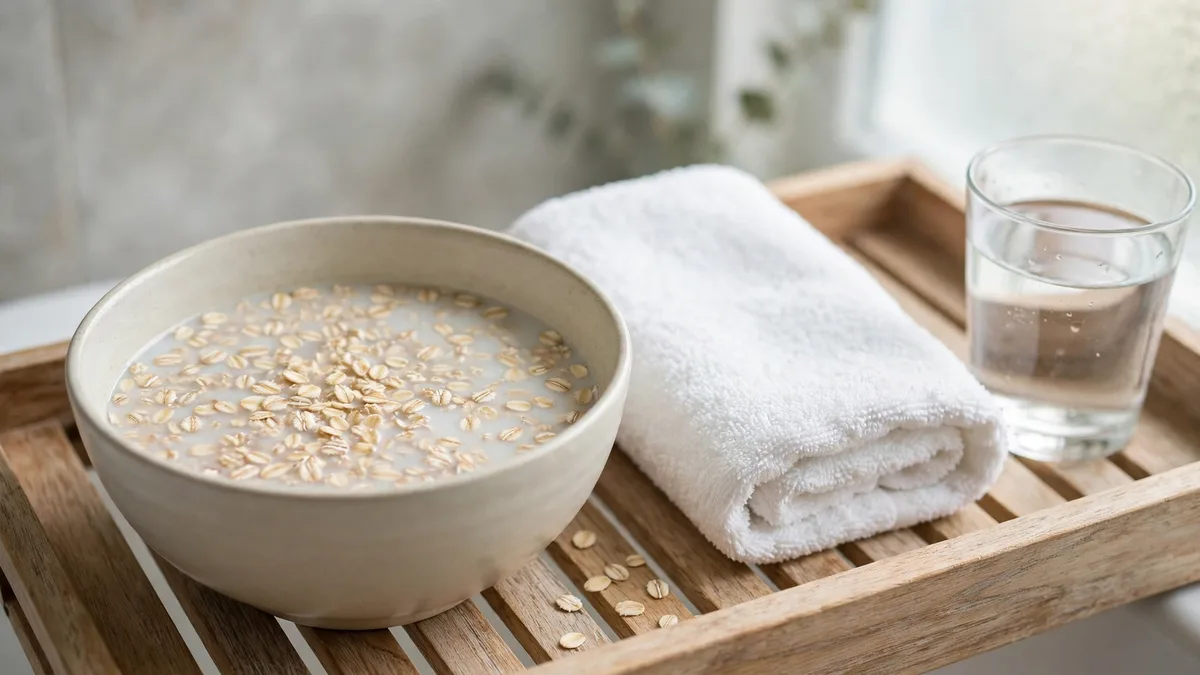
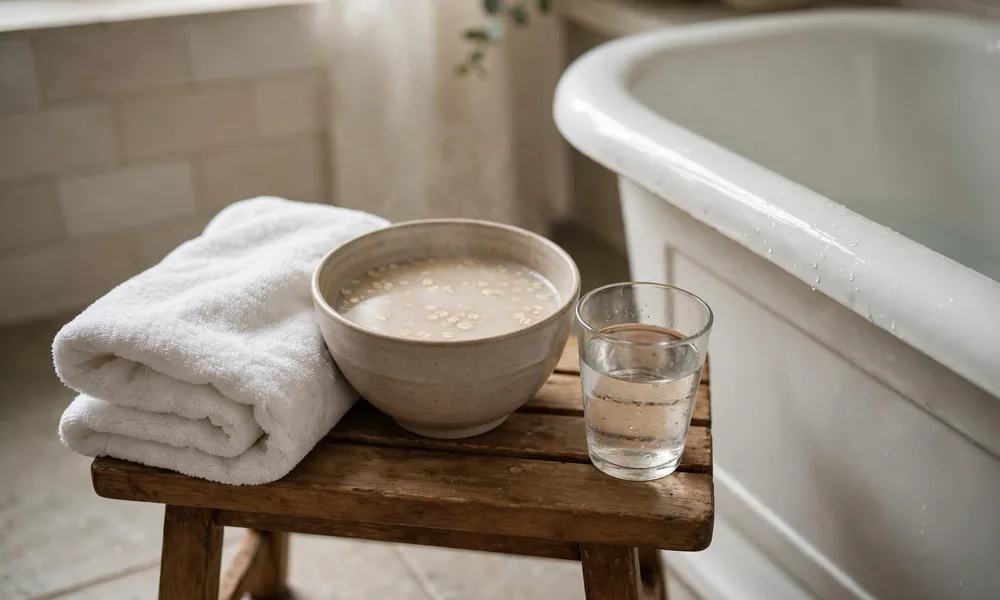
An oat soak is a bath, or a bowl of water, with plain rolled oats stirred in. The oats soften in the warm water and turn it a pale milky colour, and the water feels smooth and silky against the skin. You sit in it, or rest a cloth soaked in it against the skin, for about twenty minutes.
Oats have been used in baths for a long time, and the reason is simple: they are plain, soft, and easy to find. A cup of plain rolled oats, a tub of warm water, and a quiet evening are all the ritual needs. The water feels soft on the hands as well, and a cloth wrung out in it makes a gentle compress for tired skin.
Why Oats Suit Gentle Skin
Oats suit gentle skin because they ask for nothing harsh. Strong soaps can strip the skin and leave it tight, hot water can flush it red, and scented bath oils can sting skin that is already unhappy, but oats and warm water are plain and mild. The water stays soft, the oats stay gentle, and the skin is left clean without being scrubbed.
The soak also gives the day a slow, unhurried feeling, like a quiet room after a long week, and the warm water, the milky oats, and the stillness do the work together. A plain soak also costs very little, and it needs no special tools beyond a bowl, a towel, and a cup of oats.
Choosing Plain Oats for a Soak
Choosing oats for a soak is mostly keeping it plain. Use plain rolled oats or plain oatmeal, with no sugar, no flavour, and no instant sachets. The plainer the oats, the gentler the soak, and a simple bag of rolled oats from the kitchen shelf is the right choice.
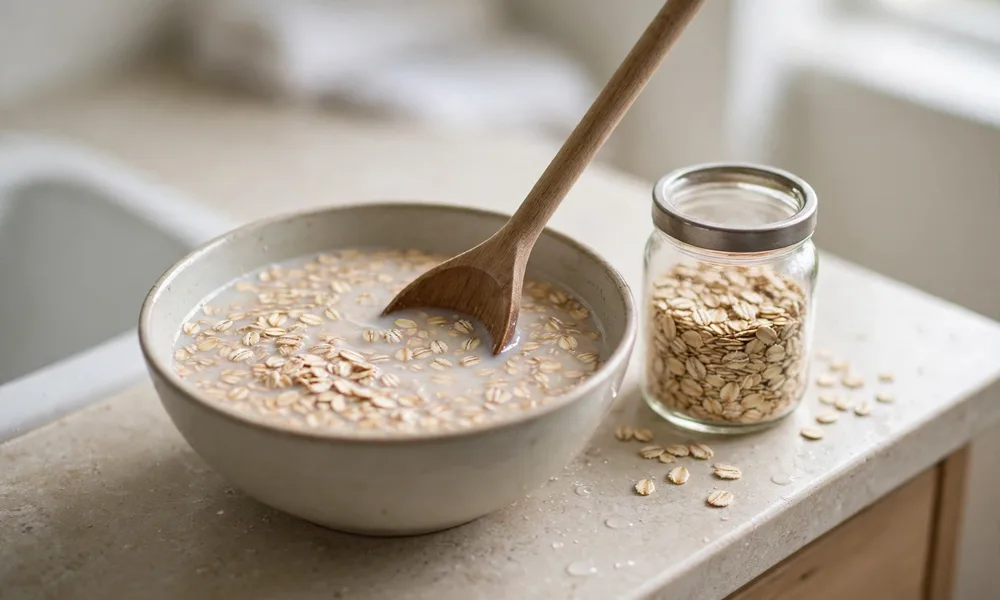
Grind the oats first if you like: a quick blend makes a fine powder that mixes into the water without lumps. One cup is enough for a full bath, and half a cup is enough for a bowl or a basin. Store the oats in a dry jar with a tight lid, so they stay fresh and ready for the next quiet evening.
A Gentle Oat Soak, Step by Step
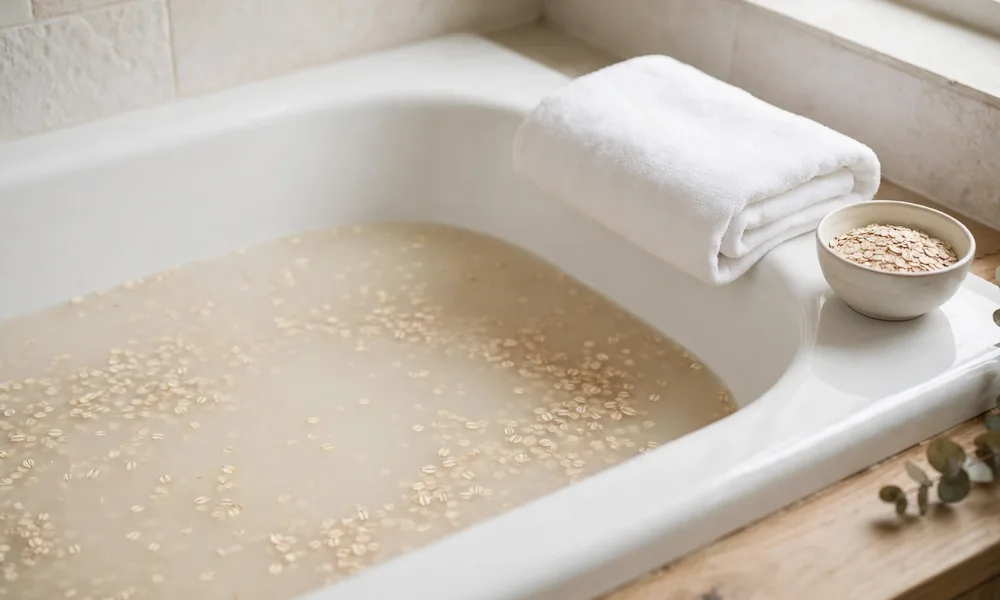
A gentle oat soak takes only a few minutes to begin: run a bath of warm water, never hot, and stir in a cup of plain oats. If you use whole rolled oats, tie them in a clean muslin bag or a thin cotton cloth first, so loose oats do not reach the drain.
Step in slowly, sit back, and rest for about twenty minutes. Keep a clear glass of fresh water beside the bath and sip it slowly. When the time is up, stand up carefully, rinse with plain warm water, and step out onto a dry towel.
Oat Soaks Beside Plain Water
Plain water belongs beside the soak, never forgotten: keep a clear glass of fresh water beside the bath to sip while you rest. Warm baths can leave you thirsty, and slow sips keep the ritual gentle from start to finish.
Never add crystals or stones to the soak water. Stones belong beside water, never in it, and amber, malachite, hematite, apatite, lepidolite, pyrite and angelite must never go in drinking water or in soaks. Keep the bath plain: water and oats, nothing else. After the soak, drink another slow glass, and let the evening stay quiet for a little while longer.
Oat Soaks at a Glance
| Warm oat soak | Gentle skin | Patch-test first |
|---|---|---|
| Plain rolled oats | Warm, not hot | Rinse with water |
| Milky soft water | Twenty quiet minutes | Moisturise after drying |
| Simple bowl ritual | Towel, water, pause | Stop if irritated |
Oat Soaks and Hot Springs
Oat soaks and hot springs are both warm-water soaks, yet they could not be more different. Hot springs are natural pools of warm water under open sky, with steam rising in the cool air, and the guide on this site is about visiting them, packing for them, and soaking in mineral water far from home.
An oat soak is a home ritual: your own bath, your own warm water, and a cup of plain oats from the kitchen. Where water hot springs simple soak guide keeps a guide to natural warm pools under open sky, this guide keeps a gentle oat soak at home. One is a journey; the other is a quiet evening in.
Oat Soaks and Himalayan Salt Soaks
Oat soaks and himalayan salt soaks are both gentle baths for tired skin, yet they use very different things. A himalayan salt soak is a warm bath with a handful of pink himalayan salt dissolved in the water, and the salt gives the water a clean, mineral feel.
An oat soak uses plain oats instead, and the water turns milky and soft rather than clear and salty. Where himalayan salt water soak skin keeps a warm bath with himalayan salt, this guide keeps a warm bath with plain oats. One is salt; the other is oats.
Oat Soaks and Rose Quartz Baths
Oat soaks and rose quartz baths are both gentle evening rituals, yet they work in different ways. A rose quartz bath is a warm bath with a rose quartz stone kept beside the water, a soft pink stone for tender evenings, and the ritual is about the quiet hour, the warm water, and the stone on the bath edge.
An oat soak has no stone at all: the oats go in the water, and the water itself turns milky and soft. Where rose quartz bath ritual skin keeps a warm bath with a rose quartz stone beside the water, this guide keeps a warm bath with plain oats in the water. One is a stone beside the bath; the other is oats in the bath.
Oat Soaks and the Other Bath Rituals
Oat soaks are one member of a large family of bath rituals on this site, and each one suits a different kind of evening. Hammams are a warm steam-room ritual, and spa days are a slow day of warm water and soft towels. A gentle detox bath is a tub of warm water with plain salt, and a cold water splash is a quick rinse for tired skin.
Two more bath rituals are still to come, and they are different from oat soaks too. Water and Milk Baths, queued as article 525, is a simple softening ritual with milk baths, and Water and Eucalyptus Steam, queued as article 527, is a simple fresh ritual with eucalyptus steam. An oat soak is none of those: plain oats, warm water, and a quiet twenty minutes at home.
Oat Allergy and Patch-Test Care
Oats are gentle for most people, but not for everyone, and this is the part to take seriously. If you are allergic to oats, never use an oat soak. If you are unsure, patch-test first: stir a spoonful of oats into a small bowl of warm water, dab a little on the inside of your wrist, and wait a day.
If the skin turns red, itchy, or sore, stop and do not soak. If you have eczema or any skin condition, follow your doctor's direction before trying a soak, and never use a soak on broken or infected skin. Warm water only, never hot, and get out at once if you feel dizzy or unwell.
Your Gentle Skin Checklist
- Use plain rolled oats only, with no sugar or flavour.
- Patch-test on your wrist first, and skip the soak if allergic.
- Run warm water, never hot, and stir in one cup of oats.
- Tie whole oats in a muslin bag so they do not reach the drain.
- Rinse with plain water, pat dry, and moisturise while damp.
- See a doctor for eczema or skin problems; a soak cures nothing.
Frequently Asked Questions
What is an oat soak?
An oat soak is a bath, or a bowl of water, with plain rolled oats stirred in, left to soften the water for about twenty minutes.
How much oats should I use?
Use one cup of plain rolled oats for a full bath, or half a cup for a bowl or a basin.
Can I use an oat soak if I am allergic to oats?
No, never. If you are allergic to oats, skip oat soaks entirely, and patch-test first if you are unsure.
How is an oat soak different from a salt soak?
A salt soak dissolves salt in the water, while an oat soak stirs plain oats into the water and turns it milky and soft.
Can I use an oat soak for eczema?
Follow your doctor's direction first. An oat soak is gentle general information only, and it will not cure eczema or any skin condition.
How often can I have an oat soak?
Once or twice a week is enough for most people. Rinse gently after each soak, pat dry, and moisturise while the skin is damp.
The Bottom Line
An oat soak brings gentle water to tired skin: plain oats, warm water, and twenty quiet minutes. Patch-test first, keep the water warm, never hot, and rinse and moisturise after.
A Note for Gentle Skin
Keep it plain, keep it warm, keep it slow. A cup of oats, a tub of warm water, and a few quiet minutes can carry a gentle evening.


