
Some days feel bright from the very first hour. The window is open, the light is clear, and the day ahead looks simple and full of promise: on days like these, a small bright object on the tray can set the mood for everything that follows.
Gem silica is a stone for bright days like these: a blue-green chalcedony, translucent and glassy, the colour of shallow sea water over pale sand in bright sun.
This guide is a spotlight on gem silica: what the stone is, how to choose a piece, how to display it, and how to enjoy it through a bright day. The stone is for display and handling only, never a treatment, and it will not heal anything.
Key Takeaways
- Gem silica is a blue-green chalcedony, coloured by copper.
- Its bright blue-green suits bright days, clear light and fresh starts.
- Gem silica differs from chrysocolla, turquoise and paraiba tourmaline.
- Gem silica is for display and handling only; it will not heal anything.
- The stone stays beside drinking water, never in it, and stays dry.
What Gem Silica Is
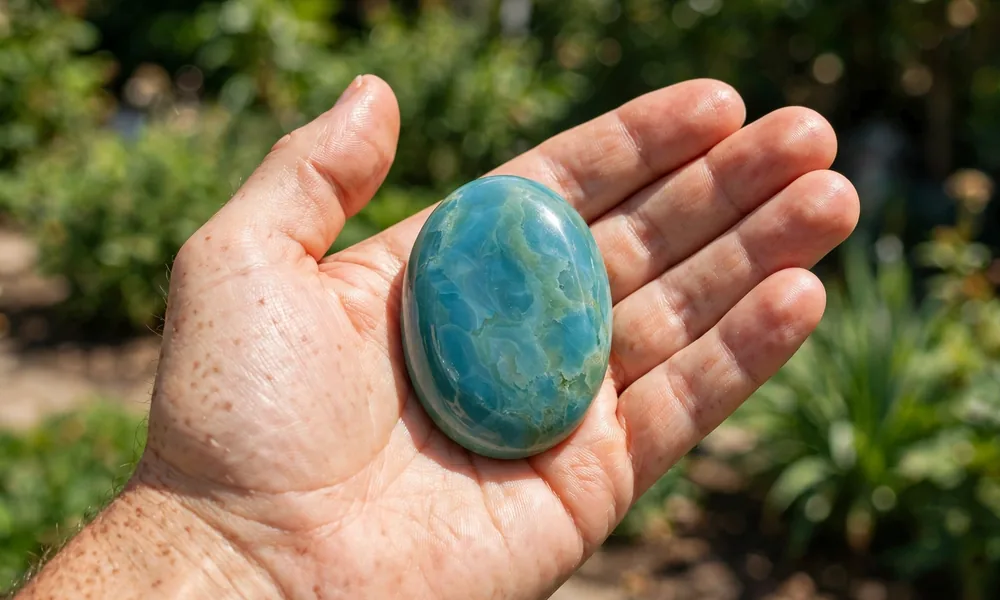
Gem silica is chalcedony, a form of quartz made of tiny crystals too small to see, coloured a bright blue-green by copper held inside the stone. The colour is its most striking quality: a clear aqua, a deep teal, or a soft sea green, often swirling together in one piece like shallow water over sand.
The stone feels cool and smooth in the hand, and it is often sold as a polished tumbled piece, a palm stone, or a small point. Hold one up to bright light and the blue-green glows, clear and steady, like water seen through glass. A piece about the size of a plum is large enough to notice and small enough to fit on a tray beside a glass.
In shops, gem silica is sometimes called gem silica chalcedony, a name that simply marks the brightest blue-green pieces of the chalcedony family. The brightest pieces glow a clear aqua in daylight, while paler pieces lean soft sea green, and both are the same stone. A piece that looks bright in the shop should look bright at home too, so check it in daylight before you buy it, and keep the receipt if the colour fades in soft light.
Why Blue Green Suits Bright Days
Blue green suits bright days because it is the colour of clear water and open sky. Deep navy can feel heavy on a day that asks for lightness, and pale white can feel quiet in a room full of sun, but blue green sits brightly between the two. It looks its best in bright light, when the sun is high, and its aqua glow gives it a fresh lift without any glare.
The blue green gives the room a cool, clear feeling, like a window opened to a bright morning, and the stone sits quietly on its tray, catching the light from the window.
Choosing a Gem Silica Stone
Choosing a gem silica stone is mostly looking closely and trusting your eye. A good piece shows a vivid, even blue green with a bright glassy shine, not a dull grey green with no light at all. The surface should be smooth with no sharp chips, and the colour should stay bright even in soft light.
A palm-sized tumbled stone is enough for a bright-day desk. If a piece feels pleasant in your hand, it is the right one. Buy from a trusted seller, and ask whether the colour is natural, because some pale chalcedony is dyed a brighter blue green.
A Bright Day with Gem Silica
A bright day with gem silica takes only a few minutes to begin: place the stone on its tray and fill a clear glass with fresh water. Drink the water slowly, in small sips, and then pick up the stone and look at its blue-green surface for a few breaths.
Put the stone back, and let the day carry on brightly. The day is water, bright light, one blue-green stone, and a short pause before the hours begin. Keep the tray where you will see it in the morning, so the pause happens before the day fills up, and let the stone remind you to drink water through the day.
Gem Silica Beside Water
Water belongs beside the stone, never around it: set a clear glass of fresh water next to the stone on the tray. They share a tray, not a glass. Never place the stone inside drinking water, and never soak it.
If the glass spills, lift the stone away and dry it at once with a soft cloth. Dust it weekly with a soft, dry cloth, never soap or polish, and keep it in a dry room, away from small children and pets.
Gem Silica at a Glance
| Blue-green stone | Bright days | Display only |
|---|---|---|
| Copper-coloured chalcedony | Bright daylight | Never in water |
| Glassy aqua shine | Desk and tray | Dust with dry cloth |
| Cool in hand | Water, light, pause | Wash hands after |
Gem Silica and Chrysocolla
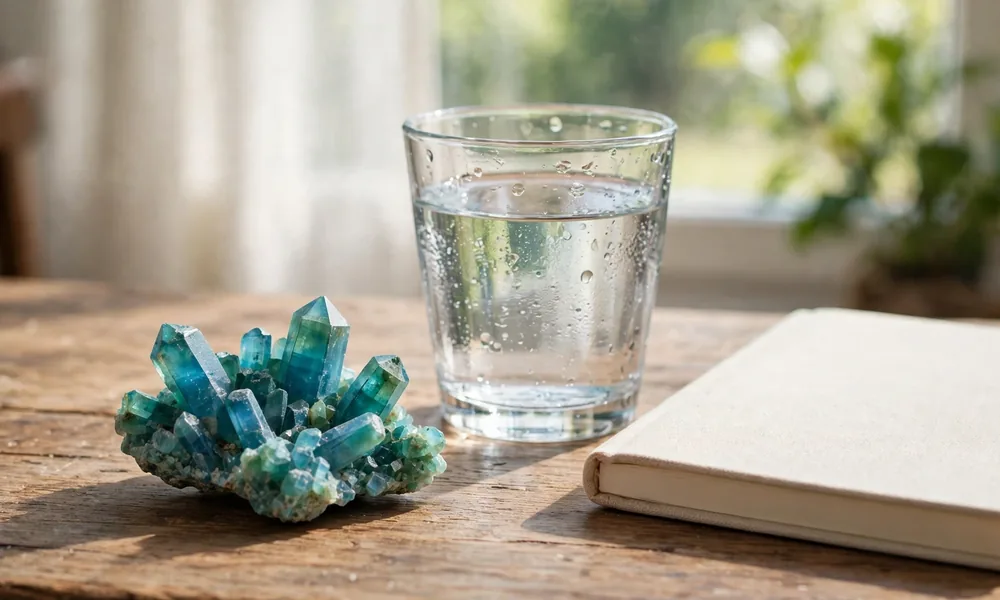
Gem silica and chrysocolla share a blue-green colour for bright and calm days, yet they are different minerals. Chrysocolla is a copper mineral in its own right, mottled with turquoise, teal and earthy brown, and its colours look like shallow sea water over sand. It is soft and porous, so it must be handled gently and never soaked.
Gem silica is a chalcedony, a form of quartz, harder and glassier than soft chrysocolla, and its blue green is clearer and more translucent, with swirling aqua rather than earthy brown patches. Where chrysocolla blue green for calm conversations keeps a mottled blue-green copper mineral for calm conversations, this guide keeps a clear blue-green chalcedony for bright days.
Gem Silica and Turquoise
Gem silica and turquoise are both bright blue-green stones, yet they look and feel very different. Turquoise is a bright blue stone, sky blue with fine dark veins, the colour of shallow sea water over pale sand, smooth and cool in the hand, with a soft waxy shine rather than a bright glassy one.
Gem silica is glassier and more translucent, with swirling teal and aqua colour and no dark veins at all. Its blue green leans greener than turquoise, like sea water over green sand. Where turquoise bright blue for fresh days keeps a bright blue stone with fine dark veins for fresh days, this guide keeps a blue-green chalcedony with swirling aqua for bright days.
Gem Silica and Paraiba Tourmaline
Gem silica and paraiba tourmaline share a vivid blue-green colour, yet they belong to different families. Paraiba tourmaline is a variety of tourmaline, coloured a bright blue-green by tiny traces of copper, vivid and glowing, like the bright aqua of shallow sea water over white sand in tropical sun.
Gem silica is a chalcedony, coloured by copper too, but its colour is softer and more watery, with gentle swirls of teal and sea green rather than a single vivid glow. Paraiba tourmaline is usually sold as a small faceted gem that flashes from every face, while gem silica is usually a smooth tumbled piece or palm stone. Where paraiba tourmaline bright blue green for fresh days keeps a vivid aqua tourmaline for fresh days, this guide keeps a softer blue-green chalcedony for bright days.
Gem Silica and the Chalcedony Family
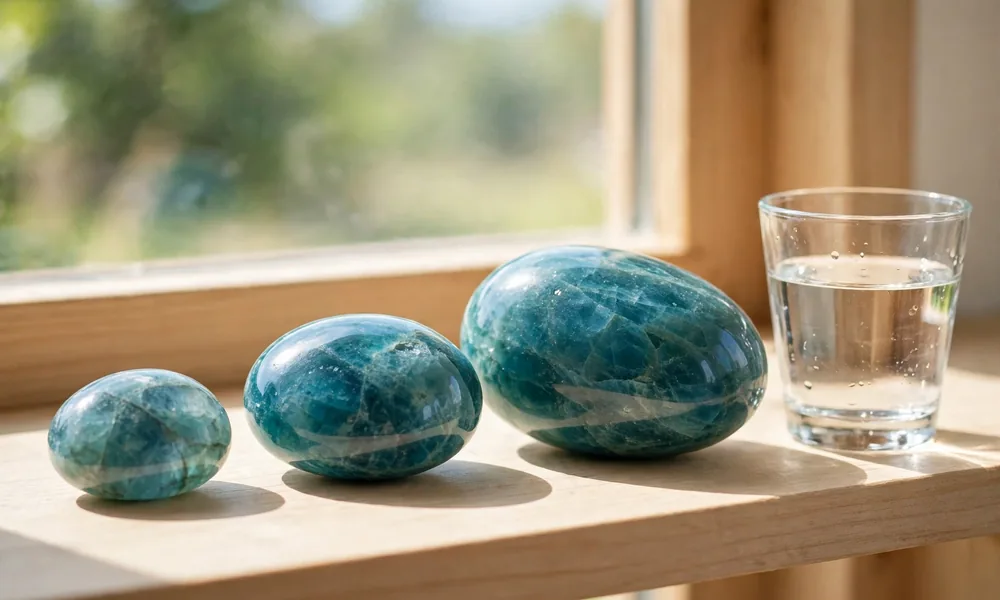
Gem silica is one member of a large chalcedony family, and each member suits a different kind of day. Blue chalcedony is a pale soft blue chalcedony for calm mornings, and pink chalcedony is a soft pink chalcedony for gentle days. Chrysoprase is a bright apple-green chalcedony, coloured by nickel, and carnelian is a warm orange chalcedony for bold days.
Onyx is a banded chalcedony in black and white, and agate is a banded chalcedony with rings of colour like the layers of a quiet lake. Gem silica is none of those: one bright blue green, coloured by copper, translucent and glassy, for bright days.
Stones That Must Never Touch Water
Not every stone is safe beside water. Malachite must never go in water or in elixirs, because it can release harmful substances. Hematite must never go in drinking water, and apatite, lepidolite — which contains lithium — pyrite, angelite and amber must never go in drinking water or in soaks either.
The rule stays the same for gem silica: display it on a tray, keep a glass of water beside it, and never let the two meet. Wash your hands after handling any stone, and keep stones away from small children and pets.
Your Bright Days Checklist
- Set the stone on a tray beside a clear glass of water.
- Drink a glass of fresh water slowly while the day begins.
- Hold the stone for a few breaths and look at its blue green.
- Keep the stone beside water, never inside drinking water or soaks.
- Dust the stone dry weekly, and wash your hands after handling it.
- Remember the stone will not heal anything; see a doctor for health problems.
Frequently Asked Questions
What is gem silica?
Gem silica is a blue-green variety of chalcedony, a form of quartz coloured by copper, translucent and glassy with swirling teal and aqua colour.
Is gem silica safe to handle?
Yes, if you wash your hands after handling it. It is for display only, never in drinking water, never in soaks.
Can I put gem silica in drinking water?
No, never. The stone belongs beside a glass of water, not inside it, and never soak the stone.
Will gem silica heal anything?
No. Gem silica will not heal anything. It is a beautiful object for display and handling, and the brightness comes from the pause, the water and the day.
How is gem silica different from chrysocolla?
Chrysocolla is a soft, porous copper mineral mottled with turquoise, teal and earthy brown, while gem silica is a harder, glassier blue-green chalcedony with clearer aqua colour and no brown patches.
Where should I keep my gem silica?
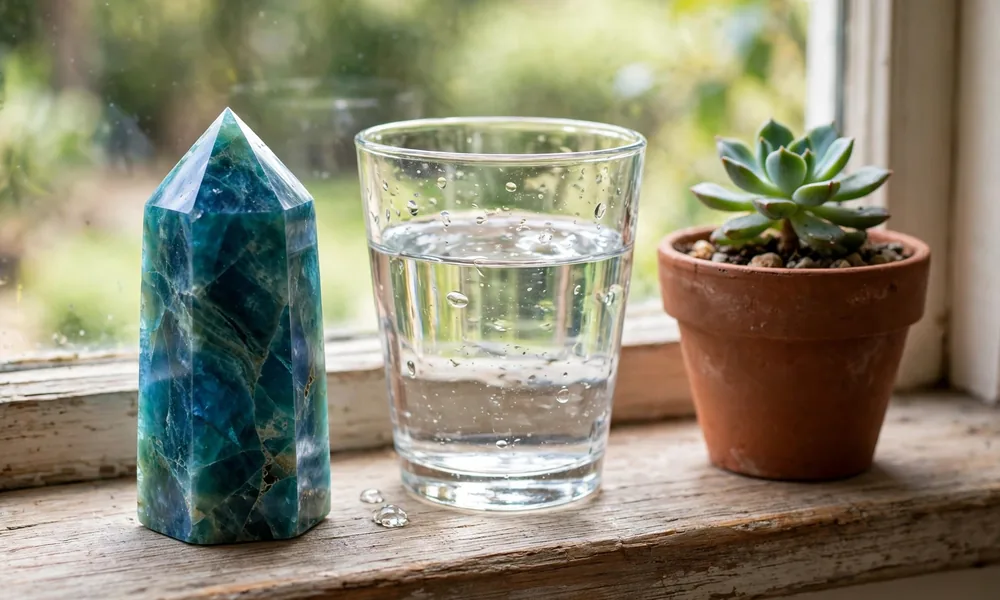
Keep it on a small tray in a dry room, with a clear glass of water beside it — a desk, a shelf or a windowsill works well.
The Bottom Line
Gem silica brings bright blue green to bright days: a clear aqua chalcedony beside a glass of fresh water. Keep it beside water, never in it, wash your hands after handling, and dust it dry.
A Note for Bright Days
Keep it bright, keep it dry, keep it clear. A small blue-green stone, a glass of water, and a few slow minutes can carry a bright day.


