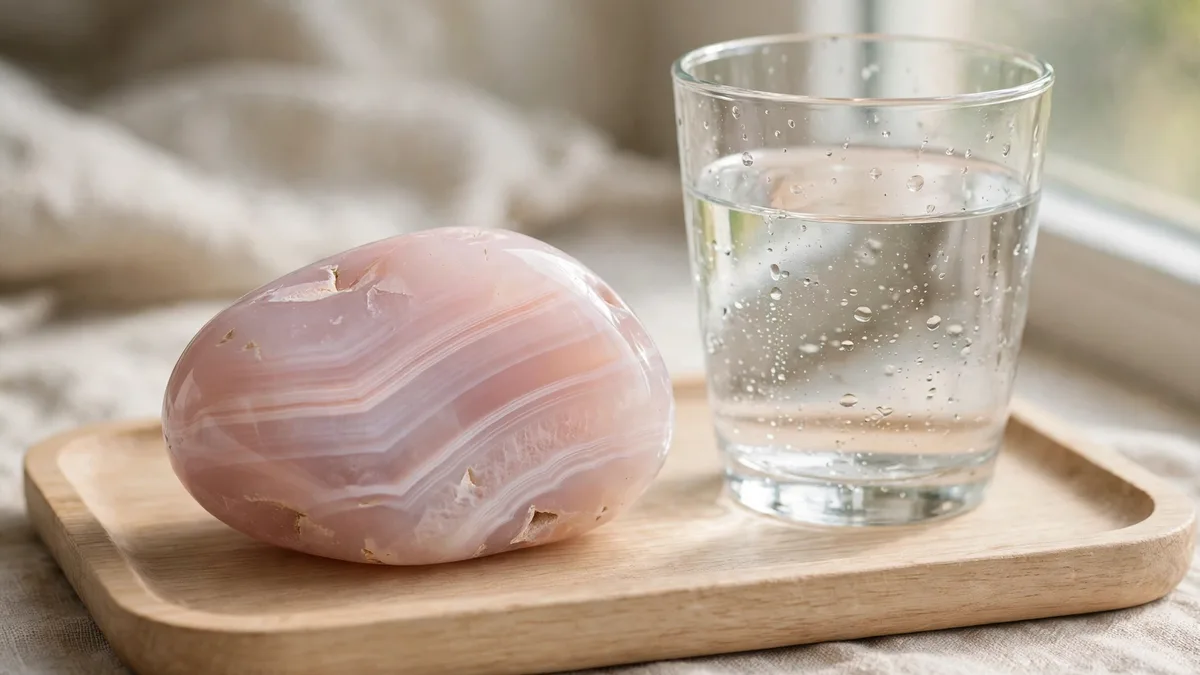
Some days feel tender before they even begin. The morning is quiet, the heart feels a little bruised by yesterday, and ordinary things feel heavier than they should. On a day like that, a loud red stone feels too bold, and a bright sparkling stone feels too busy.
Pink agate is a stone for tender days like these: a soft pink agate, coloured in pale pink bands, gentle to look at and calm to hold.
This guide is a spotlight on pink agate: what the stone is, how to choose a piece, how to display it, and how to enjoy it through a tender day. The stone is for display and handling only, never a treatment, and it will not heal anything.
Key Takeaways
- Pink agate is a soft pink banded agate, coloured in pale pink layers.
- Its soft pink suits tender days, quiet mornings and slow hours.
- Pink agate differs from pink sapphire, pink coral and rose quartz.
- Pink agate is for display and handling only; it will not heal anything.
- The stone stays beside drinking water, never in it, and stays dry.
What Pink Agate Is
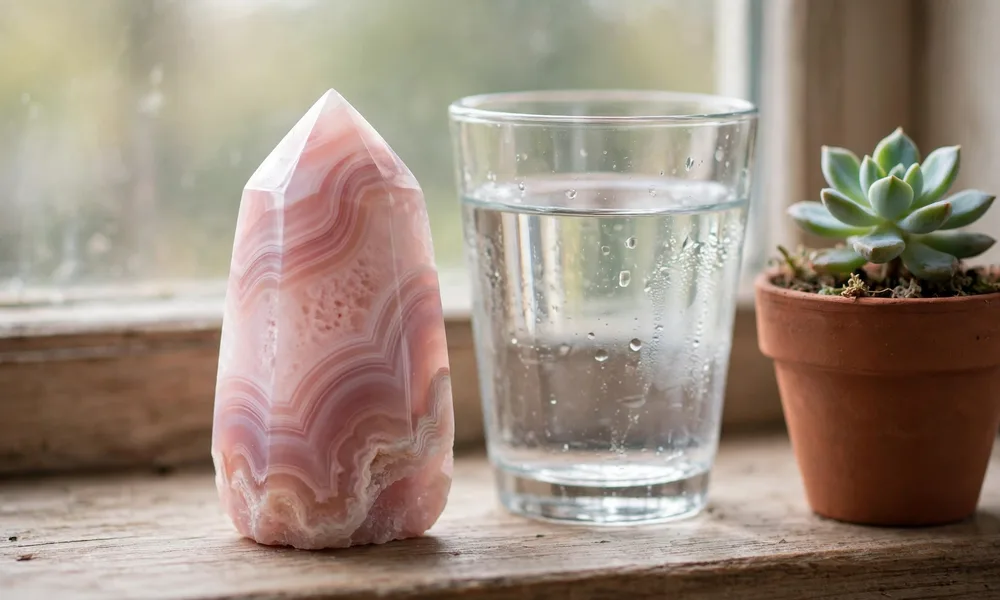
Pink agate is agate, a banded form of quartz that grows in soft layers, coloured pale pink by tiny traces of iron and manganese inside the stone. The bands sit in gentle waves, so one stone can hold a pale blush zone beside a slightly deeper rose-pink line.
The stone feels cool and smooth in the hand, and it is often sold as a tumbled piece, a palm stone, a polished slice, or a small point. Its pink is soft rather than bright, the colour of early morning light on a pale wall, and it looks its best in soft daylight. Collectors often keep a small slice on a sunny shelf, where the pale bands catch the light and show every layer clearly.
Why Soft Pink Suits Tender Days
Soft pink suits tender days because it asks for nothing. Deep red can feel loud on a day when the heart is already tired, and bright gold can feel demanding in a room that needs rest, but soft pink sits quietly between the two. It looks its best in gentle light, when the day is moving slowly, and its pale glow gives the room a soft warmth without any glare.
The soft pink gives the room a kind, unhurried feeling, like a blanket folded at the end of a bed, and the stone sits quietly on its tray, catching the light from the window. A pale pink stone also pairs well with plain wood, cream cloth, and clear glass, so a simple tray is all it needs.
Choosing a Pink Agate Stone
Choosing a pink agate stone is mostly looking closely and trusting your eye. A good piece shows a soft, even pink with clear pale bands, not a dull grey-pink with no light at all. The surface should be smooth with no sharp chips, and the bands should stay visible even in soft light.
A palm-sized tumbled stone is enough for a tender-day desk. If a piece feels pleasant in your hand, it is the right one. Buy from a trusted seller. Hold the stone up to a window before you buy it, and watch how the bands glow in daylight rather than in shop light.
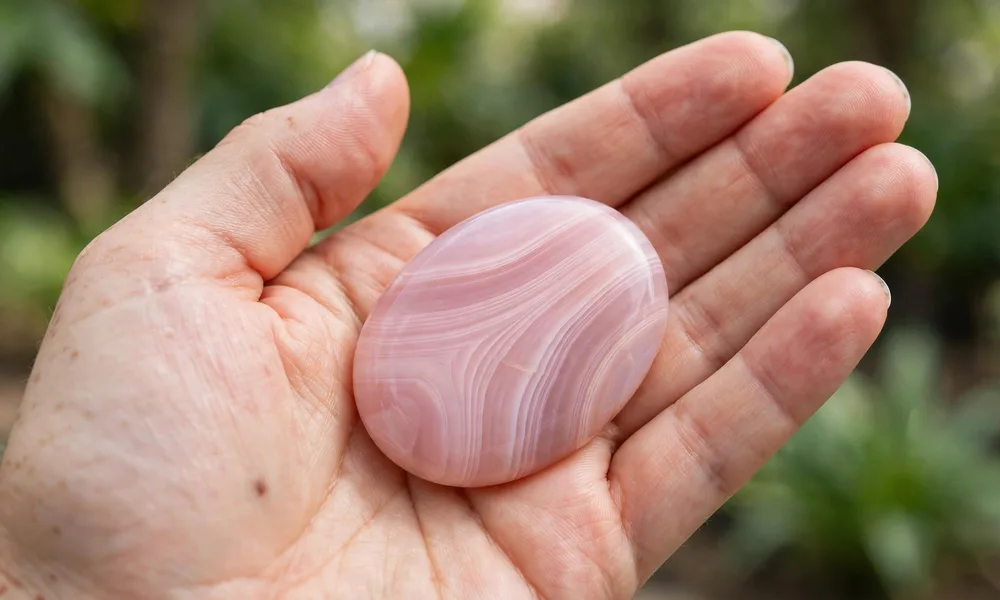
A Tender Day with Pink Agate
A tender day with pink agate takes only a few minutes to begin: place the stone on its tray and fill a clear glass with fresh water. Drink the water slowly, in small sips, and then pick up the stone and look at its soft pink bands for a few breaths.
Put the stone back, and let the day carry on gently. The day is water, soft light, one pale pink stone, and a short pause before the hours begin. Afterwards, leave the stone where you can see it through the day, a small pale reminder to move slowly.
Pink Agate Beside Water
Water belongs beside the stone, never around it: set a clear glass of fresh water next to the stone on the tray. They share a tray, not a glass. Never place the stone inside drinking water, and never soak it.
If the glass spills, lift the stone away and dry it at once with a soft cloth. Dust it weekly with a soft, dry cloth, never soap or polish, and keep it in a dry room, away from small children and pets.
Pink Agate at a Glance
| Soft pink stone | Tender days | Display only |
|---|---|---|
| Banded pale pink | Quiet daylight | Never in water |
| Smooth cool shine | Tray and shelf | Dust with dry cloth |
| Gentle in hand | Water, light, pause | Wash hands after |
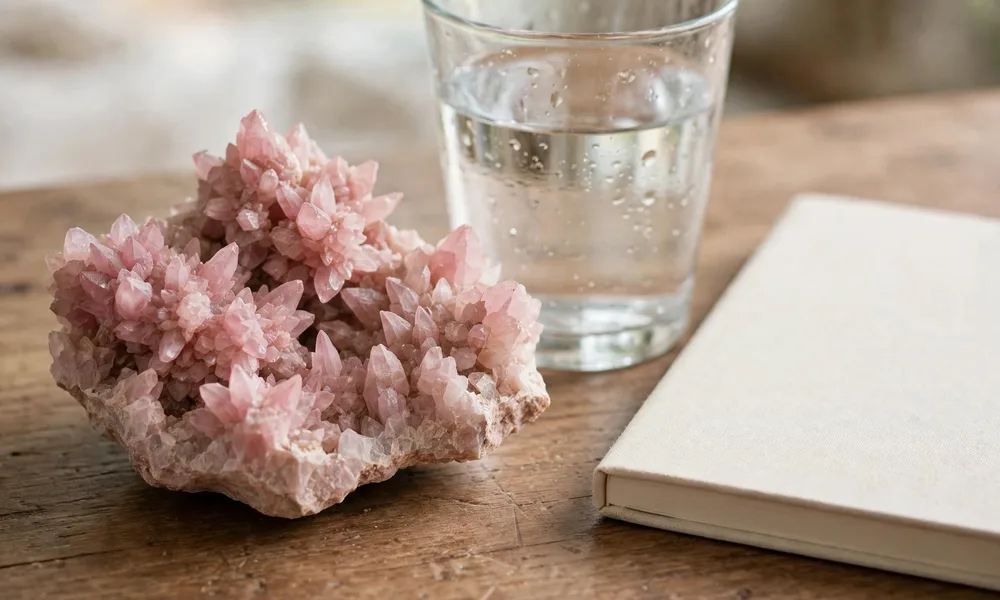
Pink Agate and Pink Sapphire
Pink agate and pink sapphire are both soft pink stones for tender days, yet they look and feel very different. Pink sapphire is a variety of corundum, coloured soft pink by tiny traces of chromium, and it is a hard stone, ranking 9 on the Mohs scale. Its pink is clear and gem-like, with a bright shine that suits a tender day that still holds a little sparkle.
Pink agate is softer and quieter, with pale pink bands that move in gentle waves across the stone. Where pink sapphire soft pink for tender days keeps a soft pink corundum for tender days, this guide keeps a soft pink banded agate for tender days. One stone is bright and gem-like; the other is soft and banded.
Pink Agate and Pink Coral
Pink agate and pink coral share a soft pink colour for tender days, but they come from very different places. Pink coral is the hard skeleton of a small sea animal, built on the seabed and polished by hand into beads, branches and jewellery. The finest pieces glow a soft, even pink that stays gentle even in bright light.
Pink agate is a mineral grown in rock, not in the sea, and its colour comes in pale bands inside the stone. A polished coral branch shows small ridges and pores that prove it grew in the sea, while a pink agate slice shows smooth bands that prove it grew in layers of stone. Where pink coral soft pink for tender days keeps a soft pink marine branch for tender days, this guide keeps a soft pink banded agate for tender days.
Pink Agate and Rose Quartz
Pink agate and rose quartz are both soft pink stones, yet they suit different hours of the day. Rose quartz is a soft pink variety of quartz, coloured by tiny traces of titanium and manganese, and it suits tender evenings, when the day is nearly done and the house is settling into its evening sounds.
Pink agate is a banded agate with pale pink layers, and it suits tender days from morning to evening. Where rose quartz soft pink for tender evenings keeps a soft pink quartz for tender evenings, this guide keeps a soft pink banded agate for tender days. One stone is even and unbanded; the other is layered in pale pink bands.
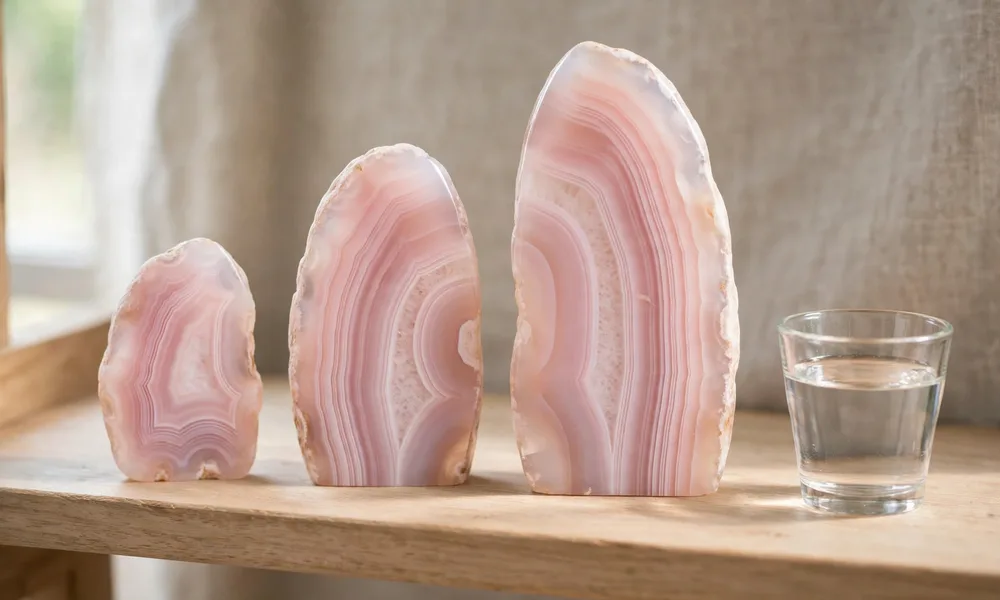
Pink Agate and the Other Agates
Pink agate is one member of a large agate family, and each member suits a different kind of day. Purple agate is a soft violet agate for quiet days. Plume agate holds soft feather-like plumes inside it, like tiny clouds caught in glass, and it suits quiet days. Moroccan agate is a warm banded agate for slow days, and botswana agate is a soft banded agate for slow days too.
White agate is a clean white agate for quiet desks. Crazy lace agate is a bright patterned agate for light days, blue lace agate is a pale blue agate for quiet water evenings, and tree agate is a quiet green agate for the home. Fire agate is a warm sparkling agate for bold days, and moss agate is a green agate for calm plants. Pink agate is none of those: one soft pink, banded in pale layers, for tender days. Each agate keeps its own colour and its own hour, and the family is wide enough for every kind of day.
Stones That Must Never Touch Water
Not every stone is safe beside water. Malachite must never go in water or in elixirs, because it can release harmful substances. Hematite must never go in drinking water, and apatite, lepidolite — which contains lithium — pyrite, angelite and amber must never go in drinking water or in soaks either.
The rule stays the same for pink agate: display it on a tray, keep a glass of water beside it, and never let the two meet.
Your Tender Days Checklist
- Set the stone on a tray beside a clear glass of water.
- Drink a glass of fresh water slowly while the day begins.
- Hold the stone for a few breaths and look at its soft pink bands.
- Keep the stone beside water, never inside drinking water or soaks.
- Dust the stone dry weekly, and wash your hands after handling it.
- Remember the stone will not heal anything; see a doctor for health problems.
Frequently Asked Questions
What is pink agate?
Pink agate is a soft pink banded agate, a layered form of quartz coloured pale pink by tiny traces of iron and manganese.
Is pink agate safe to handle?
Yes, if you wash your hands after handling it. It is for display only, never in drinking water, never in soaks.
Can I put pink agate in drinking water?
No, never. The stone belongs beside a glass of water, not inside it, and never soak the stone.
Will pink agate heal anything?
No. Pink agate will not heal anything. It is a beautiful object for display and handling, and the tenderness comes from the pause, the water and the day.
How is pink agate different from rose quartz?
Rose quartz is an even soft pink quartz for tender evenings, while pink agate is a banded agate with pale pink layers for tender days.
Where should I keep my pink agate?
Keep it on a small tray in a dry room, with a clear glass of water beside it — a desk, a shelf or a windowsill works well.
The Bottom Line
Pink agate brings soft pink to tender days: a pale banded stone beside a glass of fresh water. Keep it beside water, never in it, wash your hands after handling, and dust it dry.
A Note for Tender Days
Keep it soft, keep it dry, keep it slow. A small pale pink stone, a glass of water, and a few slow minutes can carry a tender day.


