
Some evenings call for warm water. The day has been long, the shoulders feel tight, and all you want is a quiet pool of warm water under open sky, steam rising in the cool air, and a glass of fresh water waiting nearby.
Hot springs are pools like these: natural outdoor pools of warm mineral water, heated by the earth itself, where you can sit and do nothing at all.
This guide is a simple soak guide for hot springs: what a hot spring is, how to choose one, how to soak safely, and how to build a gentle routine around the visit. It is general information only, never medical advice.
Key Takeaways
- Hot springs are natural outdoor pools of warm mineral water.
- A hot-spring soak means short gentle soaks, cool water, and slow rest.
- Hot springs differ from thermal spring water, saunas, steam rooms and hot tubs.
- Drink water before, during and after, and keep soaks short.
- Never drink spring water, and leave the pool if you feel dizzy.
What a Hot Spring Is
A hot spring begins as ordinary rain. It falls on hills, sinks into the ground, and travels slowly downward through layers of rock and soil. Deep below the surface, the earth is warm, and the water warms with it, sometimes for years, before pressure pushes it back up through rock. By the time it reaches the surface, it is naturally warm and carries minerals picked up along the way.
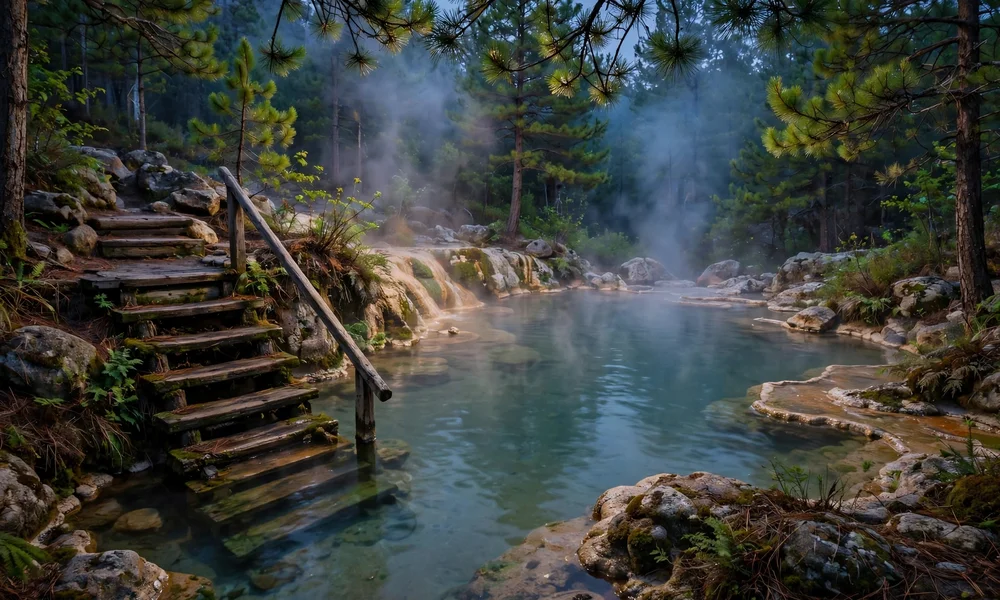
The minerals vary from spring to spring, because every spring passes through different rock. Common ones are calcium, magnesium, bicarbonate and silica, in small amounts. Most hot springs sit outdoors, ringed with rocks, with wooden steps at the edge and steam rising in the cool air.
Why a Warm Soak Feels Calming
A gentle soak feels calming because warm water asks the body to slow down. The warmth loosens tight shoulders, and the soft sound of water gives the mind something simple to listen to. The calm is ordinary, not magical. Warm water will not cure an illness or fix a hard week.
What a gentle soak does is give you a quiet half hour, and that is often enough to make the evening feel easier.
Choosing a Hot Spring to Visit
Choosing a hot spring to visit is mostly asking a few plain questions before you go. Is the pool open to visitors, with a clear path or wooden steps down to the water? Is the water tested, with simple rules posted at the entrance? Is there a dry place to sit, fresh water nearby, and somewhere to change?
A small, quiet spring with clear rules is a better first visit than a large one. If a spring has no rules, no clear water and no safe way in, choose another one.

A Simple Soak Day
A simple soak day takes only a little planning: pack a towel, a robe, a bottle of fresh water and dry clothes, and arrive early. Drink a glass of water before you step in, and test the water with your foot first. Step in slowly, sit to your shoulders, and stay still for ten to fifteen minutes.
Step out slowly, sit on the deck, and drink more water. Rest ten minutes before a second soak, and keep it shorter than the first. Then dry off, dress warmly, and drink water again on the way home.
Hot Springs and Drinking Water
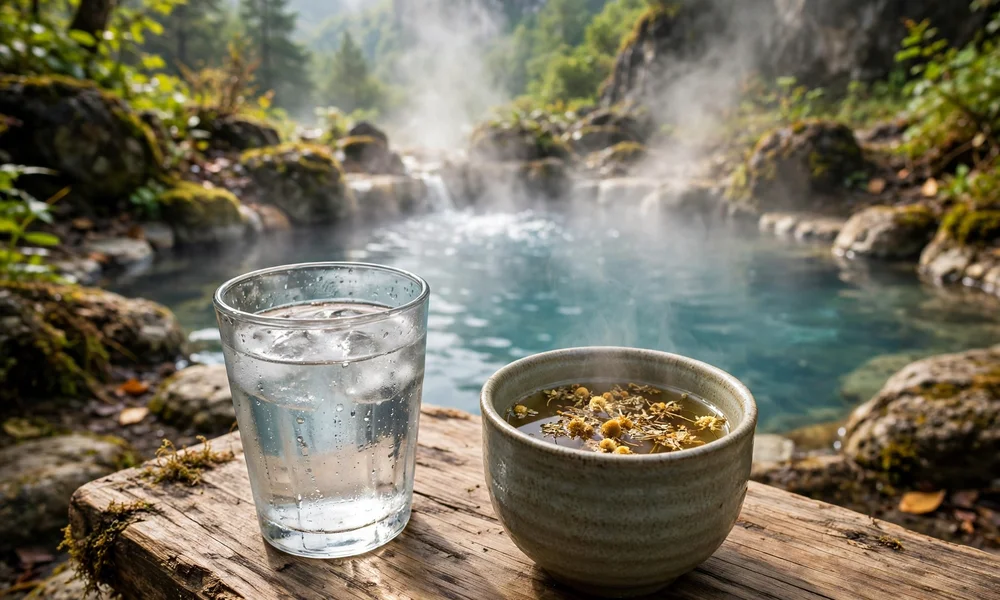
Drinking water belongs beside the pool, never in it. Bring your own bottle of fresh water, and keep it on the deck where you can reach it. Drink before you soak, sip as you rest, and drink again after you dry off. Warm water makes you sweat, so drinking water is part of the soak, not an afterthought.
Never drink the spring water itself. It is warm mineral water from the earth, and it is not drinking water. It may hold minerals, germs or grit that do not belong in a glass. Your bottle is for drinking; the pool is for soaking only.
Soak Safety First
Soak safety is simple, and it starts before you step in: hydrate, limit your soak time, and leave the pool the moment you feel dizzy, hot, faint or unwell. Sit on the deck, drink cool water, and rest until steady again. Never soak alone in a remote spring, and never soak after drinking alcohol.
Soaking is not for everyone without doctor direction: if you have a heart condition, blood pressure problems, or you are pregnant, ask your doctor before you soak. Children should soak briefly, with an adult close by.
Hot Springs at a Glance
| Warm mineral pool | Short gentle soak | Drink fresh water |
|---|---|---|
| Heated by earth | Ten to fifteen minutes | Bottle on deck |
| Outdoors, rocks, steam | Rest between soaks | Never drink spring |
| Minerals, soft water | Leave if dizzy | Doctor first if unsure |

Hot Springs and Thermal Spring Water
Hot springs and thermal spring water come from the same earth, but they are used very differently. Thermal spring water is groundwater warmed underground, carrying small amounts of minerals such as calcium, magnesium and bicarbonate. Today it reaches the bathroom as a bottle of thermal spring water, used as a fine mist or a gentle rinse for the skin.
A hot spring is the pool itself: a natural outdoor pool of warm mineral water, where you sit and soak. The bottled water is for the skin only, as a mist or a spray, and it is not a drink. One is a small bottle for the skin at home; the other is a warm pool under open sky.
Hot Springs and Saunas
Hot springs and saunas both offer gentle heat, but one is water and the other is air. A sauna is a small room lined with wood, warmed by a heater with stones on top. When water is poured over the hot stones, it turns to steam, and the room fills with warm air. The heat is steady and dry, and the steam comes only when you add water.
A hot spring is the opposite: you sit in warm water itself, outdoors, with cool air on your face and steam rising. Where water and sauna a gentle heat ritual keeps a warm wooden room with dry heat, this guide keeps a natural outdoor pool of warm mineral water. Both are gentle heat habits, kept short and safe.
Hot Springs and Steam Rooms
Hot springs and steam rooms both wrap you in warm, damp air, but one is a pool and the other is a room. A steam room is a small tiled room, warmed by a steam generator that fills the air with soft clouds of steam. The benches are low and warm, and the whole room is built for sitting still and doing nothing at all.
A hot spring has no walls and no generator: the earth heats the water, the pool sits outdoors among rocks and trees, and steam rises on its own. Where water and steam rooms a simple guide keeps a warm tiled room filled with steam, this guide keeps a natural outdoor pool under open sky.
Hot Springs and Hot Tubs
Hot springs and hot tubs look alike at first glance: warm water, steam, a quiet evening soak. A hot tub is a small tub or pool filled with warm water, kept warm by a heater, with jets that push the water in gentle bubbles. It is usually made of wood or moulded plastic, and it sits on a deck or patio.
A hot spring needs no heater and no jets: the earth warms the water, the pool is ringed with rock, and the water flows as the spring flows. Where water and hot tubs a gentle soak guide keeps a small warm pool on a deck, this guide keeps a natural outdoor spring among rocks and trees.
What to Pack for a Soak
Packing for a hot spring is simple. Bring a large towel and a robe or dry clothes, because the air is cool when you step out. Bring a bottle of fresh drinking water, dry shoes with grip for wet steps, and a waterproof bag for your phone and keys.
Leave the rest at home: no glass near the pool, no soap or shampoo in the spring, and no heavy bag to carry down the steps.
Your Hot Spring Checklist
- Drink a glass of water before you step into the pool.
- Test the water with your foot, then step in slowly.
- Soak for ten to fifteen minutes, then step out and rest.
- Drink fresh water from your own bottle, never spring water.
- Leave the pool at once if you feel dizzy, hot or faint.
- Ask your doctor first if you have a heart condition or are pregnant.
Frequently Asked Questions
What is a hot spring?
A hot spring is a natural outdoor pool of warm mineral water, heated by the earth as rainwater travels underground and rises through rock.
How long should I soak in a hot spring?
Soak for ten to fifteen minutes, then step out, rest and drink water. Keep a second soak shorter, and leave the pool at once if you feel dizzy.
Can I drink hot spring water?
No, never. Spring water is not drinking water. Bring your own bottle of fresh water and keep it on the deck beside the pool.
Are hot springs safe for everyone?
No. If you have a heart condition, blood pressure problems, or you are pregnant, ask your doctor before you soak. Children should soak only briefly, with an adult close by.
How is a hot spring different from a hot tub?
A hot tub is a small warm pool kept warm by a heater with jets, most often on a deck, while a hot spring is a natural pool warmed by the earth itself.
What should I bring to a hot spring?
Bring a towel, a robe or dry clothes, a bottle of fresh drinking water, dry shoes with grip, and a waterproof bag for your phone.
The Bottom Line
Hot springs are warm mineral pools under open sky: a short gentle soak, fresh water close by, and slow rest after. Test the water, soak briefly, drink your water, rest.
A Note for Warm Water Days
Keep it warm, keep it short, keep it kind. A quiet pool, a bottle of fresh water, and a slow rest are all a warm water day needs.


