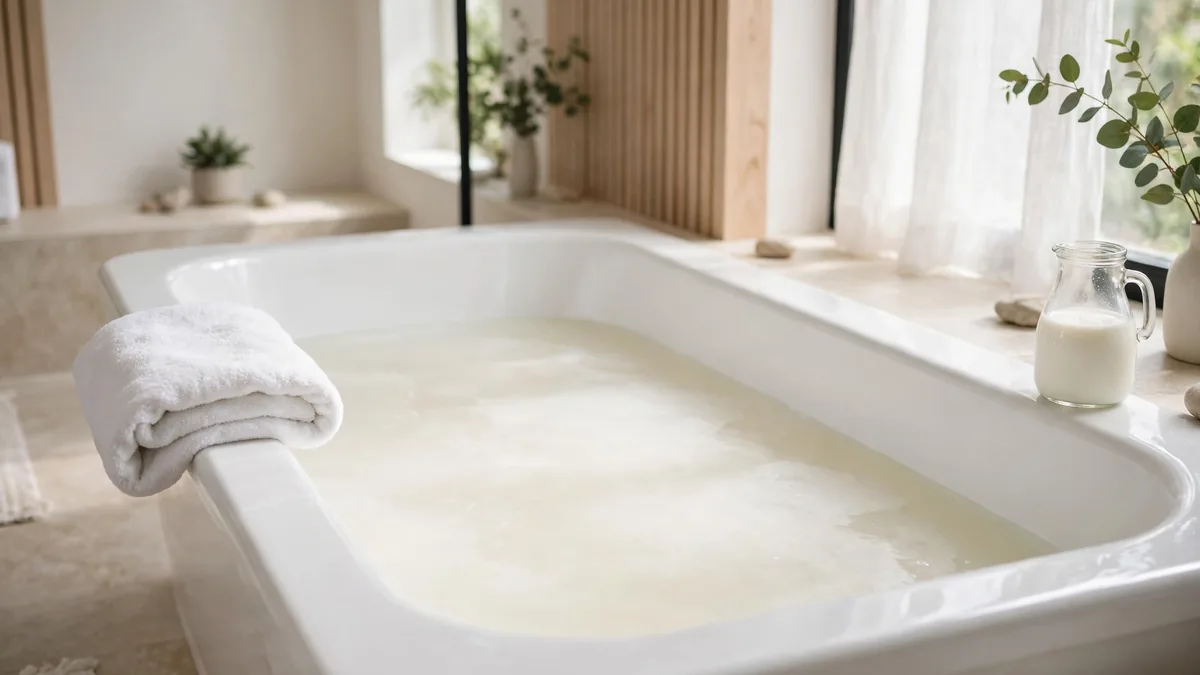
Some evenings call for softness more than anything else. The day has been long, the skin feels dry and tight, and all you want is warm water, a soft towel, and a few quiet minutes that ask nothing of you.
A milk bath is that kind of evening: a warm bath with milk stirred into the water, turning it soft and milky, a simple softening ritual you can do at home.
This guide explains what a milk bath is, how to make one, how to enjoy it safely, and how to finish with a good rinse and a short rest. It is gentle general information only, never medical advice, and it makes no promise to cure or treat anything.
Key Takeaways
- A milk bath is warm water with milk stirred in, for a softening soak.
- Milk baths mean warm water, short soaks, and a good rinse after.
- Milk baths differ from hot springs, hammams and spa days.
- If you have a milk allergy, do not use a milk bath at all.
- This is general information only; real skin problems need a doctor.
What a Milk Bath Is
A milk bath is a warm bath with milk added to the water. The milk turns the water soft and cloudy, and the bath feels gentler than plain water alone.
A milk bath is not a treatment and not a cure. It is a gentle ritual, a way to slow down at the end of a day and let warm water do its quiet work. The softening comes from the warm soak, the milk, and the rest that follows.
Why Milk Baths Suit Softening
A milk bath suits softening because warm water asks the skin and the body to slow down. The warmth loosens tight shoulders, and the soft milky water feels smooth against dry skin. There is no scrubbing to finish, no pace to keep, and no screen to answer.
On a dry day, when the skin feels tight and the evening feels full, that simplicity matters most. You sit in warm water, you breathe slowly, and you let the day soften with you.
Choosing Milk for a Bath
Choosing milk for a bath is simple: plain whole milk is the usual choice, about one to two cups for a full bath. Powdered milk works too, stirred well until it dissolves, and a little plain unscented bath oil can be added if you like. Keep the recipe plain, with no strong scent and no extra powders.
If you have a milk allergy, do not use a milk bath at all, not even a small amount. A milk allergy is different from lactose intolerance, and milk on the skin can still cause a reaction. If you are unsure, skip the milk and enjoy a plain warm bath instead.
A Simple Milk Bath, Step by Step
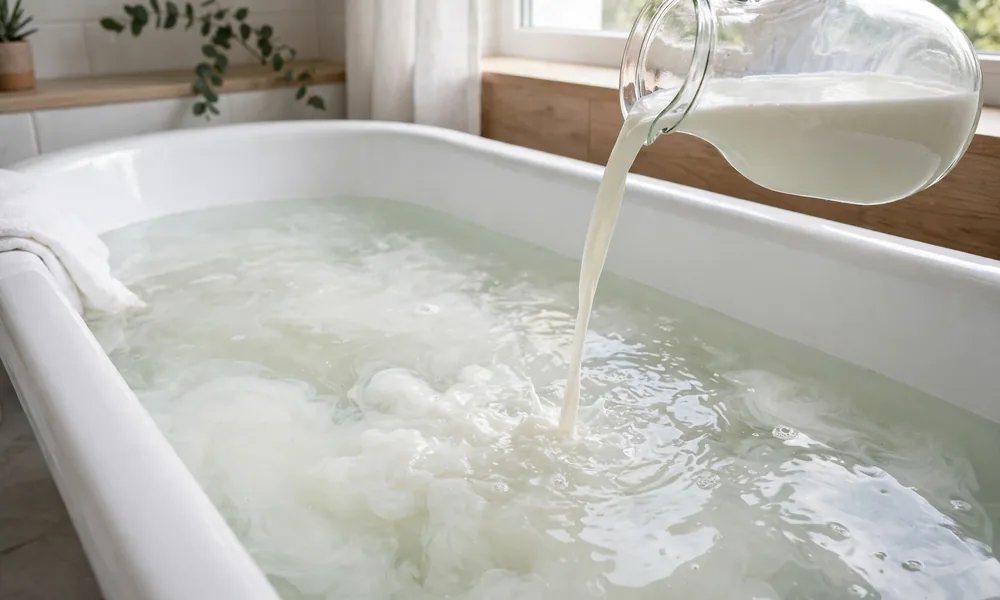
A simple milk bath takes only a few minutes to begin: run a warm bath, not hot, and test the water with your hand before you step in. Pour in one to two cups of plain milk and stir the water gently until it turns soft and cloudy.
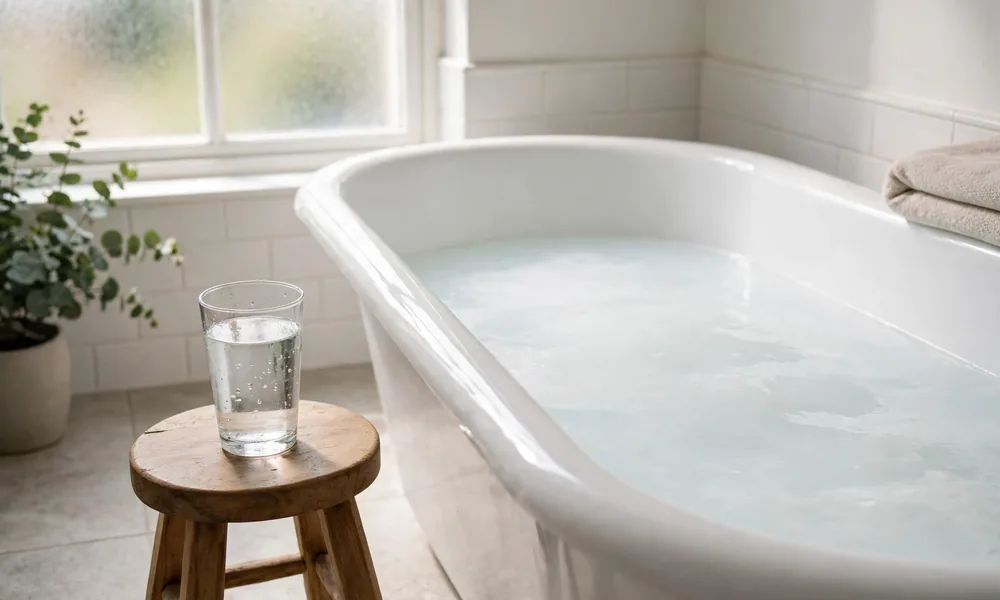
Step in slowly, sit down, and rest for ten to fifteen minutes. Sip a glass of fresh water if you like, breathe slowly, and keep the soak short. When the time is up, stand up slowly, because warm water can make you feel light-headed.
Water First: Temperature and Time
Water comes first in every milk bath: warm, never hot, and short, never long. Test the water with your hand or your wrist before you step in, and add cool water if it feels too warm. A bath that feels comfortable at the first touch is the right one.
Keep the soak to ten or fifteen minutes, and leave at once if you feel dizzy, hot, or unwell. Drink water before and after the bath, and rest in a quiet chair for a few minutes when you step out.
Milk Baths at a Glance
| Warm milk bath | Short soak | Rinse well |
|---|---|---|
| One to two cups | Ten to fifteen minutes | Plain warm water |
| Warm, never hot | Sip fresh water | Soft towel dry |
| Milk allergy, skip | Leave if dizzy | Rest after |
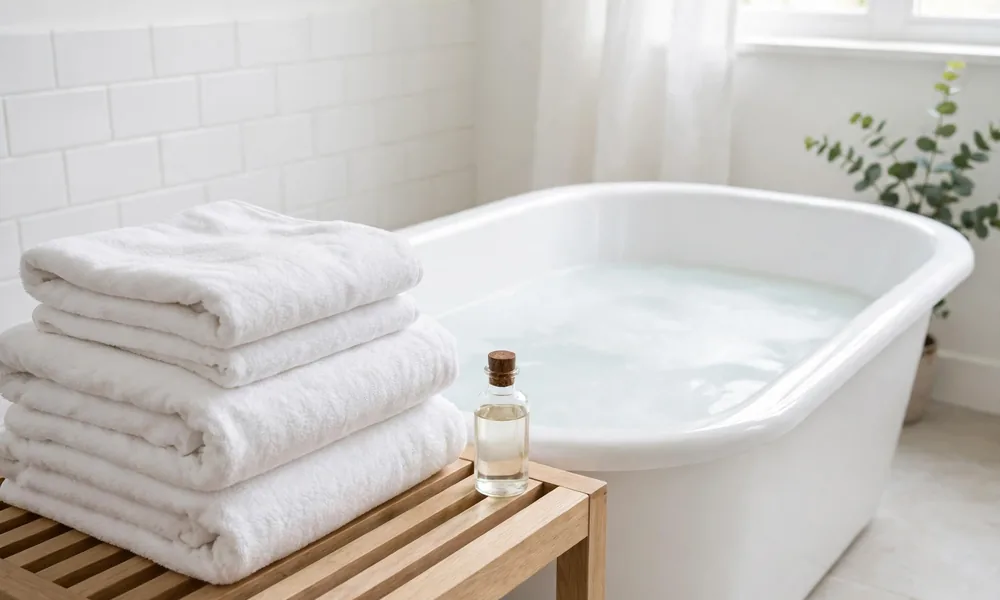
Milk Baths and Hot Springs
Milk baths and hot springs are both warm soaks, yet they happen in very different places. Hot springs are natural outdoor pools of warm mineral water, heated by the earth itself, where you can sit under open sky with steam rising in the cool air. The minerals vary from spring to spring, because every spring passes through different rock.
A milk bath is a warm bath at home, with milk stirred into plain tap water, in your own tub. There is no travel, no pool, and no mineral spring. Where water and hot springs: a simple soak guide keeps a natural outdoor pool of warm mineral water, this guide keeps a warm milk bath at home.
Milk Baths and Hammams
Milk baths and hammams are both warm rituals, yet they work in different ways. A hammam is a traditional steam bath, a warm tiled room where water and steam do the slow work of the evening, with low warm marble benches and damp air like a summer morning after rain.
A milk bath is a soak, not a steam, in your own bath, with milky water around you rather than steam in the air. There is no tiled room and no marble bench, only warm water, milk, and a soft towel. Where water and hammams: a simple steam ritual keeps a traditional steam bath in warm tiled rooms, this guide keeps a simple milk soak at home.
Milk Baths and Spa Days
Milk baths and spa days are both slow rituals, yet a spa day is a whole day and a milk bath is one short soak. A spa day is a slow day built around warm water, with a warm soak, a rinse, a rest in a quiet chair, and another glass of water, repeated as slowly as you like, at home or at a spa.
A milk bath can be one part of a spa day, but it is only one part: a single warm soak with milk, kept short, rinsed well after, and followed by rest. Where water and spa days: a simple fresh ritual keeps a slow day of soak, rinse, rest and water sips, this guide keeps one simple milk bath.
Milk Baths and Oat Soaks
Milk baths and oat soaks are both gentle bath rituals, and they sit side by side in the queue as two different answers to dry skin. An oat soak, as its queued title describes it, is a soak with oats, a grain-based bath for gentle skin. A milk bath is a soak with milk, a dairy-based bath for softening skin.
The two are not the same bath, and they should not be mixed without care. If you want oats, choose an oat soak; if you want milk, choose a milk bath. Keep each ritual plain, keep it short, and rinse well after either one.
Milk Baths and Eucalyptus Steam
Milk baths and eucalyptus steam are both gentle water rituals, and they sit side by side in the queue as two different answers to a tired evening. Eucalyptus steam, as its queued title describes it, is a steam ritual, a fresh ritual built around warm steam and the scent of eucalyptus. A milk bath is a soak, built around warm water and milk.
Steam rises into the air and fills the room, while a milk bath holds you in warm water. If you want steam, choose a steam ritual; if you want a soak, choose a milk bath. Keep each one short, and drink water before and after.
Skin That Needs Extra Care
Some skin needs extra care, and a milk bath is not the answer for it. If you have eczema, broken skin, a rash, or skin that is sore or infected, do not use a milk bath without a doctor's direction. A warm soak can feel soothing, but it can also make sore skin worse, and only a doctor can say what is safe for you.
If you have a milk allergy, do not use a milk bath at all. If a bath leaves your skin red, itchy, or sore, rinse well with plain warm water, stop the ritual, and speak to a doctor if it does not settle.
Your Softening Ritual Checklist
- Run a warm bath, never hot, and test the water first.
- Stir in one to two cups of plain milk until the water turns milky.
- Soak for ten to fifteen minutes, and sip fresh water if you like.
- Leave at once if you feel dizzy, and rest after the bath.
- Rinse well with plain warm water, and dry gently with a soft towel.
- Skip milk baths with a milk allergy, and see a doctor for eczema.

Frequently Asked Questions
What is a milk bath?
A milk bath is a warm bath with one to two cups of plain milk stirred into the water, turning it soft and milky for a short gentle soak.
How long should a milk bath last?
Keep a milk bath to ten or fifteen minutes. Leave at once if you feel dizzy, hot, or unwell, and rest after the bath.
Can I use a milk bath with a milk allergy?
No. If you have a milk allergy, do not use a milk bath at all, not even a small amount, because milk on the skin can still cause a reaction.
Should I rinse after a milk bath?
Yes, rinse well with plain warm water after every milk bath, then dry gently with a soft towel and rest for a few minutes.
Can I use a milk bath for eczema?
Do not use a milk bath for eczema without a doctor's direction. If your skin is sore, broken, or infected, speak to a doctor first.
Will a milk bath cure dry skin?
No. A milk bath will not cure dry skin or any skin problem. It is a gentle ritual, and real skin problems need a doctor, not a bath.
The Bottom Line
Water and milk baths are a simple softening ritual: warm water, one to two cups of plain milk, a short soak, and a good rinse after. Keep the water warm, keep the soak short, and skip milk entirely with a milk allergy.
A Note for Soft Skin
Keep it warm, keep it short, keep it rinsed. A little milk, a warm bath, and a few slow minutes can soften an evening.


