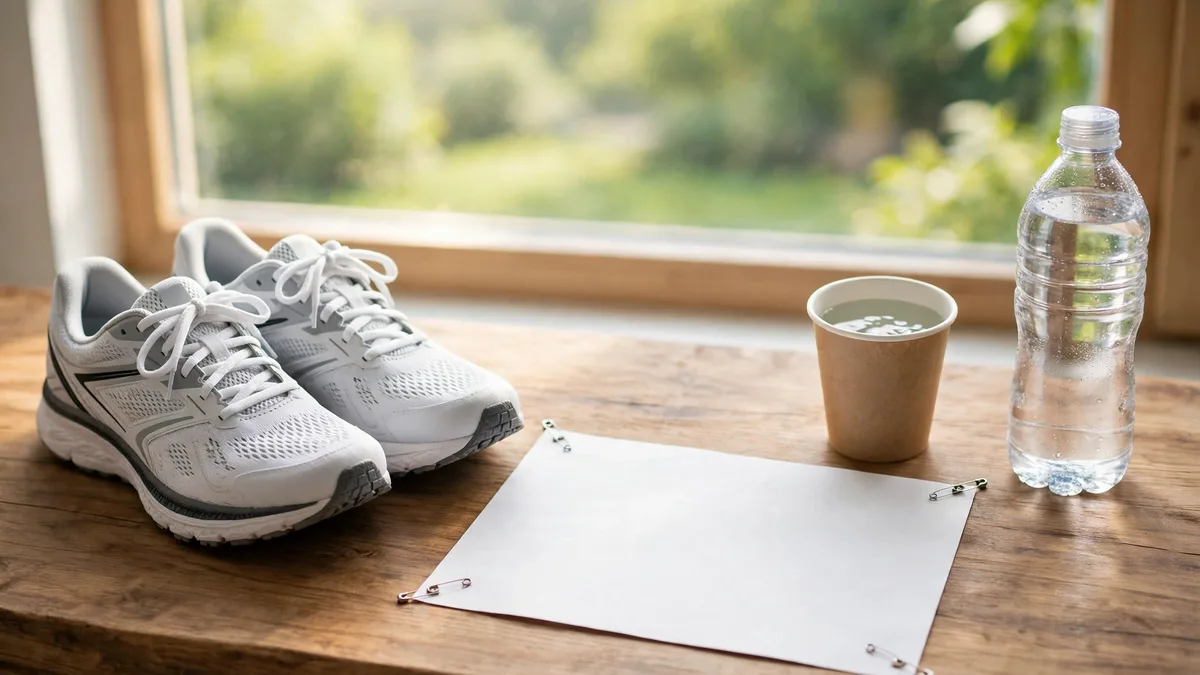
A marathon is a long day with a simple shape: an early morning, many miles of steady running, and a finish line that feels a long way off when the race begins. The shoes are laced, the race bib is pinned on, and the bottle is filled the night before.
Water is the quiet thread that runs through the whole race day. It is there in the glass before the start, in the small sips at every aid station, in the bottle carried on the move, and in the cool rinse at the finish line.
This guide is a gentle race-day routine: what to drink before the start, how to sip on the move, how to pace yourself, and how to rest and rinse at the finish. It is general information only, not medical advice, and real health problems belong with a doctor.
Key Takeaways
- A marathon is a long race day, not a short morning run.
- Drink a glass of water before the start, then sip often.
- Aid stations are the heart of the race-day water routine.
- Sip small amounts often; do not over-drink.
- Stop if you feel dizzy or in pain, and seek help if unwell.
What a Marathon Race Day Is
A marathon is a long-distance running race, far longer than a short morning run, run on roads through a city or a park, with thousands of other runners beside you. The morning starts early: the bib is pinned to your shirt, the shoes are laced twice, and the start line is crowded with runners stretching, sipping water and waiting for the signal to go.
Aid stations stand along the course every few miles, with tables of paper cups of water, and the finish line waits at the end with water, towels and a place to sit down.
Why Race Day Water Is Different
Race day water is different because the race is long. A short run needs only a glass before and a glass after, but a marathon lasts for hours, and the body loses water slowly through every mile. Small sips, taken often, keep a runner fresh in a way that one big drink cannot.
A runner who sips a little at each aid station stays cooler and steadier than one who waits until the thirst is strong. Race day water is a rhythm, not a rescue: little and often, from the first mile to the last.
Before the Start: Your Morning Glass
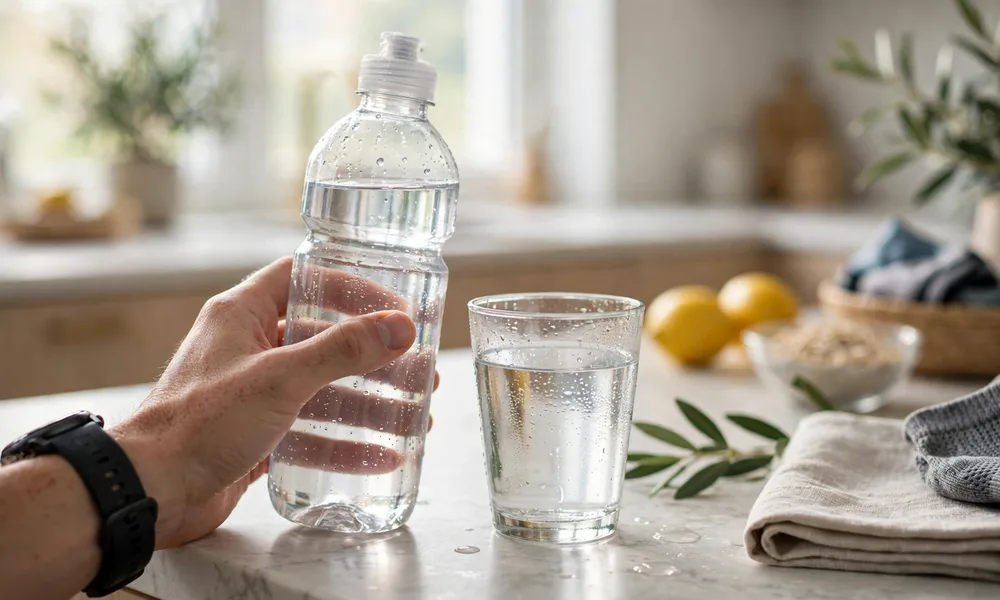
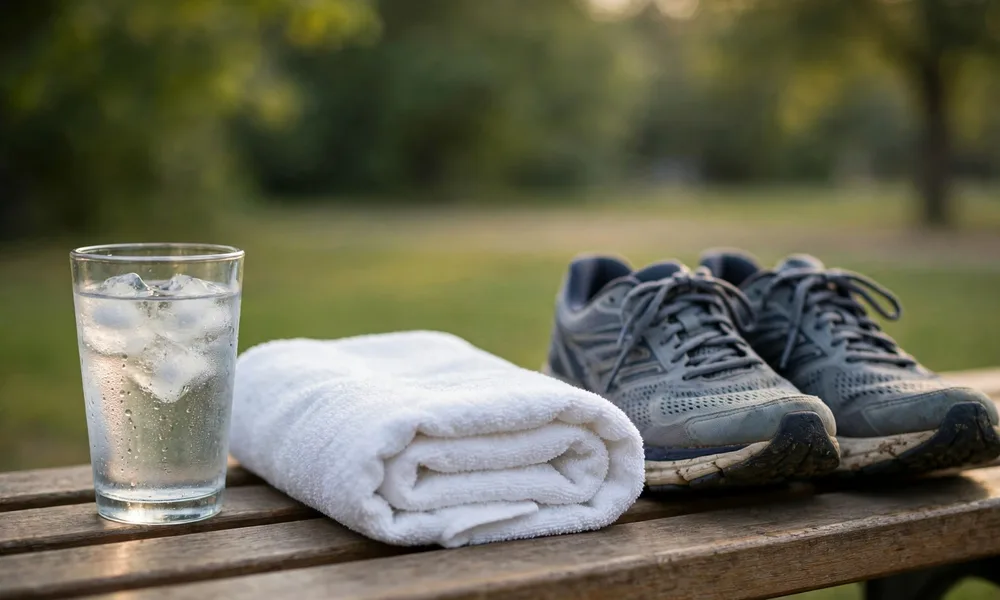
The race day begins the night before, with a bottle filled and set by the door, and a glass of water on the kitchen counter in the morning. Drink a glass of fresh water slowly when you wake, in small sips, and eat a plain breakfast that you know well.
Pin the bib on, lace the shoes, and take a small bottle for the walk to the start. Sip a little more while you wait, and use the toilets before the race begins. A calm, unhurried morning is the best start a marathon can have.
Sips on the Move: Aid Stations
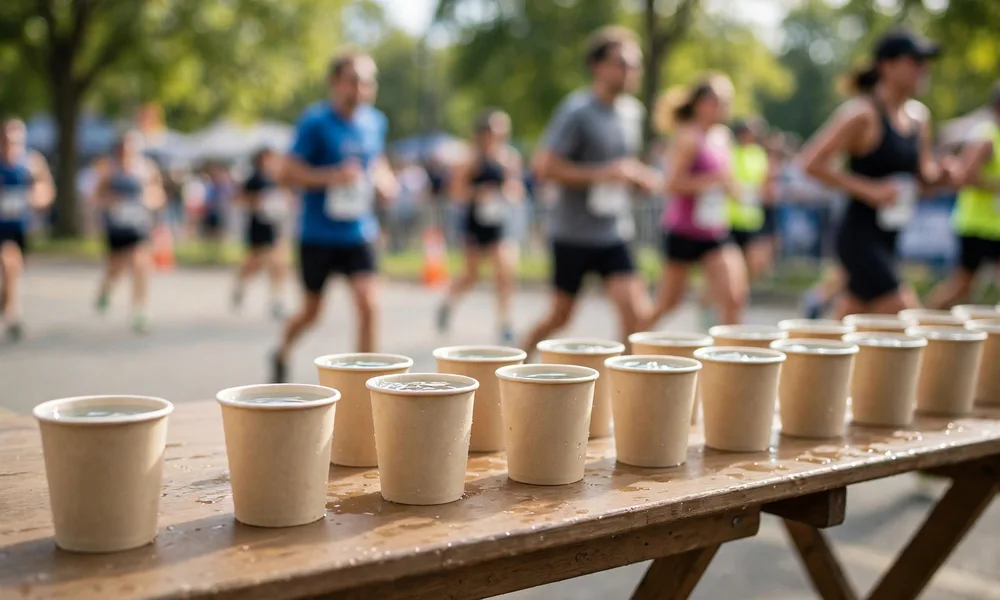
Aid stations are the heart of the race-day water routine. Every few miles, a long table appears at the side of the road, covered with rows of small paper cups of water, and volunteers hold cups out to the runners passing by. Slow to a walk as you reach the table, take one cup, and sip it slowly while you walk.
Pinch the top of the cup to make a small spout, so the water goes in your mouth and not down your shirt. Then run on, light and fresh, to the next station.
Pacing Yourself Through the Miles
A marathon is won by pacing, not by speed. Start slower than you think you should, and keep a steady rhythm that lets you talk in short sentences. The early miles should feel easy, almost too easy, because the later miles will ask for everything you saved.
Sip at every aid station, even when you do not feel thirsty yet, and walk through the stations if you need to.
The Finish Line: Rinse and Rest
The finish line arrives all at once: the crowd, the noise, and then a medal, a bottle of water and a place to sit down. Take the water, sip it slowly, and keep walking for a few minutes so your legs can cool down gently.
Rinse your face and hands with cool water, change into dry clothes, and rest with your legs up for a while. You have earned the quiet hours.
Marathons at a Glance
| Long race day | Aid stations | Sip often |
|---|---|---|
| Early morning start | Cups on tables | Small sips |
| Many slow miles | Walk through stops | Never over-drink |
| Finish line rest | Rinse and sit down | Seek help if unwell |
Marathons and Running
Marathons and running share the same shoes and the same roads, but they are different days. An ordinary run is short: a glass of water before, a few easy miles in the cool morning, and a glass of water after, and the whole routine fits inside an hour. A marathon is a race day: a bib pinned on, aid stations every few miles, pacing across many hours, and a finish line with water and rest at the end.
Where running a simple fresh routine keeps a short morning run fresh with a glass before and after, this guide keeps a long race day fresh with sips at every aid station.
Marathons and Hiking
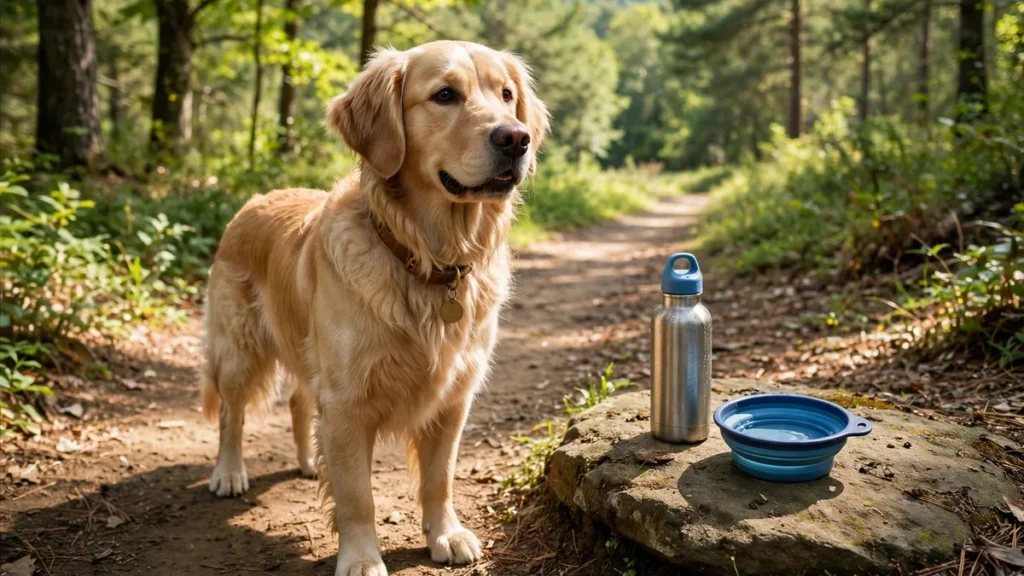
Marathons and hiking both cover long distances on foot, and both need water carried along the way, but they are different days. A hike is a slow trail walk through trees and hills, with a bottle in a bag and long stops to look at the view. A marathon is a timed race on roads, with a bib, a crowd, aid stations and a finish line waiting at the end of many fast miles.
Where hiking staying fresh on the trail keeps a trail walk fresh with a bottle carried along, this guide keeps a race day fresh with cups at aid stations and sips on the move.
Marathons and Swimming
Marathons and swimming both ask for a simple water routine, but they could hardly look more different. A swim is a gentle hour in a cool pool, with a rinse and a towel after, and the water is all around you. A marathon is a long run on dry roads, with dust, sun and many miles, and the water comes in small paper cups at aid stations along the course.
Where swimming a simple fresh routine keeps a pool swim fresh with a rinse after, this guide keeps a race day fresh with sips on the move and a finish-line rest.
Marathons and the Other Race Days
A marathon is not the only race day, and each sport keeps fresh in its own way. Skiing is a cold day on the slopes, with snow, warm layers and water carried against the cold. Tennis is a fast day on the court, with short breaks between games and sips from a bottle at the bench. Golf is a slow day on the course, with a long walk between holes and water sipped in the shade.
Skiing, tennis and golf are not live posts yet: they are only queued as topics 489, 491 and 493, described here from their queued titles, and they are not described beyond that honest note. A marathon stays a long road race, with aid stations and a finish line, and that is what sets it apart.
Race Day Water Safety
Race day water safety is simple, and it matters more than speed. Warm up gently before the start, sip often in small amounts, and do not over-drink: too much water too fast can make you feel unwell, so little and often is the rule all day.
Stop if you feel dizzy, faint or in pain, and seek help at once from the race marshals or the medical tent if you feel unwell. Tell a marshal if a fellow runner looks unwell too. Real health problems belong with a doctor, and no race is worth pushing through pain.
Your Race Day Checklist
- Fill a bottle the night before and set it by the door.
- Drink a glass of water slowly on race morning.
- Pin the bib on, lace the shoes twice, and arrive early.
- Sip a little at every aid station; do not over-drink.
- Walk through water stops, rinse at the finish, and rest.
- Stop and seek help if you feel dizzy or in pain.
Frequently Asked Questions
How much water should I drink during a marathon?
Sip small amounts often, a cup at each aid station, rather than drinking a lot at once. Do not over-drink, and listen to your body through the race.
Should I carry my own water bottle?
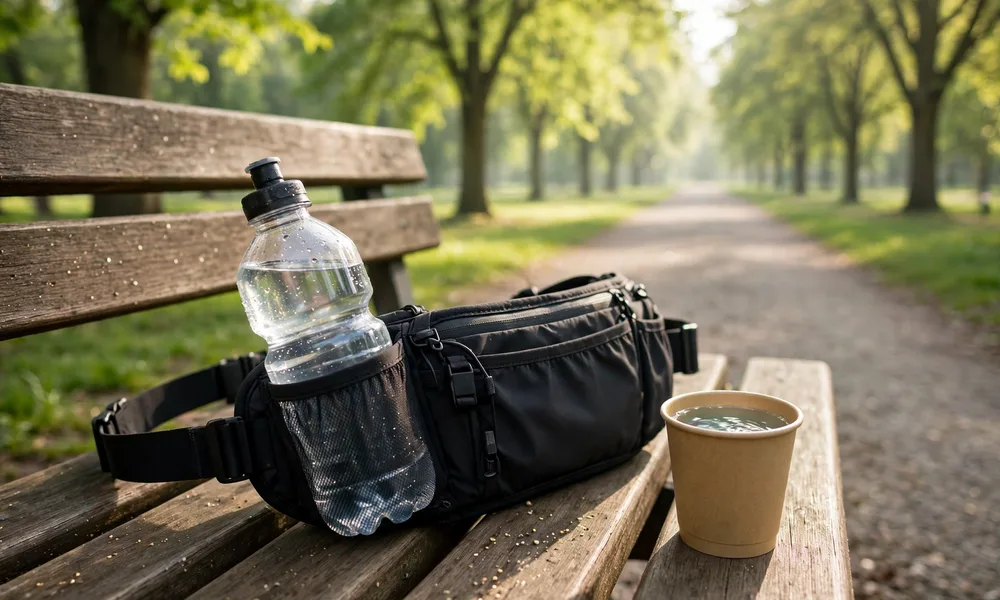
A small bottle or a running belt with a bottle is a good idea, especially between aid stations.
What should I do at an aid station?
Slow to a walk, take one paper cup, pinch the top to make a spout, and sip slowly while you walk. Drop the empty cup in the bins past the table.
Can I drink too much water on race day?
Yes. Drinking too much water too fast can make you feel unwell, so sip little and often instead of gulping large amounts at once.
What if I feel dizzy during the race?
Stop, sit or lie down in the shade, and seek help at once from a race marshal or the medical tent. Do not try to run through dizziness or pain.
What should I do after I finish?
Keep walking for a few minutes, sip water slowly, rinse your face and hands, change into dry clothes, and rest with your legs up for a while.
The Bottom Line
Water and marathons belong together: a glass before the start, small sips at every aid station, and a cool rinse and rest at the finish line. Sip often, never over-drink, and stop and seek help if you feel unwell.
A Note for Race Day
Keep it slow, keep it steady, keep it fresh. A bottle by the door, a cup at every station, and a quiet rest at the finish can carry a race day well.