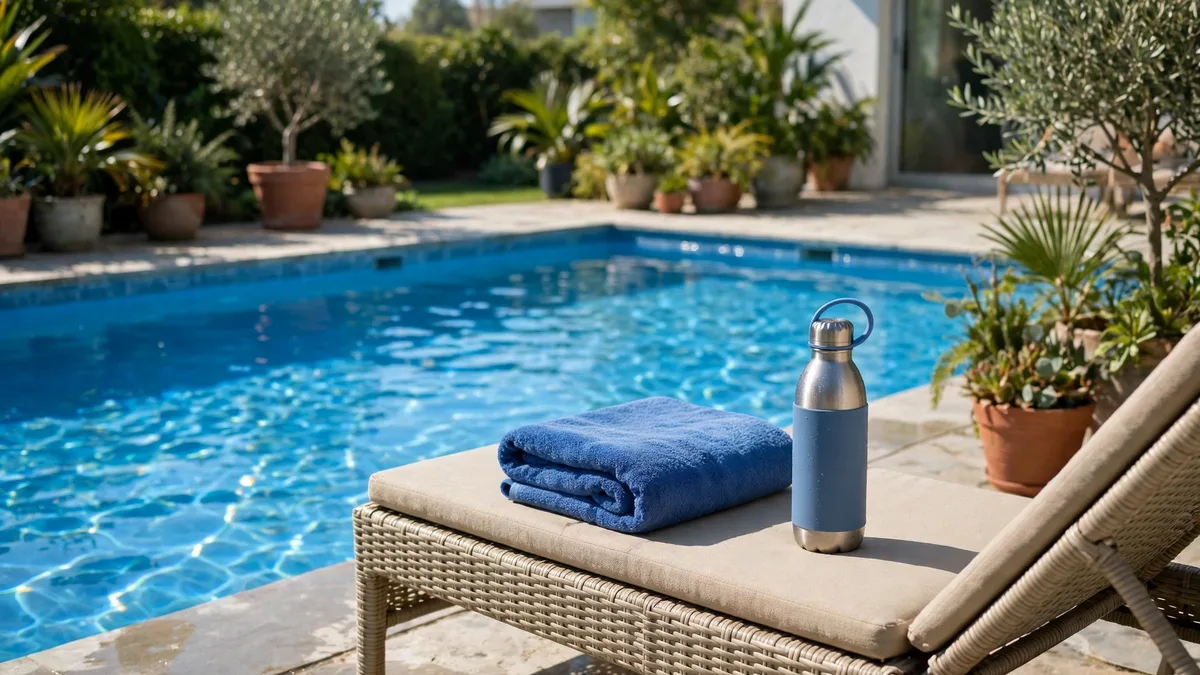
A swim is one of the simplest pleasures of warm weather. The water is cool, the pool is bright, and an hour of gentle swimming can wash away a whole week of tiredness. Yet a swim asks a little planning, because the sun is strong and the routine around the swim matters as much as the swim itself.
The answer is not a long plan or a bag full of gear. It is a short, simple habit in three parts: before the swim, during the swim, and after the swim. A packed bag, a warm-up, short gentle laps, a rinse, and plain water to drink are all it takes.
This guide sets out that simple swimming routine: what to pack, how to stay safe, how to swim gently, and how to rest and rinse afterwards. It is gentle general information only, never medical advice, and plain water does not replace sunscreen or a lifeguard.
Key Takeaways
- Water and swimming need a short routine in three parts: before, during and after.
- Never swim alone, and weak swimmers should wear a life jacket.
- Warm up gently, then swim in short stretches, not one long session.
- Rinse with plain water after swimming, to wash chlorine away.
- Drink plain water before and after, rest in the shade, and take real health problems to a doctor.
What Water and Swimming Means Here
Water and swimming, in this guide, means the swimming activity itself: going to the pool, getting into the water, swimming gently for a while, and then getting out, rinsing and resting. It is a routine for the whole swim day, from packing the bag at home to sitting down with a glass of water afterwards.
It is not a skin routine, and it is not a lesson in fast swimming. The swim here is slow and gentle, at your own pace, in a pool with other people around.
Why Swimming Suits a Fresh Routine
Swimming suits a fresh routine because the water does most of the work. The water holds the body up, so the swim feels light even when the arms and legs are moving, and the cool water leaves the skin feeling clean and awake when you climb out. A short swim can clear a busy head, because the breathing slows down and the strokes fall into a steady rhythm.
The fresh feeling comes from the whole routine, not only the swim: the cool water before, the gentle laps, the warm rinse after, and the glass of water in the shade.
Before You Swim: Packing and Planning
The routine starts at home, before you leave for the pool. Pack the bag the night before if you can: a swimsuit, a towel, goggles, sunscreen, a water bottle, and a small bag for wet things afterwards. A bag packed at night means a morning without rushing.
Drink a glass of plain water before you go, and fill a reusable bottle to take with you. Check the pool times, and plan to swim when the pool is open and staffed, never when it is closed or empty.

Water Safety First
Water safety comes first, before any swimming, and it is worth saying plainly. Never swim alone: swim where other people are around, in a pool with a lifeguard on duty, and stay where you can be seen. If you are a weak swimmer, wear a life jacket, and stay in the shallow end.
Never dive into shallow water, and never push yourself into deep water if you cannot swim back. If you feel tired, cold or short of breath, stop, hold the edge, and get out. Children must always be watched by an adult, right beside the water. If someone is in trouble, call for help and throw something that floats, rather than jumping in yourself.
Warming Up Before the Water
A short warm-up makes the swim easier and safer, and it takes only a few minutes. Before you get in, stand by the pool and roll your shoulders slowly, stretch your arms above your head, and bend your knees gently a few times.
Then rinse under the poolside shower, and step into the shallow end slowly, splashing a little water on your face and arms first. Wet skin before the first swim also helps, because wet skin takes in less pool water than dry skin.
In the Water: A Gentle Swim
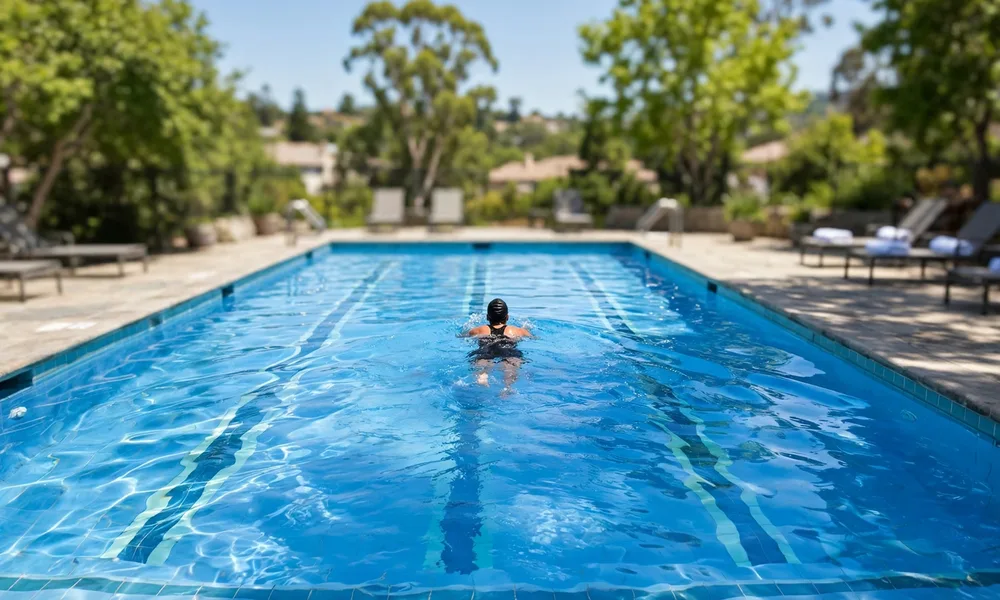
Swim in short stretches, not in one long session. Start with a few slow lengths, at a pace where you can still breathe easily, and rest at the edge between lengths if you need to. A gentle breaststroke or a slow backstroke is enough, with no need to race.
Keep to your own lane, and watch for other swimmers before you turn. If the pool is busy, swim on the right side of the lane, and leave space for faster swimmers to pass. A short swim, done gently, leaves you fresher than a long swim that leaves you worn out.
After the Swim: The Rinse
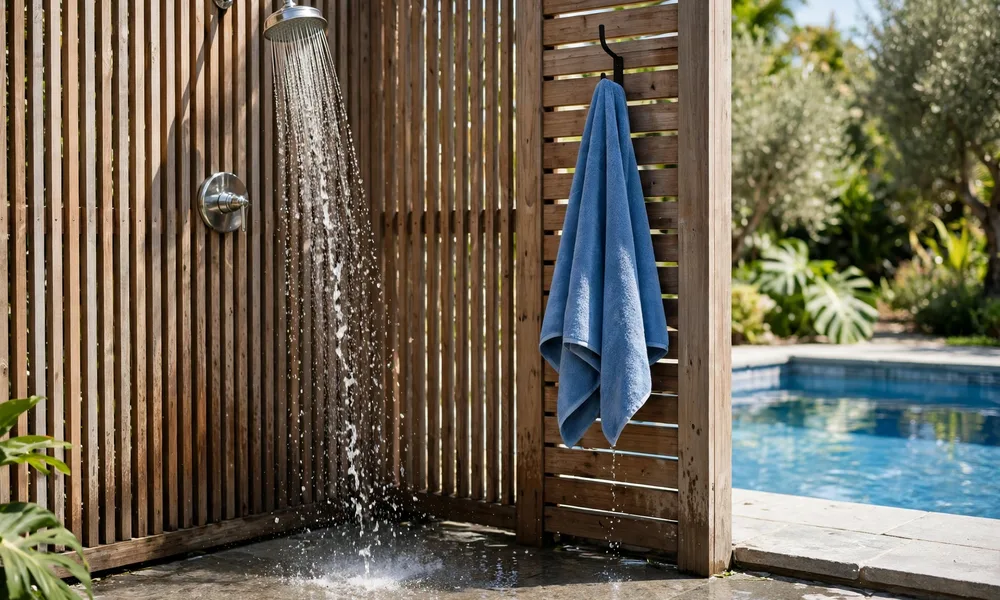
The most important step of the whole swim day comes after the last length: the rinse. Step under the poolside shower as soon as you leave the water, and rinse with plain lukewarm water from head to toe for a full minute, so the chlorine is washed away before it dries on the skin.
Do not wait until you get home to rinse, because chlorine left to dry on the skin is what leaves it feeling tight and itchy by evening. Rinse the swimsuit too, in plain water, and dry yourself with a clean towel before you head home.
Resting and Drinking After Swimming
After the rinse, sit down in the shade and rest for a while before you drive or walk home. Drink a glass of plain water slowly, in small sips, and eat something light if you feel hungry, such as a piece of fruit.
Do not rush into the sun straight after the swim, and remember that plain water does not replace sunscreen. If you plan to sit outside, smooth on sunscreen again and wear a hat. A quiet half hour in the shade, with water and a little fruit, is the best ending to a swim.
Swimming at a Glance
| Before the swim | In the water | After the swim |
|---|---|---|
| Pack bag, drink water | Short gentle laps | Rinse, dry, rest |
| Warm up, rinse first | Never swim alone | Drink water, shade |
| Life jacket if needed | Rest at edge | Sunscreen again |
Water and Swimming and Pool Days
Water and swimming and pool days are close cousins, but they are not the same guide. Pool days is a skin routine: it explains how chlorine affects the skin, how to rinse before and after, and how to wash gently in the evening with lukewarm water and a mild cleanser. Its focus is the skin, from the morning wash to the evening wash.
Where water pool days skin routine keeps a skin routine for pool days, this guide keeps a swimming routine for swim days. The skin routine cares for the skin; the swimming routine cares for the swim.
Water and Swimming and Beach Days
Water and swimming and beach days share the water, but they ask for different routines. Beach days are about the sea and the sand: the salt water, the wind, the long hours outdoors, and the walk back over hot sand. The beach has no lanes, no lifeguard tower at every step, and no poolside shower close at hand.
Where water beach days care guide keeps a care guide for beach days, this guide keeps a simple routine for pool swimming: a short, gentle activity in clear, calm water with lanes and a lifeguard nearby.
Water and Swimming and Running
Water and swimming and running are both gentle ways to move the body, but they move it in very different ways. Running is on land, on hard ground, with the feet striking the path and the body warming up quickly. Swimming is in water, with the water holding the body up, so the swim feels light even when the arms and legs are working.
Where water running simple fresh routine keeps a fresh routine for running days, this guide keeps a fresh routine for swim days. A run needs good shoes and a cool-down walk; a swim needs a bag, a warm-up, a lifeguard nearby, and a rinse afterwards.
Your Swimming Checklist
- Pack the bag the night before: swimsuit, towel, goggles, sunscreen, water bottle.
- Never swim alone; weak swimmers should wear a life jacket.
- Warm up gently, rinse first, and step into the water slowly.
- Swim in short gentle stretches, and rest at the edge when tired.
- Rinse with plain water after the swim, and dry off fully.
- Drink plain water, rest in the shade, and smooth on sunscreen again.

Frequently Asked Questions
How long should a gentle swim last?
A gentle swim of twenty to thirty minutes is enough for most people. Swim in short stretches with rests at the edge, and stop when you feel tired.
Do I need to warm up before swimming?
Yes, a short warm-up helps. Roll your shoulders, stretch your arms, bend your knees gently, and walk around the pool once before you get in.
Should weak swimmers wear a life jacket?
Yes. Weak swimmers should wear a life jacket and stay in the shallow end where they can stand, in a pool with a lifeguard on duty and other people around.
Why rinse after swimming?
Rinse with plain lukewarm water straight after the swim to wash chlorine away before it dries on the skin, which is what leaves skin feeling tight and itchy by evening.
Can I swim on my own if the pool is quiet?
No, never swim alone. Swim where other people are around, in a pool with a lifeguard on duty, and stay where you can be seen, even when the pool looks quiet.
What should I drink after swimming?
Drink plain water slowly, in small sips, and eat something light such as a piece of fruit. Plain water does not replace sunscreen, so smooth it on again if you sit in the sun.
The Bottom Line
Water and swimming is a simple fresh routine: pack the bag, warm up, swim gently, rinse, and rest with plain water in the shade. Never swim alone, wear a life jacket if you are a weak swimmer, and stop when you feel tired.
A Note for Fresh Swims
Keep it short, keep it safe, keep it fresh. A small bag, a cool pool, and a quiet half hour in the shade can carry a day well.