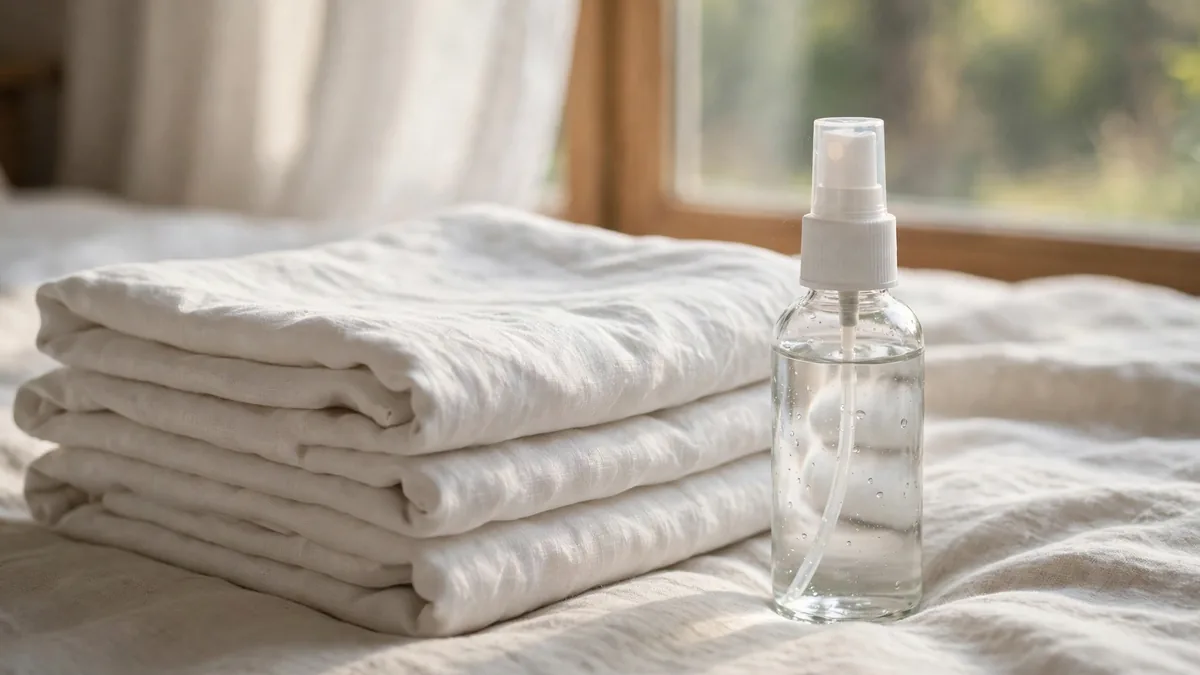
A bed made in the morning can still smell stale by evening. A linen spray answers that small gap: a light mist of water over sheets, pillowcases and clothes, laid on indoors, that leaves the fabric smelling fresh without a wash.
The bottle is small and plain: clear glass, a fine mist nozzle, water inside, and nothing else unless you choose a little scent. One press from an arm's length leaves the linen barely damp, and the damp dries in minutes.
This guide keeps to the plain version: what a linen spray is, how it differs from the room sprays and the linen wash already in this journal, how to choose a bottle, and how to use it gently. It is comfort and habit only, and it treats nothing.
Key Takeaways
- A linen spray is a light mist of water for linen, bedding and clothes.
- The mist lands on fabric indoors, never into the air of a room.
- One press from an arm's length is enough for one pillowcase.
- Plain water works; any scent stays light and patch-tested.
- Keep the mist from faces, food and open drinks, and ask a doctor about lasting worries.
What a Linen Spray Is
A linen spray is a small bottle of water with a fine mist nozzle, made for cloth rather than for air. Hold it an arm's length from a pillowcase, a folded sheet or a shirt, and press once. Fill it with the same water you drink, and tip out what is left each morning so the bottle never holds yesterday's water. Nothing needs adding to it: plain water alone lifts a stale smell from linen. If you want a scent, a splash of ready-made lavender water in the bottle is enough, and it should be tried first on a hidden corner of the cloth.
A linen spray is not a wash and not a cleaner. It is a between-wash refresh, for the mornings when the bedding is clean but the air in the room has gone flat.
Linen Spray and Room Sprays
Water and room sprays is the guide for a small bottle of plain water misted high into the air of a room. The mist hangs in the light, settles the dust, and cools the air a little, and it never touches cloth: not a face, not a bed, not a single sheet of linen.
A linen spray aims the other way. Its mist goes down onto fabric, onto a pillowcase or a folded sheet, indoors, and it stays there until it dries. The two bottles look alike and share a nozzle, but their jobs part at the first press: one freshens the air of a room, the other freshens the cloth in it.
Linen Spray and Linen Care
Water and linen care is a complete wash-and-care guide for everyday linen: a basin of lukewarm water, a drop of mild soap, a ten-minute soak, a gentle press and lift, and a line in fresh air to dry. It is the full routine, and it takes an afternoon.
A linen spray is the short version for the days between washes. There is no basin, no soap and no drying line: one press over the pillowcase, a few minutes with the window open, and the bed smells fresh again. The wash keeps linen clean for months; the spray keeps it pleasant for a day.
Linen Spray and Bedding
Water and bedding keeps the bed fresh with a weekly rhythm: sheets and pillowcases washed gently in lukewarm water with a drop of mild soap, dried fully in fresh air, and stored dry. Between washes it freshens the bed by airing: covers pulled back, window open, pillows shaken, sheet smoothed.
A linen spray does a different job inside that same rhythm. Where the bedding guide airs the cloth, the spray mists it: a fine cloud of water laid straight onto the sheet or pillowcase, so the fibres themselves smell fresh rather than only the air around them. The two habits share one bed and one jug of water, but they do not overlap.
Choosing a Linen Spray Bottle
Look for a little glass bottle you can hold in one hand, with a nozzle that gives a fine even cloud. Glass washes clean and lets you see when the water needs changing. Try the nozzle over the sink first: one press should give a soft even mist, never a hard jet and never a dribble. Leave behind any bottle with a stiff trigger, a cracked neck, or a nozzle that throws one hard stream: a hard stream soaks one patch and leaves the rest dry, which linen does not want.
A Fresh Morning with a Linen Spray
Open the bedroom window a little and pull the covers back. Lift the bottle, hold it an arm's length from the pillow, and press once over the pillowcase, then once over the top sheet. Let the linen dry while you drink a glass of water at the bedside table. Make the bed once the cloth feels dry to the touch, and the room is ready for the day. The mist is gone in minutes, and only the fresh smell stays.
Linen Spray Beside Plain Water
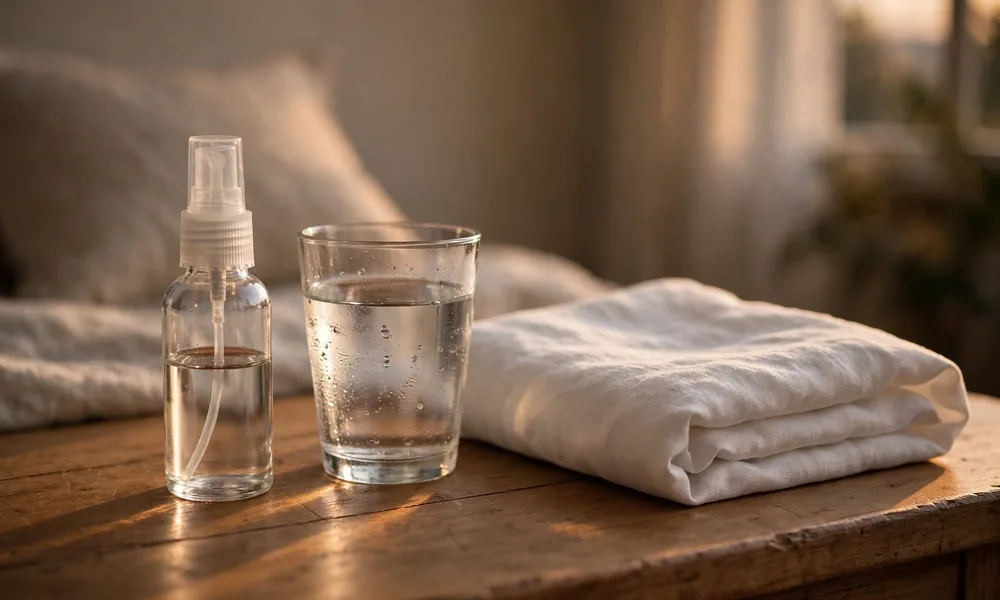
The bottle and the glass do different work, and the line between them matters. One holds water for drinking, the other holds water for cloth. Refill both from the same jug each morning, and empty the bottle before you fill it again. Rinse your hands once the spraying is done, and only then pick up the glass. Keep the mist clear of any open drink or plate of food, and never tip leftover spray water back into the jug.

Water and a Linen Spray at a Glance
| Light mist, plain water | Bedroom, laundry shelf | Patch test first |
|---|---|---|
| One press, arm's length | Pillows, sheets, clothes | Keep from eyes |
| Barely damp, dries fast | Morning, evening rounds | Change water daily |
Linen Spray Among the Other Water Guides in This Batch
Nine other guides share this batch with the linen spray, and each one takes a different road. Among the waters, a hand soak is a gentle soak for tired hands in a basin, a silver polish shines silver with water, a scalp rinse freshens hair, and a car wash is a car cleaned outside with buckets and a hose, a washing job in the open air, never a scent ritual. The linen spray is the only one of the five that mists fabric indoors for a fresh scent.
The stones take five more roads. Lithium quartz is a soft violet stone for quiet days, rutile holds golden needles inside clear quartz, chloritoid is a dark grey-green stone from schist, tugtupite is a soft pink stone for tender days, and triphane is a warm yellow stone for bright days.
Where a Linen Spray Bottle Lives at Home
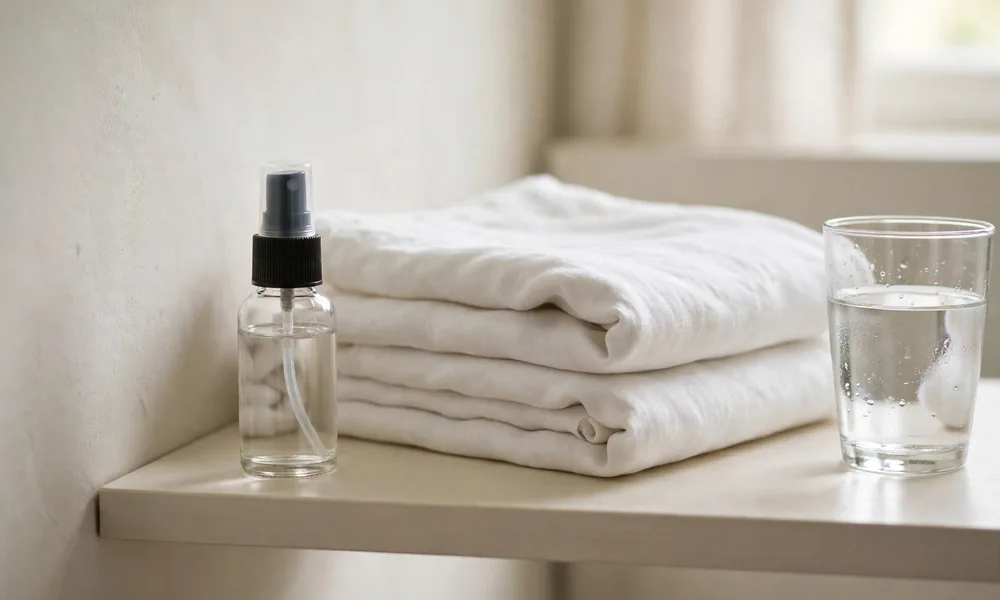
Set the bottle where your hand finds it without looking: a shelf in the bedroom, the top of the laundry basket, or a ledge beside the bed. It should stand straight, capped, with nothing to knock it over, and a light wall behind it so the water level shows at a glance. Keep it cool and away from cookers and heaters, and above the reach of small hands.
Looking After a Linen Spray Bottle
A bottle that is rinsed often keeps a fine mist. Wash it out with hot water once a week, and swap the water inside every day or two. Leave it full and forgotten and the water turns stale, which no clean linen wants. Cap it between uses and stand it upright. When the nozzle starts to dribble or the cloud turns uneven, soak the nozzle in a cup of hot water and press it a few times over the sink; if the mist still will not even out, the bottle is done and a new one takes its place.
Spraying Safely Around Skin, Pets and Plants
A linen spray is gentle, and it stays gentle when a few habits are kept. Aim only at cloth, and keep the cloud away from eyes and faces. Should you ever scent a bottle, test the mix on a hidden corner of the cloth first, then on a small patch of skin, and stop straight away if skin or breathing complains. Store the bottle where children and pets cannot reach it, and do not mist near a birdcage, a fish tank, or a plant in flower. A doctor is the person for any health worry that lingers; a mist is a comfort habit, and it cures nothing.
Your Fresh Ritual Checklist
- Open the window, then mist one pillowcase from an arm's length.
- Let the linen dry a few minutes before you make the bed.
- Drink a glass of fresh water while the mist settles.
- Change the water daily, and rinse the bottle weekly.
- Pick a bottle whose nozzle gives a fine, even cloud, and label it plainly.
- If a skin or breathing worry lingers, ask a doctor; a spray is a comfort habit, not a cure.

Frequently Asked Questions
What is a linen spray, in plain words?
A linen spray is a light mist of water in a small bottle, sprayed from an arm's length onto linen, bedding and clothes indoors, so the fabric smells fresh between washes.
How is a linen spray different from a room spray?
A room spray mists plain water high into the air of a room and never touches cloth, while a linen spray mists water straight onto fabric, onto a pillowcase or a folded sheet.
Can I spray linen every day?
Yes, if you keep it light: one press per pillowcase, let the cloth dry fully before you make the bed, and change the water in the bottle every day or two.
What should go inside the bottle?
Plain drinking water is best, fresh each morning. If you want a scent, a splash of ready-made lavender water is enough, tried first on a hidden corner of the cloth.
Is a linen spray safe around children and pets?
For most households, a plain-water mist on cloth is gentle, yet the bottle should stay out of reach of children and pets, and the mist should never go near a face, a birdcage or a fish tank.
Where should I keep the bottle at home?
Any cool, still shelf will do: a bedroom shelf, a laundry ledge, a bedside table. Keep it upright, capped, away from heat, where you can see the water level.
The Bottom Line
Water and a linen spray are a small fresh habit: one bottle, one light mist, and sheets that smell as if the window had been open all morning.
A Note for Fresh Linen Days
Mist the pillow, open the window, and let the morning in. A fresh bed takes less than a minute.