There is nothing quite like climbing into a freshly made bed. The sheets are cool and smooth, the pillowcases smell of fresh air, and the whole bed feels clean and calm.
Water and bedding belong together. Clean water washes the sheets, fresh air dries them, and a little care between washes keeps them fresh for longer. The ritual is simple, and it asks for very little: clean water, a drop of mild soap, patience while things dry, and a tidy place to store them.
This guide explains what fresh bedding means, how to wash sheets, pillowcases and duvet covers gently, how to freshen bedding between washes, how to air it and store it, and how to build a short, simple fresh ritual around it. It is gentle general information only, never a treatment for any health problem.
Key Takeaways
- Fresh bedding means clean sheets, pillowcases and duvet covers, washed in clean water.
- Water and bedding is a simple ritual: gentle washing, fresh air, and tidy storage.
- Bedding is washed as bedding, not as clothes — sheets and covers have their own routine.
- Freshening between washes, airing and storage matter as much as the wash itself.
- This guide is general information only; see a doctor for skin or health problems.
What Fresh Bedding Means
Fresh bedding means sheets, pillowcases and duvet covers that are clean, dry and aired. Sheets are the cloth you sleep on, pillowcases are the covers that keep your pillows clean, and a duvet cover is the washable cover that protects the duvet inside. Together they are the bedding, and together they decide how fresh the bed feels.
Fresh bedding feels cool and smooth when you climb in, and it smells of clean water and fresh air, not of damp or dust. Clean water, a little mild soap and patience while it dries are enough.
Why Water Suits Bedding
Water suits bedding because bedding is washed often and gently. Sheets and pillowcases touch the skin every night, so they gather sweat, skin oils and dust, and they need regular washing in clean water. A plain wash with a drop of mild soap lifts all of that away, and fresh air finishes the job.
Change the sheets once a week, wash them gently, dry them in fresh air, and the bed stays fresh without effort.
Choosing Bedding for a Fresh Bed
Choosing bedding for a fresh bed is mostly a matter of looking closely and trusting your hand. A good sheet feels smooth and cool, not rough or stiff, and a good pillowcase feels soft against the cheek. Plain cotton is the easiest choice for a fresh bed, because it washes well in clean water and dries in fresh air.
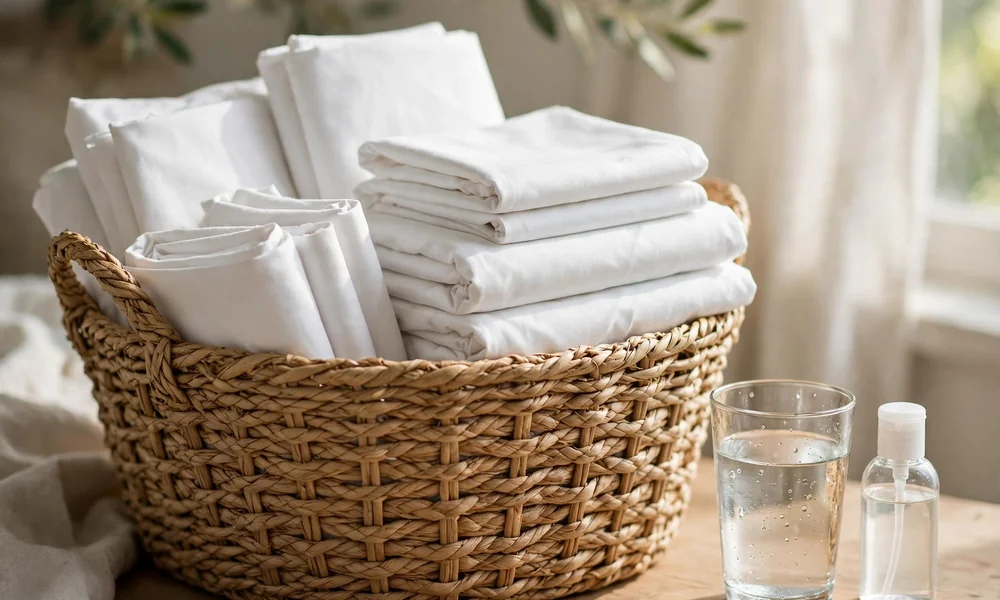
Keep two sets of bedding if you can, so one set is on the bed while the other is in the wash. Check the label before you wash, and choose a set that fits the bed properly, with no loose corners. If a set feels pleasant to the touch and smells fresh after a wash, it is the right one.
A Simple Fresh Ritual
A simple fresh ritual takes only a few minutes, and it starts in the morning. Strip the bed, shake the sheets out, and open the window so fresh air can reach the mattress. Wash the bedding gently, dry it in fresh air, and make the bed again with the clean set.
When the bed is made, place a clear glass of fresh water on the bedside table and drink it slowly, in small sips. The ritual is simply water, air, one clean set, and a short pause before the night begins.
Water and Bedding: The Gentle Wash
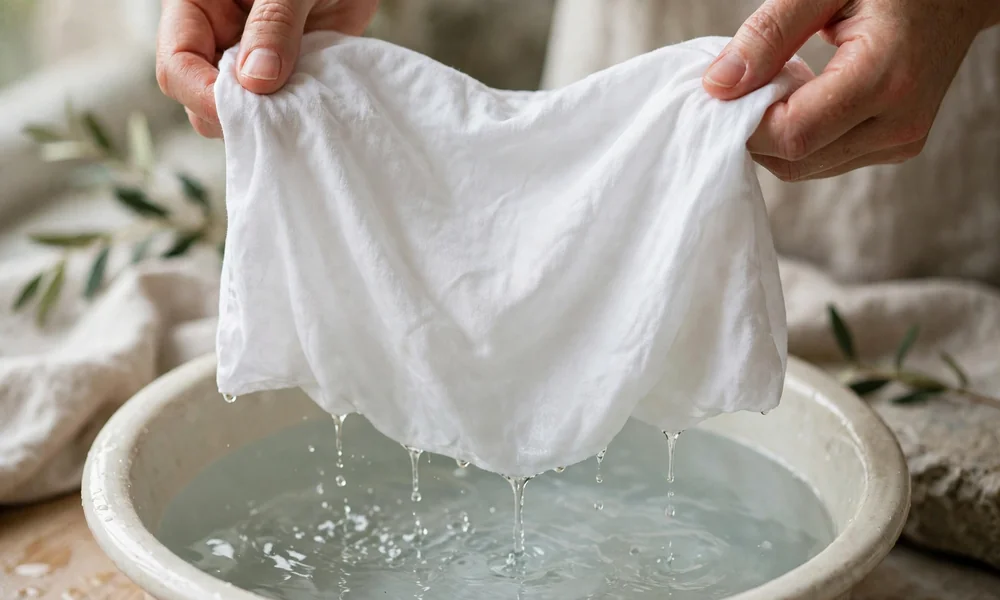
The gentle wash is simple, and it starts with reading the label. Most bedding washes well in lukewarm water with a drop of mild soap. Fill the machine or the basin with clean water, add the soap, and wash the sheets, pillowcases and duvet cover on a gentle cycle or by hand, without crowding them.
Do not use very hot water, harsh soap or a long soak, because hurry and heat wear the cloth out. Where water cotton care gentle wash washes everyday cotton clothes and towels, this guide washes cotton bedding — sheets and pillowcases — as its own set.
Drying and Airing Bedding
Drying and airing bedding is where freshness really comes from. Shake each piece out, hang it on a line in fresh air and sunlight, and let the breeze do the work. Sunlight and moving air dry the cloth and leave it smelling fresh, and a sheet dried on a line feels softer than one dried in a hurry.
If the weather is wet, hang the bedding indoors near an open window, with space between the pieces so the air can move. Never fold bedding away while it is still damp, because damp cloth smells musty. Wait until every piece is fully dry, then fold it loosely and put it away.
Bedding at a Glance
| Sheets weekly | Pillowcases weekly | Air it well |
|---|---|---|
| Lukewarm clean water | Mild soap only | Dry fully first |
| Gentle wash, no soak | Rinse until clear | Fold loosely |
| Two sets help | Fresh air dries | Store it dry |
A Fresh Bed for the Night
A fresh bed for the night is made slowly, and making it well is part of the ritual. Lay the clean sheet flat, smooth it with your hands, tuck the corners in, and place the fresh pillowcases on the pillows. Pull the duvet cover over the duvet and shake it out so it lies even.
When the bed is made and the room is tidy, the night feels calm before it even begins. A made bed is a small kindness to yourself at the end of the day.
Water and Bedding, Not Cotton Clothes
Water and bedding is not the same as water and cotton clothes, even when the cloth is the same cotton. A cotton shirt is washed for the day, worn out and washed again, while a sheet is washed for the night, slept on for a week, and changed on a schedule. The wash is similar, but the routine is different.
Where water cotton care gentle wash keeps everyday cotton clothes and towels fresh, this guide keeps the bed fresh — sheets, pillowcases and duvet covers, on their own weekly rhythm.
Water and Bedding, Not Linen or Wool
Water and bedding is also not the same as water and linen or water and wool, even though those guides share the same gentle wash. Linen is a cloth for slow summer days, a shirt that breathes on a hot afternoon, and wool is a sweater that needs cool water and flat drying so it never felts.
Bedding is the cloth you sleep in, not the cloth you wear. Where water linen care gentle wash keeps linen clothes fresh and water wool care soft wash keeps wool sweaters soft, this guide keeps the bed fresh.
Freshening Bedding Between Washes
Freshening bedding between washes keeps the bed pleasant all week, and it takes only a few minutes each morning. Pull the covers back, open the window, and let fresh air reach the sheets and the mattress for an hour. Shake the pillows, smooth the sheet, and make the bed again loosely.
Turn the pillow over, swap the pillowcase midweek if it feels tired, and keep the bedroom aired. A little morning air, a shaken pillow and a smoothed sheet can carry a set of bedding happily until wash day, and the bed stays fresh without extra washing.

When Fresh Is Not Enough
Fresh bedding is a comfort, not a cure, and it is not the answer to a health problem. If your skin itches, breaks out, or feels sore night after night, or if you wake coughing or wheezy, fresh sheets alone will not fix it, and no wash routine will replace proper care.
Enjoy the bedding for what it is, clean cloth and fresh air that make the night more pleasant, and leave health to the people trained to help.

Your Fresh Bedding Checklist
- Change the sheets and pillowcases once a week, on the same day.
- Wash bedding gently in lukewarm water with a drop of mild soap.
- Rinse in clean water until the water runs clear.
- Dry bedding fully in fresh air before folding it away.
- Air the bed each morning and shake the pillows before making it.
- Remember fresh bedding is comfort only; see a doctor for health problems.
Frequently Asked Questions
How often should I wash my bedding?
Wash sheets and pillowcases once a week, and the duvet cover every two weeks or so. If the nights are hot or the bed feels tired sooner, wash the pillowcases midweek as well.
What water should I use for bedding?
Use clean lukewarm water with a drop of mild soap. Very hot water, harsh soap and long soaks wear the cloth out, and they do not make the bedding any fresher.
How do I freshen bedding between washes?
Pull the covers back each morning, open the window, and let fresh air reach the sheets and the mattress for an hour. Shake the pillows, smooth the sheet, and make the bed again loosely.
How is water and bedding different from water and cotton care?
Water and cotton care washes everyday cotton clothes and towels, while water and bedding washes sheets, pillowcases and duvet covers as a set, on a weekly rhythm, with airing and storage as part of the routine.
How should I store spare bedding?
Store spare bedding folded loosely in a dry cupboard, with space for air to move. Never put bedding away while it is still damp, because damp cloth smells musty and can spoil.
Can fresh bedding help me sleep better?
Fresh bedding can make the night more pleasant and comfortable, because cool clean sheets and fresh air help the bed feel calm. It is comfort only, not a treatment for sleep or health problems.
The Bottom Line
Water and bedding brings a simple fresh ritual to the night: clean sheets, pillowcases and duvet covers, washed gently in clean water, dried in fresh air, and stored dry. Change them weekly, air the bed daily, and keep it simple.
A Note for Fresh Nights
Keep it clean, keep it aired, keep it simple. A freshly made bed, a glass of water, and a few quiet minutes can begin a night well.