Warm hours have a feeling of their own. The sun sits high, the air feels still, and the day slows to the pace of a ceiling fan. On an afternoon like that, a hot cup feels wrong in the hand, and plain water alone can feel plain after the third glass.
Iced tea suits those warm hours: tea brewed hot, then poured over ice and drunk cold, with a glass of water standing beside it. Together they turn a hot afternoon into a small, unhurried pause.
Below, water and iced tea get a careful look: what the ritual is, how to make a good glass, and where it sits among the other tea guides here. This is gentle general information only; nothing here treats or heals anything at all.
Key Takeaways
- Iced tea is tea brewed hot, then poured over ice and drunk cold.
- A glass of plain water always stands beside the iced tea.
- The ritual is simple: brew, cool, pour over ice, sip slowly.
- Iced tea is a drink and a pause, not a treatment of any kind.
- One tall glass and a little shade are enough for a warm afternoon.
What Iced Tea Is
Iced tea is ordinary tea served cold. You brew it the usual way, with hot water and tea leaves, then let it cool a little and pour it over a tall glass full of ice. The tea turns a deep amber that catches the light, and a slice of lemon or a sprig of mint is all the dressing it needs.
The drink is old and simple, and it asks for no special tools: a teapot, a tall glass, a tray of ice, and a jug of cold water. What makes it a ritual is the pause around it: the pouring, the waiting for the ice to settle, and the first slow sip in the shade.
Why a Cool Glass Suits Warm Hours
Warm hours ask for cool things, and a tall iced glass answers in the hand before the first sip. The cold glass feels good to hold, the ice clinks softly, and the amber tea looks refreshing before you taste it. Plain water is always beside it.
A cool glass also slows the afternoon down. You cannot hurry a drink full of ice; you sip, you wait, and the ice melts a little with each minute. That slow pace is the point: the iced tea is not a cure, just a pleasant way to sit through the heat.
Making a Simple Glass of Iced Tea
Start with fresh water and good tea leaves, black tea for amber or green tea for a lighter glass. Brew it a little stronger than you would for a hot cup, since the ice will thin it as it melts. Let the pot stand for three or four minutes, then take the leaves out.
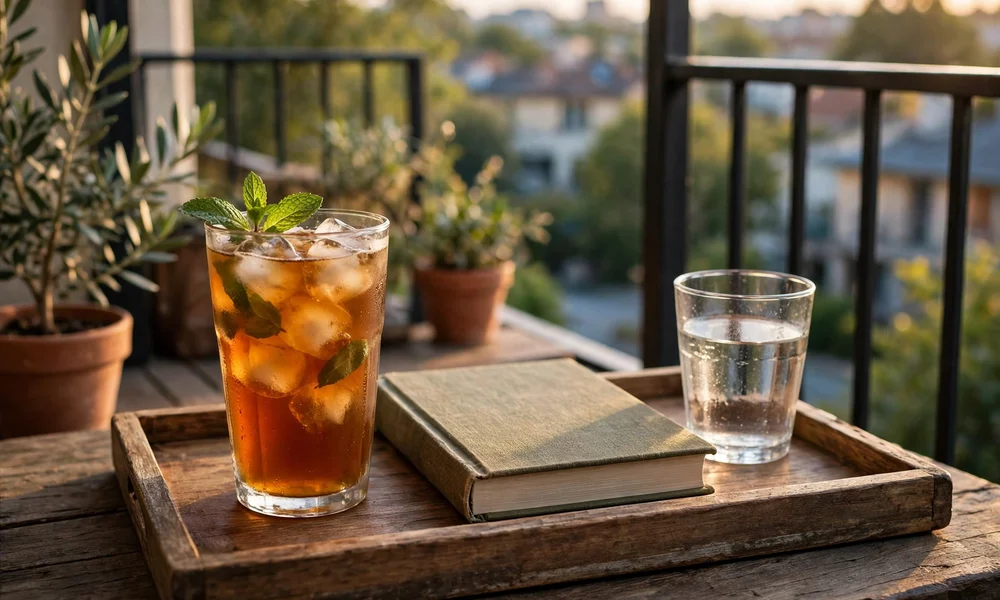
Fill a tall glass to the top with ice, and pour the tea over it in a slow stream. Add a slice of lemon or a few mint leaves, stir once, and set the glass on a tray next to a full glass of cold water.

A Cool Ritual with Water Beside It
Set the tray in the shade, on a garden table or a balcony ledge, with tea at one end and water at the other. Sit down with nothing urgent in your hands, and take the first sip slowly, letting the two glasses take turns through the afternoon.
Read a few pages while the ice melts down. When the tea glass is empty, refill it from the pitcher and top up the water glass too. The ritual ends when the shade moves on.
Iced Tea at a Glance
| Brewed hot, drunk | Tall glass, full | Water beside it |
|---|---|---|
| Strong brew, iced | Lemon, mint, plain | Sip slowly, shade |
| Amber tea, cold | Pitcher, jug, tray | No cure, just |
| One glass, enough | Afternoon, garden, balcony | Wash glasses after |

Iced Tea and Afternoon Tea
Afternoon tea is the closest warm cousin iced tea has, and the two are easy to mix up. Afternoon tea for fresh afternoons covers a warm cup and a glass of fresh water in the small hour when the day begins to slow down.
The difference is a matter of temperature and mood. Afternoon tea is warm, held in both hands, and it suits a quiet hour indoors as the light turns low. Iced tea is cold, held in one hand, and it suits bright warm hours outdoors, with ice, shade, and a pitcher on the table.
Iced Tea and a Tea Ceremony
A tea ceremony is the slow, careful cousin of this ritual. A tea ceremony for calm hours covers a small teapot, two tiny cups, and a bowl of clear water, done properly and without rushing.
The two rituals share patience, yet their shapes differ. A tea ceremony is formal and warm, with small cups and careful pouring. Iced tea is informal and cold, with tall glasses, a handful of ice, and a pitcher anyone can refill.
Iced Tea, Citrus Morning, Morning Tea and Herbal Tea
Three further rituals arrive in this same batch, each carrying a flavour iced tea keeps separate. Citrus morning, the sibling ritual numbered 769, is a bright morning drink built around citrus fruit and fresh water. Morning tea, the sibling numbered 771, is a warm cup to start the day, plain and steady.
Herbal tea, the sibling numbered 773, is a gentle brew of herbs in hot water, for slow evenings. Iced tea is the cold one between them, the only one poured over ice.
Iced Tea and the Other Tea Guides
Beyond the closest cousins, the tea guides here keep many shapes, and none of them is the iced glass of this guide. Herbal rinses for fresh rituals covers herbs steeped in hot water, cooled, and poured over hair, a garden habit rather than a drink.
Bedtime tea is a small warm cup for the last hour of the night, tea blends mix two or three gentle teas in one pot, and quiet evening tea pairs a warm cup with water and a stone. Green tea water is a morning face wash, green tea rinse is a final cool rinse for hair, and tea tree is a fresh oil for skin care, not a drink at all.
The cool guides differ too. Ice water for puffy eyes is a bowl of cold water with ice for the morning mirror, cold showers are a short burst of cold water at the end of a wash, and the sunburn and after-sun guides are gentle cooling routines for sun-warmed skin. Iced tea stands apart as simply a cold drink: tea over ice, with water beside it.

Choosing Tea and Glasses
Pick a tea you already like hot, since chilling it will not hide a flavour you dislike. Black tea gives a deep amber glass, green tea a paler one, and a plain herbal brew a soft golden one. Buy loose leaves or plain bags with nothing added.
Choose a tall glass that holds plenty of ice, with a thick base that stays steady on the tray. Keep a glass pitcher for the brewed tea and a jug for the cold water. Wash everything with hot soapy water before you begin, and dry it well.
Tea, Water and Stones
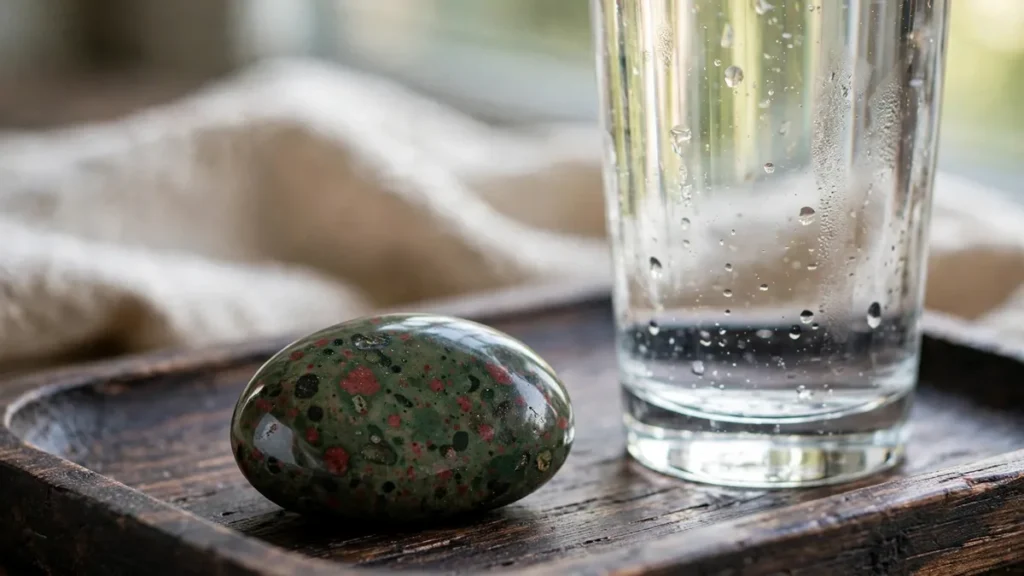
Some readers keep a stone on the same tray as their drinks, and that is fine, provided the stone stays dry and apart. A stone belongs beside the water glass, never inside it, and never in the tea pitcher or the iced glass.
A handful of stones must stay well away from every drink. Malachite is one, since the copper in its green bands can leach into water, so it never goes near a cup. Hematite is another, because wet iron can rust and stain, so it stays out of glasses too. Apatite and lepidolite are dry-only as well, and lepidolite's pale flakes hold lithium inside them. Pyrite, angelite, and amber complete the dry list.
Keeping Glasses and Pitchers Clean
Iced tea tastes best from clean glass, so wash the pitcher, the jug, and the tall glasses with hot soapy water after every use. Rinse them well and let them dry upside down on a clean cloth. Ice trays deserve the same care: wash them and refill them with fresh water.
Store the clean glasses on a dry shelf, upside down or covered, away from dust and strong smells. A chipped glass goes in the bin, and a stained pitcher gets a soak in warm soapy water.
Your Cool Ritual Checklist
- Brew the tea a little strong, then let it cool to warm.
- Fill a tall glass to the top with fresh ice cubes.
- Pour the tea over the ice, and set a full glass of water beside it.
- Add lemon or mint, stir once, and sit in the shade.
- Wash the glasses and pitcher with hot soapy water after.
- When a health concern lingers, consult a doctor; a drink answers nothing at all.
Frequently Asked Questions
What is iced tea?
Iced tea is ordinary tea brewed hot, then poured over a tall glass full of ice and drunk cold. A slice of lemon or a mint sprig is all it needs, with a glass of water beside it.
How is iced tea different from afternoon tea?
Afternoon tea is a warm cup held in both hands indoors as the light turns low. Iced tea is cold, poured over ice, and drunk outdoors in bright warm hours.
How is iced tea different from a tea ceremony?
A tea ceremony is formal and warm, with small cups and careful pouring. Iced tea is informal and cold, with tall glasses, ice, and a pitcher anyone can refill.
Can I make iced tea with green tea?
Yes, green tea makes a paler, lighter glass, and it brews the same way. Brew it strong, let it cool to warm, then pour it over ice.
Why keep a glass of water beside the iced tea?
The water is for freshness between sips, and for anyone who wants a plain drink. Move between the two glasses as you like.
Where should I enjoy iced tea at home?
Pick a shady spot — a garden table, a balcony ledge, a cool room — with the tray and the pitcher close at hand.
The Bottom Line
Water and iced tea lend warm hours a cool friend: one tall amber glass over ice, one clear glass of water beside it, sipped slowly.
A Note for Cool Hours
Keep the afternoon cool and the glasses clean. One pitcher of iced tea, one jug of water, and a little shade are enough.