Some hair days ask for very little: plain water, a quiet hour, and a simple ritual that has been used for a very long time. Henna is one of those old rituals. It is a green powder made from dried leaves, mixed with water into a smooth paste, and smoothed through the hair for colour and shine.
Water and henna belong together, because water is what wakes the powder up. Without water there is no paste, and without a good paste there is no ritual, only a mess. The water should be plain and clean, the bowl should be ready before you start, and the whole thing should move at a walking pace, not a running one.
This guide explains what water and henna is, how to choose henna, how to do a patch test first, how to mix and apply the paste, and how to rinse and care for your hair afterwards.
Key Takeaways
- Water and henna is a simple ritual: green henna powder mixed with plain water into a smooth paste.
- Always do a patch test first, and stop at once if your skin reacts.
- Mix with plain water only, apply with gloves, and protect your clothes and towels.
- Rinse with plenty of plain water, and let the hair dry naturally.
- Henna is a beauty ritual, not a treatment; scalp problems need a doctor or dermatologist.
What Water and Henna Means
Water and henna means a hair ritual built from two simple things: henna powder and plain water. Henna comes from the dried leaves of the henna plant, ground into a fine green powder, and when it is mixed with water it becomes a smooth paste that can be smoothed through the hair. The paste coats each strand, and the colour it leaves behind is a warm, coppery red-brown on most hair, deeper on dark hair and brighter on light hair.
Why Henna Suits a Slow Ritual
Henna suits a slow ritual because it cannot be rushed. The paste needs time to mix, time to rest, and time to sit on the hair, and each of those waits is a small pause in the day. There is no point hurrying, because hurrying only makes a mess on the sink and the towels. A slow morning, with the phone in another room and a cup of tea waiting, is the right setting for it.
The Patch Test First
The patch test comes before everything else, and it must never be skipped, even if you have used henna before. Mix a tiny amount of paste, smooth it onto a small patch of skin on the inside of your arm, and leave it there as the packet directs. Then wash it off, and wait a full day. If the skin stays calm, with no redness, itching, swelling or rash, you can go ahead. If it reacts at all, stop: do not use the henna, and do not try a different brand the same day.
Henna sold for hair should be pure henna, with nothing added, and so-called black henna should be avoided, because it often contains other dyes that irritate the skin. If you have a skin condition, a sensitive scalp, or you are unsure about anything, ask a doctor or dermatologist first. A patch test is a small wait that protects a whole day.
Choosing Henna and Water
Choose henna that is plainly named, and read the packet before you buy it. Good henna for hair lists one ingredient: henna leaf powder, sometimes called Lawsonia inermis. The powder should be a fine, fresh green, not brown or grey, and it should smell faintly grassy, not chemical. Buy it from a trusted seller, check the date on the packet, and keep it sealed and dry until you are ready to use it.
The water should be plain and clean, from the tap or a jug, and it should be warm, not hot. Warm water mixes the powder smoothly and keeps the paste comfortable on the scalp, while hot water can make the paste lumpy and hard to spread. Keep a jug of water beside the bowl, so you can add a little more if the paste turns thick.
Mixing the Paste with Plain Water
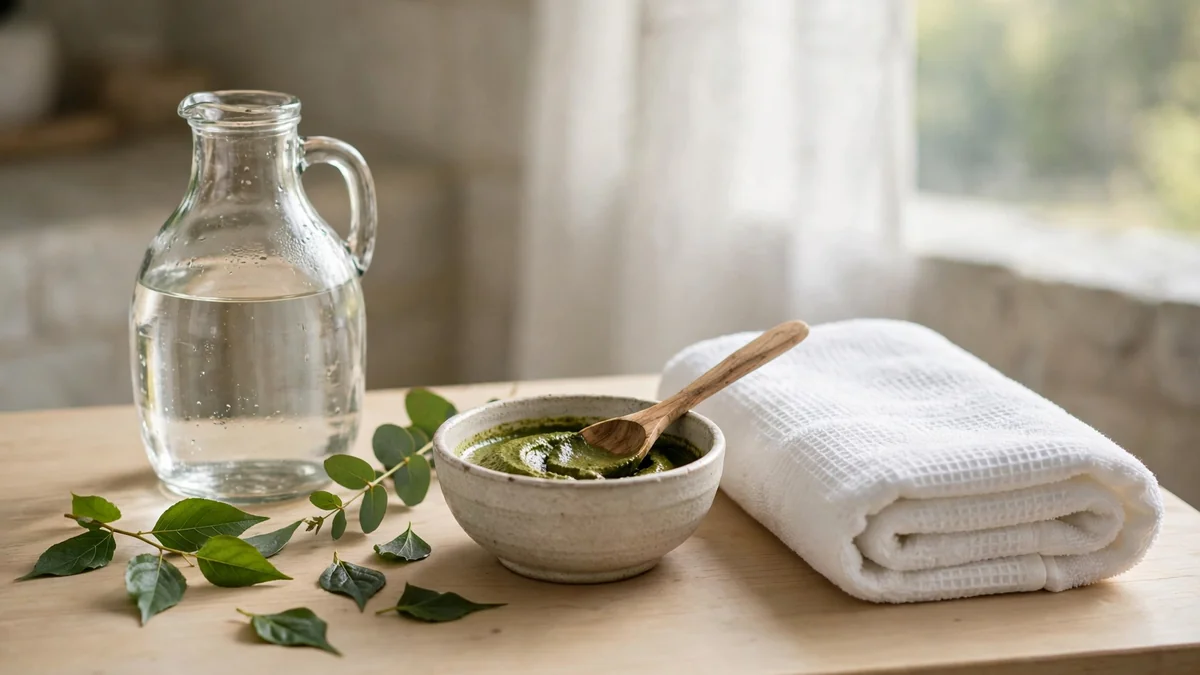
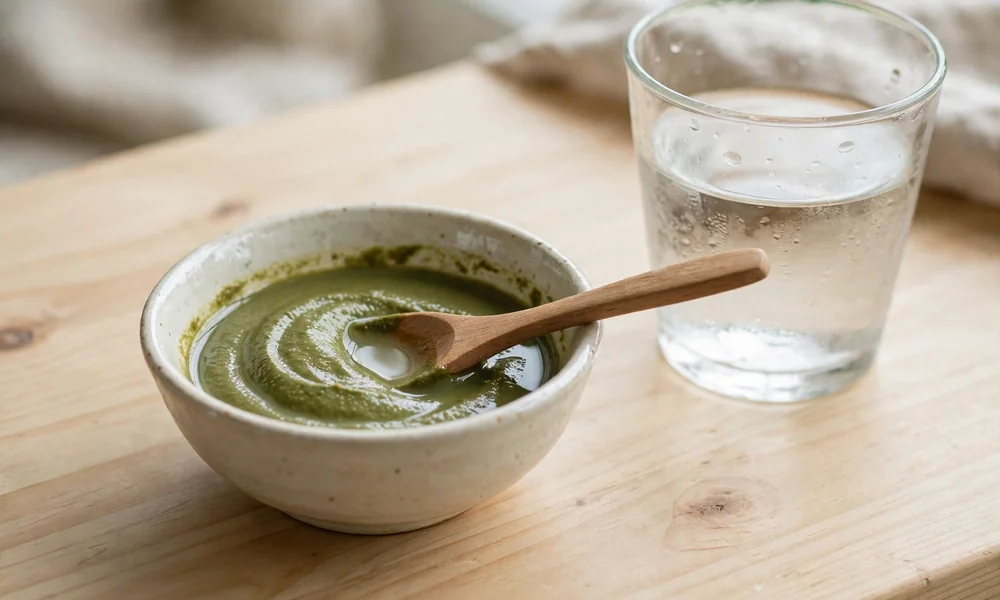
Mixing the paste is the calmest part of the ritual, and it takes about ten minutes. Put the henna powder in a ceramic or glass bowl, never a metal one, and add warm water a little at a time, stirring with a wooden spoon. Keep stirring until the paste is smooth, like thick yoghurt, with no dry powder left and no lumps. If it is too thick, add a spoon of water; if it is too thin, add a pinch of powder.
Cover the bowl with a plate or a cloth, and leave the paste to rest for the time the packet suggests, usually a few hours, or overnight for a deeper colour. The rest lets the powder and water work together, and the paste will darken slightly as it waits.
Applying the Paste Slowly
Start with clean, dry or slightly damp hair, combed through and parted into sections. Put on gloves, and protect your clothes with an old towel or shirt, because henna stains fabric. Take one section at a time, and smooth the paste through it from the roots to the ends, using your fingers or a brush. The same gentle care runs through water and scalp: a gentle wash routine, where slow hands and plain water carry the wash.
When all the hair is covered, pile it up loosely, wrap it in cling film or a shower cap, and then wrap a warm towel over that. Sit down, rest, and leave the paste on for the time the packet suggests, usually one to three hours. Drink water, read a chapter, and let the time pass without hurrying.

Waiting, Then Rinsing Well
Rinsing is the longest part of the ritual, and it needs patience. Take off the wrap and the towel, and rinse the hair under warm running water, massaging gently with your fingers until the water runs clear. This can take several minutes, and it is worth doing properly, because paste left in the hair will dry stiff and dull.
Let the hair dry naturally, in the air, and comb it through with a wide-tooth comb once it is mostly dry.
Water and Henna at a Glance
| Plain water | Green powder | Patch test |
|---|---|---|
| Warm, not hot | Fresh fine green | Wait a day |
| Smooth thick paste | Wooden spoon stir | Stop if red |
| Gloves and towel | Section by section | Rinse water clear |
| Dry hair naturally | Wide-tooth comb | Colour settles slowly |
Caring for Hair After Henna
After henna, gentle care keeps the hair looking its best. Wash it with a mild shampoo, rinse with plenty of plain water, and let it dry naturally whenever you can. A wide-tooth comb is kinder than a fine brush, and a silk pillowcase can help the hair stay smooth overnight. The same simple water-first idea runs through green tea rinse for hair: a water ritual, where a plain rinse leaves the hair soft and light.
Henna colour fades slowly over several weeks, and it does not wash out all at once. Avoid harsh shampoos and very hot water, because both can strip the colour faster. A calm rinse habit helps too, as in rice water rinse: an old beauty habit, made simple, where plain water and a gentle hand carry the routine.

What Henna Will Not Do
Be honest about what henna will not do. Henna is a beauty ritual, not a treatment: it will not cure dandruff, stop hair fall, heal a sore scalp, or make hair grow faster. It coats the hair and adds colour and shine, and that is all it does.
If your scalp is sore, flaky, very itchy, or has patches that will not heal, do not try to fix it with henna or any home ritual. See a doctor or dermatologist, and follow their advice. The same goes for sudden hair loss or any change that worries you: a professional can see what a mirror cannot. Henna is for a calm hair day, and a calm hair day is a small pleasure, not a cure.
Your Water and Henna Checklist
- Do a patch test first, and wait a full day before going ahead.
- Mix pure henna powder with plain warm water into a smooth thick paste.
- Wear gloves, protect your clothes, and work section by section.
- Wrap the hair, rest for the time the packet suggests, and do not hurry.
- Rinse with plenty of plain warm water until the water runs clear.
- Let the hair dry naturally, and see a doctor or dermatologist for scalp problems.
Frequently Asked Questions
What is water and henna?
Water and henna is a simple hair ritual: green henna powder, made from dried henna leaves, mixed with plain water into a smooth paste and smoothed through the hair for warm colour and shine.
Do I really need a patch test?
Yes, always. Mix a tiny amount of paste, put it on the inside of your arm, and wait a full day. If the skin stays calm, you can go ahead; if it turns red, itches or swells, do not use the henna.
How long should henna stay on the hair?
Follow the time on your packet, usually one to three hours.
Can I use henna on a sore scalp?
No. Do not use henna on a sore, broken or very irritated scalp. Wait until the skin is calm, and if the problem keeps coming back, see a doctor or dermatologist before trying any hair ritual.
How do I rinse henna out properly?
Rinse under warm running water and massage gently with your fingers until the water runs clear, which can take several minutes. Do not use shampoo on the first rinse; plain water is enough, and a gentle wash can wait until the next day.
Will henna colour fade?
Yes, henna colour fades slowly over several weeks. Gentle shampoo, lukewarm water and natural drying help it last longer, while harsh shampoos and very hot water can strip the colour faster.
The Bottom Line
Water and henna is plain water, green powder, a patch test first, and an unhurried hour. Mix it slowly, rinse it well, and let the hair dry on its own.
A Note for Hair Rituals
Keep it plain, keep it gentle, keep it slow. The calm hour is the real ritual.