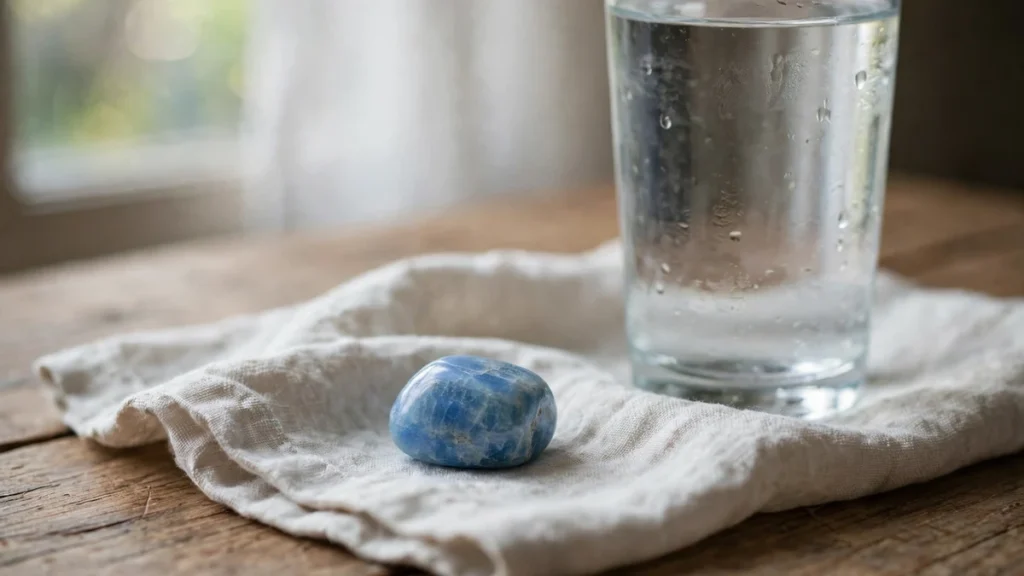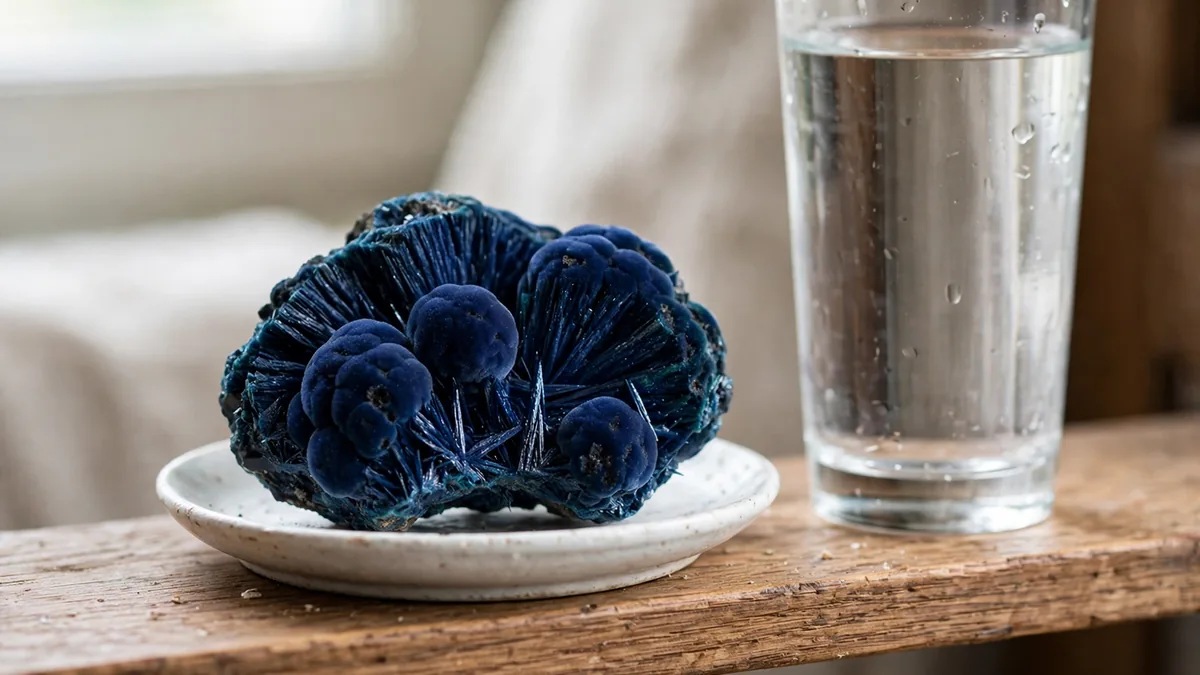
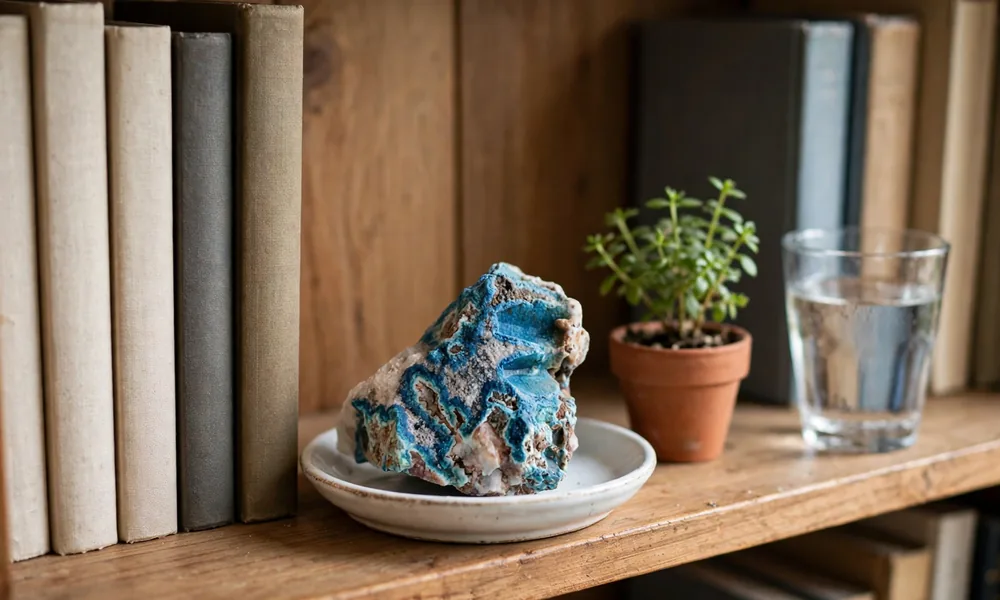
Some blue stones are pale and quiet, and some are bright enough to lead a room. Plancheite sits between the two: a deep blue, soft as velvet to the eye, with fine fibres that catch the light in a way no smooth stone quite matches. It is not a stone for a pocket or a busy desk. It asks for a dish, a shelf, and a little space around it.
The question in the title is a fair one, because plancheite is soft, it must stay dry, and it cannot be polished into a bright shine. A stone will not heal anything, and this one is no exception.
Calm days have their own shape: slow light, unhurried plans, and a room that feels settled rather than busy. Whether it is worth it depends on what you like to look at, and this guide will help you decide.
Key Takeaways
- Plancheite is a deep blue copper silicate, velvety and fibrous, not smooth and glassy.
- It is a soft display stone: look at it, hold it gently, and keep it dry.
- Plancheite differs from chrysocolla and shattuckite in colour, texture and pattern.
- It sits on a dish beside a glass of water, never inside the glass.
- It will not heal anything; it is an ornament for calm days, not a treatment.
What Plancheite Is
Plancheite is a copper silicate mineral, and its colour is the first thing anyone notices. The blue runs deep, from a rich royal blue to a dark teal-blue, and the surface often looks velvety, made of fine fibres packed close together.
It is a soft mineral, and that softness shapes everything about how it is kept. A hard knock can damage an edge, and water can dull the fine fibres, so plancheite is a display stone rather than a stone for carrying loose in a bag.
Most pieces sold are small, about the size of a plum or a little larger, often still on a piece of dark rock.
Why Deep Blue Suits Calm Days
Deep blue suits calm days because it looks like still water in the evening, and still water asks nothing of the person looking at it. A bright colour pulls the eye and wakes the room up, while a deep blue lets the eye rest, and resting eyes go with a resting mind. Plancheite carries that restful colour without looking dull.
The velvety surface adds something a smooth stone does not have. In lamplight, the fine fibres catch the light softly, so the blue seems to move a little as you walk past.
Choosing a Plancheite Piece
Choose a plancheite piece by looking at it in daylight, the way you would choose any beautiful object. A good piece shows a deep blue you can see clearly, with fine fibres that look even and settled, not patchy or crumbling at the edges.
Hold the piece in your hand if the seller allows it, and feel whether it sits comfortably in your palm. Buy from a seller who speaks plainly, and walk away from anyone who promises it will change your health or your luck.
Plancheite and Chrysocolla
Chrysocolla and plancheite are both blue copper minerals, and both are sold as smooth-looking pieces for quiet days, so the two are easy to confuse. The chrysocolla guide puts its stone between two chairs, with water for two people and a talk that needs patience. Plancheite is the deeper and bluer of the two, with no green leaning and no brown at all.
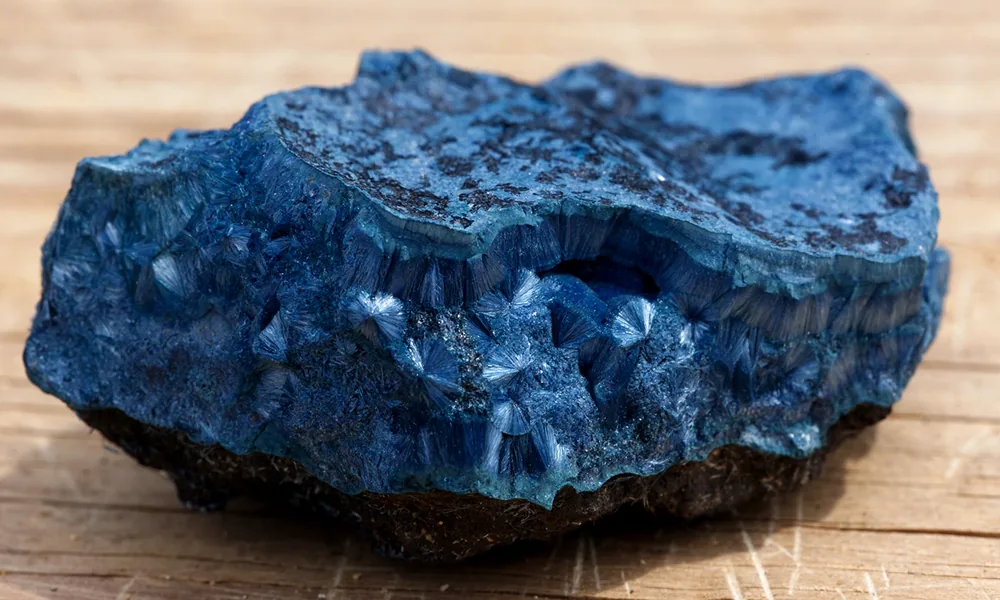
The texture tells them apart even faster than the colour. Chrysocolla is mottled and earthy, with brown and black marks running through its blue-green, while plancheite is velvety and fibrous, its fine threads giving the whole surface one even deep blue.
Plancheite and Shattuckite
Shattuckite and plancheite are closer still, both copper minerals in blue, and both kept on a tray beside a glass of water on calm days. The shattuckite guide keeps a pale blue stone with green flecks on a tray in bright light, for days that move slowly. Plancheite is the darker of the two, a rich royal blue where shattuckite is a gentle sky blue.
Look at the pattern, and the difference grows clearer. Shattuckite is flecked, with green patches scattered through a soft blue, while plancheite is fibrous, with fine velvety threads running through one deep blue.
Plancheite at a Glance
| Deep blue stone | Calm days | Dry display |
|---|---|---|
| Fibrous velvet | Dish, shelf, tray | Glass apart |
| Copper silicate | Morning and evening | Never soak |
Chrysocolla: Blue Green for Calm Conversations
For a blue-green stone that suits slow talks, see the chrysocolla guide. That guide sets a stone on a dish between two chairs, with two glasses of water and a phone in another room, and builds a short habit around listening well and speaking in short, honest sentences.
Chrysocolla is the greener cousin in this batch, mottled with turquoise, teal and earthy brown, and it suits a talk that asks for patience. The two stones share a copper family and a dry shelf, but they do different jobs in a room.
Shattuckite: Soft Blue for Calm Days
For a softer blue that suits slow days, see the shattuckite guide. That guide keeps a soft sky-blue stone, flecked with turquoise and green, on a tray where the light reaches it, and builds a calm day around a morning glass of water and a slow breath before the quietest stretch of the afternoon.
Shattuckite is the paler cousin, gentle and flecked, while plancheite is deeper and velvety, and the two look their best in different light.

Aurichalcite: Worth Displaying
For a pale stone that is even more fragile, see the aurichalcite guide. That guide studies a pale green-blue crust over dark rock, soft enough for a fingernail to mark, kept on a white dish on a clear shelf, dusted dry once a week and never washed.
Aurichalcite is the palest of the three, a whisper of green-blue where plancheite is a deep blue voice, and it is far more fragile. Both stay dry and a handspan from the water, but plancheite is the sturdier companion of the two.
Keeping Plancheite Dry
Plancheite stays dry, always, and that rule shapes its whole care routine. Set it on a small dish on a shelf or a tray, with a glass of fresh water standing apart from it, far enough that a spill cannot reach it.
Dust the piece now and then with a soft, dry brush, using light strokes that follow the fibres. Cleaning means a dry brush only: no liquids of any kind, and no hard rubbing, which would snap the fibres and take the shine off the blue.
When it is not out, keep it in its own soft pouch or on its dish, in a dry cupboard away from anything hard, and never loose in a pocket with keys.
Nine Neighbours in This Batch
In this batch, plancheite is one of ten. A passport and a folded map wait for the road, a tote bag and a backpack carry the day's load, and a suitcase stands packed light by the door.
On the stone shelf, warm bronze pyrrhotite and dark tenorite sit beside soft blue lazulite, while a clear white akoya pearl rests in its box. Plancheite's deep velvety blue is the darkest blue of the group, and it rests on its dish beside a glass of water.
Stones That Must Never Touch Water
Water treats different stones badly in different ways, so the names are worth learning one by one. Pyrite is the first: once it has been wet, its golden shine goes dull, and no amount of rubbing brings it back. Angelite is the second: it soaks water up and then cracks along its lines, and a piece left damp can fall apart in your hand.
Amber comes third, though it is not a stone at all but tree resin turned hard; a long soak makes it milky, and the milkiness stays. Apatite goes flat and dull in damp air, and lepidolite carries lithium in its pale flakes, so it must stay far from any drink. Plancheite is safest on the same dry shelf as all of them: close to the glass, where it can be seen, and never in it.
Your Plancheite Checklist
- Pick a piece with deep, even blue and fine fibres that look settled.
- Set it on a small dish, a handspan from a glass of fresh water.
- Dust it with a soft, dry brush, never with water or soap.
- Give it a dry spot of its own, away from damp air and hard objects.
- Rinse your hands once you have put it down.
- If low feelings stay week after week, speak to a doctor.
Frequently Asked Questions
What is plancheite?
Plancheite is a deep blue copper silicate mineral, velvety and fibrous, often sold as a small piece on dark rock. It is a soft display stone, kept dry on a dish beside a glass of water.
How is plancheite different from chrysocolla?
Chrysocolla is blue-green, mottled with turquoise, teal and earthy brown, while plancheite is a deeper blue with fine velvety fibres and no brown at all.
How is plancheite different from shattuckite?
Shattuckite is a soft sky blue flecked with turquoise and green, while plancheite is a deeper royal blue, fibrous rather than flecked.
Is it safe to hold plancheite in my hand?
Yes, you can hold plancheite gently with clean, dry hands; it feels cool and a little silky. Wash your hands afterwards.
Where should plancheite sit in my home?
A dry shelf or desk in a bright room suits it, with the stone on its dish and the glass well apart. Damp rooms and long hours in the sun are both best avoided.
Is plancheite worth it if it is so soft?
Yes, if you like deep blue and do not mind gentle care.
The Bottom Line
Plancheite is worth it for calm days if you love deep blue and gentle care: one velvety stone on a dish, dry, dusted, and a handspan from the water.
A Note for Calm Days
A deep blue stone on its dish, water in its glass, and a quiet shelf — keep those three apart and dry, and the habit looks after itself.