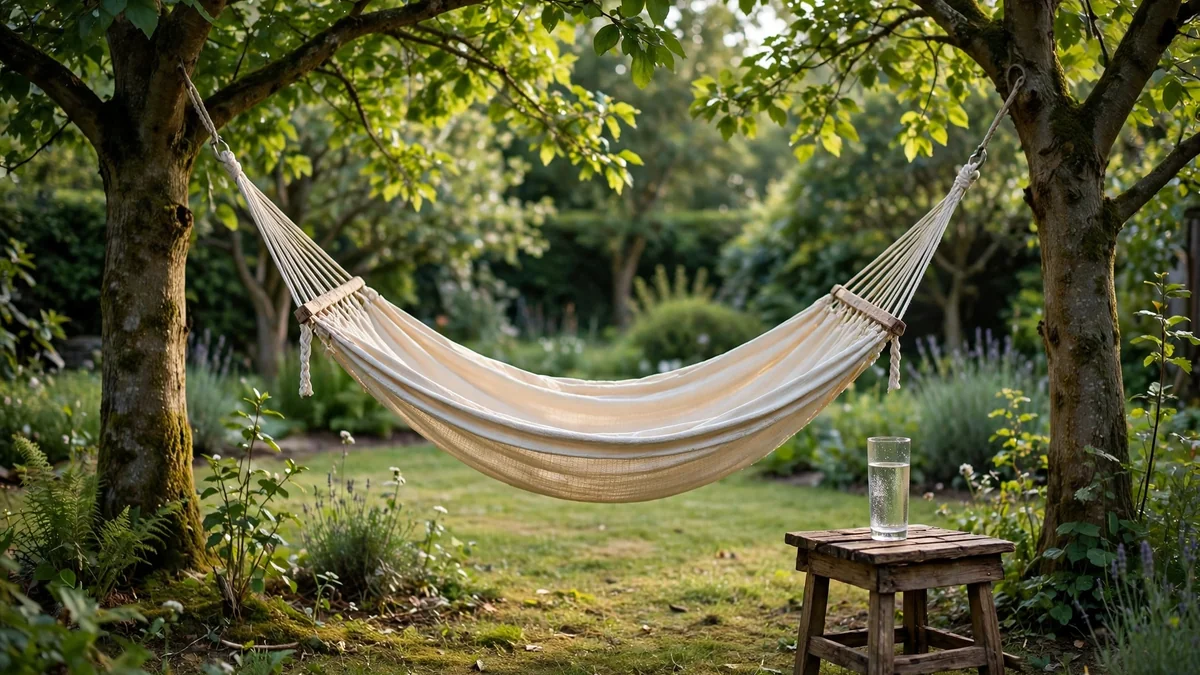
Some afternoons arrive with too much noise in them. The phone keeps buzzing, the list of jobs keeps growing, and the mind keeps turning over the same few worries.
A hammock changes the shape of that hour. It is a sling of cloth hung between two trees, and it holds you just above the grass, swaying a little with every breath of wind. There is nothing to do in it but lie still and watch the leaves move.
This guide looks at water and a hammock in plain, practical terms: what a hammock is and how it hangs, why the slow sway feels calming, how to choose one, and how to rest in it safely. Everything here is gentle general information only, never medical advice.
Key Takeaways
- A hammock is a cloth sling hung between two trees for a slow outdoor rest.
- The gentle sway, the shade and the fresh air help a busy mind slow down.
- Drink a glass of water slowly before resting, and keep one within reach.
- Hang the hammock low, check the ropes, and rest for twenty minutes or so.
- A hammock, a glass of water and a book are enough for a calm afternoon.
What a Hammock Is
A hammock is a length of strong cloth or woven net, gathered at each end into ropes, and hung between two sturdy points, usually two trees. It hangs in a curve, low in the middle and higher at the ends, and a person lies across it on the diagonal, so the cloth spreads flat beneath them.
Hammocks come from the warm parts of the Americas, where people have slept in them for hundreds of years, and sailors later carried them onto ships. Modern garden hammocks are usually cotton canvas or woven rope, sometimes with wooden spreader bars.
A garden hammock is not a bed and not a chair. It is a resting place for an hour or so, a sling that moves a little with the wind while the leaves shift overhead.
Why a Hammock Calms the Mind
The calm starts with the sway. A hammock rocks slowly from side to side, and that small steady motion gives the mind something simple to follow. Thoughts that were racing begin to slow, because the body is moving gently and there is nothing to decide.
Then there is the setting. A hammock hangs outdoors, under leaves, where the air is fresh and the sounds are soft: birds, wind, nothing urgent. The sky fills the view above, so the mind has green and blue to look at instead of walls and screens.
Water completes the ritual. A glass drunk slowly before lying down leaves you settled rather than thirsty, and the glass waiting on the stool means you never have to hurry back inside.
A Hammock and a Power Nap: Swaying Instead of Sleeping
Water and a power nap: a simple fresh reset is about a short daytime nap of ten to twenty minutes, taken lying down indoors, eyes shut, after a slow glass of water, with another one waiting for when you wake.
A hammock rest is a different kind of pause. You may doze in it, but you do not need to sleep, and the rest happens outdoors, with your eyes open to the leaves. Where the power nap closes the day off for a few minutes, the hammock leaves it open.
Choosing a Hammock
Look at a hammock before you buy it, and run a hand over the cloth. A good one feels thick and even, with no thin patches and no frayed edge, and its ropes are firm and evenly knotted. Cotton canvas is soft and cool, while woven rope lets the air through on a warm day.
Pick a hammock a little longer than you are tall, with a weight limit well above your own weight, and check that the ropes and hooks are made for outdoor use. Step away from any hammock that promises to fix back pain or cure poor sleep.
A Calm Afternoon with a Hammock
Begin the afternoon by setting the hammock up. Hang it between two trees with a gentle sag, lay a folded blanket over one end, and put a tall glass of water on a small stool within reach.
Climb in slowly, settle on the diagonal, and let the cloth take your weight. Read a few pages, watch the leaves, and drink the water in small sips.
Water and a Hammock, Step by Step
Start with a full glass of fresh water, and check the ropes and hooks before you climb in. Hang the hammock low, about the height of a chair seat, so you can step out easily.
Sit in the middle first, then swing your legs up and turn yourself onto the diagonal, so the cloth spreads wide and flat beneath you. Lie back, take a slow breath, and let the hammock rock gently. Drink the water in small sips, and step out slowly, feet first.

Water and a Hammock at a Glance
| Empty cream hammock | Two trees, garden | Drink water first |
|---|---|---|
| Cotton canvas, ropes | Calm afternoons, shade | Check ropes often |
| Low, gentle sway | Book, glass, blanket | Rest twenty minutes |
| Shade, soft breeze | Short rests only | Step out slowly |
A Hammock and Screen-Free Evenings: Outdoors Instead of Indoors
Water and screen-free evenings: a simple calm ritual is about the hour after dinner, when every screen goes dark, the phone rests in another room, and the evening is spent with a glass of water, a book and a lamp. The calm comes from putting the screens away.
A hammock takes that same idea outside and earlier in the day. There are no screens in a garden either, but the quiet comes from the trees and the sky rather than from a dark room, and the rest lasts twenty minutes rather than a whole evening. Both guides agree on the heart of it: put the phone down and keep water close.
A Hammock and a Hot Water Bottle: Cool Shade, Warm Evenings
Water and a hot water bottle: a simple warm ritual follows a warm rubber bottle in a knitted cover, placed on the lap or at the foot of the bed to warm a cold evening. It answers cold grey evenings.
A hammock answers the opposite weather. It belongs to warm afternoons, when shade and a breeze are what you want, and it holds you off the grass rather than warming a bed. One is a winter comfort for indoors, the other a summer comfort for outdoors.
A Hammock Among the Other Water Rituals in This Batch
The hammock is one of five water guides in this batch, and the other four use water in their own ways: a fire pit gathers friends round a small flame with drinks close by, an umbrella keeps a walker dry in the rain, wellies keep feet dry on wet grass, and a wool scarf warms the neck on a cold walk.
The stones in this batch rest quietly beside their own glasses too: goethite is warm brown and earthy, orthoceras is deep black and straight-shelled, bornite shifts its colours in the light, galena is soft grey and heavy, and sphalerite is warm gold.
Where a Hammock Hangs at Home
Pick two sturdy trees, or a pair of solid posts, about three to four metres apart, in a spot that gets shade in the afternoon. Hang the hammock low enough to step into easily, and keep the ground beneath it clear.
Once a week, look at the ropes and hooks for fraying or rust. To put the hammock away, unhook it, fold it loosely, and store it dry indoors.

Staying Safe and Comfortable in a Hammock
A hammock is a simple thing, but it still deserves care. Check the ropes, the hooks and the trees before every rest, and never hang a hammock from a dead branch or a fence post that wobbles. Keep the hang low, so a slip means a short drop onto soft grass.
Lie on the diagonal, not straight down the middle, so your back stays flat. Come out slowly, feet first, and sit on the edge for a moment before standing. If the cloth feels damp, let it dry in the sun, and take it down before a storm.
Patch-test any new fabric against your skin first, in case it irritates you, and wash the hammock as its label directs. This guide is gentle general information only. If dizziness, back pain or poor sleep keeps coming back, please see a doctor.
Your Calm Afternoon Checklist
- Hang the hammock low between two sturdy trees, with a gentle sag.
- Put a tall glass of fresh water on a stool within easy reach.
- Check the ropes and hooks once, then climb in slowly on the diagonal.
- Lie back, read a few pages, and watch the leaves move overhead.
- Drink the water in small sips, and step out slowly, feet first.
- If low mood or poor sleep keeps troubling you, speak to a doctor.
That is the whole arrangement: two trees, a cloth sling, and a glass of water close by.

Frequently Asked Questions
How long should I rest in a hammock?
Twenty minutes or so is enough for a calm afternoon rest, and an hour is plenty. Longer than that can leave you stiff, so step out and stretch.
Do I need trees to hang a hammock?
Trees are the simplest choice, but a pair of solid posts or a proper hammock stand works just as well, as long as the supports are strong and set firmly in the ground.
Is a hammock good for an afternoon rest?
Yes, it can be, and many people find the slow sway and the fresh air help them unwind. It is a rest, not a treatment.
What should I drink before resting in a hammock?
Drink a glass of plain water slowly before you lie down, and keep another glass within reach on a stool.
Can I read in a hammock?
Yes, you can, and a paperback is the easiest choice. Hold the book above you, and keep the glass of water on the stool, not in the hammock.
How do I keep a hammock clean and dry?
Take it down before rain, let it dry in the sun if it gets damp, and wash it as its label directs. Store it folded loosely indoors.

The Bottom Line
Two trees, a cloth sling, a glass of water and twenty quiet minutes: that is all a calm afternoon asks of water and a hammock.
A Note for Calm Afternoons
Slow sway, fresh air and a drink close by: a hammock asks for little, and a calm afternoon gives it gladly.


