A hallway is the flat passage that joins the rooms of a home, and most of us cross it a dozen times a day without ever really looking at it. Shoes gather by the wall, coats pile on the hooks, and the console table slowly collects keys, letters, and dust, until the whole passage feels tired.
Water is the simplest tool for bringing it back. A jug of plain water, one clean cloth, and a glass to drink from are enough to wipe the table, shake the mat, and clear the air, and the whole ritual takes less time than a kettle takes to boil.
What follows is a set of plain household notes for one passage only, the hallway between your rooms, and nothing here is medical advice of any kind. A tidy passage will not cure anything, and if a health worry keeps nagging at you, a doctor is the right person to ask, not a hallway.
Key Takeaways
- A hallway is the flat passage between rooms, kept fresh with water and a cloth.
- Wipe the console table and the door handle with a damp cloth each morning.
- Line shoes up in pairs, hang only this week's coat, and keep keys in one bowl.
- Open the front door daily so fresh air and daylight reach the passage.
- A hallway is a comfort, not a cure; it will not heal anything at all.
What a Hallway Is
A hallway is the long, narrow space that links the front door to the rooms beyond it. It holds the things you reach for as you arrive and leave: the console table, the coat hooks, the shoe rack, the keys bowl, and the mirror you glance into on your way out.
It is not a room for sitting, and it is not a cupboard for storing. When every object in it has a settled place, the passage stays open, and walking through it feels easy instead of crowded.
What keeps it pleasant is modest: floors clear of clutter, shoes dried out, and a breeze through the open door. A cloth wrung in plain water keeps that state day after day, with no sprays or polishes involved.
Why a Hallway Goes Stale
A hallway goes stale because it is used hard and cleaned last. Every muddy shoe crosses it, every wet coat drips on it, and every parcel lands on the console, while the rooms beyond get the duster and the vacuum first.
Dust settles on the mirror, the table grows a ring where a wet glass once stood, and the air turns flat because the front door stays shut all day. None of this is damage, only neglect, and a few minutes of attention will undo it.
The fix is a habit, not a deep clean. Wipe a little each morning, shake the mat, open the door, and the passage never slides far enough to need a weekend of work.
A Glass of Water at the Door
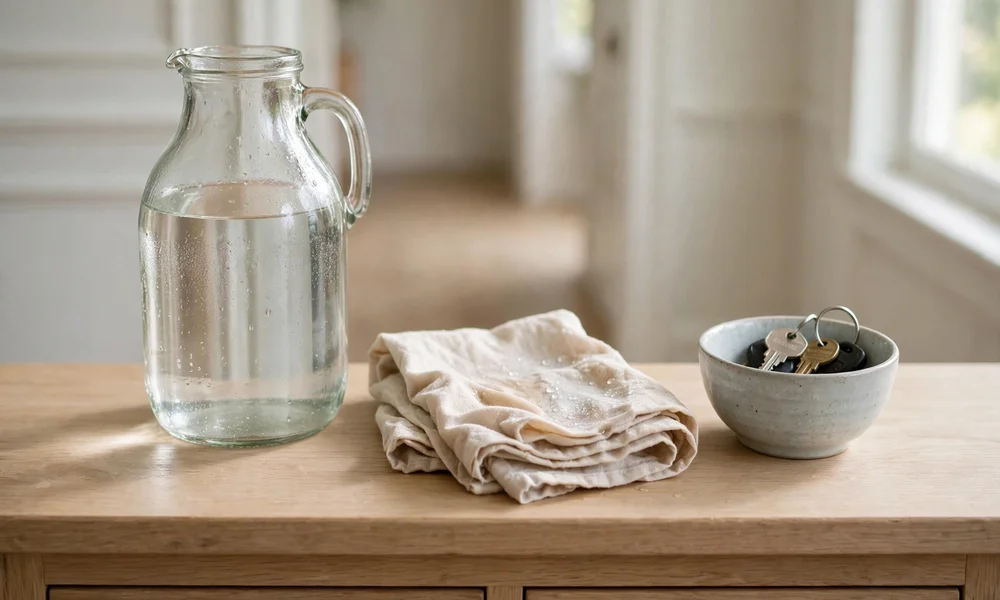
Begin at the door with a full glass, keeping the jug on the console and the cloth folded beside it. Drink the glass slowly while you look along the passage, and let the pause show you what needs doing: a shoe out of line, a coat slipping off its hook, dust on the mirror frame.
Set the empty glass down, dampen the cloth in the jug, and wipe the console from one end to the other. Rinse the cloth, wring it out, and wipe the light switch and the door handle, then hang the cloth over the rail to dry.
When the glass is full again and the table is clear, the hallway has done its first job of the day: it has slowed you down for a minute before the rest of the house wakes up.
Wiping the Console Table
The console table is the hallway's worktop, and it earns a wipe every morning. Clear it first: keys back in the bowl, letters stacked in one pile, and anything that belongs in another room carried away before the cloth comes out.
Wipe the top in slow lines, then the drawer fronts and the legs, rinsing the cloth often in the jug so the dust leaves instead of smearing. Dry the top with a second cloth so no streaks remain, and stand the glass of water at the far end, away from the letters.
A table wiped daily never needs scrubbing. The wood stays bright, the bowl stays clean, and the glass stands ready for the next arrival home.
Hallway at a Glance
| Console wiped | Shoes paired | Air opened |
|---|---|---|
| Damp cloth daily | Rack, facing out | Door ajar awhile |
| Keys in bowl | Mat shaken out | Glass drunk slowly |
| Mirror dusted weekly | One coat per hook | Cloth hung dry |
Water and a Fresh Entryway
For the small space just inside the front door, see the fresh entryway guide.
That guide keeps one threshold tidy: the door handle, the welcome mat, the keys bowl, and the console by the door, all wiped with a damp cloth and aired by opening the front door each day.
This guide is wider and different: it follows the whole passage from the door to the rooms, not only the first few steps inside. The entryway guide tends a threshold; this guide tends the corridor that threshold opens into.
Water and a Fresh Porch
For the outdoor step outside the door, see the fresh porch guide.
That guide works outside with a bucket and a stiff brush: the doormat shaken over the step, the chairs wiped, the railings rinsed, and the potted plants watered at their roots in the open air.
This guide stays indoors, and that is the difference. The porch guide brushes weather off a hard outdoor floor; this guide wipes dust off an indoor table and keeps the air inside the passage fresh.

Water and a Doorstep
For the step itself, where inside meets outside, see the doorstep guide.
That guide cares for a single stone step: it is swept, wiped, and kept dry, and it marks the line between home and the road for every foot that crosses it.
This guide walks further in. The doorstep guide minds one step at the boundary; this guide minds the long flat passage that starts where the step ends and runs on to every room.
A Hallway Is Not a Staircase
Flat runs the hallway between the rooms, all on one level, while stepped climbs the staircase between the floors, one tread after another. Level underfoot stays the hallway; rising underfoot goes the staircase.
Between rooms winds the hallway, and between levels rises the staircase, so the two never do each other's work. Down the hallway you walk; up the staircase you climb, and a damp cloth that wipes a flat console has nothing to wipe on a flight of steps.
Kept apart in the mind, the two stay easy to care for. Wipe the passage flat, sweep the steps tread by tread, and never confuse a corridor with a climb.
Nine Neighbours in This Batch
Nine companions share this batch, and inverted, each keeps its place: in the attic air the stored boxes; in the freezer chill the wrapped parcels; beside the oven waits the wiped-down door; under steady light sits wurtzite, deep brown and quiet; dark as night lies pyrolusite; red as warning glows cinnabar, display only; grey and soft rests soapstone; struck by lightning, fulgurite keeps its sandy twist; and up the steps climbs the staircase, while flat between the rooms runs the hallway.
Stones That Must Never Touch Water
Some stones dislike water far more than others, and the hallway shelf is a good place to remember the list. Dampness makes apatite crumble at the edges, and the pale flakes of lepidolite carry lithium inside them, which has no business near a drink.
Where pyrite is concerned, moist air dulls its gold and stains what it rests on, and a single wetting leaves angelite hazy for good. Amber, which is ancient tree resin grown hard, goes milky when it soaks, so the rule for all of them is the same: stones stay beside the glass, and nothing stony ever goes into drinking water.
Your Hallway Checklist
- Wipe the console table and the door handle with a damp cloth each morning.
- Shake the doormat outside and line the shoes up in pairs on the rack.
- Hang only this week's coat on the hooks and put the keys in one bowl.
- Drink a glass of fresh water at the door before you start the day.
- Open the front door daily for fresh air and daylight in the passage.
- If a cleaning cloth leaves your skin red and sore, or a dizzy spell keeps returning, stop and patch-test on a small spot first, then ask a doctor; a hallway habit cures nothing.
Frequently Asked Questions
How often should I wipe the hallway console table?
Wipe it every morning with a cloth dampened in plain fresh water, then dry it with a second cloth. A daily wipe takes a minute and keeps dust and rings from ever building up.
What is the quickest way to freshen a hallway?
Beat the mat on the step, straighten the shoe pairs, run the damp cloth over the table, and leave the door ajar. Together these jobs need less than five minutes, yet the passage feels entirely different after them.
Can I use plain water only in the hallway?
Yes, plain fresh water and a clean cloth are enough for the table, the handle, and the mirror frame. Harsh chemicals are not needed and can leave a strong smell in a narrow space.
Where should the keys bowl sit in a hallway?
Keep one bowl on the console table in the same spot every day, close to the front door. Every set of keys goes in that bowl, so nobody hunts for keys in the morning.
How do I stop shoes from piling up in the hallway?
Let each pair stand on its own rack shelf, toes pointing outward, with only the pairs you wear this week kept by the door. Pairs for other seasons live in a cupboard instead.
Is a hallway the same as an entryway?
No, the entryway is only the small space just inside the front door, while the hallway is the longer passage that runs from the door to the rooms. The porch, too, is different: it is the outdoor step outside the door.

The Bottom Line
A hallway stays fresh on very little: a damp cloth, a shaken mat, shoes in pairs, and a front door opened to the air each day.
A Note for Fresh Hallways
A glass of water, a wiped table, and a passage that lets you through easily — that is all a fresh hallway needs.