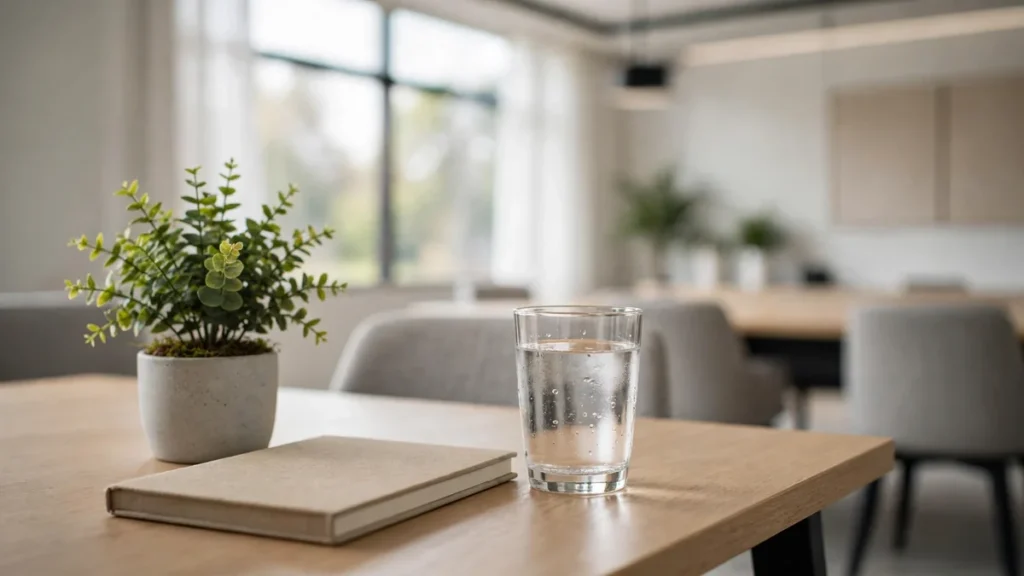
Most days fill up before we notice. The phone lights up, the list grows longer, and by the middle of the afternoon the mind feels crowded with half-finished thoughts. There is rarely a natural pause, and the day keeps moving whether we are ready or not.
Water and meditation offer a small answer to that rush. A glass of fresh water, drunk slowly, and five quiet minutes of sitting still can give the day a gentle reset. Nothing here needs special skill or expensive equipment.
This article is a gentle guide to water and meditation as a five minute reset: what the practice is, how to set up a quiet corner, the simple steps to follow, and how to use it at different times of day. It is general information only, never a treatment.
Key Takeaways
- Water and meditation means five quiet minutes with a glass of fresh water and slow, easy breathing.
- A five minute reset is a pause, not a promise, and it asks for nothing but a quiet corner.
- Drink the water slowly first, then sit still, breathe slowly, and let thoughts pass.
- The reset fits any time of day: morning, a busy afternoon, or the hour before bed.
- Water and meditation are gentle habits, not treatments, and they will not cure anything.
What Water and Meditation Means
Water and meditation is a simple pairing: fresh water and quiet sitting, kept together in one short pause. The water comes first, drunk slowly in small sips, and then comes the stillness — five minutes of sitting quietly, breathing slowly, and letting the mind rest.
The practice is not a long meditation or a complicated routine. It is five minutes, the same five minutes every time, spent with something plain in your hand and nothing to do but sit. The glass of water marks the beginning, and the quiet sitting fills the middle.
Why Five Minutes Is Enough
Five minutes is enough because it is short enough to fit into a real day. A long practice sounds lovely and then never happens, but five minutes fits between tasks, before a meeting, or after the dishes are done. It asks for almost nothing, and that is why it works.
Five quiet minutes can also feel longer than they sound. When you sit still and breathe slowly, the minutes stretch out, and the mind has time to settle. The day does not stop, but for five minutes you stop chasing it, and that small pause is enough.
Setting Up Your Quiet Corner
A quiet corner needs very little: a chair or a cushion, a small table, and a glass of fresh water. Choose a spot near a window if you can, where the daylight comes in softly, and keep it free of clutter so the eye has somewhere calm to rest.
Set out what you need before you begin — the glass, a folded cushion, a small notebook if you like one nearby. When everything is ready, the reset can start at once, and the day does not begin with searching. Keep the corner simple, and keep it yours.
Water First, Then Stillness
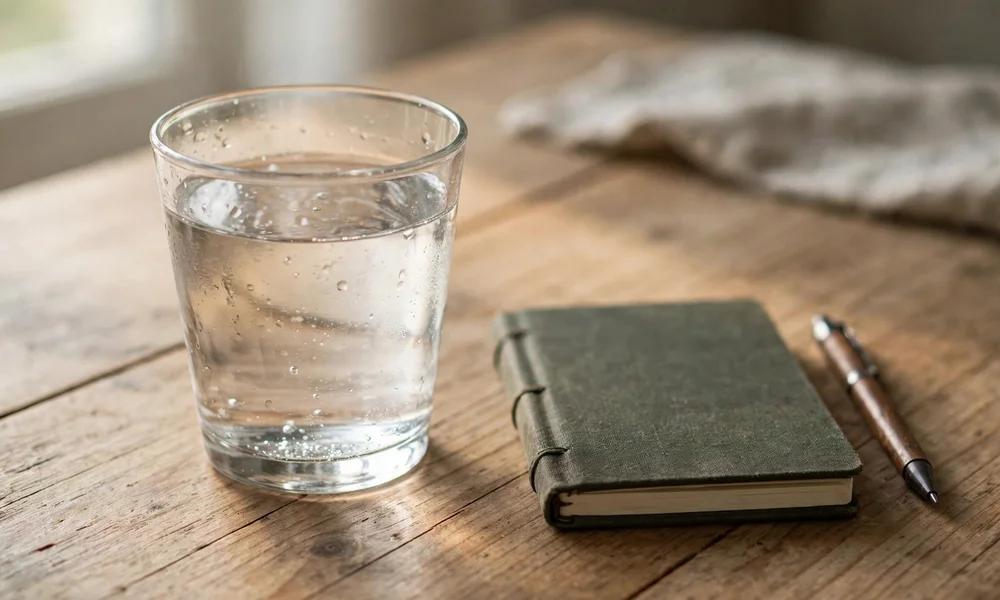
The order matters: water first, then stillness. Pour a glass of fresh drinking water and drink it slowly, in small sips, before you sit down to meditate. The water wakes you gently and gives your hands something simple to do.
Drink it unhurried, one sip at a time, and notice how cool and plain it tastes. When the glass is empty, set it down beside you. The water is done now, and the stillness can begin. Keep the glass beside you, never in your lap, so it cannot spill.
The Five Minute Reset, Step by Step
The reset follows five easy steps, one for each minute. First, drink your water slowly and set the glass down. Second, sit comfortably, rest your hands in your lap, and close your eyes or lower your gaze.
Third, breathe in slowly through your nose, then breathe out slowly through your mouth. Fourth, keep breathing in the same slow way, and let each thought pass like a cloud. Fifth, open your eyes, take one more slow breath, and stand up gently. That is the whole reset, and it takes five minutes.
Breathing Slowly Beside Water
Slow breathing is the heart of the reset. Breathe in for a count of four, hold for a moment, and breathe out for a count of six. The long, slow breath out is what makes the pause feel calm, so let it take its time.
If the counting feels stiff, forget the numbers and simply breathe a little more slowly than usual. The breath does not need to be perfect; it only needs to be slow and easy. Sit beside your glass of water, breathe slowly, and let the quiet do the rest.

Sitting Comfortably for Five Minutes
Comfort matters more than posture. Sit on a chair with both feet on the floor, or cross-legged on a cushion, whichever feels easier. Keep your back straight but not stiff, and let your shoulders drop away from your ears.
Rest your hands on your knees or in your lap, and close your eyes or look softly at the floor. If your legs ache, shift a little — comfort is part of the practice, not a failure of it. Five minutes is short, and a comfortable seat makes it feel shorter still.
When Thoughts Wander
Thoughts will wander, and that is normal. A list, a worry, a song, a plan for dinner — the mind keeps moving even when the body sits still. Wandering is not a mistake; it is simply what minds do.
When you notice a thought, do not fight it and do not follow it. Notice it gently, let it pass, and bring your attention back to your breathing. The same gentle return runs through smoky quartz grounding for busy mornings, where a quiet morning ritual begins with water drunk slowly.
A Reset for Busy Afternoons
Busy afternoons are when the reset helps most. The morning is gone, the list is still long, and the mind feels crowded. Five quiet minutes in the afternoon can break the day into two gentler halves.
Set your glass down, sit in your quiet corner, and breathe slowly for five minutes. When you stand up, drink another small glass of water and return to the afternoon. The work is still there, but the rush feels a little lighter, and that is enough.

A Reset Before Bed
The hour before bed is a good time for a slower reset. The day is done, the lights are low, and the mind is still busy with everything it did not finish. Five quiet minutes can help the evening feel finished.
Drink a small glass of water slowly, sit in your quiet corner, and breathe in the same slow way. Keep the light soft and the room quiet. A calm pause travels well too, as in aquamarine travel rituals for calm journeys, where small pauses mark each stage of a journey. When the five minutes are done, stand up gently and let the evening wind down. A calm end to the day is a kind gift to the morning.
What Water and Meditation Will Not Do
Be honest about what a short pause can and cannot do. Water and meditation will not cure anxiety, fix poor sleep, lower blood pressure or treat any illness. They will not replace medicine, rest, or advice from a doctor, and they should never be used instead of proper care.
The same honesty applies to the water itself: fresh water drunk slowly is good for you, but it is not a treatment either. If you feel unwell, low, or worried about your health week after week, please see a doctor. A five minute reset is a gentle habit, not a cure.
| Reset pause | Water beside | Quiet corner |
|---|---|---|
| Drink water slowly | Glass beside seat | Cushion near window |
| Breathe out slowly | Sip before sitting | Keep corner tidy |
| Sit still briefly | Lukewarm water first | Soft light only |
| Rest eyes briefly | Small glass only | Phone away now |
Your Five Minute Reset Checklist
- Pour a glass of fresh water and keep it beside your seat, never in your lap.
- Sit comfortably on a chair or cushion, back straight, shoulders relaxed.
- Drink the water slowly first, then close your eyes and breathe slowly.
- Breathe in for four, breathe out for six, and let thoughts pass gently.
- Sit still for five minutes, then open your eyes and stand up slowly.
- Keep the phone away, the corner tidy, and the practice short and daily.
Frequently Asked Questions
What is water and meditation?
Water and meditation is a simple five minute practice: drink a glass of fresh water slowly, then sit quietly and breathe slowly for five minutes. It is a gentle daily pause, not a long meditation or a treatment of any kind.
Do I need to meditate for longer than five minutes?
No. Five minutes is enough for a daily reset, and it fits into a real day. If you enjoy the quiet and want more time, you can sit a little longer, but the practice works best when it stays short and regular.
Should I drink water during the meditation?
No, drink the water first, before you sit down to meditate. Drink it slowly in small sips, set the glass beside you, and then sit still with empty hands. Keeping the glass beside you means it cannot spill.
Can I do the reset at work?
Yes, if you have five quiet minutes and a glass of water. Find a quiet corner, a spare chair, or a calm spot near a window, and keep your phone away. Even a short pause at your desk can help, as in water first for mornings.
Is water and meditation safe for everyone?
It is a gentle habit, but it is not a treatment, and it is not a substitute for medical care. If you have a health problem, feel unwell, or take medicine, please talk to your doctor before starting any new routine, including this one.
Will water and meditation cure stress?
No. Water and meditation will not cure stress, anxiety or any illness, and they should never replace proper care. They are a short, gentle pause that can help a busy day feel a little calmer, and nothing more.
The Bottom Line
Water and meditation is a glass of water, five quiet minutes, and a day that feels a little calmer.
Pour the water tonight, and let tomorrow begin with five quiet minutes.
A Note for Quiet Minutes
Keep it short, keep it slow, keep it beside the water. The quiet minutes can still belong to you.