Frizz is one of the most ordinary hair troubles there is. The hair looks fine when it is wet, and then, as it dries, the ends lift and the surface turns rough. It happens on damp days, on dry days, and after a rushed wash.
Water is the simplest tool against frizz, and it is the one you already own. The temperature you wash with, how long you rinse, and how gently you dry all shape how smooth the hair looks when it dries.
This guide explains what frizz is, why water matters so much for it, and how to build a simple smooth routine around lukewarm water, gentle washing, patient rinsing, and soft drying. Everything here is gentle general information only, never a treatment. If your hair or scalp troubles you in a way that does not settle, see a doctor or dermatologist.
Key Takeaways
- Frizz is lifted, rough hair surface: when the outer layer of each strand lies flat, hair looks smooth and shiny.
- Lukewarm water is kindest; hot water lifts the hair surface, and a cooler final rinse helps it lie flat.
- Wash gently with fingertips, rinse longer than you think, and pat dry with a soft towel, never rub.
- Hard water can leave a dull mineral film that makes frizz worse; rinsing longer and clarifying now and then helps.
- This is care, not a cure: it will not repair damage or fix a scalp problem.
What Frizz Is
Each strand of hair is covered in tiny overlapping scales called the cuticle, like tiles on a roof. When those scales lie flat, the hair looks smooth and shiny; when they are lifted, light scatters, and the hair looks dull and frizzy, even when it is clean.
Frizz happens when the cuticle lifts. Dry air can pull moisture out, damp air can push it in unevenly, and rough handling can lift the scales directly. Smooth habits help it lie flat again.
Why Water Matters for Frizz
Water controls the cuticle more than anything else in your routine. Warm water opens the scales slightly, helping shampoo lift away oil and dirt, while cooler water helps them close again.
Very hot water strips the scalp's natural oils and leaves the hair surface rough and lifted, so the hair dries frizzy even after a careful wash. Lukewarm water cleans just as well, and a cooler final rinse helps the scales lie flat. The same logic runs through a simple guide to glossy, healthy-looking hair with water.
Lukewarm First, Cooler Last
The single most useful water habit for smoother hair is also the simplest: wash lukewarm, rinse cooler. Lukewarm means water around body temperature, comfortable on the inside of your wrist. Wet the hair thoroughly first, for a full minute if it is thick.
Wash as usual, and rinse until the water runs clear and the hair feels clean but not squeaky. For the final rinse, turn the temperature down a notch, to cool rather than cold, and run it over the lengths for thirty seconds.
Washing Gently, Step by Step
Gentle washing begins before the water is even on. Comb the hair gently with a wide-tooth comb to loosen tangles, working from the ends upward. Wet hair is weaker than dry hair, so everything after this point should be softer, not harder.
Use a small amount of mild shampoo, lather it in your palms first, and massage the scalp only, with soft fingertips, never nails. Let the suds run down the lengths as you rinse. The same fingertip gentleness carries the wash in water and scalp: a gentle wash routine, where soft hands clean just as well as hard scrubbing.
Rinsing Longer Than You Think
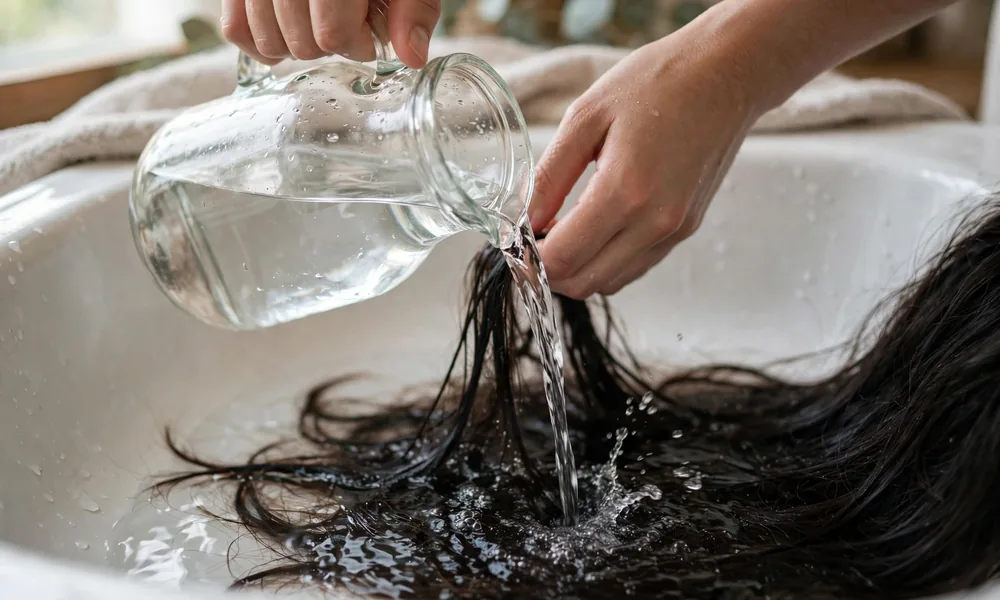
Rinsing is the step most people rush, and it is the step frizz notices most. Shampoo left on the hair dries into a thin film that lifts the cuticle and dulls the shine. A longer rinse costs nothing.
Rinse until the water runs completely clear, then a little longer, lifting sections so the water reaches the scalp underneath.
Hard Water and Frizz
Hard water is tap water that holds a lot of dissolved minerals, mostly calcium and magnesium, picked up as rainwater passes through chalk and limestone. On hair, those minerals settle as a thin film, wash after wash, scattering light and lifting the surface, so the hair looks dull and frizzy at the ends.
The fixes are practical, as in hard water hair: a practical fix guide. A shower filter fits between the shower arm and the shower head, a longer lukewarm rinse helps wash the film away, and a clarifying wash now and then clears what has built up.
Drying Softly, Without Rubbing
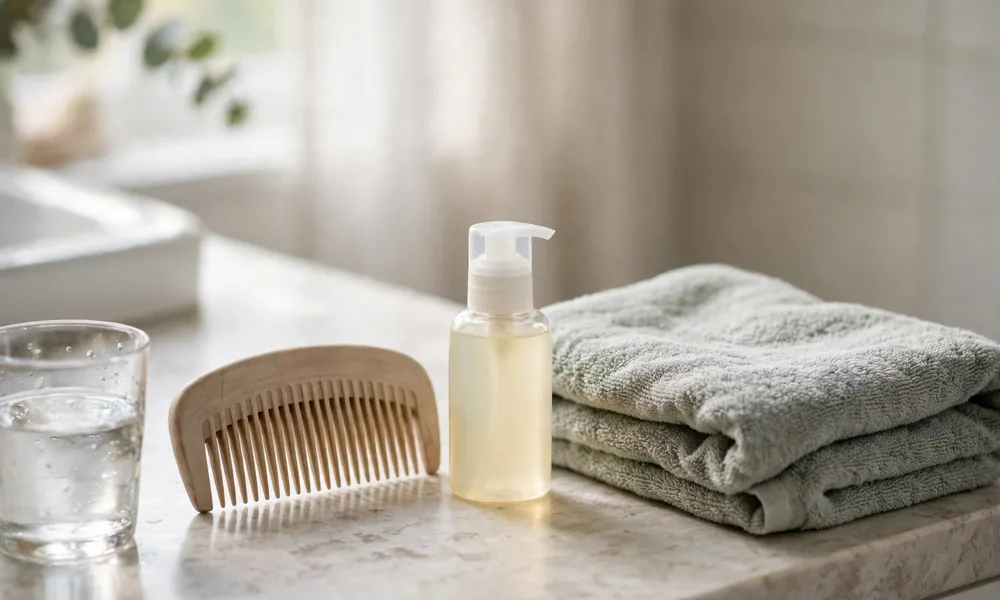
How you dry your hair matters as much as how you wash it. Rubbing wet hair hard with a towel lifts the cuticle and sets frizz in place. Wet hair is at its weakest, so the drying step should be the softest step of all.
Instead, press the hair gently with a soft towel, squeezing out water section by section, and never twist or wring it. Then let the hair air-dry when you can, away from strong heat, and keep your hands out of it while it dries.
Detangling Without Pulling
Detangling is where frizz is often made, not fixed. Pulling a brush through wet, tangled hair snaps strands and lifts the cuticle. The rule is simple: detangle dry hair before the wash, and wet hair only with a wide-tooth comb, gently, from the ends upward.
Work in small sections, holding the hair above the tangle so the pull does not reach the scalp, and ease each knot out a little at a time.
A Simple Smooth Routine, Wash by Wash
A smooth routine is not a long routine; it is the same short routine, done the same way, every wash. Before you wash, comb the hair gently from the ends upward, put a clean towel nearby, and check the water on your wrist.
Wet the hair thoroughly for a full minute, wash the scalp only with a small amount of mild shampoo and soft fingertips, and rinse until the water runs clear, then a little longer. Finish with a cooler rinse over the lengths, press the hair gently with a soft towel, and let it air-dry, combed once and then left alone.

Frizz on Damp Days and Dry Days
Damp days and dry days make frizz in opposite ways, and the answer is the same smooth routine, done patiently. On damp days, moist air pushes water into the hair unevenly, so the strands swell and lift. On dry days, the air pulls moisture out, so the ends lift. A good rinse, a cool finish, and soft drying keep the surface as smooth as it can be.
Neither kind of day can be fixed by washing harder or more often, and washing every day usually makes frizz worse. Wash when the hair needs it, not by the calendar. If frizz comes with itching, flaking, or hair loss that does not settle, that is a matter for a doctor or dermatologist, not a new shampoo.
What Water Cannot Fix
Be honest about what water cannot fix. Water cannot repair split ends, regrow hair, or cure a scalp condition, and no rinse will mend hair that is already damaged. A smooth routine helps the hair you already have look its best, and that is all it can do.
That is still worth doing. Hair that is washed gently, rinsed well, and dried softly looks smoother and more cared for, one wash at a time. Real scalp problems, sudden hair loss, or itching that does not settle belong to a doctor or dermatologist.
Water and Frizz at a Glance
| Lukewarm wash | Long rinse | Soft drying |
|---|---|---|
| Wrist feels warm | Water runs clear | Press, never rub |
| Cooler final rinse | No soap film | Air-dry when possible |
| Fingertips, not nails | Thirty seconds cool | Wide-tooth comb only |
| Hard water filter | Clarify now, then | Hands off while drying |
Your Smooth Routine Checklist
- Comb gently from the ends upward before you wash.
- Wash lukewarm, with fingertips, on the scalp only.
- Rinse until the water runs clear, then a little longer.
- Finish with a cooler rinse over the lengths.
- Press dry with a soft towel, never rub or wring.
- Let hair air-dry, and keep hands off while it dries.
Frequently Asked Questions
What causes frizz?
Frizz happens when the cuticle, the tiny overlapping scales on each strand, lifts instead of lying flat, so light scatters and the hair looks rough and dull. Dry air, damp air, hot water, strong shampoo, hard rubbing, and brushing dry hair can all lift it.
Is hot water bad for frizzy hair?
Hot water is unkind to frizzy hair, because it strips the scalp's natural oils and lifts the cuticle, so the hair dries rough even after a careful wash. Lukewarm water cleans just as well, and a cooler final rinse helps the scales lie flat.
How long should I rinse my hair?
Rinse until the water runs completely clear, with no bubbles at all, and then rinse a little longer, lifting sections so the water reaches the scalp underneath. Shampoo left behind dries into a film that lifts the cuticle and dulls the shine.
Does hard water make frizz worse?
Yes, hard water can make frizz worse, because its dissolved minerals settle on the hair as a thin film, wash after wash, scattering light and lifting the surface. A shower filter, a longer lukewarm rinse, and a clarifying wash now and then are the practical fixes.
Should I brush my hair when it is wet?
Brush dry hair before the wash, and use only a wide-tooth comb on wet hair, gently, from the ends upward. Pulling a brush through wet, tangled hair snaps strands and lifts the cuticle, so the hair dries frizzy no matter how gentle the wash was.
Can water fix split ends or hair loss?
No. Water cannot repair split ends, regrow hair, or cure a scalp condition, and no rinse will mend hair that is already damaged. A smooth routine helps the hair you already have look its best. Sudden hair loss, itching, or flaking that does not settle belongs to a doctor or dermatologist.
The Bottom Line
Water and frizz come down to this: wash lukewarm, rinse long, dry softly, and let the hair finish drying on its own.
Keep the water gentle, keep your hands soft, and the smoothness will follow, wash after wash.
A Note for Smooth Hair
Keep it lukewarm, keep it gentle, keep it patient. The hair will do the rest.