
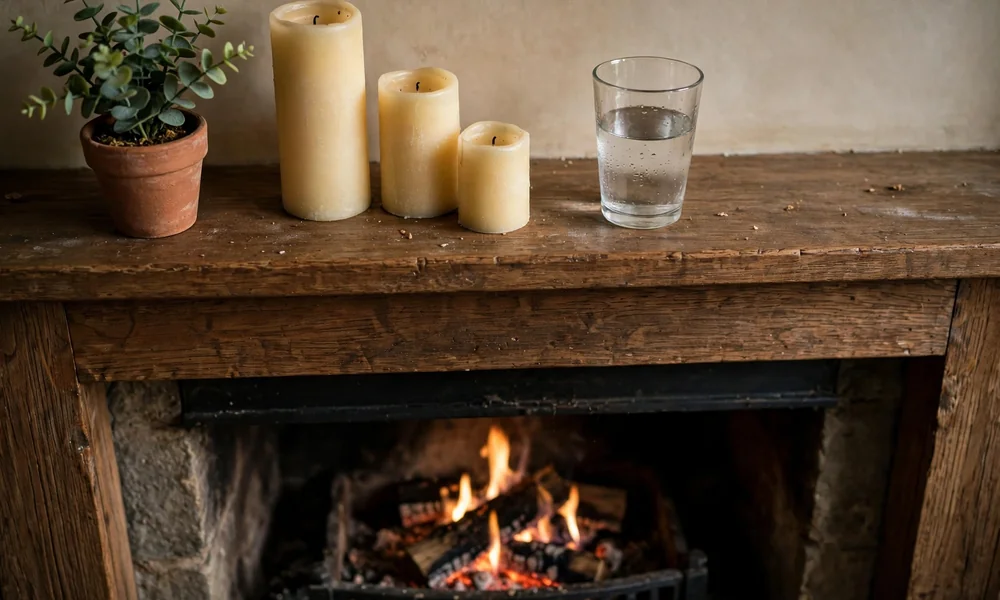
A fireplace is the warm heart of a room in the cold months. Stone or brick, built into one wall, it holds a small fire behind a screen and sends its heat out across the chairs, the rug and the low table where a glass of water waits.
Water belongs in the routine around a fireplace, not near the flame itself. A glass set on the mantelpiece or a side table keeps you drinking through the evening, and a jug kept close by is there for safety, not for show.
This guide shows five calm ways to enjoy water and a fireplace together, from a quiet hour by the fire to a slow evening with a book. Gentle general information is all this is: the fire warms the room and steadies the evening, but it cures nothing and heals nothing.
Key Takeaways
- A fireplace is built into the room for heat, with a fire held behind a screen.
- Water sits beside a fireplace in a glass for drinking and a jug for safety.
- Keep the fire small, dry and watched, and never leave it alone.
- Five calm ways fit a fireplace evening: rest, reading, a warm drink, a quiet hour and a slow close.
- A warm room is a comfort, not a cure; it will not heal anything.
What a Fireplace Is
A fireplace is a fire built into the room itself, set in a stone or brick opening in one wall, with a chimney above to carry the smoke away. The fire burns in a grate or a firebox, often behind a metal screen, and its heat warms the room for hours. A mantelpiece runs above the opening, and the hearth, a flat shelf of stone or tile, runs below it.
A fireplace is not a fire pit, and the difference matters. A fireplace is built into the room for heat, fixed in place, sheltered by walls and a roof, and its fire is small and held. A fire pit is an open outdoor bowl for gathering, set on bare ground in the garden under the sky, and its fire is open to the wind. One heats a room through the winter; the other gathers people outside on a summer evening.
Why Water Sits Beside a Fireplace
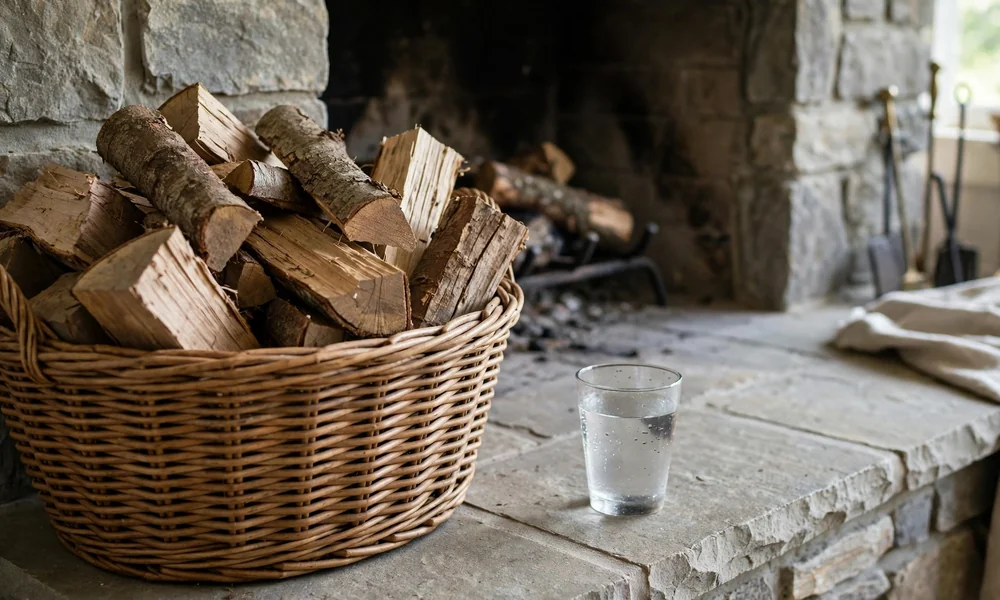
Water earns its place beside a fireplace in two ways: the glass you drink from, and the jug you keep for safety. The glass comes first: fill it, set it on the mantelpiece or the side table, and sip it slowly while the fire settles. A fire warms the room and dries the air, so a glass close by is a kindness to yourself.
The safety jug needs more care: it stands on the hearth or the floor beside the fireplace, full, and it is never used for drinking. If a spark jumps onto the rug or a log rolls forward, the jug is there in a second. The two waters never meet, and the jug is never moved once the fire is lit.
Five Ways to Enjoy Water and a Fireplace
The first way is a quiet hour by the fire. Settle into the chair nearest the hearth, place a full glass of water on the side table, and do nothing at all for a while. Watch the flames move, listen to the low crackle of the logs, and let the heat work its way across the room. When the glass is empty, the hour is done.
The second way is reading beside the fire. Bring a book to the fireside chair, keep the glass of water on the mantelpiece where it cannot spill on the pages, and read in short stretches. A small lamp does the real reading work, and the book waits patiently whenever you look up at the flames.
The third way pairs a warm drink with cool water. A cup of tea or cocoa belongs in your hands by the fire, and a glass of cool water belongs on the table beside you. The warm cup and the cool glass take turns, and the water keeps the evening gentle instead of heavy.
The fourth way is a short rest after the day. Come in from the cold, change into something soft, and sit by the fire for twenty minutes with nothing to do. A glass of water before you sit down, and another when you stand up again, frames the rest like a pair of bookends.
The fifth way is a slow close to the evening. As the fire burns down, stop feeding it, let the flames shrink, and drink the last glass of water while the room cools. When the embers are dark and cold to the touch, the evening is finished, and the room is ready for the night.

Water and a Fireplace at a Glance
| Fire low | Water near | Room calm |
|---|---|---|
| Logs dry, small | Glass full first | Blanket folded near |
| Screen in place | Jug by hearth | Book within reach |
| Embers out cold | Drink kept clean | Mantel kept clear |
Water and a Fire Pit
For the open fire outdoors, see the fire pit guide.
That guide follows a fire pit evening in the garden: a stone ring or a metal bowl on flat ground, a bucket of water standing beside it before any fire is lit, and a small fire kept low and watched until its embers are cold. The water there is a bucket for safety and for putting the fire out at the end.
This guide stays indoors, where the fire is built into the wall and the water is a glass on the mantelpiece.
Water and a Garden Bench
For stillness outdoors without any fire at all, see the garden bench guide.
That guide is about a pause on a bench of your own, out in your own garden, a bottle of water at your side and ten unhurried minutes stretching ahead. You sit, you sip, and the garden carries on around you.
A fireplace evening is the indoor cousin of that pause, still and unhurried, with a drink within reach. The difference is the warmth: the bench borrows the sun, while the fireplace makes its own heat.
Water and a Camping Wash
For water used far from home, see the camping wash guide.
That guide sets out a short, planned way to wash where no tap runs: a basin, a bottle, mild soap and a towel, used at camp in the morning. It takes about a litre of water, and the used water is carried off away from streams and scattered wide over soil.
A fireplace evening shares the water and nothing else: the wash is a morning routine with a basin and a cloth, while the fireplace is an evening ritual for sitting still, its water a glass for drinking and a jug for safety.
Nine Neighbours in This Batch
Nine companions share this batch with the fireplace. A compass points the way home, a torch lights the path after dark, and a geode waits quietly on its shelf, while brochantite brings deep green, piemontite brings soft pink, and realgar brings warm red.
At the door, a doorstep and a doormat welcome quiet arrivals, and a meteorite, fallen from the sky, keeps the strangest story of all. The fireplace warms the room they all come home to, and the glass of water waits on the mantelpiece for each of them.
Stones That Must Never Touch Water
A fireplace evening sometimes has a stone on the mantelpiece, so the water rules belong here too. Apatite goes cloudy and soft in water, and lepidolite carries lithium inside its pale flakes, so neither belongs anywhere near a drink.
Pyrite rusts when damp and stains pale cloth, angelite turns dull after one soak and never clears again, and amber, which is old tree resin grown hard, goes milky when it stays wet. Keep every stone beside the glass, never in it, and never drop one into a drink.
Your Fireplace Evening Checklist
- Fill a glass of water and set it on the mantelpiece or side table before lighting the fire.
- Keep a full jug of safety water on the hearth, and never drink from it.
- Burn only dry wood, keep the fire small, and put the screen in place.
- Never leave a burning fire alone, and let the embers go cold before bed.
- Keep the mantelpiece clear, the hearth swept, and the blanket folded nearby.
- Patch-test any skin product before an evening by the fire, and if smoke troubles your breathing or a rash lingers for days, ease off and ask a doctor; a warm room is a comfort, not a cure.
Frequently Asked Questions
How much water should I keep beside a fireplace?
Keep one full glass for drinking and one full jug for safety. The glass is yours to sip through the evening, and the jug stays on the hearth untouched, ready if a spark jumps or a log rolls forward.
Can I put a glass of water on the mantelpiece?
Yes, when the mantelpiece is wide, flat and well away from the heat of the opening. Set the glass toward the middle of the mantel, not at its edge, and keep it clear of candles and anything that could tip it over.
Is it safe to sit close to a fireplace?
Yes, when the fire is small, the screen is in place and you sit a comfortable arm's length away. If your skin feels too hot, move the chair back and drink your water slowly.
What wood burns best in a fireplace?
Dry, seasoned hardwood burns best, because it gives steady heat with little smoke. Never burn painted wood, treated wood or damp logs, and never burn household rubbish of any kind.
How do I put a fireplace fire out properly?
Stop feeding the fire and let it burn down, then spread the embers thin with a poker and leave them until they are cold to the touch. Only when nothing in the grate is warm may the evening be called done.
Can a fireplace evening help me feel calmer?
A slow evening by the fire can make the day feel steadier, because the warmth and the quiet ask so little of you. If low feelings stay for weeks, see a doctor — a fire warms a room, it cannot mend health.

The Bottom Line
Water and a fireplace go together when the fire stays small, the glass stays full, and the evening stays slow.
A Note for Warm Evenings
A glass of water, a small fire, and a quiet room — that is all a good winter evening needs.


